
Quick Answer: How to Choose Your Ideal Version
Choosing the right edition of Fyodor Dostoevsky’s masterpiece depends on your reading style, academic goals, and physical preferences. Because this classic novel has been translated into English multiple times over the past century, the reading experience can vary significantly depending on whose translation you choose.
To find your ideal copy, match your primary reading goals to the general translation philosophy of the edition. If you want a smooth, fast-paced narrative for casual reading, look for modern, fluid translations. If you are studying the text academically, a literal translation with extensive footnotes is more appropriate.
Always check the publisher, publication year, and the translator’s name before buying. Many cheap, uncredited reprints sold online are actually outdated, heavily abridged, or poorly formatted public-domain texts. There is no single definitive version, but verifying these details ensures you get a complete text that fits your reading habits.
Products mentioned in this guide
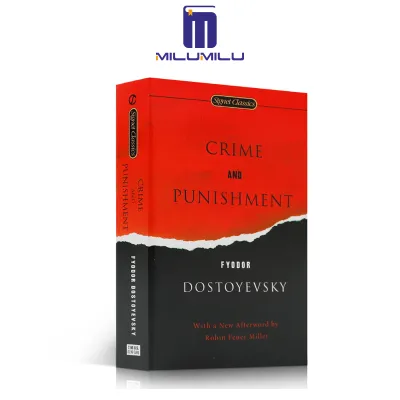
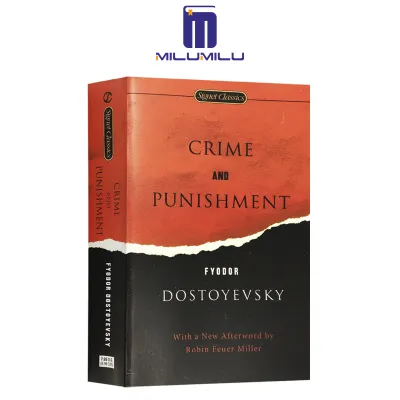

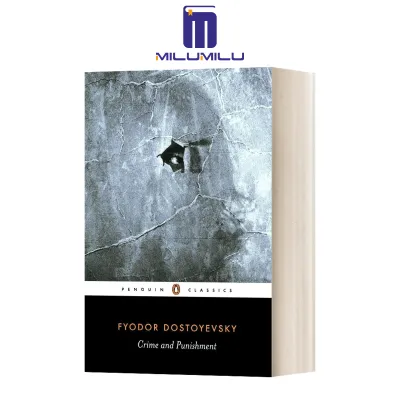
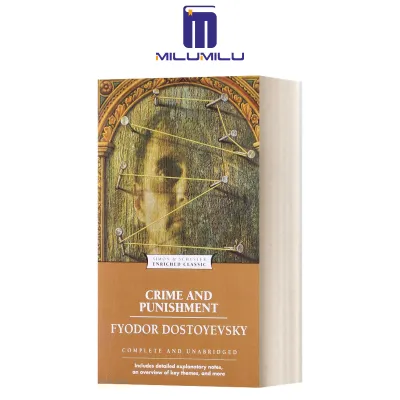
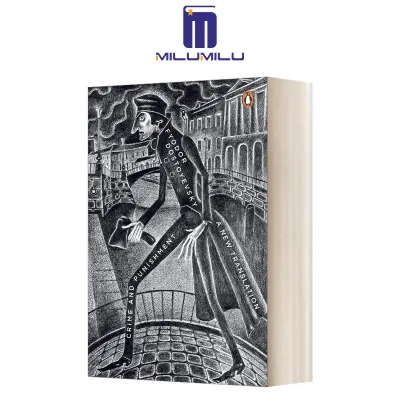
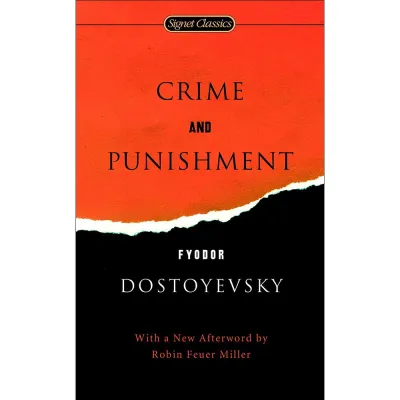

Prices are valid at publication and may change. Please refer to the product page for the latest price.
Understanding English Translation Styles
Translating 19th-century Russian literature is a delicate art. Translators must balance loyalty to Dostoevsky’s unique, often chaotic voice with the need for readable English prose. Understanding where a translation sits on this spectrum is the first step in making your choice.

The Historical and Victorian Approach
Some of the earliest translations, dating back to the early 20th century, use a traditional, Victorian English style. These versions are often highly accessible and have a classic, literary feel. However, they sometimes smooth over Dostoevsky’s intentional eccentricities, repetitions, and rough edges to suit the social sensibilities of their time. If you enjoy classic British literature, this style may feel familiar, but it may not fully capture the raw intensity of the original Russian prose.
The Literal and Academic Approach
Other translators prioritize extreme fidelity to the original Russian syntax and word choice. This style preserves the quirky rhythms, repetitions, and raw psychological tension of Dostoevsky’s writing. However, the resulting English can sometimes feel dense or slightly unnatural to a modern reader. This approach is highly suited for close academic study but can be challenging if you prefer a seamless, fast-moving narrative.
The Modern and Fluid Approach
Recent translations often aim for a middle ground, focusing on natural dialogue and smooth narrative pacing while maintaining the psychological depth of the characters. These versions attempt to capture how Dostoevsky’s characters would sound to a modern audience without losing the historical context of St. Petersburg. They are excellent for first-time readers who want to stay immersed in the story without getting tripped up by archaic phrasing.
How to Evaluate Styles Before Buying
To find your preference, read sample pages online or browse physical copies in a local bookstore. Pay close attention to the dialogue between characters like Raskolnikov and Porfiry Petrovich. Look for natural phrasing, clear sentence structures, and a tone that keeps you engaged. Check reader reviews specifically for comments on readability and flow to see how others have experienced the translation.
Evaluating Edition Features and Supplementary Materials
A great translation is only part of the package. The editorial features of a specific edition can significantly enhance your reading experience and help you navigate the complex world of 19th-century Russia.
Introductory Essays and Historical Context
For first-time readers, a well-written introduction provides crucial context about 19th-century Russian society, Dostoevsky’s personal life, and the philosophical movements of the era. However, be aware that many introductions contain major plot spoilers. It is often best to skip the introduction until you have finished the novel, or choose an edition that clearly flags spoiler-heavy sections.
Footnotes versus Endnotes
Dostoevsky’s text is filled with references to contemporary Russian laws, currency, street names, and social classes. Look for editions that offer clear annotations. Footnotes at the bottom of the page are generally much easier to read than endnotes at the back of the book, as they prevent you from constantly flipping pages and losing your place in the narrative.
Textual Integrity and Formatting
Ensure the edition preserves the original six-part structure and epilogue of the novel. Some low-quality reprints alter the chapter divisions or omit the epilogue entirely to save printing costs. Verify that the publisher is reputable and that the text is advertised as complete and unabridged. Additionally, look for editions that include a character list, as Russian names can be confusing due to the frequent use of patronymics and nicknames.
Selecting the Right Format and Binding
The physical format of your book affects not only your comfort during long reading sessions but also how well the volume survives over time.
Physical Formats and the Tropical Climate Factor
In Singapore’s humid climate, book preservation requires careful consideration. Cheap mass-market paperbacks often use highly acidic paper that yellows and becomes brittle quickly, and the glue in their bindings can fail under high humidity. If you prefer physical books, consider investing in a high-quality trade paperback or a hardcover edition with acid-free paper and sewn binding, which will withstand the local climate much better. While a mass-market paperback might cost around S$12 to S$18, investing S$25 to S$45 in a sturdy trade paperback or hardcover is often worth the extra cost for durability.
Digital and Audio Alternatives
E-books offer excellent portability and allow you to adjust font sizes, look up archaic words instantly, and read in low light. If you choose an e-book, ensure the file is from an authorized publisher to avoid terrible formatting errors. For audiobooks, sample the narrator’s voice first; a multi-hour listen requires a narrator whose pacing, tone, and pronunciation of Russian names keep you fully immersed.
Sizing and Typography Considerations
Because Crime and Punishment is a lengthy novel, physical comfort is key. Check the book’s dimensions and weight before purchasing. A book that is too heavy or has a font size smaller than 9-point can cause eye strain and hand fatigue during extended reading sessions. Look for editions that advertise clear, readable typography and generous margins.
Final Pre-Purchase Checklist
Before you finalize your purchase online or head to the cashier at a local bookstore, run through these essential checks to ensure you are getting exactly what you expect.
- Verify the ISBN: Do not rely solely on the cover art or title. Search the exact 13-digit ISBN to confirm the specific translator, publisher, and edition format.
- Check the Publisher's Reputation: Stick to established literary publishers and academic presses. This guarantees professional proofreading, high-quality paper opacity (so text doesn't bleed through from the other side), and durable binding.
- Inspect the Return Policy: If ordering online for delivery to Singapore, confirm the retailer's return policy. This protects you if the book arrives with bent corners, printing errors, or a damaged spine.
- Confirm the Translator's Name: Ensure the translator's name is clearly printed on the cover or title page. If no translator is credited, it is highly likely a low-quality, public-domain reprint.
Frequently Asked Questions (FAQ)
Is it better to read the original Russian or an English translation?
Reading the original Russian text allows you to experience Dostoevsky’s precise wordplay, cultural nuances, and stylistic rhythms exactly as he wrote them. However, this requires an exceptionally high level of language proficiency. For most readers, a high-quality modern English translation is more than sufficient, as skilled translators work diligently to preserve the psychological depth, emotional intensity, and philosophical arguments of the original work.
Why are there so many different page counts for the same book?
Page counts vary widely across different editions due to differences in typography, margin sizes, line spacing, and paper thickness. Additionally, some editions include extensive supplementary materials, such as long introductory essays, character lists, maps of St. Petersburg, and detailed explanatory notes. When comparing editions, do not use page count as a measure of completeness; instead, verify the translator’s name and ensure the publisher explicitly states the text is unabridged.
Community discussion
Share your experience or ask a question. Comments are reviewed before publication.