
Quick Answer: Which Translation Fits Your Goal?
Choosing the right English translation of Homer’s Iliad depends on your reading purpose. If you want a dramatic, highly accessible, and fast-paced narrative for general reading or audio performance, Robert Fagles is the most popular choice. For academic study and close textual analysis, Richmond Lattimore’s literal, line-by-line translation remains the scholarly standard. If you prefer a poetic, literary style that balances accuracy with rhythmic elegance, Robert Fitzgerald’s blank verse is highly regarded. For a contemporary, metrically strict translation that challenges traditional romanticized interpretations, Emily Wilson’s version offers a fresh, clear perspective. Before purchasing, verify the edition’s annotations and line numbering if you are buying for a specific university syllabus.
Core Dimensions for Comparing Translations
When comparing editions of the Iliad, look beyond the translator’s name to evaluate several key structural elements. The first is meter and rhythm. Homer’s original Greek was composed in dactylic hexameter, a rapid, musical line. Translators must choose between free verse, prose, or strict English meters like iambic pentameter, each of which fundamentally alters reading speed and narrative momentum.

The second dimension is the balance between fidelity and adaptation. A literal translation maps Greek syntax directly into English, which can sometimes result in stiff phrasing. Conversely, a dynamic translation prioritizes emotional impact and modern literary flow, occasionally altering idioms to make the narrative clearer for a contemporary audience.
Products mentioned in this guide
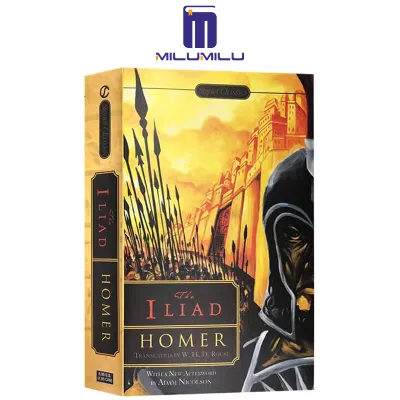
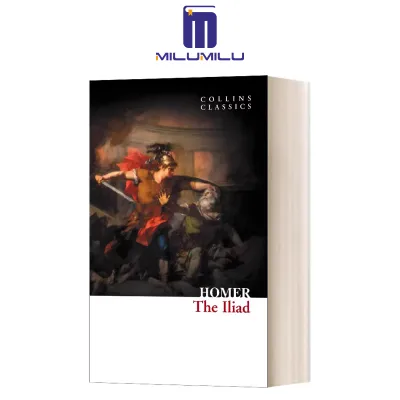
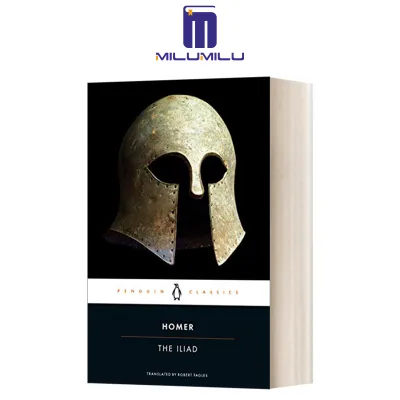
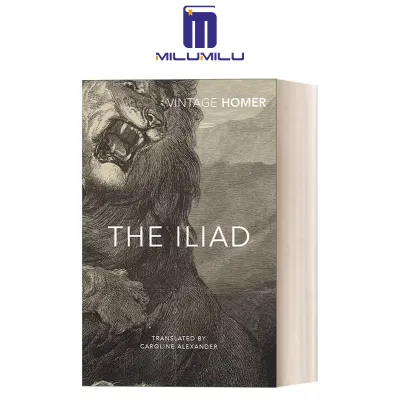
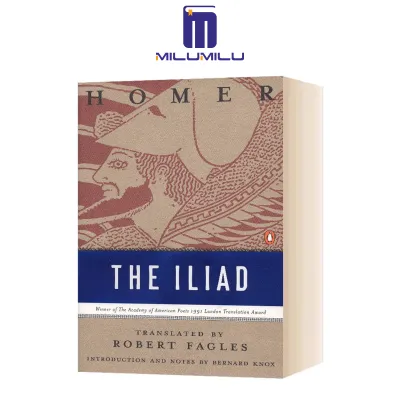

Prices are valid at publication and may change. Please refer to the product page for the latest price.
Tone and vocabulary also vary dramatically. Some translators employ archaic English to evoke ancient grandeur, while others use modern colloquialisms to make the bronze-age warriors sound immediate. Finally, assess the quality of paratextual elements. Detailed introductions, footnotes, maps, and character glossaries are invaluable for navigating the complex web of Greek and Trojan alliances.
Profiles of Major English Translations
Robert Fagles
Robert Fagles’ 1990 translation is celebrated for its dramatic energy and highly accessible language. Fagles prioritizes narrative momentum, using modern phrasing and an expansive, flexible line structure that captures the raw emotion and violence of the Trojan War. This version reads with a cinematic quality, making it an exceptional choice for first-time readers who want to be swept up in the story.
Because of its readability, the Fagles translation is a staple in introductory literature courses and is widely available in paperback. His lines are crafted with a keen ear for performance, which is why this version is also the basis for highly acclaimed audiobook recordings. While it occasionally departs from literal Greek to maintain its driving pace, it successfully conveys the epic grandeur of Homer’s world.
Richmond Lattimore
For decades, Richmond Lattimore’s 1951 translation has been the benchmark for academic precision. Lattimore’s primary goal was to bring the reader as close as possible to the literal syntax, word choice, and line structure of the original Greek. He retains the repetitive Homeric epithets—such as “swift-footed Achilles”—exactly where they appear in the original text, preserving the oral-formulaic nature of the epic.
This literal approach makes Lattimore’s version incredibly valuable for students and researchers engaged in close textual analysis. Because it maintains a strict line-by-line correspondence with the Greek text, it is exceptionally easy to reference specific line numbers during discussions. The tone is formal and elevated, capturing the ancient distance of the poem.
Robert Fitzgerald
Published in 1974, Robert Fitzgerald’s translation is favored by readers who appreciate the musicality of the English language. Fitzgerald rendered the epic into a supple, elegant blank verse that balances accuracy with a distinct literary grace. His vocabulary is sophisticated and mid-century, avoiding both overly modern slang and dusty archaisms.
Fitzgerald’s strength lies in his ability to capture the lyrical beauty of Homer’s natural descriptions and the quiet, tragic moments between battles. He pays meticulous attention to the rhythm of each line, ensuring that the English text flows with a natural cadence that appeals to lovers of classic poetry.
Emily Wilson
Emily Wilson’s 2023 translation represents a major milestone in contemporary Homeric scholarship. Wilson approaches the text with a metrically strict constraint, using regular iambic pentameter to match the pace and syllable control of the original Greek hexameter. This choice keeps the narrative moving at a brisk, rhythmic clip while maintaining a clear, unpretentious vocabulary.
Beyond her technical skill, Wilson’s translation is notable for its modern ethical framing. She deliberately avoids the romanticized, overly heroic language that past translators often used to gloss over the brutal realities of ancient warfare and gender dynamics. By choosing precise, direct words, she highlights the complex humanity of both Greek and Trojan characters.
Stanley Lombardo
Stanley Lombardo’s 1997 translation is designed specifically for rapid comprehension and oral performance. Lombardo uses a direct, highly colloquial style that strips away the traditional epic register in favor of spare, muscular free verse. His characters speak in a sharp, modern vernacular that makes the intense arguments and battleground speeches feel immediate.
This version is highly recommended for classrooms where the primary goal is to understand the plot without getting lost in complex poetic structures. Lombardo’s edition features student-friendly annotations, clear character lists, and a layout that reduces visual friction, prioritizing the spoken-word origins of the poem.
Matching the Edition to Your Specific Needs
Selecting the ideal copy of the Iliad requires matching these translation styles to your specific reading goals. If you are a student or educator, prioritize utility. Look for editions that feature robust scholarly apparatus, including detailed introductions, comprehensive glossaries of characters, and clear maps of the Aegean region. Standard line numbering is non-negotiable for academic work, so ensure the publisher has printed line counts in the margins.
For audiobook listeners, select translations with a strong rhythmic drive and dramatic pacing. The oral nature of the Iliad means that translations like those by Fagles or Lombardo translate beautifully to the spoken word, especially when narrated by experienced actors who can bring out the dramatic tension of the assembly scenes and the tragic weight of the funeral orations.
If you are a collector or classicist, look for premium hardcover bindings, original Greek facing pages, or extensive scholarly appendices. A bilingual edition allows for immediate linguistic comparison, though it carries a higher price point. Neither of these options may fit if you are looking for a heavily abridged version; always check the product description to confirm it is the complete epic, as some school editions omit crucial passages like the “Catalogue of Ships.”
Physical and Digital Format Considerations
The physical or digital format of your chosen translation can significantly impact your reading experience. A paperback is excellent for portability, but the spine may crease easily under the weight of the poem’s twenty-four books. Hardcover editions offer superior durability and lie flat on a desk, which is incredibly helpful if you are taking notes or cross-referencing maps and glossaries while you read.
If you prefer digital reading, e-books offer unmatched portability and instant search functions. However, poetry formatting can be challenging on smaller screens. Standard e-readers often struggle with long poetic lines, causing awkward text wrapping that disrupts the translator’s intended meter. Furthermore, navigating back and forth between the main text and explanatory endnotes can be clunky on digital devices.
For those choosing audiobooks, verify which translation the recording uses before purchasing. A narrator’s performance is deeply tied to the translator’s style; a narrator reading Lattimore’s formal syntax will sound vastly different from one performing Lombardo’s colloquial verse. Listening to a short sample beforehand ensures that both the translation style and the narrator’s pacing align with your personal listening preferences.
Frequently Asked Questions (FAQ)
Do I need to read the Iliad before the Odyssey?
While the Odyssey is the narrative sequel to the Iliad, you do not strictly need to read them in chronological order. The Iliad focuses on a brief, intense period during the final year of the Trojan War, highlighting the wrath of Achilles. The Odyssey takes place years later, chronicling Odysseus’s long journey home. Reading the Iliad first provides valuable context regarding the characters’ past exploits and cultural values, but the Odyssey is structured as a self-contained adventure that can be fully appreciated on its own.
Should I buy a translation with facing Greek text?
Bilingual editions featuring the original Greek text alongside the English translation are highly beneficial for language students and classicists. They allow you to instantly compare how a translator has interpreted specific Greek words. However, these editions are significantly bulkier and carry a higher price point than standard English-only volumes. If you do not plan to study the original language, a standard edition with comprehensive footnotes will serve you much better.
Are prose translations of the Iliad worth reading?
Prose translations of the Iliad are highly useful for readers who want to focus entirely on plot comprehension and historical details without the distraction of poetic line breaks. They read like a standard novel, which can reduce reading fatigue. However, prose versions inevitably sacrifice the musicality, rhythm, and oral-formulaic structure that define the epic genre. If you want to experience the work as an ancient performance piece, a poetic translation is highly recommended.
Community discussion
Share your experience or ask a question. Comments are reviewed before publication.