
Selecting the right Kala baritone ukulele as a beginner requires balancing physical comfort, tonal preferences, and budget. For most first-time players, a standard laminate mahogany baritone offers the most reliable entry point, providing a warm, classic sound and excellent structural durability without a heavy financial commitment. However, the ideal choice depends heavily on whether you plan to play plugged into an amplifier, your tolerance for instrument maintenance in humid climates, and your previous musical experience.
By understanding the unique characteristics of the baritone size and evaluating the specific features Kala offers, you can avoid common purchasing pitfalls. This guide breaks down the essential factors that influence playability, construction quality, and overall value to help you make an informed decision.
Why a Kala Baritone Ukulele Suits Beginners
The baritone is the largest member of the standard ukulele family, typically measuring around 30 inches in total length with a scale length of 20 inches. This larger size produces a deep, warm, and resonant voice that closely resembles a classical nylon-string guitar rather than the bright, percussive chime of smaller soprano or concert models. For beginners who prefer a mellow, full-bodied sound, the baritone provides a highly satisfying acoustic experience.
Products mentioned in this guide
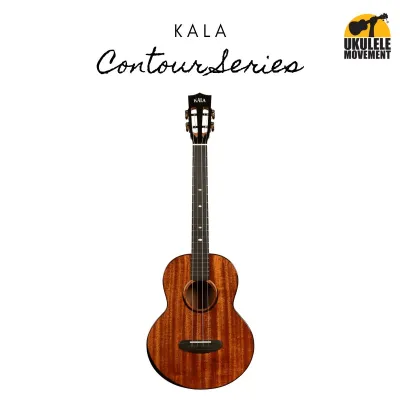

Prices are valid at publication and may change. Please refer to the product page for the latest price.
A key advantage of the baritone ukulele is its tuning. Unlike smaller ukuleles which are tuned to GCEA, the baritone is tuned to DGBE. This tuning is identical to the top four strings of a standard acoustic guitar. If you already have some experience with the guitar, transitioning to the baritone ukulele is incredibly straightforward because your existing chord shapes and scale patterns translate directly. For absolute beginners, learning on a DGBE instrument provides an excellent stepping stone if you eventually want to learn the guitar.
Kala has established a strong reputation in the musical instrument industry for maintaining consistent quality control across their entire product lineup. Even their entry-level models benefit from standardized manufacturing processes, ensuring that beginners receive an instrument with reliable intonation and structural integrity. This consistency is particularly valuable for new players who may not yet have the experience to diagnose or correct manufacturing defects.
The physical dimensions of a baritone ukulele also offer distinct ergonomic benefits. The longer scale length results in wider fret spacing along the fretboard. If you have larger hands or find the cramped frets of a soprano ukulele frustrating, the baritone provides ample room to place your fingers cleanly. This extra space reduces the likelihood of accidentally muting adjacent strings, making the initial stages of learning chords much less discouraging.
Core Features to Evaluate for Playability and Build
When evaluating different Kala baritone models, playability should be your primary concern. The neck profile, which refers to the shape and thickness of the neck, should feel comfortable in your hand. Kala typically utilizes a slim, user-friendly C-shaped neck profile that accommodates various hand sizes. Additionally, you should check the factory action height, which is the distance between the strings and the fretboard. If the action is too high, pressing down on the strings will require excessive finger strength, leading to early fatigue and soreness.

The choice of build materials significantly impacts both the tone and the durability of your ukulele. Laminate wood construction consists of thin layers of wood pressed together. Laminate instruments are highly durable and exceptionally resistant to environmental changes. In tropical climates with high relative humidity, such as Singapore, a laminate ukulele is far less prone to warping, cracking, or joint separation. While laminate models may lack the complex tonal depth of solid wood, they offer unmatched peace of mind for beginners who do not want to worry about strict humidity control.
Solid wood tops, on the other hand, are crafted from a single piece of seasoned timber. Solid spruce or solid mahogany tops vibrate much more freely than laminates, resulting in greater volume, superior projection, and a richer harmonic profile that actually improves as the wood ages. However, solid wood is highly sensitive to climate fluctuations. If you choose a solid-top model, you must be prepared to store it in a stable environment or use a dedicated instrument humidifier to prevent the wood from drying out or swelling.
Hardware reliability is another critical factor that determines how often you will need to tune your instrument. Look for models equipped with high-quality tuning machines. Sealed, die-cast gears generally offer smoother operation and better protection against dust and moisture than open-geared tuners. The nut and saddle, which are the contact points for the strings at either end of the scale, should ideally be made of a dense, synthetic material like NuBone rather than cheap, soft plastic. High-quality nut and saddle materials transfer string vibrations to the body more efficiently, improving sustain and clarity.
Matching Kala Baritone Categories to Your Needs
Standard acoustic baritone ukuleles represent the most traditional and straightforward option for beginners. These instruments rely entirely on the natural resonance of their wooden bodies to project sound. Because they do not include internal electronics, standard acoustic models are lightweight, structurally simple, and highly cost-effective. If your primary goal is to practice at home, play for family, or participate in acoustic jam sessions, a standard acoustic model provides the purest learning experience and the best value for your money.
Acoustic-electric models feature an under-saddle piezo pickup and an onboard preamp system, allowing you to plug the ukulele directly into an amplifier, PA system, or recording interface. These models often include convenient built-in tuners and basic equalization controls to adjust the bass and treble frequencies. If you plan to perform in public, play alongside louder instruments, or record your music digitally, an acoustic-electric model is highly beneficial. However, keep in mind that the added electronics increase both the weight of the instrument and the retail price.
Travel and compact baritone models are designed specifically for portability, often featuring shallower body depths or alternative materials. While these models are incredibly easy to pack and transport, the reduced body volume naturally limits their acoustic projection and low-end warmth. If you travel frequently or have limited storage space, a compact model may be appealing. However, for most beginners, a full-sized baritone body is recommended to fully experience the deep, rich bass tones that define the instrument.
Setting a Realistic Budget and Identifying Value
Establishing a realistic budget is essential when shopping for your first instrument. In Singapore, entry-level Kala baritone ukuleles generally span from S$120 to S$300. Within the lower end of this range, from S$120 to S$180, you will primarily find reliable laminate mahogany models. These instruments are excellent, no-frills workhorses that prioritize structural integrity and playability over cosmetic enhancements, making them perfect for absolute beginners.
As you move into the S$180 to S$300 price bracket, you will encounter models featuring solid wood tops, exotic laminate veneers, and built-in electronics. This mid-range tier offers the best long-term value for beginners who are committed to learning. A solid spruce or solid mahogany top in this price range provides a noticeable upgrade in tonal richness and volume, ensuring that the instrument continues to satisfy your ears as your playing skills advance.
It is easy for beginners to fall into the trap of overpaying for professional-grade aesthetics or high-end features that do not contribute to the learning process. Intricate abalone binding, highly figured exotic woods, and complex multi-band preamps look beautiful but do not make the instrument any easier to play. When starting out, focus your budget on securing a straight neck, smooth frets, and reliable tuning stability rather than visual ornamentation.
Inspection and Setup Checklist Before You Play
Once you receive your new Kala baritone ukulele, whether from an online marketplace or a local music retailer, performing a thorough physical inspection is crucial. Start by running your fingers gently along both sides of the fretboard. The metal fret ends should feel smooth and flush with the wood. If you feel sharp metal edges protruding, this is known as fret sprout, which typically occurs when the wooden fretboard shrinks in dry conditions. While common, sharp frets can make playing uncomfortable and should be addressed.
Next, check the straightness of the neck. Hold the body of the ukulele at eye level and look down the edge of the fretboard from the bridge toward the nut. The neck should appear straight or have a very slight, almost imperceptible upward curve. A severe forward bow will make the strings sit too high off the fretboard, making chords difficult to press down. Conversely, a backward bow will cause the strings to buzz against the frets when played.
Examine the bridge area carefully to ensure the structural components are secure. The wooden bridge should be perfectly flush against the body of the ukulele, with no visible gaps, lifting, or glue residue around the edges. Pluck each string individually while turning the tuning pegs. The tuning machines should turn smoothly with consistent resistance, without any slipping, grinding, or loose play that could compromise tuning stability.
Finally, evaluate the overall action and playability. If you find that pressing down on the strings near the first fret requires an uncomfortable amount of pressure, the string slots in the nut may need to be filed deeper. While Kala instruments generally arrive with a highly playable factory setup, taking your new ukulele to a professional luthier or a specialized music shop in Singapore for a personalized setup can dramatically improve its playability, making your learning journey much smoother and more enjoyable.
Frequently Asked Questions (FAQ)
Can I use standard ukulele strings on a Kala baritone?
No, you should not use standard soprano, concert, or tenor ukulele strings on a baritone instrument. Baritone ukuleles have a significantly longer scale length and are designed to be tuned to DGBE, which requires specific string gauges and tensions. Standard GCEA strings are not engineered to handle the physical demands of a baritone scale length. Attempting to tune standard strings to DGBE on a baritone will result in loose, floppy strings that cannot hold pitch or produce a clear tone. Conversely, trying to tune standard strings to GCEA on a baritone can exert excessive tension, potentially warping the neck or damaging the bridge. Always purchase strings explicitly labeled for baritone ukuleles.
Do I need an acoustic-electric Kala baritone as a beginner?
For most beginners, an acoustic-electric model is not strictly necessary. A standard acoustic baritone produces ample natural volume for home practice, learning chord shapes, and playing in small, quiet settings. Choosing a standard acoustic model allows you to maximize your budget by focusing on the quality of the wood and construction rather than paying extra for onboard electronics. However, if you already own an amplifier, plan to record your progress directly into a computer interface, or intend to perform in public spaces where amplification is required, investing in an acoustic-electric model from the start can save you the future expense of installing an aftermarket pickup.
How does baritone tuning affect learning chord shapes?
Because the baritone ukulele is tuned to DGBE rather than the standard GCEA tuning of smaller ukuleles, the chord shapes you play will produce different musical chords. For example, the finger pattern used to play a C major chord on a soprano ukulele will produce a G major chord on a baritone. While the physical relationship between the strings remains consistent, you must use chord charts, tutorials, and songbooks specifically written for baritone ukulele or standard guitar. This tuning is highly advantageous if you plan to transition to the acoustic guitar later, as the chord shapes and fingerings you learn on the baritone translate directly to the top four strings of a guitar.
Community discussion
Share your experience or ask a question. Comments are reviewed before publication.