
Choosing the right Korg metronome depends entirely on how, where, and what you play. Rather than relying on generic popularity, this guide helps you evaluate your specific practice environment, instrument type, and technical requirements. By matching your personal needs to the physical form factors and feature sets available in the Korg lineup, you can identify the most suitable device for your musical routine.
Identify Your Core Practice Requirements
To find the ideal metronome, you must first analyze your primary practice environment. A musician practicing a classical acoustic piano in a quiet apartment or a typical residential flat faces very different acoustic challenges than a drummer practicing on a full acoustic kit in a shared rehearsal studio. In a quiet home setting, a metronome with a highly adjustable volume control or a dedicated headphone jack is essential to maintain a productive practice session without causing a disturbance to neighbors or family members. Conversely, in a loud band rehearsal room, a standard built-in speaker will quickly be drowned out, making highly visible visual cues, such as bright flashing LEDs or a physical sweeping needle display, absolutely critical for keeping time.
Portability is another major factor that depends heavily on your lifestyle as a musician. If you are a gigging musician, a music student, or a teacher traveling frequently between different schools, studios, and performance venues, you require a lightweight, compact metronome that can easily slip into an instrument case pocket or a gig bag accessory compartment. On the other hand, if you are a home studio producer, an organist, or a music teacher who conducts all lessons from a single fixed studio, a larger desktop unit with a stable base, a larger display, and a more robust speaker system will be far more practical and comfortable to use daily.
Products mentioned in this guide
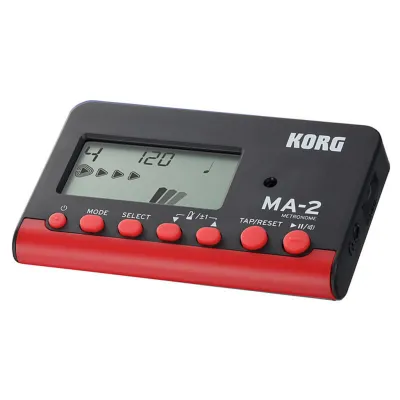
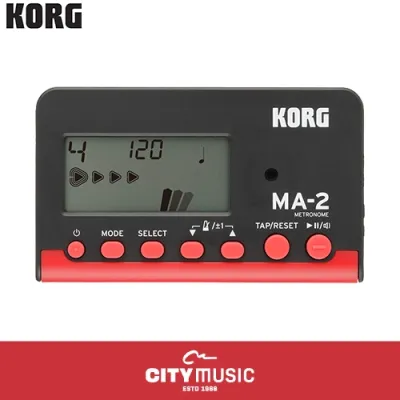
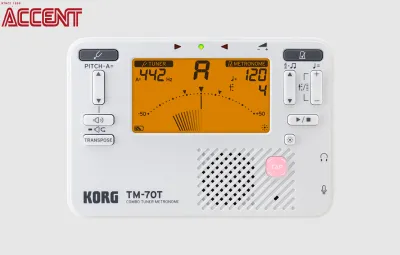

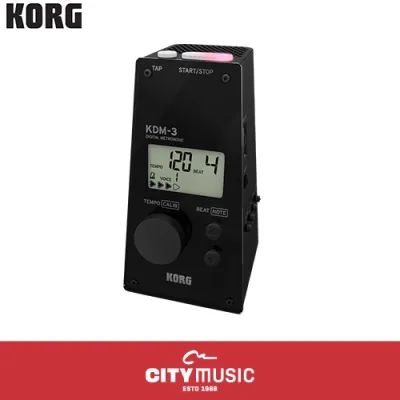
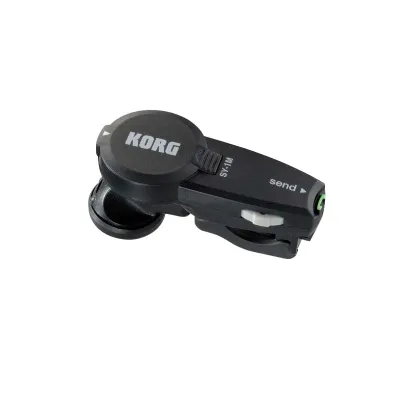
Prices are valid at publication and may change. Please refer to the product page for the latest price.
Finally, you must identify whether basic timekeeping, complex rhythm training, or combined tuning is the primary goal of your practice sessions. If you are a beginner focusing on maintaining a steady quarter-note pulse, a simple, straightforward metronome with basic tempo adjustments is all you need. However, if you are an advanced student or professional tackling complex classical compositions, jazz syncopations, or progressive rock, you will benefit immensely from a device that offers advanced rhythm training features, such as complex time signatures, varied subdivisions, and customizable accent patterns. Additionally, if you play an instrument that requires frequent tuning, selecting a combination metronome and tuner can streamline your gear setup and save valuable space.
Match Korg Form Factors to Your Instrument and Setup
Korg designs metronomes in several distinct physical form factors, each tailored to specific instruments, playing postures, and performance setups. Clip-on models are engineered to attach directly to your instrument, such as the headstock of an acoustic guitar, the bell of a trumpet, or the pegbox of a violin. These devices are exceptionally convenient for hands-free use and minimal stage footprints. Because they clip directly onto the instrument, many models can detect pitch and tempo through direct vibration transfer, which is incredibly useful in noisy environments where acoustic microphones fail to capture sound accurately.

Compact pocket or card-style models represent the classic electronic metronome design. These flat, lightweight units are highly portable and can be easily stored in almost any instrument case. They typically feature a small built-in speaker, a headphone jack, and a clear LCD screen, making them versatile all-rounders for students and traveling musicians. Their flat design allows them to sit neatly on a music stand shelf, a piano music desk, or even a tabletop, providing a reliable reference that is easy to read and adjust on the fly.
Desktop or standalone units are larger, heavier devices designed to sit securely on a flat surface, such as a piano top, a desk, or a dedicated equipment stand. These models often feature larger physical dials or buttons, robust speakers that offer broader sound projection, and highly visible displays that can be easily shared by multiple musicians in an ensemble or classroom setting. They are particularly well-suited for acoustic pianists, percussionists practicing on drum pads, and music teachers who need a highly visible, loud, and stable timekeeping reference.
In-ear or headphone-based models offer a highly specialized solution for isolated practice and silent rehearsal. These ultra-compact devices fit directly into your ear canal, delivering the click track directly to your ear without emitting any external sound. This setup is ideal for marching band members who need to maintain a precise tempo while moving, orchestral players who require a private reference during rehearsals, or any musician practicing late at night in a shared living space. Some of these models also allow you to sync multiple units wirelessly, making them excellent for small ensembles practicing together in silence.
Evaluate Essential Features and Connectivity
When evaluating different Korg metronome models, one of the first decisions you must make is whether to choose a combination metronome and tuner. For multi-instrumentalists, orchestral string players, and brass or woodwind players, a hybrid device is highly efficient. It allows you to check your pitch and practice your timing using a single piece of equipment, reducing the amount of gear you need to carry. These combination units often feature dedicated modes for tuning and metronome functions, and some even allow you to use both features simultaneously, which is invaluable for practicing intonation while maintaining a steady tempo.
Advanced rhythm features are essential for musicians who want to push their technical boundaries. Look for models that offer tap tempo, a feature that allows you to set the tempo by tapping a button in time with a song you are listening to or a melody in your head. Additionally, check for the availability of complex time signatures, varied subdivisions (such as triplets, sixteenth notes, and swing patterns), and customizable accent patterns. These features allow you to break down complex rhythms into manageable practice segments, helping you build a more precise and versatile sense of timing.
Connectivity options are crucial for integrating your metronome into your broader practice or performance setup. A standard headphone jack is a must-have for silent practice, but you should also consider whether you need audio outputs that allow you to connect the metronome to an external amplifier, mixing console, or PA system. This is particularly important for drummers or electric guitarists who practice at high volumes. Some advanced models also feature auxiliary inputs, enabling you to plug in an external audio source and blend the metronome click with backing tracks or reference recordings.
Display visibility and interface simplicity can make a significant difference in your daily practice experience. A high-contrast LCD screen with a switchable backlight is essential if you frequently perform on dimly lit stages or practice in low-light environments. Furthermore, consider the physical interface of the device; dedicated buttons, rotary dials, or tactile sliders are often much easier and faster to adjust mid-practice than navigating through complex digital menus on a small screen. A simple, intuitive interface allows you to focus on your music rather than struggling with your gear.
How to Verify Specifications and Compatibility Before Purchase
Before finalizing your purchase, it is highly recommended to verify the exact technical specifications of the metronome model you are considering. Start by cross-referencing the tempo range, which is typically measured in beats per minute (BPM), and the available beat subdivisions with the official Korg specification sheets. If you play specialized genres or require historical temperaments, pay close attention to the tuning accuracy, calibration range, and reference pitch options of any built-in tuner, ensuring they align with your specific musical requirements.
Power management is another critical aspect to verify before buying. Check whether the model runs on standard AAA batteries, coin-cell batteries, or a built-in rechargeable battery. Review the manufacturer’s expected battery life under normal operating conditions, and check if the device supports alternative power options, such as a USB connection or a dedicated AC adapter. Choosing a model with flexible power options can save you significant money on replacement batteries over time, especially if you practice for several hours every day.
Physical compatibility and mounting mechanisms must also be carefully evaluated, particularly for clip-on and stand-mounted models. Verify the physical dimensions, weight, and clip opening width of the metronome to ensure it can attach securely to your instrument’s headstock, bell, or music stand without causing physical interference, imbalance, or damage. A metronome that is too heavy or has an insecure clip can easily fall off during a performance, potentially damaging both the device and your instrument.
Finally, when you are ready to make your purchase, compare prices in S$ across authorized local music retailers. Buying from an authorized local dealer ensures that you receive a genuine Korg product rather than a counterfeit, and it secures a valid local warranty for reliable after-sales support and repairs. While it may be tempting to purchase from unverified online marketplaces or parallel importers, doing so often leaves you without warranty coverage or customer support if the device experiences a technical fault.
Frequently Asked Questions (FAQ)
Can I use a Korg clip-on metronome on any instrument?
While clip-on metronomes are highly versatile and convenient, they are not universally compatible with every musical instrument due to physical and structural limitations. The clip mechanism relies on a specific tension and opening width, which must match the thickness and shape of your instrument’s headstock, bell, or pegbox. Attempting to force a clip-on device onto an instrument with an excessively thick or awkwardly shaped surface can damage the clip or scratch the instrument’s finish.
Additionally, you must consider the fragility of your instrument’s materials and finish. Delicate vintage varnishes, thin wooden pegheads, or fragile tuning pegs can be easily marred, dented, or cracked by overly tight clips. To prevent damage, always check the manufacturer’s specifications for the maximum clip opening width and ensure the clip features protective rubber or foam padding. If your instrument is particularly delicate, you may want to consider a standalone or pocket metronome instead.
Do Korg metronomes with built-in tuners work for all instruments?
Combination metronome and tuner models are incredibly useful, but their tuning capabilities depend heavily on the specific tuning modes, sensor types, and frequency ranges they employ. Chromatic tuners are highly versatile because they can detect any of the twelve semitones in an octave, making them suitable for almost any instrument. However, some models may feature instrument-specific tuning modes (such as guitar, bass, or violin) that limit pitch detection to specific open strings, which may not be suitable for other instruments.
The method of pitch detection is also a critical factor to consider. Acoustic instruments, such as acoustic guitars, violins, and brass instruments, rely on either a built-in microphone or a piezo vibration pickup to detect pitch. Electric instruments, such as electric guitars and basses, typically require a direct cable connection to a 1/4-inch input jack for accurate tuning in noisy environments. Before purchasing, verify that the device’s supported frequency range, calibration options (such as adjusting the reference pitch from 410 Hz to 480 Hz), and input methods are fully compatible with your instrument’s acoustic or electronic output.
Community discussion
Share your experience or ask a question. Comments are reviewed before publication.