
Choosing the right English dictionary is a pivotal decision for any language learner, educator, or professional. The Longman dictionary family is highly regarded for its clear definitions and corpus-based examples, but selecting the wrong edition can lead to frustration. If the book is too advanced, the definitions themselves may require a dictionary to understand; if it is too basic, it will fail to provide the nuanced vocabulary needed for academic or professional growth.
To find the perfect match, you must align your current English proficiency with your specific learning goals and study habits. Longman offers tailored editions ranging from simplified illustrated books for beginners to massive, comprehensive reference works for advanced academics. By evaluating your needs against the unique features of each edition, you can invest in a tool that actively accelerates your language acquisition.
How to Match Your English Level to the Right Longman Edition
Selecting a dictionary begins with an honest assessment of your current language proficiency. The Common European Framework of Reference for Languages (CEFR) provides a reliable global standard for this evaluation, dividing learners into beginner (A1-A2), intermediate (B1-B2), and advanced (B2-C2) stages. Beginners require highly simplified definitions with visual aids, while intermediate learners benefit from structural support, such as grammar notes and common error warnings. Advanced learners, on the other hand, need exhaustive coverage of idioms, register, and subtle semantic differences.
Products mentioned in this guide
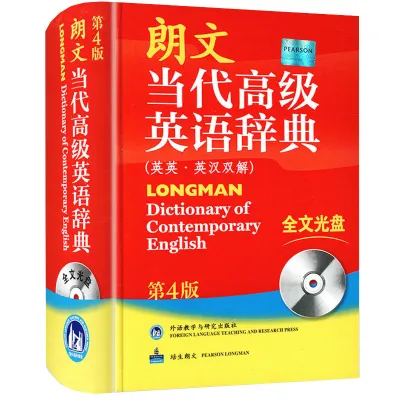
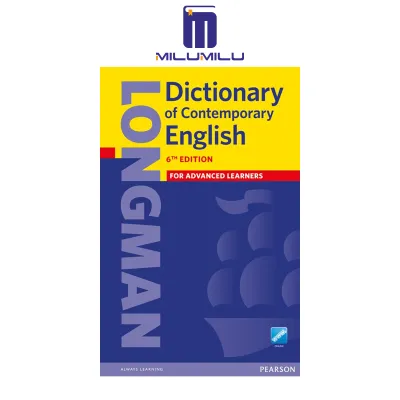
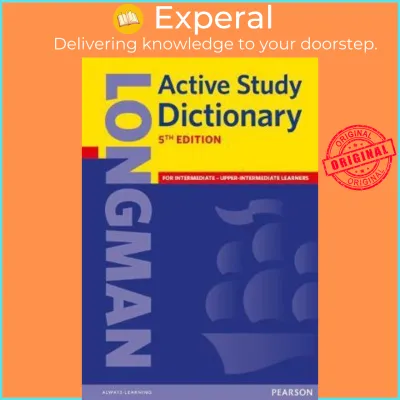
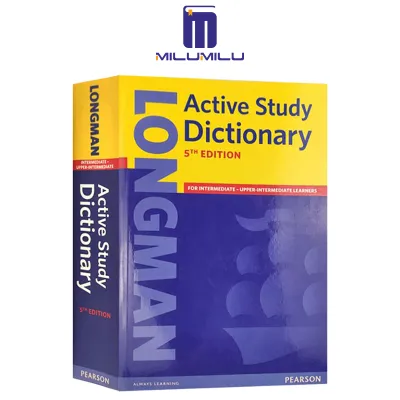
Prices are valid at publication and may change. Please refer to the product page for the latest price.
Your primary learning goals should also dictate your choice. If you are preparing for standardized examinations like the IELTS, Cambridge, or local school assessments, you will need an edition that highlights academic vocabulary and exam-taking strategies. Conversely, if your goal is to improve daily conversational fluency or professional email writing, your focus should shift toward collocations and natural phrasing rather than sheer vocabulary volume.
Finally, consider your personal study habits and how you interact with reference materials. Some learners thrive on structured vocabulary-building exercises and active study pages integrated directly into the text. Others prefer a clean, distraction-free layout designed purely for rapid lookup during intensive reading sessions. Understanding whether you need an active learning workbook or a comprehensive reference volume will narrow down your options significantly.
Breaking Down the Main Longman Dictionary Series
Longman categorizes its dictionaries systematically to support learners at every stage of their educational journey. Each series is engineered with a specific vocabulary limit and pedagogical focus, ensuring that the language used in the definitions matches the user’s comprehension level.

Longman Dictionary of Contemporary English (LDOCE)
The Longman Dictionary of Contemporary English, often abbreviated as LDOCE, is the flagship edition designed specifically for upper-intermediate to advanced learners (CEFR B2 to C2) as well as English language teachers. Its primary strength lies in its ability to explain complex, nuanced terms using a controlled defining vocabulary of just 2,000 common words. This ensures that even highly technical or literary definitions remain accessible to non-native speakers without sacrificing precision.
This edition relies heavily on the Longman Corpus Network, a vast database of real-world written and spoken English. By analyzing actual usage, the LDOCE provides authentic example sentences that demonstrate how words function in natural contexts. It also integrates extensive collocation boxes, helping users identify which words naturally pair together, and register notes that explain the difference between formal written English and informal spoken language.
For those engaged in academic research, university-level study, or professional writing, the LDOCE serves as an indispensable reference. It does not merely define words; it teaches users how to employ them accurately in essays, reports, and presentations. If your goal is to master the subtle nuances of the language and transition into near-native fluency, this comprehensive volume is the most suitable choice.
Longman Active Study Dictionary
The Longman Active Study Dictionary is specifically engineered for intermediate learners (CEFR B1 to B2) who are transitioning from basic comprehension to independent language production. At this stage, students often struggle with applying grammatical rules correctly and avoiding common translation mistakes. This edition addresses those challenges directly by incorporating active study aids alongside standard definitions.
Key features of this dictionary include targeted vocabulary-building exercises, detailed grammar notes, and explicit “common error” warnings that highlight frequent pitfalls for non-native speakers. It also features dedicated study pages focused on exam preparation, helping students familiarize themselves with the types of vocabulary and structures commonly tested in school-leaving and proficiency exams.
This edition is ideal for students who want to do more than just look up unfamiliar words. It is designed to be an active learning tool that reinforces memory retention and encourages practical application. If you are preparing for intermediate-level school exams or looking to build a robust foundation for independent communication, the Active Study Dictionary provides the perfect balance of guidance and reference.
Longman Collocations Dictionary and Thesaurus
For upper-intermediate and advanced learners who find that their English is grammatically correct but sounds unnatural, the Longman Collocations Dictionary and Thesaurus is a highly specialized solution. A common hurdle at the intermediate plateau is the reliance on direct translation from one’s native language, which often results in awkward phrasing. This dictionary solves that problem by focusing entirely on word partnerships, or collocations.
Instead of standard definitions, this volume prioritizes showing which verbs, nouns, adjectives, and adverbs naturally cluster together. For example, it helps a writer choose “commit a crime” or “perpetrate a crime” rather than the awkward “make a crime.” The integrated thesaurus further assists by grouping synonyms and explaining the precise differences in meaning and formality between them.
This tool is highly recommended for university students writing academic essays, professionals drafting business correspondence, and anyone preparing for advanced writing examinations. By focusing on natural phrasing and vocabulary variety, it helps users produce more fluent, sophisticated, and persuasive written English.
Longman Basic and Pocket Dictionaries
Beginners (CEFR A1 to A2) and casual users require a very different approach to vocabulary acquisition. The Longman Basic Dictionary is designed to prevent cognitive overload by offering highly simplified definitions, large print, and abundant illustrations. It focuses strictly on core, high-frequency vocabulary that forms the foundation of daily communication, making it an excellent starting point for young learners or adult beginners.
For those who prioritize portability and quick reference, the Longman Pocket Dictionary offers a compact physical format without the weight of a comprehensive volume. While it necessarily condenses definitions and limits example sentences, it retains the essential spelling, pronunciation, and meaning guides needed for on-the-go lookups.
These smaller editions are ideal for travel, quick classroom checks, or early-stage learners who might feel overwhelmed by the sheer volume of information in the LDOCE. They provide immediate, straightforward answers to basic vocabulary queries, allowing users to build confidence before moving on to more advanced reference works.
Print, Digital, or App: Choosing the Right Format
Once you have identified the correct edition, you must decide on the medium that best fits your lifestyle and study environment. Physical print dictionaries remain highly popular, particularly in competitive academic landscapes. A physical book offers a distraction-free study experience, completely free from social media notifications or battery dependency. Furthermore, cognitive research suggests that flipping through physical pages aids spatial memory, helping learners recall where a word was located on a page, which can reinforce vocabulary retention.
In contrast, digital versions and mobile applications offer unparalleled convenience and interactive features. Digital editions provide instant search functionality, saving valuable time during intensive reading sessions. They also feature high-quality audio pronunciations in both British and American English, which is crucial for mastering spoken English. Many apps also include interactive vocabulary quizzes, flashcards, and regular content updates that reflect evolving language trends.
Before purchasing a digital license or an app subscription, it is essential to perform a few verification steps. Check the operating system requirements on your smartphone or tablet to ensure compatibility. Additionally, verify if the digital access code bundled with a physical book has regional restrictions or an expiration date, as some online resources are only accessible within specific territories or for a limited number of years after publication.
What to Check Before Buying a Longman Dictionary
To ensure you make a sound investment, always verify the specific publication year and edition number before finalizing your purchase. Language is dynamic, and newer editions incorporate updated vocabulary, contemporary usage notes, and revised exam preparation materials. Purchasing an outdated version might mean missing out on modern terminology and updated curriculum alignments.
You must also decide between a monolingual (English-only) and a bilingual dictionary (such as English-Chinese). While bilingual dictionaries are helpful for absolute beginners, educators generally recommend transitioning to a monolingual dictionary as soon as possible to encourage thinking directly in English rather than translating.
Always confirm the International Standard Book Number (ISBN) and purchase from authorized bookstores or official publisher channels. The market contains unauthorized reprints and pirated digital copies, which often suffer from missing pages, poor print quality, or non-functional digital access codes.
When shopping, compare prices in S$ across reputable physical and online retailers. Be highly cautious of unusually low prices on open online marketplaces, as these are frequently indicators of counterfeit goods or outdated stock. Investing in a genuine copy from an authorized seller guarantees access to the complete text and any accompanying digital learning suites.
Frequently Asked Questions (FAQ)
Can I use the official Longman dictionary app without an internet connection?
Yes, most official Longman dictionary applications allow you to download the core database directly to your device for offline use. This feature is highly convenient for studying in areas with limited connectivity or saving mobile data. However, keep in mind that certain dynamic features, such as live vocabulary updates, cloud-based search history syncing, and some high-definition audio pronunciation files, may still require an active internet connection. Always review the technical specifications and storage requirements on the official app store listing before downloading.
Is the LDOCE better than the Active Study Dictionary for IELTS preparation?
The choice between the two depends heavily on your current English proficiency and target IELTS score. For intermediate learners aiming for a modest band score, the Active Study Dictionary is highly beneficial because of its targeted grammar notes, common error warnings, and structured vocabulary exercises. However, for advanced candidates aiming for higher band scores (Band 7.0 and above), the LDOCE is superior. Its extensive corpus-based examples, detailed collocation data, and register notes are essential for mastering the complex writing and speaking tasks required at advanced levels.

Community discussion
Share your experience or ask a question. Comments are reviewed before publication.