
Preparing for the Primary School Leaving Examination (PSLE) is a significant milestone for primary school students in Singapore. Among the various educational publishers available, Mavis assessment books have earned a strong reputation for aligning closely with the Ministry of Education (MOE) syllabus and offering structured, practical practice. However, walking into a bookstore and purchasing every title under the Mavis banner is rarely the most effective strategy for academic success.
An over-allocated study schedule can lead to student burnout and superficial learning, where a child rushes through pages without truly consolidating concepts. To build a highly effective PSLE preparation set, parents must adopt a targeted approach, selecting specific books that address their child’s unique learning profile. This guide provides a comprehensive breakdown of how to evaluate and select the right Mavis assessment books for English, Mathematics, and Science, ensuring every study session is purposeful and productive.
How to Match Mavis Series to Your Child's Level
Selecting the right assessment book requires an honest assessment of your child’s current academic standing and immediate learning goals. Mavis publications generally fall into three distinct categories: foundational topical guides, intensive skill-builders, and full-length preliminary mock papers. Foundational topical guides are designed to reinforce classroom learning, making them ideal for students who need to secure their basic understanding of core concepts before moving on to complex questions. Intensive skill-builders, on the other hand, isolate specific exam components—such as situational writing in English or heuristics in Mathematics—to help students bridge the gap between passing and excelling. Full-length mock papers and preliminary examination papers serve as the final stage of preparation, designed to build exam stamina and refine time-management skills under simulated test conditions.
Products mentioned in this guide
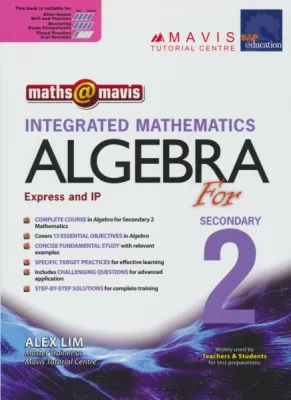
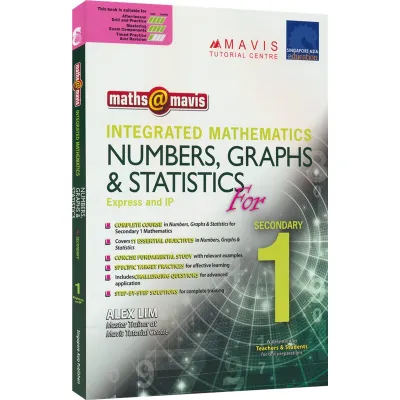
Prices are valid at publication and may change. Please refer to the product page for the latest price.
Before making a purchase, it is crucial to verify the publication year and check the publisher’s notes to ensure the content aligns perfectly with the latest MOE syllabus. Educational standards and exam formats undergo periodic updates, and using outdated materials can inadvertently expose your child to obsolete question formats or omitted topics. A quick check of the table of contents against your child’s school textbooks can confirm whether the book covers the correct scope.
Budgetary considerations also play a practical role when assembling a preparation set. While purchasing comprehensive multi-book bundles might seem cost-effective initially, buying individual, highly targeted books often yields a better return on investment. A single, well-chosen book priced around S$10 to S$20 that directly addresses a child’s weakness in fractional word problems is far more valuable than a S$50 bundle of general practice papers that repeat concepts the child has already mastered.
Finally, parents must clarify the intended use case of each book before adding it to the study desk. A book designed for daily topical practice features shorter, bite-sized exercises that can be completed in fifteen to twenty minutes after school. Conversely, a book of mock exam papers requires a dedicated, uninterrupted block of one to two hours to simulate actual exam conditions. Mixing up these use cases can lead to frustration, as attempting a complex mock paper during a brief weekday study slot can overwhelm a tired student.
Choosing Mavis Books for PSLE English Skills
The PSLE English Language paper demands a high level of proficiency across diverse components, including grammar, vocabulary, comprehension, and composition. When selecting Mavis English assessment books, parents should avoid generic “all-in-one” grammar books unless the child requires a broad, foundational review of basic parts of speech. Instead, look for targeted titles that isolate specific components where your child consistently loses marks. For instance, if your child struggles with the synthesis and transformation section of Paper 2, prioritize books that offer dedicated drills on active-to-passive voice conversion, direct-to-indirect speech, and the correct usage of complex connectors.

High-quality English assessment books are distinguished by the depth of their answer keys and explanatory notes. When browsing Mavis titles, open the answer section to verify if it provides detailed explanations for grammar MCQ options rather than just listing the correct letter. For comprehension open-ended sections, the book should ideally offer a breakdown of how to extract clues from the passage, identify the question type (such as literal, inferential, or vocabulary-in-context), and construct a grammatically precise answer.
Determining whether your child needs foundational grammar drills or advanced comprehension strategies is key to selecting the right difficulty level. A student scoring in the lower achievement levels will benefit most from systematic grammar worksheets that reinforce tense agreement, prepositions, and sentence structure. Conversely, a student aiming for top marks should bypass basic drills and focus on books that teach advanced comprehension strategies, such as identifying subtle authorial intent, interpreting figurative language, and mastering the precise vocabulary needed for contextual clues.
For Paper 1, writing frameworks are essential for helping students structure their thoughts under exam pressure. Look for Mavis composition books that provide clear, step-by-step planning templates for both continuous writing and situational writing. The ideal composition guide should not only showcase high-scoring model essays but also dissect those essays to explain why they are effective. Look for annotations that highlight excellent vocabulary choices, varied sentence structures, and logical paragraph transitions, giving your child a concrete blueprint to emulate in their own writing.
Choosing Mavis Books for PSLE Math Problem-Solving
Mathematics is a subject where the distinction between conceptual understanding and heuristic problem-solving becomes highly apparent. Mavis Math assessment books cater to both ends of this spectrum, and selecting the wrong type can lead to unproductive study hours. For students who struggle with basic calculations, formula recall, or standard word problems, look for topical practice books that offer repetitive, structured drills. These books help build computational fluency and confidence, ensuring that the student does not lose easy marks in Paper 1.
For students who have mastered the basics but struggle with the high-weightage word problems in Paper 2, the focus must shift to heuristics and higher-order thinking. Look for Mavis titles that categorize problem sums by heuristic type, such as working backwards, excess and shortage, spatial visualization, or units and parts. A good heuristics book should feature a clear, step-by-step worked example at the beginning of each chapter, demonstrating how to translate a complex word problem into a visual model or algebraic representation.
The quality of the answer key is arguably the most critical factor when choosing a Math assessment book. Parents should carefully inspect the solutions section to ensure that every problem sum is accompanied by a complete, logical progression of steps. Avoid books that present sudden jumps in calculation without explaining the underlying reasoning, as this makes it incredibly difficult for a child—or a parent trying to help—to identify where a mistake was made. The solutions should clearly show how intermediate values are derived and how they relate back to the original question.
As the examination date approaches, transitioning from topical books to full-length mock papers is essential for building exam stamina. PSLE Math Paper 2 is notorious for its tight time limit, and many students fail to perform not because they do not know how to solve the questions, but because they run out of time. Mock paper series allow students to practice pacing themselves, learning when to temporarily skip a highly challenging five-mark question to secure the marks of easier questions further down the paper.
Choosing Mavis Books for PSLE Science Concepts and OEQs
PSLE Science requires a delicate balance of conceptual knowledge and precise communication. Mavis Science assessment books are highly regarded for helping students navigate the five main themes of the primary Science syllabus: Diversity, Cycles, Systems, Interactions, and Energy. When selecting a topical guide, ensure it does not merely present lists of facts to memorize. Instead, look for books that use clear diagrams, comparison tables, and concept maps to illustrate the relationships between different scientific phenomena, such as how the respiratory system interacts with the circulatory system.
The most common hurdle for students in PSLE Science is the Open-Ended Questions (OEQs) in Section B. Many students understand the scientific concepts but fail to score full marks because they do not use the specific keywords required by the marking scheme. When evaluating Mavis Science books, prioritize those that feature dedicated OEQ practice and explicitly teach structured answering frameworks. A highly effective framework is the CER (Claim, Evidence, Reasoning) model, which guides students to state their direct answer, back it up with observable evidence from the question’s diagram or table, and explain the underlying scientific concept that links the two.
Furthermore, look for books that actively address common student misconceptions and feature comparative questions. For example, a question might ask a student to compare the rate of evaporation of water under different conditions or analyze the heat conductivity of various materials. The assessment book should clearly explain why certain common answers are incorrect or incomplete, helping the student develop a highly analytical mindset when reading exam questions.
Finally, verify that the diagrams, experimental setups, and scientific terminology used in the book reflect current syllabus standards. Science questions frequently use experimental scenarios involving data loggers, light sensors, or complex water cycle setups. The illustrations in the assessment book should be clean, accurate, and easy to interpret, ensuring that your child becomes comfortable analyzing the types of visual data they will encounter in the actual examination.
Integrating Mavis Books into a Sustainable Study Plan
Acquiring the right Mavis assessment books is only the first step; the true value lies in how these resources are integrated into your child’s weekly study routine. To prevent academic fatigue and maximize retention, parents should establish a logical sequence of study. Begin the academic year by focusing almost exclusively on topical practice books to reinforce the concepts taught in school week by week. Only when a child has demonstrated a solid grasp of these individual topics should they transition to intensive skill-builders, and eventually, to timed mock papers in the final months leading up to the PSLE.
Setting realistic daily or weekly page targets is crucial for maintaining a sustainable study momentum. Rather than demanding that a child complete an entire chapter in one sitting, break the work down into manageable segments based on their attention span and school workload. For example, completing two high-quality problem sums with deep analysis of the solutions is far more beneficial than rushing through ten pages of multiple-choice questions without reviewing the mistakes.
The answer key should be treated as an active learning tool rather than a passive grading sheet. When a child completes an exercise, do not simply mark the answers right or wrong and move on. Encourage your child to study the model answers, especially for open-ended questions in English and Science. Have them highlight the key phrases and structural elements in the model answer and compare them directly to their own written response, noting any missing keywords or logical gaps.
Lastly, parents must remain flexible and closely monitor their child for signs of academic burnout, such as persistent frustration, lack of focus, or physical fatigue. If a study plan is causing excessive stress, do not hesitate to scale back the workload. It is always better to prioritize the quality of review over the sheer quantity of books completed; mastering a single Mavis book thoroughly will always yield better results than leaving five books half-finished.
Frequently Asked Questions (FAQ)
Do I need to buy the latest edition of Mavis assessment books?
Yes, it is highly recommended to purchase the latest editions of Mavis assessment books to ensure complete alignment with the current MOE syllabus. While older editions might cover similar core topics, they often carry the risk of outdated question formats, obsolete scientific terminology, or comprehension styles that are no longer tested. For instance, changes in the English syllabus may alter the format of situational writing, while Science syllabus updates might refine the specific keywords required in open-ended answers. Before using an older edition passed down from a sibling or friend, carefully cross-reference its table of contents and question styles with the official MOE syllabus guidelines or your child’s current school materials.
How many Mavis books should my child complete for each subject?
Rather than overwhelming your child with a mountain of assessment books, aim for a highly focused selection of one to two books per subject. A balanced and effective baseline approach consists of one comprehensive topical book to use throughout the school year for steady concept reinforcement, paired with one mock paper or preliminary exam series to use closer to the exam date for timed practice. This lean approach ensures that your child has enough high-quality practice to build confidence and exam stamina without experiencing burnout. You can always adjust this plan by adding a highly targeted skill-builder if your child displays a specific, persistent weakness in a particular area, such as fractional word problems or science open-ended questions.
Community discussion
Share your experience or ask a question. Comments are reviewed before publication.