
Finding the right music score folder is a decision that directly impacts your performance flow, practice efficiency, and the preservation of your sheet music. The ideal choice depends on your specific instrument, where you practice, and how you manage page turns. A classical pianist requires a flat-laying binder that accommodates rapid page-turning, while a gigging brass player or outdoor busker needs a wind-resistant, highly portable folder. By matching your physical environment and rehearsal habits to the correct music score folder design, you can eliminate common performance distractions and focus entirely on the music.
Diagnose Your Sheet Music Pain Points and Practice Habits
Managing physical sheet music often comes with subtle frustrations that disrupt your focus. To determine what kind of folder will serve you best, start by evaluating your current practice setup and identifying where things go wrong. Ask yourself: Do loose sheets frequently slide off the music stand during rapid passages? Is your current folder too heavy or bulky for a daily commute to rehearsals or music lessons? Do bright overhead lights reflect off plastic sleeves, creating a blinding glare that makes reading the notes impossible?
Your daily environment plays a massive role in this decision. If you primarily practice at home on a sturdy piano music desk or a heavy-duty professional stand, a heavier, high-capacity binder is perfectly manageable. However, if you are an active ensemble player or a gigging musician who commutes regularly, portability and quick setup become your top priorities. A heavy folder will quickly become a burden during transit, while a flimsy one will fail to protect your scores from being crushed in a crowded gear bag.
Products mentioned in this guide
![[SG FREE ] A4 Piano Score Holder Music Book Clip Sheet Note Document Folder File Organizer](https://img.lazcdn.com/g/p/855c7f064f87c34ce48be05a2304a587.jpg_400x400q80.jpg_.webp)
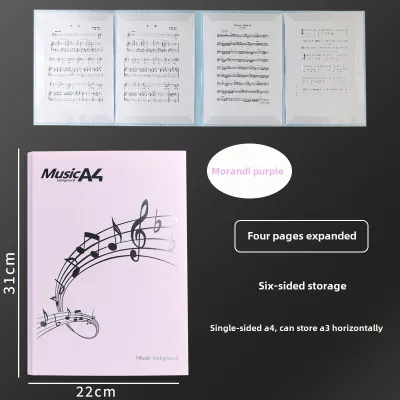
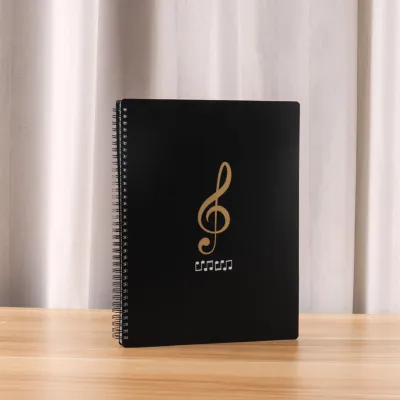

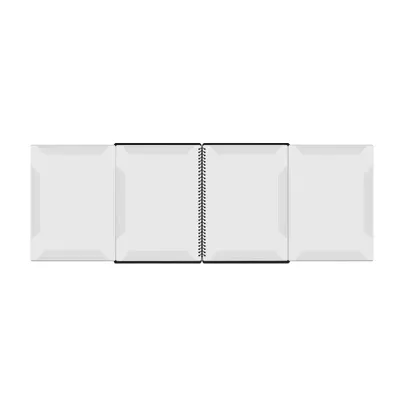
Prices are valid at publication and may change. Please refer to the product page for the latest price.
Environmental hazards present another set of challenges. Outdoor performances or open-air rehearsals expose your music to sudden gusts of wind that can blow loose sheets away or flip pages prematurely. For musicians using standard ring binders, the constant tension of turning pages quickly can cause the punched holes to tear, eventually ruining expensive or rare scores. Recognizing these specific pain points allows you to choose a folder designed to solve your exact ergonomic and environmental challenges.
Match Folder Styles to Your Instrument and Routine
The market offers several distinct folder designs, each tailored to different playing styles and musical settings. Choosing the correct style is not about finding the most expensive option, but rather selecting the one that aligns with how you interact with your sheet music during a session.

Binders and Ring Folders for Extensive Repertoires
Binders and ring folders are the traditional workhorses of sheet music organization, making them ideal for pianists, classical guitarists, and vocalists who manage large, diverse repertoires. These folders allow you to compile dozens of pieces in a single location, keeping your entire seasonal program or study curriculum organized. They offer excellent protection for loose sheets, keeping them clean, uncreased, and organized in chronological order.
The primary advantage of a ring binder is its high capacity and modularity. You can easily add, remove, or rearrange pages as your setlist changes, which is highly beneficial for church organists or choir members who cycle through different pieces weekly. Many of these binders feature multi-ring systems that distribute the weight of the paper evenly, reducing the risk of individual pages tearing at the binding edge.
However, standard ring binders have notable limitations. The central rings create a physical “bump” that can catch on your hand or the paper during fast, one-handed page turns. Furthermore, unless the binder features a specialized lay-flat spine or flexible hinge, it may resist sitting flat on a narrow wire music stand, causing the entire setup to wobble or slide off.
Portfolios and Gig Folders for Traveling Musicians
If your musical routine involves constant travel between home, school, lessons, and gigs, a slim portfolio or gig folder is often the most practical choice. These designs are highly favored by string, woodwind, and brass players who only need to carry a handful of active pieces rather than an entire library of music.
Portfolios prioritize lightweight transport and streamlined organization. They typically feature a sleek, low-profile design that slips easily into an instrument case pocket or a backpack without adding unnecessary bulk. Many premium gig folders include secure closure mechanisms, such as heavy-duty zippers, elastic bands, or magnetic snaps, which prevent loose sheets from falling out during transit. Additional exterior pockets provide convenient storage for essential accessories like pencils, tuners, cleaning cloths, or rosin.
The trade-off for this portability is a significantly lower storage capacity. Overstuffing a portfolio can strain the seams or prevent the zipper from closing, which risks damaging the corners of your sheet music. If you frequently perform long, multi-movement works or need to keep a massive archive of reference material on hand, a portfolio will likely prove too restrictive.
Stand Folders and Clipboards for Unconventional Venues
For musicians who perform in non-traditional settings where standard music stands are unavailable, impractical, or prohibited, specialized stand folders and clipboards offer a reliable solution. This category is essential for marching band members, outdoor buskers, and pit orchestra musicians working in extremely cramped quarters.
These folders are designed to function as self-contained support systems. Many feature rigid backing boards that act as a firm writing and reading surface, allowing you to read your music securely even when resting the folder on your lap, a chair, or a keyboard frame. They often incorporate heavy-duty built-in clips, elastic bands, or weighted page-holders that keep the paper firmly anchored, preventing the wind from disrupting your performance during outdoor events.
While incredibly useful for specialized scenarios, stand folders are not intended for general, high-volume practice. They typically hold only one or two open pages at a time, making them poorly suited for long, complex compositions that require continuous reading and frequent page turns. Additionally, the heavy clamping mechanisms can sometimes obscure performance markings or lyrics printed near the edges of the page.
Multi-Book and Expanding Folders for Ensemble Players
Ensemble players, such as those in community orchestras, concert bands, or large choirs, often face the challenge of managing multiple distinct pieces of music during a single rehearsal. Fumbling through a thick, disorganized binder to find the next piece on the conductor’s agenda can disrupt the flow of the rehearsal and cause unnecessary stress. Multi-book and expanding folders are specifically designed to solve this problem.
These folders feature multiple internal dividers, pockets, or independent sleeves that allow you to separate your music by piece, composer, or setlist order. This structural separation makes it easy to transition from a warm-up exercise to a major symphony piece in a matter of seconds. Some expanding designs also feature tabbed dividers, allowing you to label each section clearly for rapid identification.
The main limitation of expanding folders is their potential to become bulky and heavy when fully loaded with thick, high-weight paper. If you do not actively manage the contents and remove older, inactive pieces, the folder can quickly become difficult to carry and may exceed the depth capacity of standard music stand shelves.
Adapt Your Choice for Performances and Rehearsals
While a folder might perform perfectly during quiet practice sessions at home, the demands of live performances and formal rehearsals can introduce unexpected challenges. Selecting a folder that adapts to these professional environments is crucial for maintaining a polished, distraction-free stage presence.
Stage Lighting and Glare: Bright overhead stage lights can reflect off standard glossy plastic sleeves, creating a mirror-like glare that obscures your music. To prevent this, look for folders equipped with non-glare, matte-finish sleeves. Alternatively, many modern music folders feature “write-on” or “band-style” sleeves, which secure the paper only at the top and bottom margins, leaving the center of the page completely exposed. This design entirely eliminates glare while allowing you to make quick pencil markings directly on the paper without removing it from the sleeve.
Outdoor and Humid Environments: In highly humid climates like Singapore, paper sheet music is highly susceptible to absorbing moisture from the air, causing the pages to wilt, curl, or warp. If you perform outdoors or in open-air venues, look for folders constructed from water-resistant and humidity-resistant materials, such as treated canvas, heavy-duty nylon, or high-quality synthetic leatherette. These materials provide a protective barrier that keeps your scores dry and flat, preventing ink from bleeding or running during humid outdoor rehearsals.
Orchestral Etiquette and Aesthetics: Formal performance venues, school ensembles, and professional orchestras almost universally require musicians to use solid black folders. This standardizes the appearance of the ensemble and prevents bright colors or distracting patterns from drawing the audience’s attention away from the performance. If you plan to participate in formal concerts, choosing a plain, matte black folder ensures you comply with traditional stage etiquette.
Page-Turning Mechanics: The physical act of turning a page must be as silent and smooth as possible. In a quiet concert hall, the sound of crinkling plastic or a snapping ring binder can be highly distracting to both the audience and your fellow musicians. Test how the folder opens and ensure the binding allows the pages to turn effortlessly without sticking or resisting. The folder must lay completely flat on the stand so that you do not have to fight the binding to keep your place.
Verify Key Specifications Before You Buy
Before finalizing your purchase, it is essential to verify the physical specifications of the folder to ensure complete compatibility with your sheet music and performance gear. Taking a few moments to check these details will prevent the frustration of receiving a folder that does not fit your music or your stand.
Paper Size and Edition Compatibility: Sheet music comes in various dimensions, from standard A4 and US Letter to oversized orchestral scores. Before purchasing, verify the physical dimensions, language, and layout of your specific sheet music edition. Standard office folders are typically designed only for A4 or Letter paper and will crush or fold the edges of larger music sheets. Always measure your largest scores and compare them against the internal dimensions of the folder. If you frequently play classical repertoire, look for folders specifically labeled as accommodating “orchestral” or “music-sized” paper.
Binding and Ring Mechanism: If you choose a ring-based binder, pay close attention to the shape of the rings. D-rings are highly superior to traditional round O-rings because they allow the pages to stack flat against the straight edge of the ring, reducing wear on the paper and ensuring a smoother page turn. Additionally, verify that the ring mechanism opens and closes smoothly without gaps, as any misalignment will catch and tear the paper during use.
Weight When Loaded: The empty weight of a folder can be deceptive. A premium, heavy-duty leather or thick hard-shell folder might feel substantial and durable on its own, but once loaded with dozens of pages of heavy-weight sheet music, it can become uncomfortably heavy. Consider how much weight you are willing to carry, especially if you must hold the folder open with one hand during choral performances or while standing.
Sleeve Top-Loading vs. Side-Loading: Consider how you prefer to insert your music. Top-loading sleeves are the most common and make it simple to drop pages in from the top, but there is a slight risk of pages sliding out if the folder is accidentally held upside down. Side-loading sleeves offer superior security because the opening faces the spine, making it virtually impossible for pages to fall out during transit, though they can be slightly more tedious to load initially.
Frequently Asked Questions (FAQ)
Can I use a standard office binder for my sheet music?
While a standard office binder can work in a temporary pinch, it is generally poorly suited for regular musical use. Office binders typically lack the specialized lay-flat bindings required to sit securely on narrow music stands, and their cheap, glossy plastic sleeves create significant glare under performance lighting. Furthermore, they are rarely sized to accommodate oversized orchestral sheet music without folding the edges.
How do I keep my music score folder from slipping off a narrow stand?
To prevent your folder from slipping off a narrow or slick music stand, look for designs that feature a built-in stand-clip, a weighted bottom edge, or a textured, non-slip backing material. If your current folder lacks these features, you can easily secure it by placing a small, low-profile binder clip on the bottom lip of the stand, or by using a specialized elastic stand strap to hold the folder firmly against the backing plate.
Community discussion
Share your experience or ask a question. Comments are reviewed before publication.