
The type of music stand holder you need depends entirely on your primary reading medium—whether you use physical paper scores, a digital tablet, or a smartphone for auxiliary tools like tuners and metronomes. For paper, you need physical clips or page expanders; for tablets, a secure, adjustable clamp mount; and for phones, a compact, vibration-resistant bracket. Matching the holder to your specific media format ensures stability, prevents accidental drops, and keeps your hands free to play your instrument.
Assess Your Display Needs: Paper, Tablet, or Phone?
Before purchasing any accessory, evaluate the materials you use during a typical practice session or performance. If your repertoire consists of loose-leaf sheets, heavy bound anthologies, or standard folders, your primary challenge is keeping physical pages open and flat. Physical paper requires mechanical tension or a wide supporting surface to prevent pages from flipping back on their own.
Conversely, if you have transitioned to a digital workflow, your needs shift toward device security, viewing angles, and screen accessibility. Digital tablets require robust clamps that hold the device firmly without blocking the screen or pressing physical buttons. The size of your screen and the presence of a protective case will dictate the exact dimensions of the holder you require.
Products mentioned in this guide
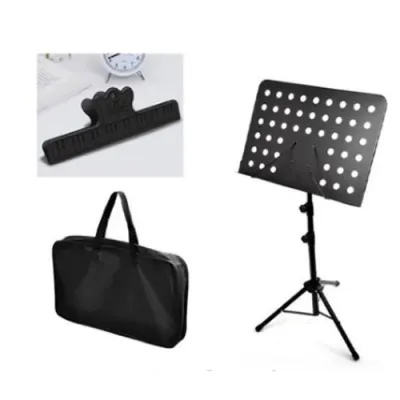
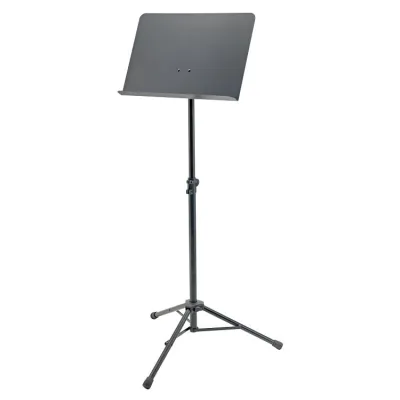
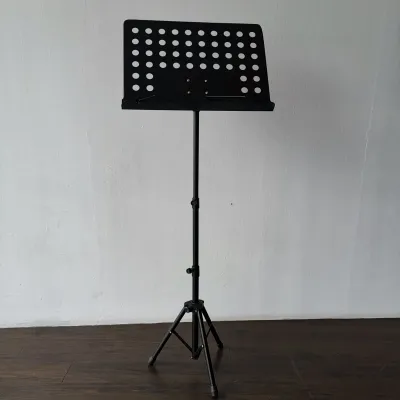
Prices are valid at publication and may change. Please refer to the product page for the latest price.
Your practice environment and workflow also play critical roles. Musicians performing outdoors or in drafty spaces must prioritize wind resistance, which physical clips or heavy-duty bands provide. If you frequently use auxiliary tools like digital tuners or metronomes on your phone, you may need a secondary mount that keeps these tools visible without cluttering your main reading area. Additionally, consider how often you need to interact with your display; a classical pianist requires seamless page-turning access, whereas a gigging guitarist using a tablet might prioritize a quick-release mount for rapid pack-up between sets.
Traditional Clips and Trays for Paper Sheet Music
Traditional paper sheet music demands physical restraint to stay open, especially when dealing with new books with stiff bindings or loose sheets prone to sliding. For these materials, standard sheet music clips, page holders, or auxiliary tray extenders are the most reliable solutions. These accessories work by applying direct pressure to the margins of your music, keeping the pages flat against the stand’s desk.

When evaluating physical clips, pay close attention to the clamp mechanism, spring tension, and your stand’s lip depth. A clip with too much tension can tear delicate paper or leave permanent indentations on expensive scores, while weak springs will fail to hold thick books open. Look for clips with smooth, rounded contact points or rubberized tips that protect the paper. If you regularly play from thick songbooks, a standard wire stand or shallow wooden desk may not offer enough depth to support the book’s spine; in such cases, a clip-on tray extender or a set of long, flexible page anchors can artificially deepen your stand’s ledge, preventing the book from tumbling forward.
For complex pieces requiring rapid page turns, a dual-clip setup or a single wide, transparent acrylic page holder is often necessary. Transparent holders allow you to read the entire page without obstruction, though they require you to lift the unit to turn the page. Alternatively, individual spring-loaded clips placed at the outer edges of the stand allow you to slide pages out quickly with one hand.
Tablet Holders for Digital Scores and Practice Apps
Digital tablets have revolutionized how musicians store and read music, but they require specialized mounting hardware to ensure your device remains secure. A dedicated tablet holder attaches directly to your music stand’s pole or desk, positioning the screen at the perfect eye level. Unlike paper, a tablet represents a concentrated weight, making stability and clamp security your primary concerns.
Before choosing a tablet holder, measure the physical dimensions of your device, including any protective case you use. Many manufacturers list compatibility by screen size, but the actual thickness and overall width of the case are what determine if the holder’s jaws can grip the device safely. Ensure the clamp’s maximum jaw opening and depth specifications accommodate your fully encased tablet.
Adjustability and portability are also essential features for digital readers. Look for holders featuring a ball-joint connection or a multi-angle tilt mechanism, which allows you to switch between portrait and landscape modes easily to eliminate glare from overhead stage lights. Secure locking collars or screw-tightened clamps are preferable to simple spring-loaded grips, as they prevent the device from slipping over time. If you frequently transition between home practice, rehearsals, and live gigs, consider a holder with a quick-release mechanism that allows you to detach the tablet cradle from the mounting bracket in seconds, leaving the main clamp attached to the stand.
Phone Mounts for Tuners, Metronomes, and Quick Reference
Smartphones are indispensable tools in modern music practice, serving as metronomes, tuners, audio recorders, and quick reference screens. However, balancing a phone on the narrow ledge of a music stand alongside your sheet music is risky and limits visibility. A dedicated phone mount solves this problem by securing your device to the stand’s vertical pole or the edge of the desk, keeping your main reading area completely clear.
When selecting a phone mount, verify that the bracket design does not obstruct essential parts of your device. The mounting arms should not block the screen, cover the camera lens if you record your sessions, or press down on the side volume and power buttons. Look for mounts with offset grips or adjustable bottom feet that leave charging ports accessible, allowing you to keep your phone powered during long rehearsals.
Vibration dampening and security are crucial considerations, particularly for brass, woodwind, or percussion players whose instruments produce significant acoustic energy. Vibrations traveling up a lightweight music stand can cause a poorly mounted phone to rattle or slowly slip out of its bracket. Mounts with rubberized interior linings and screw-tightened clamps help absorb these micro-vibrations, keeping your tuner app stable and readable. For musicians who perform in high-traffic environments, a clamp with a manual locking screw or a secondary safety strap offers peace of mind on stage, ensuring that accidental bumps from passing bandmates will not send your phone crashing to the floor.
Check Stand Compatibility and Mounting Limits
Even the most advanced holder is useless if it cannot attach securely to your existing music stand. Before making a purchase, examine the construction of your stand to identify where and how a holder can be mounted. Heavy-duty orchestral stands with solid steel shafts offer different mounting options compared to lightweight, folding wire stands.
Start by measuring the diameter of your stand’s central pole and the thickness of its desk or lip. Most pole-mount holders specify a range of compatible tube diameters. If your stand has a square or triangular shaft rather than a round one, ensure the holder’s clamp is designed to grip non-cylindrical surfaces securely without slipping or damaging the metal finish.
Weight distribution and physical clearance are critical safety factors, especially when using lightweight folding stands. Attaching a heavy tablet and a robust mounting bracket to the top of a thin wire stand can make the entire setup top-heavy and prone to tipping over. If you use a portable wire stand, opt for lightweight, compact holders, and position them as low on the central shaft as possible to maintain a stable center of gravity. Additionally, check for potential physical conflicts with your stand’s adjustment mechanisms; a poorly positioned clamp can block the tension knobs used to adjust the stand’s height or desk angle, forcing you to remove the holder whenever you need to reposition your music.
Frequently Asked Questions (FAQ)
Can I use a tablet holder for a heavy music book?
No, you should not use a tablet holder to secure a heavy music book. Tablet holders are engineered specifically for flat, rigid digital devices and rely on edge-clamping pressure to hold them in place. Attempting to force a thick, flexible book into a tablet clamp can damage the holder’s spring mechanism, warp the book’s spine, or cause the book to slip out entirely during a performance. For heavy bound scores, use a dedicated sheet music tray extender or heavy-duty page clips designed to work with your stand’s existing desk. Always check the manufacturer’s specified weight limits for both your stand and any attached accessories to ensure safe operation.
How do I keep paper pages from turning in the wind?
To keep paper pages from turning in windy or drafty environments, you can use specialized outdoor music accessories. Heavy-duty wind clips made of clear acrylic are highly effective because they hold the pages flat across the entire width of the stand without blocking your view of the notes. Alternatively, magnetic page holders work exceptionally well on solid steel music stands, pinning loose sheets firmly to the desk. For a highly portable solution, placing your sheet music inside clear plastic sheet protectors within a heavy binder adds weight and wind resistance, preventing individual pages from fluttering.
Community discussion
Share your experience or ask a question. Comments are reviewed before publication.