
Selecting the right Oxford English Dictionary edition requires matching your current language proficiency with the dictionary’s design purpose. Beginners and intermediate learners benefit most from learner-focused editions that use simplified defining vocabularies and highlight grammar patterns. Advanced users, native speakers, and professionals requiring quick spelling or definition checks are better served by concise or pocket editions. For deep academic research, historical linguistics, or professional writing, the comprehensive, unabridged editions provide the necessary etymological depth and historical citations.
Assessing Your English Proficiency and Daily Needs
To narrow down your choices, you must first evaluate your current language level and identify your primary use cases. English proficiency is generally categorized into beginner, intermediate, advanced, and professional stages. Each stage demands a different level of detail and a different style of explanation from a dictionary. Beginners need simple, direct definitions that avoid complex jargon, while advanced users require precise nuances, synonyms, and stylistic guidance.
Your daily activities will dictate whether you need a dictionary for academic study, professional writing, casual reading, or translation. If you are preparing for standardized English exams, your focus should be on mastering collocations, prepositions, and common sentence structures. If you are an editor, translator, or creative writer, you will need to verify rare words, historical meanings, and subtle distinctions between closely related terms.
Products mentioned in this guide
Prices are valid at publication and may change. Please refer to the product page for the latest price.
For bilingual speakers or those transitioning from another primary language, the dictionary must also serve as a cultural bridge. Many English words carry cultural connotations or idiomatic usages that are not obvious from a literal translation. A dictionary that includes cultural notes, usage warnings, and stylistic labels helps prevent embarrassing missteps in professional or academic writing.
The frequency and context of your dictionary use also play a major role in determining the best format. A heavy, multi-volume desk reference is highly impractical if you study on the move, commute daily on public transport, or prefer working in local libraries and cafes. For on-the-go reference, a portable pocket edition or a digital application is far more suitable. Conversely, if you have a dedicated study space at home or in an office, a comprehensive print volume offers a tactile, distraction-free environment that supports deep concentration.
Matching Oxford Editions to Your Learning Stage
Oxford dictionaries are structured systematically to serve distinct developmental stages and practical requirements. The publisher categorizes these reference books into three primary tiers: Learner’s, Concise/Pocket, and Advanced/Unabridged. Selecting the correct tier requires balancing three competing factors: the complexity of the definitions, the total number of words included, and the physical or digital footprint of the medium.

Oxford Learner's Dictionaries (Beginner to Intermediate)
Oxford learner’s dictionaries are engineered specifically for non-native speakers and students building foundational fluency. Unlike standard dictionaries designed for native speakers, these editions use a restricted defining vocabulary, typically limited to a list of 3,000 to 5,000 common words, to explain all entries. This design prevents the frustrating loop where a reader looks up an unfamiliar word only to find the definition contains several other words they do not understand.
A key feature of these learner-focused editions is their heavy emphasis on active language production rather than passive comprehension. They provide extensive details on grammar patterns, common collocations, and register labels that indicate whether a word is formal, informal, or literary. By showing exactly how words function in sentences, these dictionaries help students avoid common grammatical errors and build confidence in writing and speaking.
Many learner’s editions incorporate specialized vocabulary lists, such as the Oxford 3000 or Oxford 5000. These curated lists identify the most core, high-frequency words in the English language that every learner should prioritize. By focusing study efforts on these essential terms, students can maximize their learning efficiency and quickly achieve functional literacy.
When selecting a learner’s edition, it is highly beneficial to check for accompanying digital resources and multimedia tools. Many modern print copies include access codes for online learning platforms or mobile applications. These digital companions often feature high-quality audio pronunciations in multiple regional accents, interactive vocabulary exercises, and visual aids that support active learning and retention.
Oxford Concise and Pocket Dictionaries (Intermediate to Advanced)
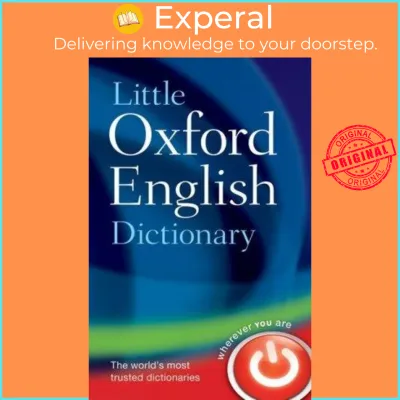
The Concise Oxford English Dictionary and the Pocket Oxford English Dictionary serve as practical, everyday reference tools for fluent speakers. The primary distinction between these two formats lies in their physical size and the depth of their vocabulary coverage. The Concise edition is designed as a robust desk reference, while the Pocket edition is scaled down to fit easily into a bag or briefcase for quick consultations.
To achieve portability, pocket editions must make clear trade-offs in content and design. They utilize smaller fonts, thinner paper, and streamlined entries that omit rare words, highly technical jargon, and detailed etymological histories. The definitions are kept brief, direct, and focused on contemporary meanings, making them ideal for rapid spelling and definition checks during daily tasks.
In warm, humid climates like Singapore, the physical construction of a print dictionary is a critical factor in its longevity. Paperback editions with cheap glue bindings can deteriorate quickly, leading to loose pages over time. Opting for a flexicover or a high-quality hardcover with sewn binding ensures the book can withstand daily use and environmental humidity without falling apart.
These editions are highly recommended for native speakers, advanced bilingual learners, and busy professionals who do not require extensive linguistic research. If your primary goal is to quickly verify a spelling, check a definition during a meeting, or find a quick synonym while drafting a report, these streamlined editions offer the perfect balance of speed and coverage without the physical bulk of academic volumes.
Oxford Advanced and Unabridged Editions (Professionals and Academics)
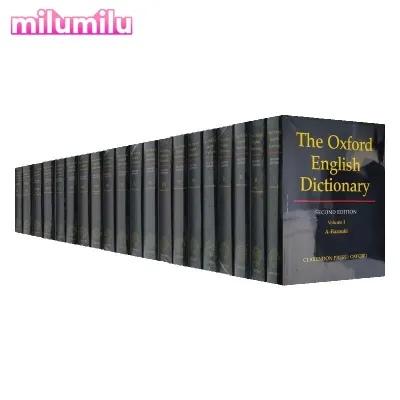
At the pinnacle of lexicography stand the advanced and unabridged editions, most notably the multi-volume Oxford English Dictionary (OED) and the Shorter Oxford English Dictionary. These works are not designed for quick spelling checks or basic vocabulary building; they serve as comprehensive historical records of the English language. They are the standard reference tools for writers, researchers, translators, and literature students who require deep linguistic insights.
The defining characteristic of these unabridged editions is their historical approach to lexicography. Instead of merely listing current meanings, they trace the development of every word from its first recorded usage to the present day, using chronological citation examples from literature, historical documents, and media. They provide exhaustive etymological histories, detailing how words migrated across languages and changed pronunciation over centuries.
Before investing in these advanced editions, you must carefully consider their physical and financial footprint. Multi-volume print sets require significant shelf space and represent a substantial financial commitment, often costing hundreds of dollars (S$). For most modern researchers, a digital subscription to the online database is far more practical than housing a massive physical collection, though bibliophiles and dedicated institutions still prize the print volumes for their permanent, tangible value.
Essential Checks Before You Buy
Before finalizing your purchase of an Oxford dictionary, you must perform several critical checks to ensure the edition matches your specific goals. First, verify the language variant and regional focus of the book. Oxford publishes editions tailored to British English, which is standard in Singapore’s education system and civil service, as well as American English. Ensure the spelling conventions, pronunciation guides, and regional idioms align with your curriculum or professional environment.
Second, examine the publication date and edition number. Language evolves rapidly, with new technological, social, and scientific terms entering the lexicon every year. An outdated edition might lack essential modern vocabulary or contain obsolete definitions. Check the copyright page or product specifications to confirm you are purchasing the most recent revision.
Third, if you are opting for a digital, app-based, or e-book version, verify device compatibility and technical requirements. Some dictionary apps require specific operating system versions or constant internet connectivity to access audio pronunciations and advanced search features. Ensure the software supports offline access if you plan to study in areas with spotty network coverage.
When shopping on online marketplaces, be vigilant against unauthorized reprints or counterfeit editions. These low-quality copies often suffer from missing pages, blurry printing, and incorrect indexing, which can severely disrupt your study. Always purchase from reputable bookstores, official brand storefronts, or authorized educational distributors to guarantee you receive a genuine, complete text.
Finally, if you are purchasing a heavy print volume from an online marketplace, pay close attention to the physical specifications, binding quality, and return policy. Large dictionaries are heavy and can easily sustain damage during shipping if not packaged correctly. Opt for hardcover bindings for desk references to ensure durability, and verify that the seller offers a reliable return or exchange policy in case the book arrives with bent pages or a damaged spine.
Frequently Asked Questions (FAQ)
Is the Oxford English Dictionary (OED) the same as the Oxford Advanced Learner's Dictionary?
No, they are entirely different publications designed for different audiences. The Oxford English Dictionary (OED) is a historical dictionary that records the history and evolution of the English language, making it ideal for academic research and etymological study. In contrast, the Oxford Advanced Learner’s Dictionary is designed specifically for non-native speakers, focusing on current vocabulary, clear definitions, grammar patterns, and practical usage guides to aid language acquisition.
Should I buy a physical dictionary or use the digital version?
The choice depends on your study habits and environment. Physical dictionaries offer tactile benefits, reduce screen fatigue, and help build spatial memory, making them excellent for focused, distraction-free study sessions at home or in a library. Digital versions and mobile apps, on the other hand, provide rapid search capabilities, instant audio pronunciations, regular updates, and unmatched portability, making them highly convenient for on-the-go reference and quick lookups during daily tasks.

Community discussion
Share your experience or ask a question. Comments are reviewed before publication.