
Choosing the right Seiko metronome requires evaluating your instrument’s acoustic volume, your practice environment, and your specific learning goals. Seiko offers a wide range of timing devices, from traditional mechanical pendulums to highly precise digital quartz units. The right choice depends on how you interact with the beat—whether you rely on visual cues, high-volume audio clicks, or silent physical vibrations. By understanding how different form factors and technical specifications align with your musical routine, you can select a reliable tool that actively improves your rhythm and timing.
How to Match a Seiko Metronome to Your Instrument and Space
Your primary instrument plays a massive role in determining the type of metronome you need. Acoustic instruments like pianos, violins, or brass horns produce high sound pressure levels that can easily drown out a weak metronome click. For these instruments, a loud mechanical click or a digital metronome with an adjustable volume dial and a physical speaker is essential. Conversely, digital instruments like electronic keyboards or silent violins often allow you to practice with headphones, meaning a metronome with a dedicated headphone jack is highly beneficial so you can hear both your instrument and the click simultaneously.
Visual cues are another critical factor to consider when matching a metronome to your instrument. The physical pendulum of a mechanical metronome provides a continuous visual sweep, allowing you to anticipate the beat before it actually sounds. This is highly valuable for orchestral instruments and piano players who need to time their physical movements, such as arm drops or bow strokes, in sync with the tempo. Digital models often use flashing LEDs, which provide a binary on/off cue rather than a continuous sweep, though some advanced digital screens attempt to simulate a moving pendulum.
Products mentioned in this guide
Prices are valid at publication and may change. Please refer to the product page for the latest price.
Room noise and acoustics also dictate your metronome requirements. A small, carpeted bedroom absorbs sound differently than a tiled living room or a dedicated studio space in Singapore. In highly reflective rooms, a sharp, high-pitched digital beep can become piercing and fatiguing over long sessions. A mechanical metronome’s wooden or plastic casing produces a warmer, wood-block-like click that is often easier on the ears in live acoustic spaces. If you practice in a noisy environment or a shared household, look for a model with a 3.5mm headphone jack to keep your practice private and focused.
Portability is the final spatial consideration. If your metronome stays permanently on top of an upright piano, a heavier, stable mechanical model is ideal. However, if you are a student commuting to music lessons, a gigging musician traveling between venues, or an orchestral player moving between rehearsal rooms, a compact digital clip-on or pocket-sized metronome is far more practical. These smaller units slip easily into an instrument case pocket, ensuring you always have a reliable tempo reference wherever you go.
Seiko Metronome Form Factors and Their Ideal Use Cases
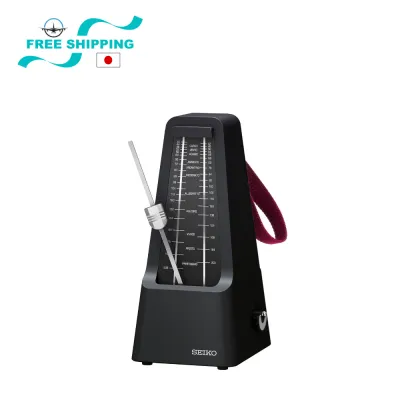
Mechanical wind-up models are the classic choice for traditional practice spaces. These pyramid-style or rectangular units rely on a spring-wound mechanism and a physical pendulum with a sliding weight. Because they require no batteries, they are highly reliable and environmentally friendly. The mechanical click is naturally synchronized with the physical swing of the arm, providing intuitive visual feedback. These models are best suited for stationary home practice, particularly for pianists and classical instrumentalists who appreciate the traditional aesthetic and the organic sound of a physical wood-block strike.

Digital desktop models utilize quartz crystal oscillators for highly precise timekeeping. These units typically feature an LCD screen, adjustable volume controls, and a variety of synthetic tones, such as electronic beeps, simulated wood-blocks, or human voice counts. Digital desktop models are incredibly versatile, offering wide tempo ranges and the ability to program complex rhythm subdivisions, such as triplets, quadruplets, and syncopated patterns. They are ideal for contemporary musicians, percussionists, and advanced students tackling complex modern repertoire that demands absolute precision.
Clip-on metronomes are highly compact, specialized devices designed for maximum portability and direct physical feedback. These models can attach directly to a music stand, an instrument peghead, or even a shirt collar, delivering the click close to your ear. Some clip-on models even feature vibration modes, allowing you to feel the beat physically against your instrument or body rather than hearing it. This is incredibly useful for loud rehearsal environments or for musicians who find audible clicks distracting during intense focus sessions.
Tuner-metronome combos combine two essential tools into a single pocket-sized chassis. These devices allow brass, woodwind, and string players to check their pitch and their timing simultaneously. By integrating a digital tuner with a fully functional metronome, these combos reduce the amount of gear you need to carry in your instrument case. They are the ultimate utility tools for school band members, orchestral players, and traveling musicians who need to streamline their daily warm-up and practice routines.
Essential Specifications to Verify Before You Buy
Before purchasing a Seiko metronome, check the manufacturer’s specifications for the exact tempo range. While most standard repertoire falls between 40 and 208 beats per minute (BPM), some modern compositions or slow-tempo practice techniques require tempos as low as 30 BPM or as high as 250 BPM. Ensure the model you choose supports these extremes. Additionally, verify the beat settings, which often range from 0 to 9 beats per measure, to ensure the metronome can accent the downbeat of your specific time signatures, whether you are playing a standard 4/4 march or an irregular 7/8 meter.
If you are practicing jazz, progressive rock, or complex classical pieces, a simple quarter-note click may not be sufficient. Look for a digital Seiko model that offers explicit rhythm subdivisions, such as eighth notes, triplets, sixteenth notes, and dotted rhythms. Some advanced models allow you to mute or accent specific subdivisions, which is invaluable for mastering polyrhythms and syncopated sync-pulses. Verify these programming capabilities on the product packaging or user manual before making your final decision.
Always verify the physical connections, power requirements, and budget considerations. For digital models, check if they use standard AAA batteries, coin cells, or rechargeable internal batteries. Standard AAA batteries are generally easier to replace on the go, while coin cells allow for a slimmer device profile. If you plan to use headphones, confirm the jack size, which is typically 3.5mm. While basic digital models can often be found for under S$40, advanced multi-functional units or premium wooden mechanical models may require a larger investment. Ensure you purchase from an authorized source to guarantee product authenticity and warranty coverage.
Integrating Your Metronome into Daily Practice
To get the most out of your metronome, place it where you can easily see and hear it without straining your posture. For pianists, this usually means placing it on the piano’s music shelf or top lid, slightly to one side of your sheet music. For string and wind players, position the metronome at eye level on a nearby music stand or table. Ensure the visual indicator, whether a swinging pendulum or a flashing LED, is within your peripheral vision so you can maintain steady timing without constantly turning your head away from your music score.
A common mistake is using the metronome as a constant crutch, which can hinder the development of your internal rhythm. Start your practice sessions by setting the metronome to a simple quarter-note pulse at a slow, manageable tempo. Focus on aligning your notes precisely with the click. Once you have mastered the basic pulse, introduce subdivisions to refine your micro-timing. To build a strong internal clock, practice playing along with the metronome for a few measures, then mute the volume or use a silent flashing mode for a measure or two to see if you can maintain the tempo independently before the sound returns.
Proper care ensures your Seiko metronome remains a reliable practice partner for years. For mechanical models, always wind the spring gently and stop when you feel resistance; over-winding can damage the internal mainspring. When not in use, slide the pendulum weight to the top of the shaft and secure it with the physical hook or cover to prevent the delicate pivot mechanism from bending during storage or transport. For digital models, always remove the batteries if you plan to store the device unused for several months to prevent corrosive battery leaks from damaging the internal circuitry. Keep both types away from extreme heat, direct sunlight, and high humidity to protect their internal components.
Frequently Asked Questions (FAQ)
Do I need a mechanical or digital Seiko metronome for classical training?
Both types have distinct advantages for classical training, and the choice depends on your learning style. Mechanical models are highly favored by classical teachers because the physical pendulum sweep helps students visualize the space between beats, which is crucial for developing a natural sense of rubato and phrasing. However, digital models offer unmatched precision, a wider range of subdivisions, and silent visual modes that are highly practical for quiet practice. If you prioritize traditional visual feedback and a warm acoustic click, choose a mechanical model; if you need portability and advanced rhythm programming, a digital model is superior.
Can I connect a Seiko digital metronome to my audio interface or amplifier?
Yes, you can connect many digital Seiko metronomes to external audio gear if they feature a standard 3.5mm headphone output. You can route this output to an audio interface, mixing board, or amplifier using a standard auxiliary cable or a 3.5mm-to-1/4-inch adapter. Before doing so, always turn the metronome’s volume dial to its lowest setting to prevent sending an excessively hot signal that could clip your audio interface or damage your speakers. Gradually increase the volume to find a clean, audible level that blends well with your instrument’s amplified sound.
Community discussion
Share your experience or ask a question. Comments are reviewed before publication.