
Choosing the right translation of Marcus Aurelius’s Meditations depends on whether you seek a modern, direct guide for daily self-improvement or a precise, scholarly text for historical study. Because the Roman Emperor wrote these personal journals in Koine Greek without intending them for publication, translators must choose between preserving his raw, fragmented syntax and rendering his thoughts into smooth, contemporary English. Selecting the edition that aligns with your reading habits ensures you can fully absorb and apply these timeless Stoic principles.
Define Your Reading Goals and Translation Preferences
Before selecting an edition, clarify what you hope to gain from reading Meditations. If your primary goal is daily self-improvement and practical Stoic practice, you will likely benefit from a translation that prioritizes clear, conversational language. A modern rendering allows you to absorb the core concepts quickly during a morning routine or a brief commute without getting bogged down by archaic sentence structures.
Conversely, if you are reading for academic, historical, or deep philosophical study, your priorities will shift toward literal accuracy and contextual depth. In this case, you should look for translations that stay closer to the original Greek syntax and vocabulary, even if the resulting English feels more formal or demanding. These editions often preserve the specific philosophical terminology that Marcus Aurelius used, which is essential for comparing his ideas with other Stoic writers.
Products mentioned in this guide
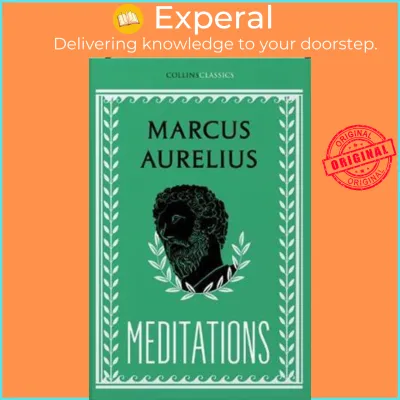
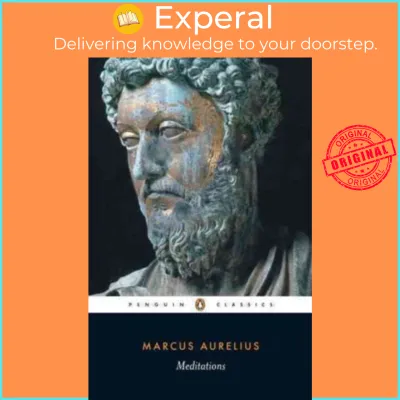
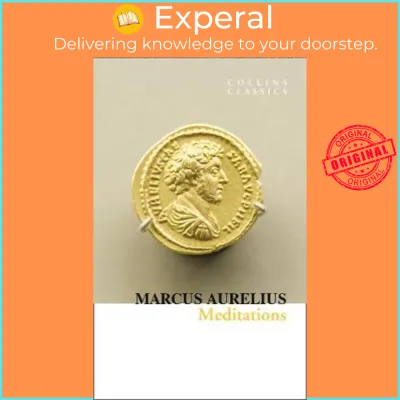
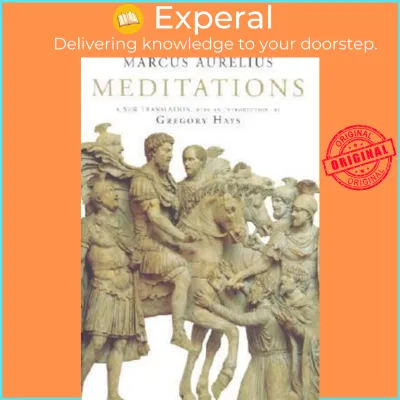
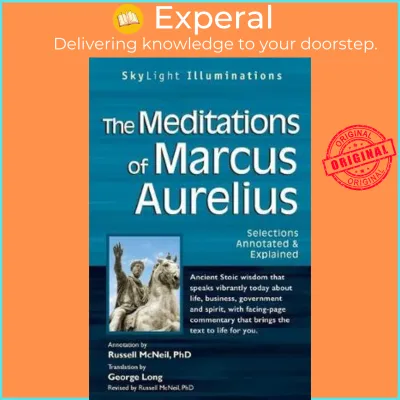


Prices are valid at publication and may change. Please refer to the product page for the latest price.
You should also consider how much supplementary material you need to fully appreciate the text. A standalone translation of the journal entries might suffice for casual reading, but many readers find that historical introductions, detailed footnotes, and glossaries of Stoic terms are invaluable. These resources explain the political challenges Marcus Aurelius faced and clarify the specific philosophical definitions of concepts like nature, reason, and the soul.
Finally, reflect on your preferred reading pace and environment. If you intend to read the book slowly, digesting one short passage each day, a denser or more poetic translation might offer a rewarding challenge that forces you to pause and contemplate. If you prefer to read entire books in a few sittings to grasp the overall themes, a smooth and modern translation will provide a much more fluid and enjoyable experience.
Comparing Popular English Translations of Meditations
Translators approach the original Koine Greek of Meditations with different philosophies, resulting in vastly different reading experiences. Some focus on capturing the raw, urgent, and sometimes blunt tone of a military commander writing to himself in the middle of the night. Others aim to elevate the text into elegant, formal English prose that reflects the dignity of a Roman emperor.

When comparing editions, look at how they handle the trade-offs between literal accuracy and modern readability. A highly literal translation preserves the exact structure of the original sentences but can feel disjointed or confusing to a modern reader. A highly readable translation flows naturally but may occasionally interpret or simplify complex philosophical concepts to make them accessible.
For instance, the Greek term hegemonikon is translated variously as the “ruling center,” “directive faculty,” or “inner self.” How a translator chooses to render these technical Stoic terms heavily influences how you perceive Marcus Aurelius’s psychological framework. A modern translator might use “mind” or “reason” to keep the text accessible, while a scholarly translator will often retain a more precise, literal equivalent and explain the nuance in a footnote.
Gregory Hays (Modern and Accessible)
The translation by Gregory Hays is widely recognized for its direct, contemporary language that makes Marcus Aurelius’s thoughts feel remarkably modern. Hays strips away the formal, Victorian phrasing that characterized older translations, presenting the Stoic reflections in sharp, punchy, and accessible English. This approach captures the urgent, personal nature of a private journal, making it highly effective for daily reflection.
Hays’s translation is particularly famous for rendering complex philosophical ideas into simple, memorable aphorisms. For example, where older translations might use elaborate clauses to describe the nature of human cooperation, Hays writes with a directness that feels like a modern self-help guide. This makes his version highly quotable and easy to memorize, which aligns perfectly with the Stoic practice of keeping core dogmas close at hand.
For readers focused on practical self-improvement and modern Stoicism, this edition offers immediate comprehension without the need for constant referencing. However, the trade-off is that some of the precise philosophical nuances of the original Greek may be simplified for the sake of flow. It remains an excellent entry point for beginners and those who want a highly readable, engaging text to carry with them.
George Long (Classical and Literal)
For those who prefer a traditional, historically significant tone, the 19th-century translation by George Long offers a classical reading experience. Long’s translation uses formal Victorian prose, which gives the text a solemn, almost biblical weight that many readers associate with ancient philosophy. This style can make the emperor’s reflections feel grand and poetic, preserving a sense of historical distance.
The primary challenge of the Long translation is its steep learning curve, as the dense sentence structures and archaic vocabulary require careful, slow reading. It is highly valued by readers who enjoy classical phrasing and those interested in how the Victorian era received and interpreted Stoic thought. However, casual readers may find the formal language a barrier to quick, practical application in daily life.
Despite its challenges, Long’s translation remains a popular choice for those who appreciate the historical connection to early modern Stoic revivals. Because it is in the public domain, you will often find this translation in beautifully bound, budget-friendly classic editions or free digital archives. If you choose this version, it is helpful to read it alongside a glossary of Victorian terms to ensure you do not misinterpret the archaic vocabulary.
Martin Hammond (Balanced and Scholarly)
The translation by Martin Hammond strikes a deliberate balance between academic precision and clear, modern English. Hammond avoids both the archaic phrasing of older translations and the highly simplified language of some modern editions, offering a text that is both readable and faithful to the original Greek syntax. This makes it an excellent choice for readers who want to understand exactly what Marcus Aurelius wrote without struggling through Victorian English.
A key strength of this edition is its extensive scholarly support, which typically includes a detailed introduction and comprehensive notes on the text. These annotations explain historical references, clarify philosophical terms, and provide crucial context for the emperor’s personal struggles. It is the ideal edition for readers who want to engage in a deeper, more structured study of Stoic philosophy.
Hammond’s work is highly regarded for its syntactic accuracy, preserving the structure of Marcus’s arguments without sacrificing clarity. He manages to convey the emperor’s distinct voice—which ranges from poetic contemplation to blunt self-admonishment—without over-simplifying the philosophical concepts. This makes it a highly reliable text for anyone who wants to transition from casual reading to a more serious engagement with Stoic philosophy.
Key Edition Features to Verify Before Purchase
When selecting a copy of Meditations, the translation itself is only part of the decision; you must also verify the physical and structural features of the specific edition. First, check the quality and depth of the introduction. A strong introduction provides essential historical context about the Roman Empire, the Marcomannic Wars during which Marcus wrote, and the core tenets of Stoic philosophy, which helps ground your reading.
Next, verify the structural formatting of the text, specifically the inclusion of clear book and section numbers. Meditations is traditionally divided into twelve books, with each book containing numbered passages. Ensure the edition you choose preserves this standard numbering system, as it is vital for cross-referencing passages, looking up quotes, or following along with study groups and online discussions.
Finally, consider the physical format of the book in relation to your reading habits. If you plan to use Meditations as a daily companion for reflection while traveling or commuting, look for a compact, durable paperback or a pocket-sized hardcover. If you intend to study the text at a desk, a larger hardcover with wide margins for note-taking and high-quality paper may be more appropriate.
How to Make Your Final Selection
To make your final decision, match your primary reading goals with the translation style that best supports them. If you are new to Stoicism or want a text that you can easily read and apply to your daily life, choose the Gregory Hays translation for its modern, direct, and highly accessible language. This version is best for quick, impactful reading sessions that focus on practical self-improvement.
Choose the Martin Hammond translation if you want a deeper, more accurate understanding of the original text but still want to read in clear, modern English. This edition is ideal if you plan to study the philosophical concepts in detail and appreciate having comprehensive notes and historical context to guide your reading.
Choose the George Long translation if you specifically enjoy classical, formal prose and want a traditional reading experience that reflects the historical weight of the text. This version is often available in public domain editions, making it a highly accessible option if you are comfortable with Victorian sentence structures.
Before finalizing your purchase, verify that the publisher has clearly labeled the translator on the cover or title page, as many budget editions do not specify which translation they use. If you are purchasing an ebook or audiobook, check the sample to ensure the narration style or digital formatting is comfortable for you.
Frequently Asked Questions (FAQ)
Is it necessary to read the original Greek to understand Meditations?
No, it is not necessary to learn Koine Greek to understand the core philosophical concepts of Meditations. High-quality English translations are highly effective at capturing the practical wisdom and psychological insights of Marcus Aurelius. Learning the original language is generally only necessary for advanced academic research or specialized linguistic study.
Should I read Meditations in chronological order or by topic?
Because Meditations was written as a personal journal rather than a structured book, there is no narrative arc or chronological progression. You can read it from beginning to end, or you can open to random passages for daily reflection. Some readers prefer to use an indexed edition to study specific topics, such as resilience, mortality, or duty, as they arise.
Are audiobook versions of Meditations effective for self-improvement?
Audiobooks can be highly effective for passive listening and absorbing Stoic principles during a commute or daily chores. However, because the text consists of dense, fragmented reflections, many readers find that a physical or digital text is better for deep study. Having a written copy allows you to pause, reflect, highlight key passages, and take personal notes.
Community discussion
Share your experience or ask a question. Comments are reviewed before publication.