
Finding the right Vic Firth drumstick depends on a balanced assessment of your musical genre, physical hand size, and striking dynamics. For most beginners and versatile players, the American Classic 5A serves as the baseline standard. However, heavy rock players require the added mass of a 5B or Extreme series, while jazz fusion and acoustic players benefit from the speed and lighter touch of a 7A or Maple-based Heritage model. Choosing the perfect stick requires understanding how diameter, taper, tip shape, and wood species interact with your grip and playing style.
Step 1: Diagnose Your Playing Style and Physical Needs
To find the perfect drumstick, you must first analyze how you play and what your body requires. Every drummer interacts with the instrument differently, and choosing a stick that conflicts with your natural mechanics can lead to poor technique, muscle fatigue, or even physical injury over time.
Your musical genre and dynamic requirements dictate the baseline physical properties of your drumstick. A jazz drummer playing in an intimate acoustic setting requires a stick that allows for delicate, articulate ride cymbal patterns and subtle ghost notes on the snare. Conversely, a metal or hard rock drummer playing in high-volume environments needs a stick with enough mass to project over amplified guitars. Aggressive playing styles demand sticks that can withstand heavy impact, whereas lighter, more technical genres prioritize speed, rebound, and precise control over raw power.
Products mentioned in this guide
Prices are valid at publication and may change. Please refer to the product page for the latest price.
Striking force is directly tied to stick durability and playing longevity. If you are a heavy hitter who frequently splinters or breaks sticks, choosing a model with a thicker shaft or a denser wood species is essential to avoid constant replacements. On the other hand, if you prioritize rebound, speed, and clean cymbal articulation, a lighter stick will work with your hand mechanics rather than against them. Using too heavy a stick for light playing forces your muscles to work harder to control the rebound, while using too light a stick for heavy playing leads to over-striking, which can damage both your sticks and your drumheads.
Your physical attributes, specifically hand size and grip technique, are crucial factors in determining the optimal stick dimensions. Drummers with larger hands often find wider diameters more comfortable, as they prevent the hand from over-clenching to maintain control. Conversely, players with smaller hands or those who utilize traditional grip often prefer thinner sticks that allow for more precise finger control and manipulation. The right stick should feel like a natural extension of your arm, resting comfortably in your fulcrum without causing tension in your fingers, wrist, or forearm.
Step 2: Decode Vic Firth Stick Specifications
Understanding the technical specifications of Vic Firth drumsticks allows you to translate model numbers into predictable physical performance. The brand offers a vast catalog of designs, but they all rely on a few core variables: diameter, length, taper, tip shape, and wood type.

The alphanumeric naming system used by Vic Firth is the first key to decoding their lineup. Generally, the number indicates the diameter (with higher numbers representing thinner sticks), while the letter historically denoted the intended application (such as “A” for orchestra/jazz and “B” for band). For example, a 7A is a thin, lightweight stick ideal for quiet or highly articulate playing. The 5A is the industry standard, offering a balanced medium diameter and weight that suits almost any genre. Moving up, the 5B and 2B models provide significantly thicker shafts and heavier weights, making them the preferred choices for rock, metal, and heavy-duty practice.
Stick length and taper determine the overall balance and feel of the stick in your hand. Most standard Vic Firth sticks are 16 inches (40.64 cm) long, but variations exist. A longer stick provides greater reach and increased leverage, allowing you to generate more power with less physical effort. The taper is the sloping section that connects the main shaft to the tip. A long taper shifts the weight toward the butt of the stick, creating a light, fast feel with rapid rebound. A short taper keeps more weight near the front, providing a forward-heavy balance that delivers powerful, solid strokes but requires more wrist control to manage the bounce.
The design and material of the tip have a profound impact on the acoustic response of your drums and cymbals. Teardrop tips produce a warm, focused tone with excellent low-end response, making them highly versatile. Barrel tips offer a broader, punchier sound with high volume, which is excellent for live rock performances. Acorn tips provide a rich, full sound with a large contact area, allowing you to alter the tone simply by changing the angle at which the stick strikes the cymbal. Wood tips offer a natural, warm response but can wear down or chip over time. Nylon tips produce a bright, glassy, and highly consistent cymbal sound, and they are exceptionally durable.
The wood species used to manufacture the stick dictates its weight, flex, and shock absorption. Hickory is the most popular choice due to its excellent combination of strength, weight, and natural shock-absorption properties, which help protect your joints from the impact of hard hitting. Maple is approximately 10% to 15% lighter than hickory, allowing drummers to use a thicker stick profile for comfort without the added weight. Persimmon is an extremely dense, heavy wood that offers maximum durability, powerful projection, and a very solid feel, making it a favorite for classical percussion and marching band applications.
Step 3: Match Your Profile to the Right Vic Firth Series
Once you understand your physical needs and the technical specifications, you can navigate Vic Firth’s distinct product series to find your ideal match.
American Classic Series for Versatile and Standard Needs
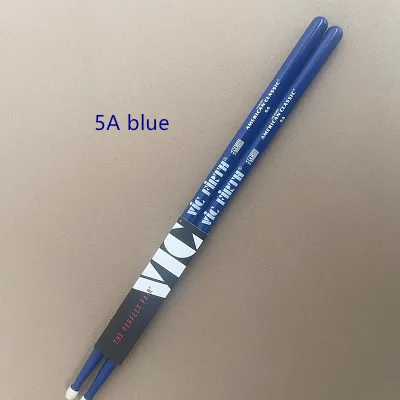
The American Classic series is the cornerstone of the Vic Firth brand, representing the industry standard for drumstick manufacturing. Within this line, the American Classic 5A is widely considered the most versatile drumstick in the world. It features a teardrop tip and a medium taper, making it the perfect starting point for beginners and a reliable workhorse for professional multi-genre players.
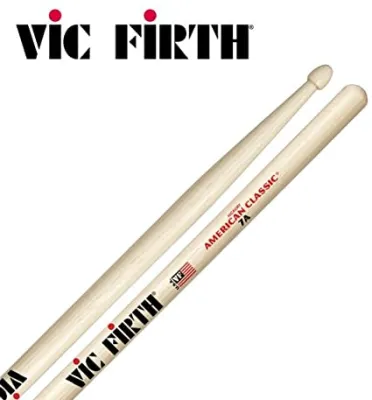
If your playing demands more volume, durability, and a solid physical presence, stepping up to the American Classic 5B is a natural transition. The 5B retains the balanced feel of the 5A but provides a thicker diameter that is easier to grip during high-energy performances. Conversely, if you perform in low-volume settings, jazz clubs, or acoustic ensembles, stepping down to the American Classic 7A offers a lighter, faster alternative that prevents you from overpowering the rest of the band. Every pair in this series undergoes rigorous pitch-pairing and weight-matching processes, ensuring that the sticks in your left and right hands feel and sound identical.
Extreme Series for Heavy Hitters and Maximum Durability
For drummers who find standard models slightly too short or lacking in forward momentum, the Extreme series offers a robust solution. Models like the Extreme 5A (X5A) and Extreme 5B (X5B) take the classic profiles and extend their length by an additional half-inch, bringing them to 16.5 inches (41.91 cm).
This extra length shifts the balance point forward, providing significantly more leverage, reach, and impact velocity. This makes the Extreme series highly suitable for rock, metal, and marching drummers who need to project their sound in loud, unmic’d environments. The added leverage allows you to hit harder with less physical strain, reducing hand fatigue during long, high-energy sets.
Heritage and Signature Models for Refined or Specific Feels
For players seeking highly specialized performance characteristics, the Heritage and Signature series offer refined alternatives. The American Heritage series utilizes maple wood instead of hickory, allowing you to play with the familiar dimensions of a 5A or 5B but with a much lighter, faster response. This is highly beneficial for studio recording or fast jazz fusion where speed and delicate dynamics are paramount.
The Signature series features custom models designed in collaboration with some of the world’s most influential drummers. For instance, the Steve Gadd Signature stick features a barrel tip and a slightly shorter length, optimized for precise, articulate studio work and crisp cymbal definitions. The Dave Weckl Signature stick offers a unique barrel tip and a distinct taper that enhances rebound and produces a rich, full cymbal tone. These models are ideal for intermediate and advanced drummers who have developed a highly specific technical approach and require a stick tailored to those exact demands.
Step 4: Test and Verify Your Drumsticks Before Buying
Before committing to a bulk purchase or taking a new pair of sticks straight to a gig, performing a few simple, low-risk tests will ensure you have selected a high-quality pair that matches your expectations.
A visual and tactile inspection is your first line of defense against manufacturing defects or shipping damage. In Singapore’s humid climate, wood can absorb moisture and warp if not stored in a climate-controlled environment. To check for straightness, place the sticks on a flat surface—such as a glass counter or a flat table at your local music retailer—and roll them with your hand. A straight stick will roll smoothly, while a warped stick will wobble or hop, which can severely disrupt your rebound consistency. Additionally, perform a pitch-pairing check by tapping each stick gently near your ear; they should produce a matching resonant frequency, indicating they are well-balanced in density.
Next, evaluate the rebound and balance of the sticks on a practice pad. Hold the sticks at your natural fulcrum point and execute a series of single and double strokes. Pay close attention to how the taper responds to your grip style. The stick should bounce back naturally without requiring you to force the upward motion with your wrists. If the stick feels front-heavy or sluggish, you may need a model with a longer taper; if it feels too light or lacks power, a shorter taper or heavier model may be more appropriate.
Finally, test the acoustic response on actual instruments if a demo kit is available. Strike a ride cymbal with the tip of the stick to evaluate the clarity and definition of each stroke. A good stick should produce a clean, articulate “ping” without excessive undertones. Execute a few rimshots on a snare drum to check how the shoulder of the stick absorbs the shock. The impact should feel solid and comfortable, without transmitting harsh, fatiguing vibrations back into your hands and wrists.
Frequently Asked Questions (FAQ)
How often should I replace my Vic Firth drumsticks?
There is no set schedule for replacing drumsticks, as wear depends entirely on your playing frequency, technique, and striking force. You should replace your sticks when you observe deep splintering along the shoulder, flat spots or cracks on the wood tip, or a noticeable loss of structural stiffness. Playing with worn, splintered, or chipped sticks can easily puncture drumheads and gouge cymbal surfaces, leading to far more expensive repairs.
Are nylon tips better than wood tips for electronic drums?
Nylon tips are highly recommended for electronic drum kits, particularly those equipped with mesh heads. Unlike wood tips, which can chip and develop sharp edges that easily snag and tear expensive mesh material, nylon tips remain smooth and intact. However, you must ensure the nylon tip is free of sharp manufacturing seams and remains securely attached to the shaft. Always consult your electronic drum manufacturer’s care guide to verify their specific recommendations and preserve your warranty.
Community discussion
Share your experience or ask a question. Comments are reviewed before publication.