
Quick Decision Guide: Which Violin Mute Fits Your Needs?
Selecting the right violin mute depends on where you play, how much volume you need to cut, and the specific tone color you want to achieve. For orchestral players who need to blend seamlessly and make rapid transitions, a standard rubber mute is the most reliable choice. If you are performing solo repertoire that calls for a focused, slightly nasal, or historical timbre, a metal mute offers a distinct acoustic profile. For subtle adjustments to your instrument’s overtones without a noticeable drop in volume, a lightweight wire mute is ideal. When your primary goal is practicing late at night in a high-density apartment without disturbing others, a heavy-duty practice mute is essential to keep the peace. Before purchasing any mute, always verify your instrument’s bridge clearance and string spacing to ensure a secure, damage-free fit.
How Rubber, Metal, Wire, and Practice Mutes Alter Your Sound
The fundamental mechanism of any violin mute relies on physics: adding mass directly to the bridge. The bridge acts as the primary transmitter of vibrational energy from the strings to the violin’s top plate and soundpost, which in turn amplifies the sound through the body of the instrument. By clamping or resting a mute on top of the bridge, you restrict its ability to vibrate freely, which alters both the volume and the harmonic profile of your instrument. The material composition and the total surface area in contact with the bridge dictate how much energy is absorbed or redirected.

Rubber Mutes
Rubber mutes are the most common accessories found in a violinist’s case, prized for their balance of volume reduction and tonal warmth. The classic Tourte-style rubber mute features a simple design that clips onto the middle strings behind the bridge when not in use, allowing you to slide it quickly onto the bridge during a performance. Because rubber is relatively soft and flexible, it dampens the high-frequency overtones of the violin, resulting in a mellow, warm sound that blends beautifully in orchestral settings.
Products mentioned in this guide

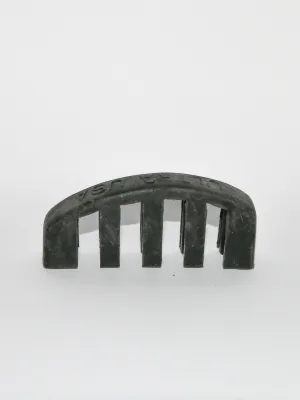
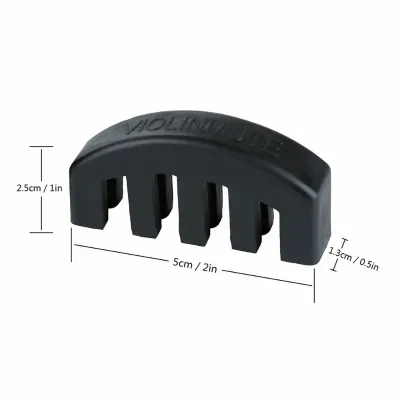
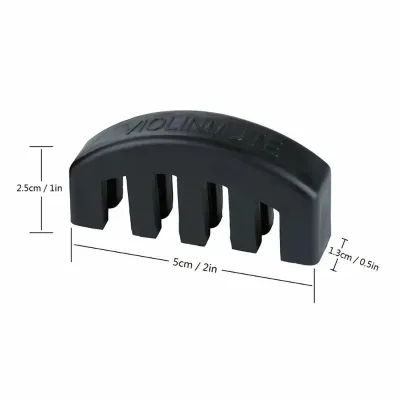

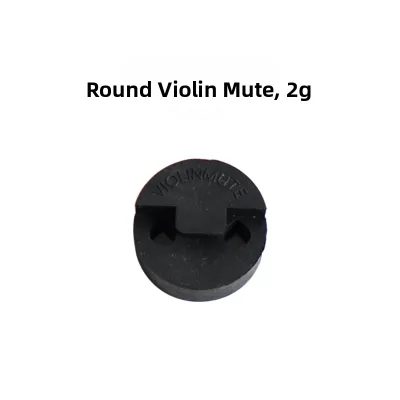
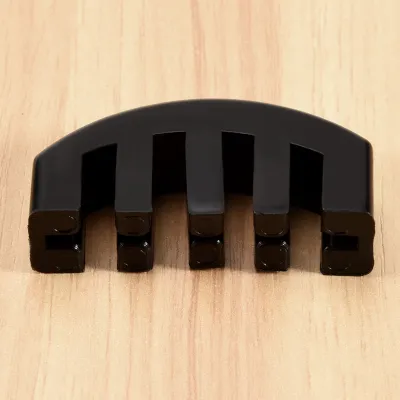
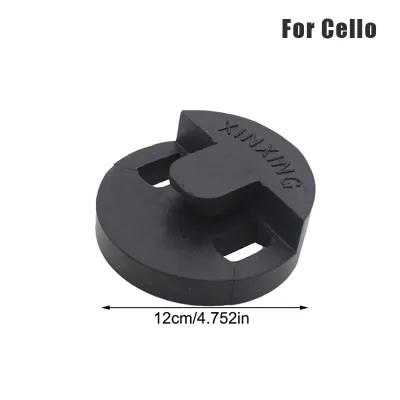
Prices are valid at publication and may change. Please refer to the product page for the latest price.
The volume reduction provided by a standard rubber mute is moderate, making it perfect for ensemble playing where the composer specifies con sordino (with mute). It softens the projection of the instrument without completely killing its natural resonance or projection. This ensures you can still hear your own intonation clearly while contributing to a unified section sound.
Metal Mutes
Metal mutes, typically crafted from brass, bronze, or nickel-plated alloys, offer a much heavier mass than their rubber counterparts. This increased weight restricts the bridge’s lateral vibrations far more intensely, resulting in a significant drop in overall volume. Acoustically, metal mutes produce a highly focused, bright, and sometimes nasal or metallic timbre that can sound hauntingly beautiful in specific solo or chamber works.
While they provide excellent sound dampening, metal mutes require careful handling. Because they are heavy and rigid, dropping a metal mute onto the delicate spruce top of your violin can easily cause deep dents, scratches, or even cracks in the varnish and wood. Many metal mutes feature rubber coatings to mitigate this risk, but players must still exercise caution.
Wire Mutes
Wire mutes, often constructed from lightweight spring steel or copper wire, are designed for subtle tonal coloration rather than significant volume control. These mutes typically feature a small sliding mechanism or a spring-loaded clip that attaches to the strings behind the bridge. When engaged, they apply minimal physical pressure to the top of the bridge, resulting in a very slight dampening effect.
Instead of drastically lowering the volume, a wire mute primarily alters the instrument’s overtones, sometimes brightening or darkening the sound depending on the specific design. This makes them highly favored by soloists who want to introduce a unique tonal texture to a piece without sacrificing their instrument’s projection or dynamic range. They are also exceptionally stable during intense playing.
Practice (Heavy-Duty) Mutes
Practice mutes, also known as hotel mutes, are heavy-duty accessories designed solely for maximum volume restriction. These mutes are significantly larger and heavier than standard performance mutes, often consisting of massive rubber blocks or heavy metal frames encased in protective rubber. They are designed to cover almost the entire top surface of the bridge, absorbing the vast majority of the vibrational energy before it can reach the violin body.
The acoustic result of a practice mute is a drastic reduction in volume, turning a full-bodied violin sound into a quiet, whispered hum. While useful for practicing in apartments or late at night, it does come at the cost of tone quality. The sound becomes highly suppressed, flat, and stripped of its natural resonance, making these mutes unsuitable for performance but indispensable for quiet environments.
Comparing Volume Reduction, Tone Shifts, and Daily Convenience
To choose the right mute, it helps to compare how each type performs across key practical dimensions. The volume reduction spectrum ranges from the subtle dampening of a wire mute to the near-silent performance of a practice mute. Tonal shifts also vary widely, from the warm mellowing of rubber to the metallic focus of metal, and finally the heavily muffled output of a practice mute.
Daily convenience is another critical factor, especially for gigging musicians. Rubber and wire mutes excel here because they can remain on the strings behind the bridge when not in use, ready to be engaged in a matter of seconds. Metal and heavy-duty practice mutes, however, must be completely removed and stored separately in your case, as their weight makes them unsafe to leave on the instrument during transport.
| Mute Type | Volume Reduction | Tonal Shift | Convenience & Storage | Risk to Instrument |
|---|---|---|---|---|
| Rubber | Moderate | Warm, mellow, rounded | High; stays on strings behind bridge | Very low; soft material |
| Metal | High | Focused, bright, nasal | Moderate; must be stored separately | Moderate; heavy, can scratch if dropped |
| Wire | Minimal | Subtle overtone adjustment | High; stays on strings behind bridge | Low; lightweight |
| Practice | Extreme | Heavily suppressed, flat | Low; must be stored separately | Low to moderate (if metal-core) |
Matching the Mute to Your Practice and Performance Environments
Your playing environment is the ultimate guide for deciding which mute to pack in your case. In an orchestral or ensemble setting, your primary concern is blending with other players and executing rapid page turns or mute transitions. A standard rubber Tourte or slide-on mute is the industry standard here, ensuring you can engage the mute within a two-measure rest without fumbling or dropping a heavy accessory onto the floor.
For solo practice, recording sessions, or chamber music where you want to explore unique acoustic textures, wire or light metal mutes are highly effective. These mutes allow you to retain the core resonance and projection of your violin while shaping the high-frequency overtones to match the mood of the piece. They give you the freedom to play expressively without feeling like your instrument’s voice is being choked.
If you live in a high-density housing estate, such as an HDB flat or condominium, or if you prefer to practice late at night, a heavy-duty practice mute is a necessity. It allows you to run through scales and difficult passages at midnight without waking family members or neighbors. While it does alter the tactile feedback of your bow, the peace of mind it provides is well worth the trade-off in tone quality.
Many active violinists find that keeping a variety of mutes in their gig bag is the best strategy. A typical setup might include a rubber Tourte mute installed on the strings for rehearsals, and a heavy practice mute in the accessory pocket for late-night warm-ups. This ensures you are prepared for any acoustic scenario without compromising your instrument’s safety.
Essential Fit and Safety Checks Before You Buy
Before purchasing any violin mute, performing a few physical compatibility checks can save you from frustrating fit issues or potential damage to your instrument. First, inspect your violin’s bridge clearance and string spacing. The slots on the bottom of the mute must align with your string spacing; if the mute is too narrow, forcing it can pinch the strings or damage the bridge wood.
Material safety is another critical consideration, particularly when dealing with metal mutes. Ensure that any metal mute you choose has smooth, deburred edges, or opt for a model that features a protective rubber or plastic coating on the contact points. A slip of the hand while mounting a raw brass mute can easily scrape away your violin’s delicate varnish, leading to costly cosmetic repairs.
You should also consider the weight distribution of the mute and its potential long-term effects on your instrument. Extremely heavy mutes place downward pressure on the bridge, which can gradually cause the bridge to lean forward or backward if not monitored. Over time, an unaligned bridge can warp or even collapse, potentially shifting the internal soundpost of the violin. Finally, always check the manufacturer’s specifications regarding bridge curvature and instrument size. A mute designed for a full-size (4/4) violin will not fit properly on a fractional-size student instrument or a wider viola bridge.
Frequently Asked Questions (FAQ)
Can leaving a mute on the strings damage the violin?
Leaving a lightweight rubber or wire mute on the strings behind the bridge is generally safe and is standard practice for most orchestral musicians. However, leaving a heavy metal or practice mute attached to the bridge for extended periods when the instrument is not in use is not recommended. The constant, heavy downward pressure can cause uneven tension across the top plate and may contribute to the bridge warping over time. Additionally, if a heavy mute is left on the violin inside a case during transport, any sudden bump could cause it to dislodge, potentially scratching the varnish or denting the spruce top. For maximum safety, always remove heavy practice or metal mutes and store them securely in your case’s accessory compartment before packing up.
Do I need a different mute for a viola or fractional-size violin?
Yes, you generally need a mute specifically sized for your instrument. Violas have wider bridges, thicker strings, and wider string spacing than violins, meaning a standard violin mute will often be too narrow to fit securely or may pinch the strings. Conversely, fractional-size violins (such as 1/2 or 3/4 sizes) have much smaller, thinner bridges. Using a full-size violin mute on a fractional instrument can result in a loose fit that rattles during play, or it may apply excessive weight that dampens the sound unevenly and risks warping the delicate, smaller bridge. Always check the product packaging or manufacturer specifications to ensure the mute is rated for your specific instrument type and size.
Community discussion
Share your experience or ask a question. Comments are reviewed before publication.