
To prepare effectively for the Primary School Leaving Examination (PSLE) in Singapore, selecting the right academic resources is a critical step. The visible thinking 6 series is highly regarded by educators and parents for its structured approach to making cognitive processes explicit. For each of the four core PSLE subjects—Mathematics, Science, English, and Chinese—there is a specific volume designed to address the unique demands of the curriculum. Choosing the correct book ensures that your child builds the precise answering techniques required to secure top marks under exam conditions.
By focusing on thinking routines and structured scaffolding, these books help students transition from basic content recall to high-level application. Rather than offering repetitive drills, the series guides students through the step-by-step logic needed to solve complex, non-routine questions. Understanding which book to purchase for each subject allows you to target your child’s specific academic needs and build their confidence ahead of the national examinations.
Quick Guide: Visible Thinking P6 Books by PSLE Subject
Identifying the exact resources your child needs for their Primary 6 preparation prevents purchasing errors and ensures targeted study. The table below maps each core subject to its corresponding book in the series, highlighting the primary focus and the student profile that benefits most from each volume.
Products mentioned in this guide
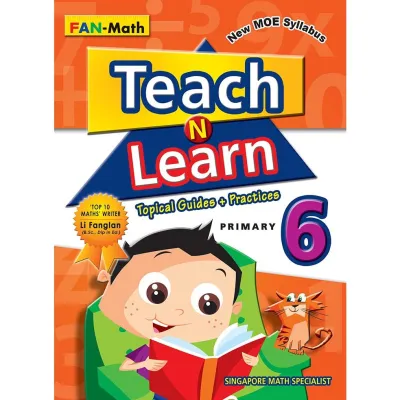
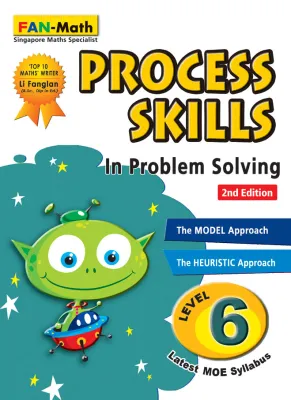
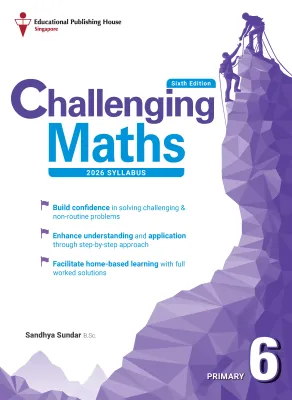
Prices are valid at publication and may change. Please refer to the product page for the latest price.
| Subject | Exact Book Title | Primary Pedagogical Focus | Target Student Profile |
|---|---|---|---|
| Mathematics | Visible Thinking Mathematics Primary 6 | Heuristics, visual model drawing, and multi-step word problems. | Students who struggle with Paper 2 problem sums and structured problem-solving. |
| Science | Visible Thinking Science Primary 6 | Section B open-ended questions, scientific vocabulary, and concept linking. | Students who understand science concepts but lose marks due to imprecise phrasing. |
| English | Visible Thinking English Primary 6 | Synthesis and transformation rules, comprehension inference, and grammar. | Students aiming to refine their language precision and critical reading skills. |
| Chinese | Visible Thinking Chinese Primary 6 | Comprehension (阅读理解) answering techniques and structured essay planning. | Students who need help structuring Chinese compositions and answering comprehension questions. |
| Higher Chinese | Visible Thinking Higher Chinese Primary 6 | Advanced comprehension analysis and Higher Chinese composition formats. | Students taking the Higher Chinese syllabus who need to master complex text analysis. |
Each book in this series is structured around the core philosophy of making thinking visible, which helps students organize their thoughts systematically. While the pedagogical focus varies by subject, the overarching goal remains consistent: to provide students with clear, repeatable frameworks for tackling challenging exam components.
Why Choose the Visible Thinking Series for P6?
In Singapore’s academic landscape, rote memorization is no longer sufficient to excel in the PSLE. The national examinations increasingly emphasize critical thinking, real-world application, and the ability to articulate thought processes clearly. The series addresses this shift by adapting cognitive thinking routines to the local Ministry of Education (MOE) syllabus, helping students document and refine their internal reasoning.

This series is particularly effective because of its step-by-step scaffolding. For complex questions, the books break down the problem-solving process into manageable phases, such as identifying key information, selecting the appropriate strategy, and verifying the final answer. This methodology is highly beneficial for students who experience anxiety when faced with open-ended or non-routine questions, as it provides them with a familiar starting point for every problem.
The ideal student profile for this series includes mid-to-high progress learners who have a decent grasp of basic concepts but struggle to secure top marks due to structural errors or vague explanations. It is also highly suitable for students transitioning from Primary 5 to Primary 6 who find the sudden jump in cognitive demand challenging to navigate.
However, it is important to recognize the limitations of these books. They are designed to teach thinking pathways and structured methodologies, meaning they are not high-volume drill books. If your child already masters answering techniques and simply needs rapid speed practice or exposure to extreme, Olympiad-level questions, a standard topical assessment book or past-year paper booklet may be a more appropriate choice.
Subject-by-Subject Breakdown: What Each Book Offers
To make an informed purchasing decision, it is helpful to understand how each subject-specific book addresses the unique challenges of the PSLE curriculum. Each volume utilizes distinct frameworks tailored to the cognitive demands of that particular subject.
Visible Thinking Mathematics P6
Primary 6 Mathematics is defined by its heavy emphasis on heuristics and multi-step word problems, particularly in Paper 2. Visible Thinking Mathematics Primary 6 addresses this by teaching students how to identify and apply specific problem-solving heuristics, such as systematic listing, working backwards, and drawing detailed models. By breaking down complex word problems into visual components, the book helps students see the relationships between different quantities clearly.
This visual approach is crucial for transitioning students from basic arithmetic calculations to multi-step analytical thinking. The book guides the student to ask key questions: “What is the relationship between the parts and the whole?” and “What remains unchanged in this scenario?” This structured questioning prevents students from diving into calculations without a clear plan, which is a common source of careless errors in the exam.
When integrating this book into your child’s study routine, it is best used as a topical reinforcement tool alongside their school textbook. After a topic is taught in school, use the corresponding chapter in this book to deepen their conceptual understanding. Note that while the book covers standard PSLE heuristics thoroughly, it does not focus on niche, non-syllabus competitive math puzzles, keeping the preparation highly aligned with actual exam requirements.
Visible Thinking Science P6
Section B of the PSLE Science paper is a major area where students lose critical marks, often because they write answers that lack scientific precision. Visible Thinking Science Primary 6 tackles this issue directly by teaching students how to construct precise, scientific explanations. It emphasizes the use of correct vocabulary and guides students on how to link scientific concepts to the specific scenarios presented in the questions.
The book utilizes structured frameworks to help students identify the “clue” in a question, recall the relevant scientific principle, and state the resulting effect clearly. This prevents the vague, generalized answers that markers frequently penalize. Furthermore, the book provides dedicated sections on data analysis and experimental design, teaching students how to identify variables, interpret graphs, and draw valid conclusions from experimental setups.
While this workbook is exceptionally strong for structuring written answers, parents should remember that a book cannot fully replace the physical intuition gained from school laboratory experiments. To maximize the benefit of this resource, encourage your child to review their school lab worksheets and practical notes alongside the workbook exercises, helping them connect theoretical structures to physical observations.
Visible Thinking English P6
English Paper 2 requires absolute grammatical precision and sharp critical thinking, particularly in the Synthesis and Transformation and Comprehension Open-Ended sections. Visible Thinking English Primary 6 focuses heavily on these demanding areas. For Synthesis and Transformation, the book breaks down complex sentence structures—such as active to passive voice, direct to indirect speech, and nominalisation—into clear, rule-based steps that students can easily replicate.
In the Comprehension section, the book moves away from simple literal retrieval exercises. Instead, it teaches students how to analyze texts for contextual clues, identify the author’s tone, and infer meaning. This training is essential for answering high-weightage inference questions, where students must explain why a character acted in a certain way or what a specific phrase implies.
To get the most out of this book, it should be paired with a broader language strategy. While the workbook is excellent for teaching exam techniques and grammatical rules, holistic English mastery also requires consistent reading of diverse texts and regular real-world language exposure. This dual approach ensures that your child builds both the technical skills needed for the exam and a natural, intuitive grasp of the language.
Visible Thinking Chinese and Higher Chinese P6
Choosing the correct Chinese edition is highly important, as there are distinct versions for standard Chinese (华文) and Higher Chinese (高级华文). The Higher Chinese edition contains more complex vocabulary, deeper text analysis, and different composition formats that align with the HCL syllabus. Buying the wrong version can lead to unnecessary frustration or inadequate preparation for your child’s specific exam track.
Both books focus heavily on the key components of the paper: Comprehension (阅读理解) and Composition (作文). For comprehension, the books teach students how to identify key paragraphs, analyze character motivations, and structure their answers using precise Chinese phrasing. For composition, the books provide structured planning templates that help students organize their plots logically, incorporate descriptive vocabulary, and write effective introductions and conclusions.
Before purchasing, verify your child’s exact syllabus track with their school teacher. If your child is taking standard Chinese, do not buy the Higher Chinese edition, as it includes vocabulary and sentence structures that are outside their examinable scope. Conversely, Higher Chinese students need the specific HCL edition to practice the advanced writing and analytical skills required for their paper.
What to Check Before Buying Your Visible Thinking P6 Books
To ensure you purchase the correct, most effective materials for your child’s PSLE preparation, keep the following checklist in mind before making a purchase:
- Syllabus Alignment: Always check the publication year and edition details on the cover. The Singapore MOE syllabus undergoes periodic updates, and buying an outdated edition may mean your child is practicing topics that have been removed or missing out on new exam formats.
- Level and Track Verification: Double-check that you are buying the Primary 6 (P6) books. Additionally, ensure you select the correct academic track, particularly for Chinese (Standard vs. Higher Chinese) and Mathematics (Standard vs. Foundation, if applicable).
- Content Completeness: Before leaving the store or finalizing your online purchase, verify that the book includes the complete answer key. The answer key is often a detachable booklet at the back of the book; ensure it is intact, as it contains the essential marking rubrics and step-by-step explanations.
- Authorized Channels: Purchase your books from reputable local bookstores, major retail chains, or the publisher's official online store. Avoid buying unauthorized photocopies or heavily used copies from unverified online marketplaces, as these often have missing pages, poor print quality, or outdated content that can hinder effective revision.
Frequently Asked Questions (FAQ)
Do I need to buy the Visible Thinking P5 books before starting P6?
No, you do not need to purchase the Primary 5 books before starting the Primary 6 editions. The P6 books are designed as standalone resources that align specifically with the Primary 6 syllabus. However, because the PSLE is a cumulative examination that tests concepts learned from Primary 3 through Primary 6, any severe foundational gaps from earlier years should be addressed. If your child struggles with foundational P5 topics, it is highly recommended to review their P5 school notes or use targeted topical revision resources to bridge those gaps before attempting the advanced application questions in the P6 books.
Are Visible Thinking books enough, or do I need past-year PSLE papers?
While this series is excellent for teaching structured thinking and answering techniques, it should not be the sole resource used for PSLE preparation. These books are designed for topical mastery and skill acquisition, whereas actual past-year PSLE papers (published by SEAB-approved publishers) and school preliminary exam papers are essential for exam-stamina and time management. Practicing with full-length exam papers under timed conditions helps your child get used to the actual formatting, pacing, and mental demands of the national examination, making them an indispensable supplement to your workbook practice.
Community discussion
Share your experience or ask a question. Comments are reviewed before publication.