
Choosing the right vocabulary book is not about finding a universally ideal text, but rather about matching a book’s methodology to your personal learning style, goals, and schedule. For decades, adult learners have turned to classic resources like Word Power Made Easy by Norman Lewis, which uses etymology to build vocabulary from the ground up. Conversely, a wide range of modern vocabulary books focus on contextual learning, thematic grouping, and high-frequency word lists to deliver rapid, practical results.
Understanding how these two philosophies differ is key to selecting the right tool for your language journey. While one method prioritizes deep structural logic, the other emphasizes immediate, situational utility. By evaluating your specific objectives—whether you are preparing for a standardized exam, aiming to read advanced literature, or looking to improve your professional communication—you can select the approach that will yield the most sustainable progress.
Core Methodologies: Etymology vs Contextual Learning
The etymological approach, epitomized by classic texts like Word Power Made Easy, treats language as a structured system built from historical building blocks. This method teaches you to break words down into their constituent parts: roots, prefixes, and suffixes. For example, once you understand that the Greek root “pathos” relates to feeling or disease, you can logically deduce the meanings of words like sympathy, apathy, antipathy, and pathology. This structural framework allows you to decode unfamiliar words you encounter in the wild, even if you have never seen them before.
Products mentioned in this guide
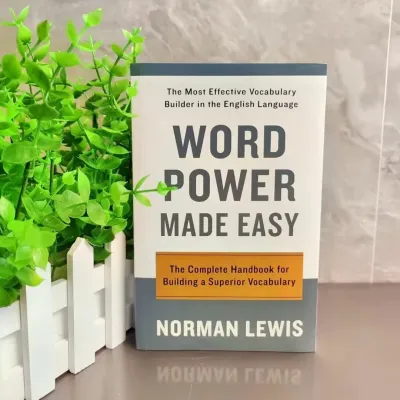
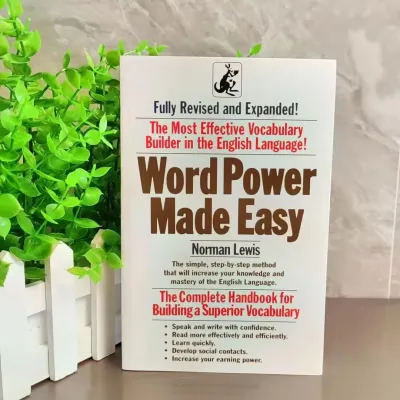
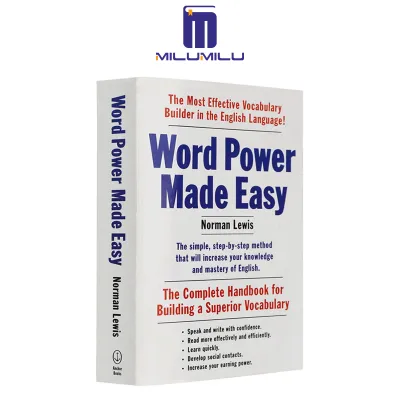
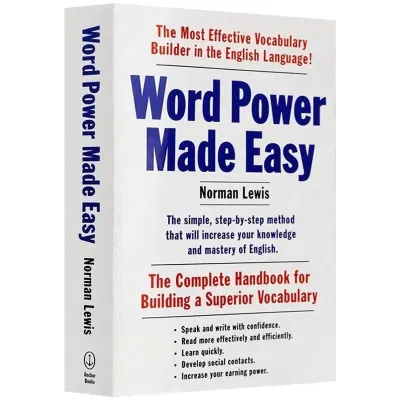
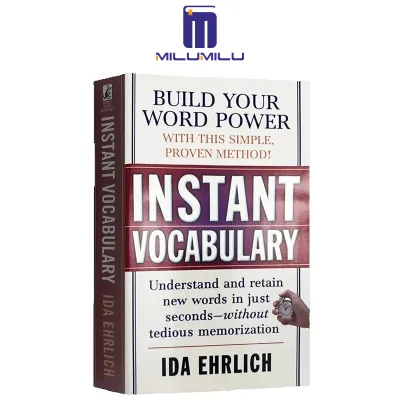
Prices are valid at publication and may change. Please refer to the product page for the latest price.
In contrast, modern vocabulary books typically favor contextual and thematic learning. Instead of analyzing linguistic history, these books group words by topic, such as business negotiations, environmental science, or daily social interactions. They introduce new vocabulary through authentic reading passages, dialogues, and real-world scenarios. This method relies on the brain’s natural ability to learn through association, helping you understand not just what a word means, but exactly how it functions alongside other words in a sentence.
These differing methodologies have a direct impact on cognitive retention and active recall. Etymology builds deep, long-term retention because it connects words through logical, structural relationships. However, it requires you to perform the mental translation from root meaning to modern usage, which can sometimes slow down active recall during fast-paced conversations. Contextual learning, on the other hand, excels at promoting rapid active recall and natural usage because you learn words in the exact environments where they are spoken or written. The trade-off is that without constant reinforcement, contextually learned words can be easier to forget if they are not tied to a broader structural system.
Matching the Approach to Your Learning Goals
Your ultimate goal for improving your English should dictate which vocabulary book you choose. If your primary objective is deep reading, literature appreciation, or advanced academic writing, an etymological approach is effective. Classic literature and high-level academic journals frequently employ words derived from Latin and Greek roots. A strong foundation in etymology allows you to appreciate the subtle nuances and historical weight behind these words, enabling you to express complex ideas with precision and sophistication.

If you are preparing for standardized tests or need to expand your vocabulary rapidly, modern books are generally more efficient. Standardized exams often test a specific, predictable pool of high-frequency words. Modern test-preparation books focus on these lists, using thematic grouping and targeted exercises to help you memorize the necessary terms in a shorter timeframe. Spending months learning etymological roots may not be the most practical use of your time if your exam is only a few weeks away.
For professional communication and daily fluency, the choice depends on your industry and daily environment. Modern vocabulary books often feature dedicated sections on contemporary business jargon, technological terms, and idiomatic expressions that are essential for modern workplaces. These books teach you the practical phrases needed for emails, presentations, and meetings. However, if your professional field relies heavily on scientific, medical, or legal terminology, the etymological approach remains valuable, as these fields continue to rely almost exclusively on classical Greek and Latin roots.
Time Commitment and Study Habits
The format of your chosen book must align with your daily habits to prevent study fatigue and abandonment. Classic texts like Word Power Made Easy are structured, linear, and time-intensive. They are designed to be worked through sequentially, with each chapter building directly on the concepts introduced in the previous one. This requires a disciplined, daily commitment of uninterrupted study time, as skipping sections or reading chapters out of order can disrupt the learning progression.
Modern vocabulary books offer greater flexibility, making them suitable for micro-learning and busy schedules. Many of these books are designed with self-contained chapters or modular units, allowing you to jump directly to the topics that interest you most. You can easily study a single page during a short commute or complete a quick exercise during a lunch break. This non-linear structure fits well with modern spaced-repetition techniques, where you review different topics at varying intervals to reinforce memory.
Your personal tolerance for page layouts and visual presentation also plays a role in maintaining consistency. Classic vocabulary books tend to be text-heavy, dense, and printed on standard paper with minimal visual aids. They rely on your internal motivation and the intellectual satisfaction of solving linguistic puzzles. Modern books, by comparison, often feature more open layouts, varied typography, color-coded sections, and interactive elements like crossword puzzles, matching games, and fill-in-the-blank exercises. If you find dense blocks of text intimidating, a modern, visually engaging layout will likely keep you motivated for longer.
How to Evaluate a Vocabulary Book Before Buying
Before purchasing any vocabulary book, it is essential to evaluate its structure and features to ensure it meets your learning needs. Begin by reviewing the table of contents. A well-designed book should display a logical progression of difficulty and clearly indexed chapters. Look for manageable chapter lengths that fit your daily study limits; chapters that are too long can feel overwhelming, while chapters that are too short may lack depth.
Next, examine the internal content of the chapters. A high-quality vocabulary book must provide authentic example sentences that demonstrate how words are used in realistic contexts. Avoid books that simply list definitions without usage examples. Additionally, look for clear pronunciation guides—ideally using standard phonetic symbols or easy-to-read phonetic spellings—and built-in review exercises or self-tests at the end of each section to help measure your progress.
Finally, verify the specific edition and format of the book. Ensure you are purchasing the correct language variant, as there are notable differences in spelling, vocabulary, and usage between US and UK English. Consider whether a physical book or an e-book suits your study style better. For books that require writing down answers, completing quizzes, or filling in blanks, a physical paperback is often much more practical and satisfying to use than a digital screen.
Decision Framework: Which Book Should You Choose?
To make your final decision, assess your learning preferences against a clear set of conditions. You should choose Word Power Made Easy if you enjoy logical problem-solving, want to understand the historical origins of words, prefer a structured and sequential study plan, and can commit to consistent daily study sessions. This book is best suited for those who want a deep, permanent foundation in English vocabulary and are willing to put in the cognitive effort required to master word roots.
You should choose a modern vocabulary book if you have a specific, short-term goal such as passing an exam, need to learn practical vocabulary for a specific professional field, or prefer a flexible, modular study format that fits into a busy, unpredictable schedule. Modern books are also the better choice if you learn best through visual aids, thematic associations, and varied, interactive exercises.
If you remain unsure of which path to take, start by verifying your current English proficiency level. Reviewing online sample pages or taking a quick diagnostic vocabulary test can help you determine if a book’s content is appropriate for you. Selecting a book that is too advanced can lead to frustration and abandonment, while choosing one that is too basic will not provide the cognitive challenge necessary for meaningful vocabulary growth.
Frequently Asked Questions (FAQ)
Can I use both classic and modern vocabulary books together?
Yes, combining both approaches can create an effective, balanced study routine. You can use a root-based classic book like Word Power Made Easy to build a strong structural foundation, while simultaneously reading a modern, theme-based book to see how those roots manifest in contemporary, everyday contexts. This dual approach allows you to encounter overlapping vocabulary through different cognitive pathways, which significantly reinforces long-term retention and helps you transition words from passive recognition to active use.
Do modern vocabulary apps replace physical books entirely?
While modern vocabulary apps are excellent tools for quick reviews, tracking progress, and practicing spaced repetition on the go, they do not completely replace the benefits of physical books. Physical books offer a focused, tactile, and distraction-free environment that is conducive to deep cognitive processing and sustained concentration. Apps can easily expose you to digital distractions like notifications and screen fatigue. For the best results, use physical books for your primary, deep-focus study sessions, and use mobile apps as supplementary tools to review words during spare moments throughout the day.
Community discussion
Share your experience or ask a question. Comments are reviewed before publication.