
Quick Answer: Which Portable Drum Pad Should You Choose?
Living in a space-constrained apartment or HDB flat in Singapore makes owning a traditional acoustic drum kit highly impractical due to noise levels and physical footprint. Portable digital drum pads offer an excellent, headphone-friendly compromise, allowing aspiring drummers to practice without disturbing neighbors or flatmates. Two of the most popular entry-level options on the market are the Yamaha DD-75 and the Alesis CompactKit 4. While both are designed for tabletop use, they cater to very different skill levels, practice goals, and budgets.
Choose the Yamaha DD-75 if:
- You are a serious beginner or intermediate player who wants to learn realistic acoustic drumming coordination.
- You require an eight-pad layout that mimics the physical arrangement of a standard drum kit.
- You need assignable foot pedals to practice kick drum and hi-hat coordination.
- You plan to connect the unit to a computer or external MIDI hardware for recording and music production.
Choose the Alesis CompactKit 4 if:
Products mentioned in this guide
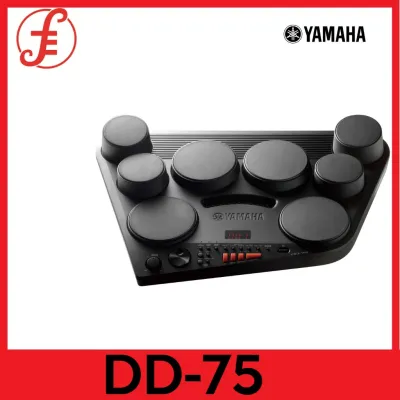
![Yamaha DD75 Digital Percussion Set DD-75 Portable Musical Electronic Instrument DD 75 [PREORDER]](https://img.lazcdn.com/g/p/c2c5758c27b7e76ef28a58fa17673cb1.jpg_400x400q80.jpg_.webp)
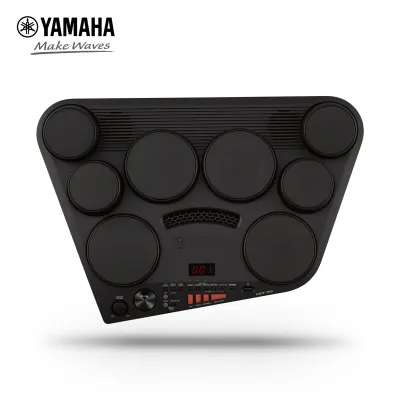
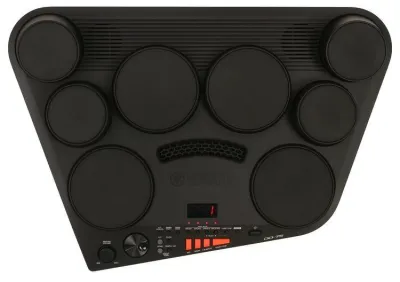
Prices are valid at publication and may change. Please refer to the product page for the latest price.
- You are looking for a highly budget-friendly, ultra-compact tabletop rhythm trainer.
- You are buying for a young child or casual hobbyist who wants simple, game-like coaching features.
- You have very limited storage space and need a lightweight unit that can be easily tucked away in a drawer.
- You do not require foot pedals or advanced MIDI connectivity.
Verify first if:
- The retail bundle you are purchasing includes a power adapter certified for Singapore’s 230V electrical system.
- You need to purchase essential accessories separately, such as drumsticks, headphones, or a dedicated stand.
- The local distributor provides a valid warranty to protect your investment against electronic defects.
This guide evaluates these two portable drum pads across several core criteria: pad feel and layout, sound engine capabilities, connectivity options, and physical footprint. By analyzing these dimensions, you can make an informed decision that aligns with your specific practice environment and musical aspirations.
Pad Feel and Playability: Comparing the Striking Surfaces
The physical layout of a digital drum pad directly impacts how easily your practice session translates to a real acoustic drum kit. The Yamaha DD-75 features eight touch-sensitive pads arranged in a semi-circular, multi-level configuration. This tiered design is specifically engineered to mimic the layout of an acoustic drum set, with the snare and tom pads positioned lower and the cymbal pads angled upward. For a beginner, this layout is highly beneficial because it helps build the spatial muscle memory required to move your arms and wrists across a full drum kit.

In contrast, the Alesis CompactKit 4 features four velocity-sensitive pads arranged in a single, flat horizontal row. While this layout is straightforward and easy to navigate, it does not emulate the spatial geometry of an acoustic kit. It is designed primarily for basic rhythm training, hand percussion, or simple beat-making. If your goal is to learn how to play a traditional drum set, the four-pad flat layout will feel highly restrictive and will not prepare you for the physical transition to a larger kit.
Both models utilize rubber-based striking surfaces, which offer distinct rebound characteristics. Rubber pads provide a firm, springy bounce that helps beginners practice stick control and double-stroke rolls. However, because rubber does not absorb impact energy as effectively as a tensioned acoustic drumhead or a mesh head, the shock of each strike is transferred back up the drumstick into your wrists and forearms. To prevent muscle fatigue or strain during long practice sessions, beginners should focus on maintaining a relaxed grip and proper hand technique.
Acoustic noise generation is a critical consideration for anyone practicing in a shared living space or an HDB flat. Although playing with headphones silences the drum sounds, the physical impact of wooden drumsticks striking rubber pads produces an audible, repetitive tapping noise. This structural vibration can travel through desks, floors, and walls. The Yamaha DD-75 has a heavier, more robust chassis that helps absorb some of this physical vibration, but the striking noise remains noticeable. The lighter Alesis CompactKit 4 can transfer significant vibration to the table it sits on, so placing a dampening mat or towel underneath the unit is highly recommended to keep your practice quiet for others in your home.
Velocity sensitivity is another crucial factor in pad playability, as it determines how dynamically the instrument responds to your playing. Both the DD-75 and the CompactKit 4 feature touch-sensitive pads that produce louder sounds when struck harder. However, the Yamaha DD-75 offers customizable sensitivity settings and selectable velocity curves, which can be adjusted in the system menu to match your playing style. This allows players with a lighter touch to trigger full-volume sounds without straining, or heavy hitters to prevent accidental volume spikes. The Alesis CompactKit 4 features fixed velocity sensitivity that, while responsive, does not offer the same level of fine-tuning.
Finally, foot pedals play a vital role in developing complete drumming coordination. The Yamaha DD-75 includes two assignable foot switches that function as the kick drum and hi-hat controller, allowing you to practice the essential hand-foot coordination used in standard drum beats. While the included plastic switches are basic, the DD-75’s system can be upgraded with more realistic, heavy-duty foot controllers as your skills progress. The Alesis CompactKit 4 does not support external foot pedals at all. To play a kick drum or hi-hat sound on the CompactKit 4, you must assign those sounds to one of the four hand pads, which limits your ability to practice standard drum kit coordination.
Sound Quality and Built-in Drum Kits
The internal sound engine of a digital drum pad determines the quality of the auditory feedback you receive, which is vital for maintaining motivation during practice. The Yamaha DD-75 is equipped with a high-quality sound engine featuring 570 drum voices, 75 preset drum kits, and 10 user-customizable kits. These voices include stereo-sampled acoustic drum sounds derived from Yamaha’s professional electronic drum kits and acoustic drums. When you strike a pad on the DD-75, you hear a realistic recording of an acoustic drum, complete with natural resonance and decay. This realistic feedback helps beginners develop an ear for tone and dynamics.
The Alesis CompactKit 4 features a much simpler sound library, consisting of 70 percussion voices and 10 effect voices, along with 50 built-in play-along songs. The sounds are primarily electronic beats, basic drum hits, and fun sound effects. While these sounds are highly engaging for children and casual hobbyists, they lack the acoustic realism and dynamic depth found in the DD-75. If you are serious about learning traditional drumming, the realistic acoustic emulation of the DD-75 provides a far superior learning experience. Always consult the official manufacturer specification sheets to verify the exact voice list and preset configurations, as regional variations can occur.
For silent practice, both units are equipped with headphone outputs, but they utilize different physical connection types. The Yamaha DD-75 features a standard 1/4-inch (6.35mm) stereo headphone jack. If you plan to use standard consumer headphones or earphones, which typically use a 1/8-inch (3.5mm) plug, you will need to purchase a 1/4-inch to 1/8-inch adapter separately. The Alesis CompactKit 4 features a 1/8-inch (3.5mm) headphone jack, allowing you to plug standard consumer headphones directly into the unit without any adapters.
If you want to play aloud, these headphone jacks can also function as line outputs to connect the drum pads to external amplification. You can connect either unit to an external drum amplifier, a keyboard amp, or a home audio system using the appropriate cables. Using a dedicated drum amplifier is highly recommended if you want to experience the full dynamic range of the drum sounds, as standard home speakers can struggle with the sharp transient peaks produced by drum strikes.
Both models feature built-in speakers for casual room practice, but they differ significantly in performance. The Yamaha DD-75 features a stereo speaker system with a bass reflex port, which enhances the low-frequency response of the kick drum and floor toms. This gives the sound a warmer, fuller quality when playing without headphones. The Alesis CompactKit 4 has a basic built-in speaker that is suitable for low-volume personal practice but lacks low-end punch and can distort if the volume is turned up too high.
Connectivity, MIDI, and Expansion Options
Integration with external devices and software can greatly expand the educational and creative capabilities of a digital drum pad. The Yamaha DD-75 features traditional 5-pin MIDI IN and OUT ports. This connectivity allows you to use the DD-75 as a MIDI controller by connecting it to a computer, synthesizer, or external audio interface. By routing the MIDI data into a Digital Audio Workstation (DAW) on your computer, you can trigger high-end virtual drum instruments. This completely bypasses the internal sound engine of the DD-75, allowing you to record professional-grade drum tracks or use interactive learning software.
The Alesis CompactKit 4 does not feature any MIDI connectivity. It lacks both traditional 5-pin MIDI ports and USB-MIDI ports, meaning it functions strictly as a standalone instrument. You cannot connect it to a computer or mobile device to trigger software instruments or record MIDI data. If you plan to use educational drumming apps or want to explore music production, the lack of MIDI support on the CompactKit 4 is a significant limitation that makes the Yamaha DD-75 the clear choice.
Playing along with backing tracks is one of the most effective ways to develop timing and tempo control. The Yamaha DD-75 features a 3.5mm AUX IN jack, which allows you to connect a smartphone, tablet, or computer using a standard auxiliary cable. This routes the audio from your device directly through the DD-75’s headphones or speakers, letting you mix your drumming with your favorite songs or instructional tracks. The Alesis CompactKit 4 does not have an auxiliary input, meaning you must practice along with its 50 built-in songs or play external music from a separate speaker system in your room.
When connecting the DD-75 to modern mobile devices like an iPad or iPhone for learning apps, you will need to purchase compatible adapters. Because the DD-75 uses traditional 5-pin MIDI ports rather than a direct USB connection, you will need a 5-pin MIDI-to-USB interface cable, combined with an official USB adapter compatible with your device’s port (such as an Apple Lightning-to-USB Camera Adapter or a USB-C adapter). Always verify the compatibility requirements in the user manuals of both the drum pad and your mobile device before purchasing additional cables.
Portability, Power Options, and Build Quality
Physical dimensions and weight are critical factors if you need to pack your drum pad away after each practice session or transport it to different locations. The Alesis CompactKit 4 is exceptionally compact and lightweight, weighing approximately 1.5 kg and featuring a small tabletop footprint. It can easily sit on a study desk, a bed, or a coffee table, and can be stored in a drawer or on a shelf when not in use. This makes it an ideal option for highly space-constrained rooms where a permanent setup is not possible.
The Yamaha DD-75 is significantly larger and heavier, weighing approximately 4.2 kg (without batteries) and measuring about 60 cm in width. It requires a dedicated, sturdy table, a specialized drum pad stand, or a standard snare drum stand (which fits the mounting hole on the bottom of the unit). While still highly portable compared to a full electronic drum kit, the DD-75 requires more planning for storage and setup, and is less convenient to pack away quickly.
For power flexibility, both models can run on either an AC adapter or batteries. Both units utilize six “C” size batteries, which is highly convenient for outdoor use, busking, classroom settings, or practicing in areas of your home that lack accessible power outlets. When running on battery power, the battery life will vary depending on the volume level and whether you are using headphones or the built-in speakers.
Both drum pads feature durable plastic chassis designed to withstand the physical impact of drumming. When unboxing your new drum pad, it is important to perform a thorough quality check to ensure there was no transit damage. Use this checklist during unboxing:
- Chassis Inspection: Check the plastic housing for any cracks, stress marks, or loose seams.
- Pad Alignment: Verify that all rubber pads are securely seated and do not peel at the edges.
- Trigger Test: Turn on the unit and tap each pad gently with a drumstick to ensure consistent velocity response and no dead zones.
- Jack Stability: Gently insert and remove the power adapter and headphone plugs to ensure the jacks are stable and do not cause audio dropouts.
- Button Functionality: Press all buttons and rotate any dials to ensure they respond correctly and the LCD screen displays information clearly.
When purchasing these electronic instruments in Singapore, pay close attention to the power adapter voltage and plug type. Singapore’s domestic electrical grid operates at 230V and 50Hz, utilizing Type G (three-pin) plugs. If you purchase your drum pad from international online marketplaces or grey-market sellers, the included power adapter may be designed for 110V (such as US models) or feature a different plug type (such as Type A or Type C). Operating a 110V adapter on a 230V outlet without a proper step-down transformer can destroy the adapter and permanently damage the drum pad’s internal circuitry. Always verify that the power supply is rated for 230V input and carries the local safety certification (such as the Safety Mark in Singapore), or purchase a compatible, locally certified adapter separately.
Specification Comparison Checklist
To help you quickly compare the technical specifications of both models, the following table summarizes their key features based on verified manufacturer data.
| Feature | Yamaha DD-75 | Alesis CompactKit 4 |
|---|---|---|
| Number of Pads | 8 (touch-sensitive) | 4 (velocity-sensitive) |
| Pad Layout | Semi-circular, multi-level | Flat, single-row |
| Foot Pedals | 2 included (assignable for kick/hi-hat) | Not supported |
| Built-in Voices | 570 drum voices + 30 phrases | 70 percussion voices + 10 effects |
| Preset Drum Kits | 75 presets + 10 user-customizable | 10 preset kits (no custom kits) |
| MIDI Connectivity | MIDI IN/OUT (5-pin DIN) | None |
| Auxiliary Input | Yes (3.5mm stereo jack) | None |
| Audio Output | 1/4" (6.35mm) stereo headphone jack | 1/8" (3.5mm) stereo headphone jack |
| Power Options | 12V DC adapter or 6 "C" batteries | 6V DC adapter or 6 "C" batteries |
| Dimensions (Approx.) | 602 mm x 180 mm x 411 mm | 460 mm x 260 mm x 150 mm |
| Weight (Approx.) | 4.2 kg (without batteries) | 1.5 kg (without batteries) |
Note: Specifications, power adapter models, and included accessories (such as drumsticks or specific pedal switches) can vary depending on the retailer, regional distribution package, or bundle version. Always verify the exact contents with the seller before purchasing.
Final Verdict: Matching the Pad to Your Practice Goals
The Yamaha DD-75 and Alesis CompactKit 4 serve very different beginner needs despite both being tabletop drum pads. Your choice should ultimately depend on your primary practice goals and how you plan to use the instrument in your home.
If your goal is to learn standard acoustic drum coordination, play along with backing tracks, and potentially use the pad as a MIDI controller for music production, the Yamaha DD-75 is a highly capable and expandable investment. Its 8-pad layout, foot pedals, and high-quality stereo-sampled sounds provide a realistic learning experience that prepares you for a transition to a full drum kit.
If you are looking for a simple, fun, and budget-friendly rhythm trainer for a young child or a casual hobbyist, the Alesis CompactKit 4 is a practical and highly accessible starting point. Its compact size makes it incredibly easy to store, and the built-in coaching features offer an engaging way to learn basic rhythm concepts without a large financial or space commitment.
When shopping in Singapore, check established local music retailers for bundle packages. These bundles often package the drum pad with essential accessories like a pair of 5A drumsticks, a dedicated stand, a pair of headphones, or upgraded foot pedals (for the DD-75), which can offer better overall value than buying each component individually.
Additionally, ensure you purchase from an authorized distributor or a seller that offers a local Singapore warranty. This guarantees access to reliable after-sales support and repair services if any electronic components or pads malfunction.
For your next step, consider visiting a local music showroom to test the physical rebound of the rubber pads and see the layout in person. Alternatively, search for verified, non-sponsored video demonstrations that showcase the raw audio output of both models through headphones, allowing you to assess the sound quality before making your final decision.
Community discussion
Share your experience or ask a question. Comments are reviewed before publication.