
Choosing your first acoustic guitar is a pivotal decision that directly impacts how often you practice, how quickly you progress, and how much you enjoy the learning process. When searching for a reliable starter instrument, you will inevitably encounter the brand that has dominated the entry-level market for decades: Yamaha. Specifically, the debate between the Yamaha F310 and the Yamaha FS800 represents a classic dilemma for aspiring musicians. Both of these models are incredibly popular, highly durable, and designed to ease the physical learning curve of a beginner, but they cater to distinct physical needs, musical preferences, and budget considerations.
If you are looking for a direct decision framework, the choice comes down to a few practical trade-offs. You should choose the Yamaha F310 if you are working with a strict budget, prefer a loud and bright strumming sound, possess a larger physical frame, or want an exceptionally robust instrument that can withstand extreme climate variations without shifting. Conversely, you should choose the Yamaha FS800 if you can afford to invest slightly more upfront for a richer, more complex tone, prefer fingerstyle playing, want an instrument that matures and sounds better over time, or require a smaller, more ergonomic body shape that prevents shoulder fatigue during long practice sessions. While the F310 stands as the ultimate low-risk entry point, the FS800 offers superior long-term musical value that can easily carry you from your first chords to intermediate performance.
Choosing Your First Acoustic Guitar: Yamaha F310 vs FS800 Specs
To understand what sets these two instruments apart, it is helpful to look at their physical and structural specifications side by side. While they share the same legendary Yamaha quality control, their materials and dimensions target different playing styles.
Products mentioned in this guide
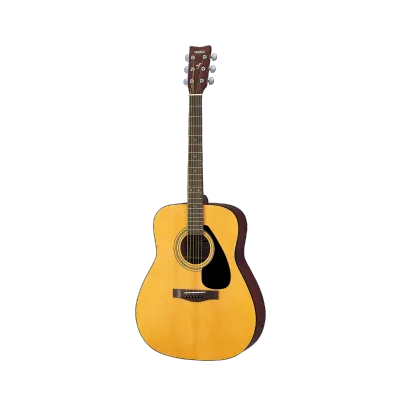
![Yamaha FG800 FG800M Acoustic Guitar FG 800 M Full Size Solid Spruce Top Beginners Series [LIMITED STOCK]](https://img.lazcdn.com/g/p/ebccdae0f44bc8448a2d98fc192a14d6.jpg_400x400q80.jpg_.webp)
Prices are valid at publication and may change. Please refer to the product page for the latest price.
| Specification | Yamaha F310 | Yamaha FS800 |
|---|---|---|
| Body Shape | Traditional Western (Dreadnought) | Small / Concert (FS Shape) |
| Top Wood | Laminate Spruce | Solid Sitka Spruce |
| Back & Sides | Meranti / Locally Sourced Tonewood | Nato / Okume |
| Neck Material | Nato | Nato |
| Fingerboard | Rosewood or Walnut | Rosewood or Walnut |
| Scale Length | 634 mm (25 inches) | 634 mm (25 inches) |
| Nut Width | 43 mm (1 11/16 inches) | 43 mm (1 11/16 inches) |
| Bracing | Standard Non-Scalloped | Scalloped Bracing |
| Target Player | Budget-conscious strummers, casual players | Fingerstyle players, serious learners, smaller frames |
Remember to verify the exact hardware specifications, such as the specific fingerboard wood, tuning machines, and bridge pins, on the manufacturer’s label or at your local point of purchase. Minor factory updates and regional variations can occur over different production years, meaning some batches may feature walnut instead of rosewood, or slightly different tuner designs.
Body Shape and Comfort: Dreadnought vs Concert
The physical feel of an acoustic guitar is one of the most critical factors in determining whether a beginner will stick with the instrument. If a guitar is physically uncomfortable to hold, practicing becomes a chore rather than a pleasure. The F310 and FS800 represent two fundamentally different approaches to body design, which directly affects their ergonomics and playability.

The Yamaha F310 features a Traditional Western body shape, which is Yamaha’s version of the classic dreadnought. This design is characterized by its large size, deep body cavity, and wide waist. Physically, the dreadnought is built to move a large volume of air, resulting in a loud acoustic voice with a booming bass response. However, this large footprint can be highly challenging for certain players. If you have a smaller physical frame, are buying for a younger student, or enjoy practicing while seated on a deep sofa, the F310 can feel unwieldy. It forces your strumming arm to wrap high and wide over the lower bout of the guitar, which can lead to shoulder tension and muscle fatigue during long practice sessions.
In contrast, the Yamaha FS800 utilizes a concert-style body, which Yamaha designates as their “FS” shape. This body style features a significantly tighter waist, a narrower upper bout, and a shallower body depth. When you hold the FS800, it sits much closer to your torso, allowing your arm to drape naturally over the lower bout without awkward elevation. This compact geometry makes the instrument feel highly accessible and physically manageable, especially for players who find traditional dreadnoughts too bulky.
This difference in body shape also influences your playing posture and overall endurance. A comfortable guitar encourages you to sit upright and maintain relaxed shoulders, which is essential for developing proper technique. Because the FS800 reduces physical strain, it allows beginners to practice for longer periods without experiencing the muscle fatigue that often leads to frustration. While the F310’s larger body is excellent for raw acoustic projection, the FS800’s concert shape provides an ergonomic, player-friendly experience that actively supports your physical development as a musician.
Tonewoods and Sound Profile: Laminate vs Solid Top
The acoustic voice of a guitar is primarily determined by its soundboard, which is the top piece of wood on the body. This is where the strings transfer their energy, causing the wood to vibrate and project sound. The structural difference between the F310 and the FS800 in this area represents the single most important musical distinction between the two models.
The Yamaha F310 is constructed with a laminate spruce top. Laminate wood consists of multiple thin layers of wood pressed and glued together, often with a decorative veneer on the outside. This construction method makes the F310 exceptionally durable and highly resistant to environmental changes. In tropical climates like Singapore, where relative humidity levels can fluctuate dramatically between outdoor environments and air-conditioned rooms, laminate wood is highly stable. It is far less likely to warp, swell, or crack under these conditions. However, because laminate wood is stiffer and bound by heavy adhesives, it does not vibrate as freely as solid wood. The resulting tone is bright, punchy, and clear, but it lacks deep resonance, sustain, and dynamic range. A laminate top’s sound is also static, meaning it will not change or mature over time.
The Yamaha FS800 features a solid Sitka spruce top. Solid wood refers to a single, continuous slice of timber without any glue layers or artificial binders restricting its movement. This allows the soundboard to vibrate with exceptional freedom, responsiveness, and efficiency. The acoustic result is a warmer, more balanced, and highly nuanced sound profile with significantly better sustain. When you play the FS800, you will notice a richer bass response, clearer mid-range frequencies, and sweeter high notes. Additionally, solid wood possesses a unique organic property: it “opens up” over time. As the wood fibers are subjected to the constant vibration of playing, they gradually loosen and become more resonant. This means your FS800 will actually sound better, deeper, and more complex after a year of consistent practice.
These acoustic differences directly influence how each guitar performs across different musical styles. The F310’s bright, immediate projection makes it highly effective for heavy chord strumming and vocal accompaniment, where its clear voice cuts through cleanly. The FS800, enhanced by its solid top and modern scalloped bracing, is a far more versatile instrument. It responds beautifully to the delicate touch of fingerpicking, allows for subtle dynamic control, and provides a much more satisfying tonal canvas for recording. For beginners who want to explore a wide variety of musical genres, the acoustic sophistication of the FS800 offers a far more rewarding experience.
Pricing, Value, and Long-Term Investment
When purchasing a beginner instrument, it is important to evaluate the long-term value of your investment rather than focusing solely on the initial price tag. Both the F310 and the FS800 offer exceptional build quality for their respective price points, but they represent different financial strategies for a starting player.
The Yamaha F310 is positioned as a highly budget-friendly, entry-level instrument. It represents an incredibly low-risk financial commitment, making it the ideal choice for absolute beginners who are testing the waters and are not yet sure if they will stick with the hobby. If you are buying a guitar for a child or simply want a dependable, low-cost instrument to keep around the house for casual strumming, the F310 provides outstanding reliability without requiring a large upfront expense. It is a highly durable workhorse that delivers solid performance day in and day out.
The Yamaha FS800 sits in a slightly higher price band, representing a “step-up” beginner guitar. While it requires a larger initial investment, it is often the more cost-effective choice in the long run. Many beginners who start on a laminate-top guitar find themselves wanting a richer, more expressive sound within a year or two of steady progress. This inevitably leads to an upgrade purchase, meaning you end up buying two instruments. By investing in the FS800 from the start, you secure an instrument with the acoustic depth and playability to satisfy intermediate players, effectively delaying or completely eliminating the need for a future upgrade.
When shopping in Singapore, it is highly recommended to look for beginner bundles offered by local music stores and authorized online music retailers. These bundles often package the guitar with essential accessories, such as a padded gig bag, a digital clip-on tuner, a strap, spare strings, and picks. Purchasing these items together in a bundle can offer significant savings compared to buying them individually. If your budget allows for the FS800, especially when packaged in a value-added bundle, the long-term musical return on your investment is incredibly high. However, if your budget is strictly capped, the F310 remains a highly respectable, dependable choice that will not disappoint.
Final Verdict: Making Your Final Decision
Ultimately, both the Yamaha F310 and the FS800 are superb instruments that showcase Yamaha’s dedication to quality craftsmanship and user-friendly design. Your final choice should depend on your physical comfort, budget limits, and musical commitment.
The Yamaha F310 is the pragmatic, low-risk choice. It is ideal for casual strummers, those on a strict budget, or anyone who needs a highly durable guitar that can handle tropical humidity shifts with minimal maintenance. It provides a reliable, solid foundation for learning your first chords and rhythm patterns.
The Yamaha FS800 is the superior musical instrument. If you are committed to learning and want a guitar that will inspire you with its rich tone and comfortable playability, the FS800 is well worth the extra investment. Its compact concert body offers excellent physical comfort, while its solid spruce top delivers a warm, resonant, and evolving sound that will support your musical growth for years to come.
To make the absolute best decision, the most effective final step is to visit a physical music showroom. Hold both guitars, feel how the neck profiles sit in your hand, and strum a few chords. Even if you do not know how to play yet, hearing the resonance of the solid top in person and feeling how each body shape fits your torso will immediately reveal which Yamaha guitar is the perfect partner for your musical journey.
Frequently Asked Questions (FAQ)
Do I need to buy a separate tuner and accessories for these guitars?
Both the Yamaha F310 and FS800 are typically sold as standalone instruments directly from the factory, meaning they do not automatically include accessories in the standard box. When purchasing, it is highly advisable to check if your chosen local music shop or authorized online retailer offers a curated beginner bundle. A complete starter setup should ideally include a digital clip-on tuner, a padded gig bag for safe transport, a comfortable strap, a few medium-gauge picks, and a spare set of acoustic strings. If these are not bundled, you will need to budget for them separately to ensure a smooth learning experience.
Will the FS800 solid top crack in Singapore's humid weather?
While solid wood is naturally more sensitive to environmental changes than laminate wood, Singapore’s consistently high ambient humidity is rarely the primary cause of cracking. Acoustic guitar wood is far more vulnerable to sudden, extreme drying. The real risk in Singapore comes from leaving your guitar exposed in heavily air-conditioned rooms, which strips moisture from the wood rapidly and can cause the solid top to shrink and crack. To protect your FS800, get into the habit of storing it inside a padded gig bag or hard case when you are not playing, and keep it positioned well away from direct air-conditioning vents.
Can I upgrade the strings on the F310 to make it sound like the FS800?
Installing a set of premium, high-quality acoustic strings can certainly enhance the clarity, brightness, and overall playability of the Yamaha F310. However, string upgrades cannot overcome the physical limitations of a laminate wood soundboard. The warm resonance, long sustain, and complex harmonic depth of the FS800 are direct results of its solid spruce top vibrating as a single, uninterrupted piece of wood. While fresh strings will make your F310 sound its absolute best, they cannot replicate the organic, evolving acoustic properties of a solid wood instrument.
Community discussion
Share your experience or ask a question. Comments are reviewed before publication.