
Selecting your first acoustic guitar is a pivotal decision that directly influences how often you practice and how quickly you progress. The Yamaha F310 has long been a staple in the beginner market, frequently recommended for its structural reliability and standardized manufacturing. However, an instrument that works well for one player might prove uncomfortable or tonally uninspiring for another. Choosing between the F310 and its competitors requires evaluating how its specific design elements align with your physical stature, practice environment, and musical preferences.
To make an informed choice, you must look beyond brand reputation and examine the physical specifications of the instrument. Factors such as body shape, scale length, nut width, and wood construction determine not only how the guitar sounds but also how easy it is to hold and play. By comparing these baseline characteristics against alternative entry-level designs, you can identify the instrument that will minimize early learning hurdles and keep you motivated.
Defining the Baseline: Yamaha F310 Specifications and Design
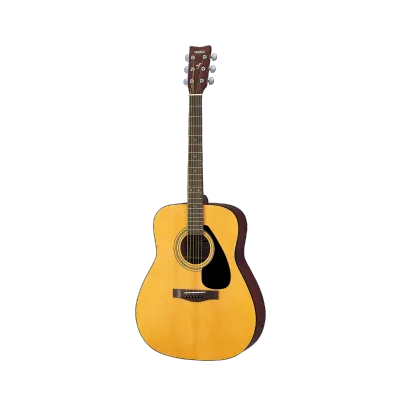
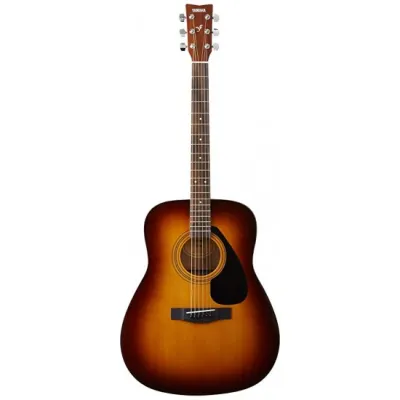
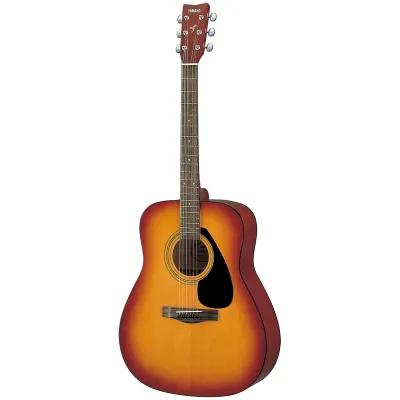
The Yamaha F310 is built around the classic dreadnought body shape, which is the most common design for acoustic guitars. This shape features a deep body cavity and a relatively wide waist, which naturally maximizes internal air volume to produce a loud, robust sound. For beginners, this means the instrument offers excellent natural projection, allowing you to hear your notes clearly even with a light strumming technique. However, the physical footprint of a dreadnought is substantial, requiring a larger seating area and a wider arm reach to drape over the lower bout of the guitar.
Products mentioned in this guide
![Yamaha F310 Acoustic Guitar Natural Brown Cherry Sunburst F 310 F-310 Spruce Top Standard Size [LIMITED STOCK]](https://img.lazcdn.com/g/p/ccd5e325f3295bdb6d6e1cb2cca8bfd4.jpg_400x400q80.jpg_.webp)
![Yamaha F310P Natural Acoustic Guitar Package Spruce Top F310 P [LIMITED STOCK]](https://img.lazcdn.com/g/p/e35d6df7dc61b38557fe9adcaf8b5eba.jpg_400x400q80.jpg_.webp)
![Yamaha F310P Tobacco Brown Sunburst Acoustic Guitar Package Spruce Top F310 P [LIMITED STOCK]](https://img.lazcdn.com/g/p/c31dd16a58d1682e2c7a157b757f2d5d.jpg_400x400q80.jpg_.webp)
![Yamaha F310P Acoustic Guitar Package Full Size Traditional Western Body Spruce Top F310 P Beginner Series [LIMITED STOCK]](https://img.lazcdn.com/g/p/b8fe2168efd38d65ea74060dab00ad3b.png_400x400q80.png_.webp)
Prices are valid at publication and may change. Please refer to the product page for the latest price.
In terms of materials, the F310 utilizes a laminated spruce top paired with laminated meranti back and sides. Laminated wood consists of multiple thin layers of wood pressed and glued together, topped with a fine veneer. While purists often favor solid wood for its resonance, laminated construction offers a major practical advantage for beginners, particularly in tropical climates like Singapore. Laminated guitars are highly stable and resistant to extreme humidity fluctuations, meaning they are less likely to warp, crack, or suffer from shifting action when transitioning between air-conditioned rooms and humid outdoor environments.
The neck of the F310 is designed with a slightly shorter scale length of approximately 634mm compared to the standard 648mm found on many other dreadnoughts. This shorter scale reduces string tension slightly, making it marginally easier for novice fingers to press down on the strings. The nut width stands at a standard 43mm, which keeps the string spacing compact enough for comfortable open-chord shapes without requiring excessive finger stretch. The neck profile is a comfortable, slim contour that accommodates a wide range of hand sizes, while the hardware includes basic covered chrome tuners that hold tuning stability reasonably well under normal playing conditions.
Critical Comparison Dimensions for Entry-Level Acoustics
When comparing the Yamaha F310 to other entry-level acoustic guitars, the first major point of comparison is body size and ergonomics. While the dreadnought shape of the F310 excels at volume and bass response, it can feel overwhelming for younger players, individuals with smaller frames, or those who practice in confined spaces. Alternative body shapes, such as concert (often designated as “FS” or “000” shapes) or grand auditorium models, feature narrower waists and shallower depths. These smaller bodies sit lower on the lap, bringing the neck closer to the player’s body and reducing shoulder strain during extended practice sessions.

Another critical dimension is the choice between laminated and solid-top construction within your budget. While the F310 is fully laminated, some entry-level competitors offer a solid spruce top at a slightly higher price point, often under S$300 or S$400. A solid top consists of a single piece of wood that vibrates more freely than laminated layers, resulting in greater dynamic range, richer overtones, and a tone that matures and improves as the wood ages. However, a solid-top guitar requires diligent maintenance, including humidity control devices or humidified cases, to prevent the wood from cracking in dry environments or swelling in high humidity. Beginners must weigh the tonal benefits of a solid top against the low-maintenance durability of a fully laminated model like the F310.
Neck specifications also vary significantly across beginner models. While a 43mm nut width is standard, some alternative guitars feature a wider 44mm or 45mm nut. This extra millimeter or two may seem negligible, but it provides additional spacing between the strings, which can prevent your fingers from accidentally muting adjacent strings when playing complex chords. Conversely, players with very small hands or shorter fingers often prefer a narrower nut or a more pronounced V-shaped neck profile that allows their thumb to wrap around the neck more easily.
Assessing Playability and Physical Comfort
Playability is the single most important factor in determining whether a beginner sticks with the guitar or gives up. The primary driver of playability is the “action,” which refers to the height of the strings above the fretboard. If the action is too high, you will have to exert excessive finger pressure to fret notes, leading to rapid hand fatigue and sore fingertips. While the F310 is manufactured to consistent factory standards, shipping conditions, temperature changes, and storage can cause the wood to shift, altering the action by the time the guitar reaches the retail shelf. It is essential to inspect the string height at the 12th fret; if the gap looks excessively wide, the guitar will require a setup adjustment.
The feel of the neck and the finish on the back of the neck also impact comfort. The F310 features a smooth, satin-like finish on the back of the neck, which allows the hand to slide easily up and down the fretboard without sticking. Some alternative beginner guitars use a high-gloss finish on the neck, which can feel sticky when your hands sweat during warm practice sessions. Additionally, you should run your fingers along the edges of the fretboard to check for sharp metal fret ends that protrude from the wood. This is a common issue in budget instruments when the wood shrinks, and it can make playing highly uncomfortable.
Finally, consider the physical weight and balance of the instrument. A well-balanced guitar should sit comfortably on your lap without the neck diving toward the floor or the body slipping off your thigh. Dreadnought guitars like the F310 have a larger body mass, which helps anchor the instrument on your lap but can feel cumbersome if you prefer to practice while slouched on a sofa. Testing different body shapes in a physical store allows you to observe how your shoulder, elbow, and wrist align when reaching for the first fret.
Tonal Expectations and Genre Suitability
The combination of a laminated spruce top and meranti back and sides gives the Yamaha F310 a bright, clear, and direct acoustic voice. Spruce is naturally reflective and highlights the higher frequencies, which makes strummed chords sound crisp and articulate. Because the back and sides are made of meranti, the midrange is relatively balanced, preventing the guitar from sounding overly muddy or boomy. However, because the wood is laminated, the overall sustain—how long a note rings out after being plucked—is shorter than what you would experience on a solid-top instrument.
This tonal profile makes the F310 highly suitable for rhythmic strumming, folk music, pop accompaniment, and classic rock acoustic parts. The dreadnought body provides the necessary volume and bass response to support a singer’s voice without needing amplification. If your primary goal is to strum chords while singing or play in an ensemble setting, the F310 offers the projection and presence required to cut through the mix.
In contrast, if your musical interests lean toward fingerstyle guitar, classical arrangements, or delicate blues, a smaller-bodied alternative may serve you better. Concert and grand auditorium guitars produce a more balanced frequency response across all six strings, ensuring that individual treble notes are not drowned out by a booming bass. These smaller shapes also respond more quickly to a light touch, allowing subtle fingerpicking nuances to be heard clearly without requiring the heavy right-hand attack that a large dreadnought body demands.
Decision Framework: Choosing the Right Beginner Guitar
To finalize your decision, evaluate your physical needs and musical goals against the following criteria:
You should choose the Yamaha F310 if:
- You want a highly durable, low-maintenance instrument that can withstand humidity variations without warping.
- Your primary playing style will involve strumming chords, playing folk or pop music, and accompanying vocals.
- You have an average to large physical frame and find the traditional dreadnought body shape comfortable to hold.
- You prioritize a reliable, consistent factory build from an established brand with a proven track record in student instruments.
You should choose an alternative beginner acoustic if:
- You have a smaller physical frame, are purchasing for a younger player, or prefer practicing in tight spaces where a smaller concert body would be more ergonomic.
- You want to focus primarily on fingerstyle playing and require a more balanced, note-focused tonal response.
- You are willing to invest slightly more (typically up to S$300 or S$400) for a solid-top guitar that offers richer tone and better dynamic range, and you are prepared to maintain its humidity levels.
- You have specific physical preferences, such as a wider nut width for larger fingers or a different neck profile.
Before making any purchase, visit a local music retailer to physically test the instruments. Hold the guitar on your lap, check how far you must stretch your arm to reach the first fret, and run your hand along the neck to ensure there are no sharp fret edges. Ask the retailer about their setup policies; many dedicated music shops will adjust the string action for you at the point of sale, ensuring your new guitar is as easy and comfortable to play as possible from day one.
Frequently Asked Questions (FAQ)
Does the Yamaha F310 require a professional setup out of the box?
While the Yamaha F310 is manufactured to high quality-control standards, factory setups are designed to be conservative and may not suit every player’s preference. Changes in humidity and temperature during shipping can also cause the neck to bow slightly, raising the string action. If you find that pressing down on the strings requires significant effort, or if you experience buzzing on certain frets, you should take the guitar to a qualified technician. A professional setup—which involves adjusting the truss rod, filing the nut slots, and lowering the saddle—can dramatically improve playability and reduce finger fatigue for a beginner.
When should a beginner consider upgrading from a laminated acoustic guitar?
A beginner should consider upgrading when their physical technique outgrows the tonal capabilities of a laminated instrument. As your ear becomes more discerning, you may notice a lack of sustain, dynamic range, or tonal warmth when playing expressive passages. Specific milestones that warrant an upgrade include mastering barre chords, developing a consistent fingerstyle technique, or performing in public where greater projection is needed. Transitioning to a solid-top or all-solid wood guitar will allow you to explore a wider range of dynamics and tonal colors that a laminated guitar simply cannot reproduce.

Community discussion
Share your experience or ask a question. Comments are reviewed before publication.