
Quick Answer: Yamaha FS800 vs Fender FA-115
Choosing between the Yamaha FS800 and the Fender FA-115 depends primarily on your physical comfort preferences and your musical goals. The Yamaha FS800 features a compact concert body shape and a solid spruce top, making it highly suitable for players with a smaller physical frame, those who prefer fingerstyle playing, or anyone practicing primarily while seated.
Conversely, the Fender FA-115 utilizes a traditional, larger dreadnought body shape with a laminated spruce top. This design is better suited for players with a larger frame, those who prefer aggressive strumming, or singers looking for a loud, resonant vocal accompaniment.
Before finalizing your purchase, verify the current local availability, bundle inclusions (such as gig bags, tuners, or straps), and exact retail prices in S$ from authorized musical instrument dealers in Singapore.
Products mentioned in this guide
![Yamaha FS800 Acoustic Guitar Small Concert Body Solid Spruce Top Beginners Series FS 800 FS-800 [LIMITED STOCK]](https://img.lazcdn.com/g/p/538ed74d5a320975dafee5c3fe1485d7.jpg_400x400q80.jpg_.webp)
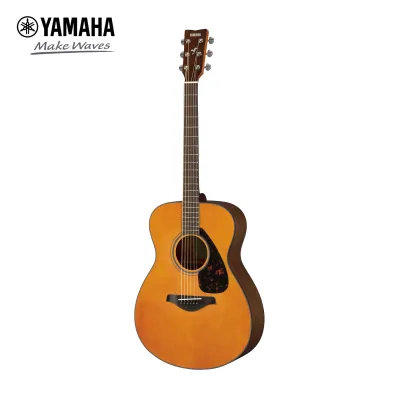
Prices are valid at publication and may change. Please refer to the product page for the latest price.
Key Specifications to Verify Before Buying
Body Shape and Dimensions
The physical footprint of an acoustic guitar dictates both its ergonomic feel and its acoustic projection. The Yamaha FS800 is built with a concert body profile, which features a narrower waist and a shallower body depth compared to standard models. The Fender FA-115 is a traditional dreadnought, characterized by a wider waist, a broader lower bout, and a deeper body cavity. Beginners should check these physical dimensions in person to ensure the instrument fits comfortably against their torso.

Top Wood Construction
The soundboard, or top wood, is the most critical component for acoustic tone generation. The Yamaha FS800 features a solid spruce top, meaning the soundboard is crafted from a single continuous piece of timber. The Fender FA-115 utilizes a laminated spruce top, which consists of multiple thin layers of wood pressed together. While solid tops are generally prized for their resonance, laminated tops offer excellent structural stability under varying environmental conditions.
Neck Profile and Nut Width
Neck playability is determined by the shape of the neck back and the width of the nut. A narrower nut width brings the strings closer together, which can make open chords easier to fret for players with smaller hands. A wider nut width provides more physical space between individual strings, reducing the likelihood of accidentally muting adjacent strings. Cross-reference the official manufacturer websites to verify the exact neck specifications and nut widths for both models before purchasing.
Playability and Comfort for Beginners
Body Depth and Seated Practice
For a beginner, physical comfort during long practice sessions is essential for building muscle memory. A deep dreadnought body like the Fender FA-115 requires you to drape your strumming arm higher and wider over the lower bout. This posture can lead to shoulder fatigue during extended seated practice, especially for younger players. The shallower concert body of the Yamaha FS800 sits lower on the lap, allowing a more natural, relaxed shoulder and elbow alignment.
String Action and Setup
String action refers to the height of the strings above the fretboard. High action requires significant finger pressure to press the strings down, which can cause finger pain and discourage early practice. When visiting a local retail store, ask the technician to inspect the action at both the nut and the twelfth fret. Many entry-level guitars benefit from a professional setup to lower the action to an optimal, comfortable height.
Fretboard Feel and Fret Edges
During an in-store trial, run your hand gently along both sides of the neck to check the fret finishing. The metal fret wires should be smooth and flush with the edge of the fretboard. Sharp or protruding fret edges can scrape your hand during chord transitions, indicating poor quality control or wood shrinkage. Inspecting the fretboard wood for dryness or cracking is also a reliable way to gauge the initial condition of the specific instrument you are testing.
Sound Profile and Musical Styles
Tonal Characteristics of Body Shapes
The volume of air inside the guitar body directly shapes its acoustic voice. The dreadnought shape of the Fender FA-115 produces a robust bass response and high natural volume, making it excellent for flatpicking and loud, rhythmic strumming. The concert shape of the Yamaha FS800 yields a more balanced, focused mid-range tone, where individual notes in a chord stand out clearly rather than blending into a heavy bass wash.
Solid vs. Laminated Top Performance
A solid spruce top, like that on the FS800, is highly responsive to subtle playing dynamics and light fingerstrikes. Over years of consistent play, solid wood gradually matures and “opens up,” which can enhance the warmth and complexity of the tone. A laminated top, like on the FA-115, maintains a highly consistent sound profile over time but generally lacks the dynamic range, sustain, and tonal evolution of a solid wood soundboard.
Matching Styles to the Instrument
If your goal is to play folk, fingerstyle, or intricate classical-adjacent arrangements, the focused clarity of the concert body is highly advantageous. If you plan to strum open chords loudly to accompany your singing or play in a group setting where acoustic volume is necessary, the dreadnought’s natural projection is highly beneficial. Consider your primary musical interests when evaluating these acoustic profiles.
Build Quality and Long-Term Value
Structural Inspection Points
Before finalizing your purchase, perform a physical inspection of the guitar. Check the neck joint where it meets the body to ensure there are no visible gaps or glue residue. Inspect the bridge—the wooden piece glued to the top of the guitar—to verify it is completely flush with the soundboard without any lifting at the back edge. Turn the tuning machines to ensure they rotate smoothly without slipping or grinding.
Humidity Management in Singapore
Singapore’s tropical climate presents unique challenges for acoustic guitars. Relative humidity levels often hover around 80% or higher. Solid wood tops are highly hygroscopic, meaning they absorb moisture from the air, which can cause the top to swell, raising the action and warping the neck. Laminated tops are much more resistant to humidity-induced warping. If you choose a solid-top guitar like the FS800, you must plan for proper storage, such as using a hard case with silica gel packs, a dedicated dehumidifier, or keeping the instrument in an air-conditioned room.
Warranty and Support
Always purchase from an authorized local distributor to secure a valid manufacturer warranty. Check the specific terms of the warranty, as some cover structural defects for a year or more, while others may only cover hardware. Local after-sales support is invaluable if the guitar requires neck relief adjustments or bridge repairs due to environmental exposure.
Decision Framework: Which One Should You Pick?
Choose the Yamaha FS800 if:
- Physical Comfort: You prefer a physically smaller, lighter instrument that is easy to hold while seated.
- Playing Style: Your primary interest is fingerstyle playing or light, articulate picking.
- Tonal Growth: You want a solid wood top that can mature and improve in tone over time.
- Maintenance Commitment: You are willing to manage humidity levels to protect the solid wood construction.
Choose the Fender FA-115 if:
- Physical Frame: You have a larger physical frame and find a full-sized dreadnought comfortable to hold.
- Playing Style: Your primary playing style involves heavy strumming or vocal accompaniment.
- Climate Resilience: You prefer a highly durable, laminated top that is less sensitive to high humidity.
- Acoustic Volume: You are looking for a straightforward, traditional acoustic sound with strong bass projection.
Verify first if:
- Accessory Bundles: The local retailer includes essential accessories like a gig bag, tuner, and strap in the purchase price.
- Professional Setup: The instrument has been inspected and set up by a technician to ensure comfortable string action.
- Budget Limits: The current retail price in S$ fits your budget, keeping in mind the potential cost of humidity control accessories.
Frequently Asked Questions (FAQ)
Do I need to buy a specific case for the Yamaha FS800 or Fender FA-115?
Yes, case compatibility depends heavily on the body shape. A standard dreadnought case or gig bag is designed for larger instruments and will be too loose for a concert-sized guitar like the Yamaha FS800. A loose fit allows the guitar to slide around inside, risking damage to the neck or headstock during transport. Conversely, a concert-sized case will be too small to fit a dreadnought like the Fender FA-115. Always check the internal dimensions, padding thickness, and neck support cradle of the case before purchasing.
Which guitar holds its tuning better for a beginner?
Tuning stability is determined by several mechanical factors rather than the brand name alone. Check the quality of the tuning machines, the smoothness of the nut slots, and how well the strings are wound around the posts. New strings naturally stretch and slip during the first few days of play, requiring frequent retuning regardless of the guitar model. To improve stability, gently stretch new strings during installation and ensure the nut slots are free of friction. If tuning issues persist, have a local technician inspect the nut and tuning gears.
Community discussion
Share your experience or ask a question. Comments are reviewed before publication.