
Choosing your first musical instrument is a pivotal step that shapes your learning journey. When deciding between a Yamaha portable keyboard and a Yamaha digital piano, the right choice depends on your primary musical goals, your available living space, and how you plan to practice. While both instruments produce beautiful sounds, they are designed for entirely different types of players. A portable keyboard offers versatility, lightweight mobility, and a vast library of sounds, making it excellent for casual playing and music production. In contrast, a digital piano focuses on replicating the authentic touch, weight, and acoustic resonance of a traditional piano, making it the standard choice for classical training.
Understanding the Core Differences: Portable Keyboard vs Digital Piano
The most fundamental difference between these two instruments lies in their key action and touch response. Yamaha digital pianos typically feature fully weighted keys, often utilizing graded hammer action mechanisms. This design replicates the physical resistance of an acoustic piano, where the keys in the lower register feel heavier than those in the treble. Portable keyboards, on the other hand, generally feature unweighted or semi-weighted keys. These keys rely on simple spring tension, offering very little resistance, which is ideal for playing fast synthesizer lines or organ passages but does not build the finger strength required for traditional piano playing.
The number of keys also sets these instruments apart. A standard digital piano features a full layout of 88 keys, matching the range of an acoustic grand piano. This allows you to play any piece of sheet music without running out of notes. Portable keyboards are more compact, commonly offering 61 or 76 keys. While a 61-key layout is sufficient for most popular music, basic chords, and beginner exercises, it will limit your ability to play advanced classical repertoire or pieces that span the extreme high and low registers.
Products mentioned in this guide
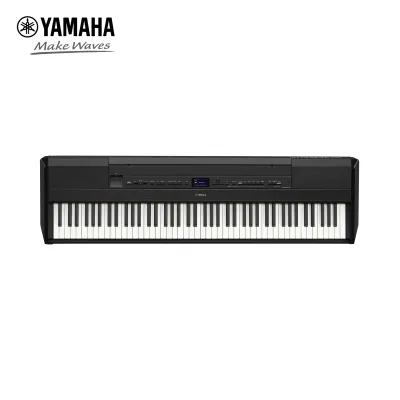
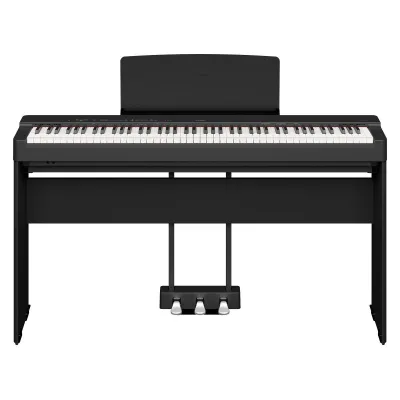
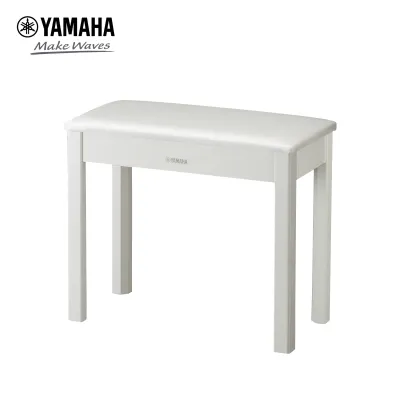
Prices are valid at publication and may change. Please refer to the product page for the latest price.
Sound design philosophy differs significantly between the two categories. Yamaha portable keyboards are built as versatile entertainment stations, packed with hundreds of diverse instrument voices, drum kits, and auto-accompaniment rhythms. They allow a single player to sound like a full band or orchestra. Digital pianos prioritize sound depth over variety. They focus on high-resolution, multi-layered samples of world-class acoustic grand pianos, capturing subtle nuances like string resonance and key-off samples to deliver a highly expressive, authentic acoustic experience.
Finally, the physical footprint and speaker systems reflect their intended environments. Digital pianos are often housed in substantial wooden cabinets or sturdy chassis with integrated pedal boards, designed to be permanent fixtures in a room. They feature larger, more powerful built-in speaker systems that project sound with rich bass and clear highs. Portable keyboards are lightweight, plastic-bodied instruments designed to be placed on foldable stands and easily stored away when not in use. Their smaller speakers are optimized for personal practice rather than filling a large room with acoustic-like resonance. This difference in construction also impacts the price, with portable keyboards often costing a few hundred S$ while console digital pianos typically start at over S$1,000.
Aligning the Instrument With Your Learning Goals
Before making a purchase, you must evaluate your long-term musical aspirations and daily practice routines. If your primary goal is to learn proper piano technique, read traditional sheet music, and eventually transition to an acoustic piano, a digital piano is almost always the better investment. Practicing on unweighted keys can lead to poor habits, as you will not develop the finger control, hand posture, and dynamic sensitivity needed to play an acoustic instrument expressively.

Conversely, if you are interested in songwriting, music production, or playing in a modern band, a portable keyboard offers tools that a digital piano cannot match. The built-in rhythms, auto-accompaniment styles, and educational suites found in many portable keyboards help beginners understand song structure, timing, and arrangement. These features make early practice sessions highly engaging, especially for younger learners who might find traditional scales and classical exercises repetitive.
Choosing for Classical and Traditional Piano Training
For those pursuing classical training or formal piano exams, an 88-key digital piano with graded hammer action is a strict necessity. Traditional piano repertoire relies heavily on dynamic control—the ability to play softly (piano) or loudly (forte) based on how hard you strike the keys. Graded touch response ensures that the instrument responds accurately to the subtle nuances of your touch, allowing you to develop a wide expressive range.
Furthermore, a minimalist interface is highly beneficial for traditional students. Many digital pianos feature clean control panels with only a few buttons, keeping the focus entirely on the keys and the sheet music. This lack of visual distraction helps students concentrate on their posture, hand positioning, and reading skills, rather than getting sidetracked by changing instrument voices or playing with backing tracks.
Choosing for Pop, Electronic, and Music Production
If your musical interests lean toward pop, electronic music, or digital music production, the diverse feature set of a portable keyboard is incredibly valuable. Having access to hundreds of instrument voices—ranging from electric pianos and synthesizers to brass and string ensembles—allows you to experiment with different genres and arrangements. Real-time control knobs and pitch bend wheels, found on many advanced keyboards, let you manipulate sounds on the fly, adding a creative dimension to your playing.
Connectivity is another crucial factor for modern creators. Portable keyboards often feature robust USB-to-Host or MIDI ports, allowing them to serve as MIDI controllers when connected to a computer, tablet, or smartphone. This integration makes it easy to record your playing directly into a Digital Audio Workstation (DAW) or interact with interactive learning software. The lighter key action is also physically easier on the hands when playing rapid synth leads, organ glissandos, or programming drum patterns.
Evaluating Your Living Space and Portability Needs
Your physical environment plays a massive role in determining which instrument is practical for your home. In compact urban living spaces, such as typical high-rise apartments in Singapore, a massive console digital piano can dominate a room. If space is limited, a portable keyboard or a slim, slab-style digital piano that can be mounted on a foldable X-stand or stored under a bed is highly advantageous. You must measure your designated practice area carefully, keeping in mind that an 88-key instrument is approximately 1.3 to 1.4 meters wide.
Weight and mobility are equally important if you plan to move the instrument frequently. A console digital piano with an integrated wooden stand can easily weigh over 35 kilograms, making it a two-person job to move. A portable keyboard, by contrast, often weighs less than 6 kilograms, allowing you to carry it effortlessly between rooms, take it to music lessons, or pack it into a gig bag for outdoor performances.
Noise management is a vital consideration for anyone living in shared spaces or close-proximity housing. Both Yamaha keyboards and digital pianos feature headphone jacks, which are essential for silent practice at any hour of the day or night. However, you should also consider the physical noise of the key action itself. Fully weighted keys produce a noticeable mechanical thumping sound when struck, which can travel through floors and walls in quiet apartment buildings. Unweighted keyboard keys are significantly quieter in their physical operation.
Power requirements and cable management also differ based on your setup. Digital pianos require a stable connection to a wall outlet and often come with substantial power adapters that are best kept in a permanent location. Many portable keyboards offer the option to run on standard AA batteries. This battery-powered capability provides ultimate freedom, allowing you to practice in areas without easy access to power outlets, such as balconies, parks, or temporary setups in the middle of a room.
Key Specifications to Verify Before You Buy
To ensure you select an instrument that meets your expectations, you must verify specific technical details in the manufacturer’s official documentation rather than relying solely on retail descriptions. First, examine the exact key action mechanism. Look for terms like “Graded Hammer Standard” (GHS) or “GrandTouch-S” in the official specifications to confirm the level of weighting. If a product description uses vague terms like “touch sensitive” or “piano-style keys” without specifying a weighted hammer mechanism, it is likely an unweighted keyboard.
Second, check the polyphony limit of the instrument. Polyphony refers to the maximum number of individual notes or voices the instrument can produce simultaneously. For a beginner keyboard, a polyphony of 32 or 64 notes is common and sufficient for basic playing. However, as you progress to using a sustain pedal or layering multiple sounds, notes will begin to cut off prematurely if the polyphony limit is too low. For a digital piano, look for a minimum of 64 notes, though 128 or 256 notes is highly recommended for seamless, expressive playing.
Third, confirm exactly what accessories are included in the retail box. Some packages include only the bare instrument, requiring you to purchase a power adapter, music rest, and sustain pedal separately. Budgeting for these extras is crucial; a high-quality sustain pedal that supports half-pedaling (for realistic acoustic piano expression) or a sturdy, adjustable stand can add significantly to your initial investment. Ensure you verify these inclusions on the manufacturer’s official product page or with an authorized dealer.
Finally, review the warranty terms and the availability of service centers in your region. Electronic musical instruments are long-term investments, and having access to official repair services is essential if a key sensor or power port requires maintenance. Verify that your purchase includes a local manufacturer’s warranty rather than a parallel import warranty, as official service centers may not accept instruments imported from other regions without official documentation.
Frequently Asked Questions (FAQ)
Do I need to buy a separate stand, bench, and pedals?
Whether you need to purchase these accessories separately depends entirely on the specific model and package you choose. Console-style digital pianos usually come as a complete package, including an integrated wooden stand and a three-pedal board. Portable keyboards and slab-style digital pianos are typically sold as standalone units, meaning you will need to purchase a stand and a sustain pedal separately unless you opt for a retailer bundle.
Investing in an adjustable, padded bench is highly recommended for proper ergonomics. Maintaining the correct playing height is essential for preventing wrist strain and back fatigue during long practice sessions. For the pedal, basic keyboards often include a simple plastic footswitch, but serious piano students should upgrade to a metal, piano-style sustain pedal that offers realistic physical resistance and supports half-pedaling techniques.
Can I connect these instruments to learning apps and computers?
Yes, most modern Yamaha keyboards and digital pianos offer digital connectivity, but you must verify the specific ports available on your chosen model. Look for a USB-to-Host port on the instrument’s connection panel, which allows you to connect the keyboard to a computer, tablet, or smartphone using a standard USB cable. Some models also offer built-in Bluetooth MIDI or audio, enabling wireless connection to compatible devices.
Before attempting to connect, consult the manufacturer’s official specification sheet to confirm compatibility with your operating system, whether it is iOS, Android, Windows, or macOS. You may need to download specific drivers or proprietary companion apps to access interactive lessons, sheet music displays, or sound customization features. Additionally, keep in mind that while some basic learning apps are free, advanced educational platforms often require a paid monthly subscription.
Community discussion
Share your experience or ask a question. Comments are reviewed before publication.