
The Yamaha P-225 is a highly capable digital piano designed specifically for players who require an authentic acoustic-like touch in a compact form factor. If you are a beginner looking to build proper finger technique, develop a strong sense of dynamics, and practice on a reliable instrument that fits comfortably into a modern living room or a compact Singapore HDB flat, this model is an excellent candidate. It bridges the gap between basic portable keyboards and heavy, traditional console digital pianos, making it a popular starting point for students of all ages.
However, the right instrument depends entirely on your specific learning goals, budget, and space. Beginners working with a very strict budget under S$500, or those who primarily want to experiment with electronic beats, synthesizer sounds, and auto-accompaniment features, may find that other keyboard types are more suitable. Before committing to a purchase, it is helpful to look closely at the physical design, internal sound technology, and connectivity options of this model to ensure it matches your musical aspirations.
Key Action and Touch: Building Proper Technique from Day One
Developing correct finger strength and muscle memory is the single most important task for any beginner pianist. To achieve this, an 88-key keyboard with fully weighted keys is non-negotiable. Traditional acoustic pianos use a physical hammer mechanism that creates resistance when you press a key. If you practice on unweighted or semi-weighted keys, your fingers will not develop the necessary control, making it incredibly difficult to transition to an acoustic piano during lessons, exams, or performances.
Products mentioned in this guide
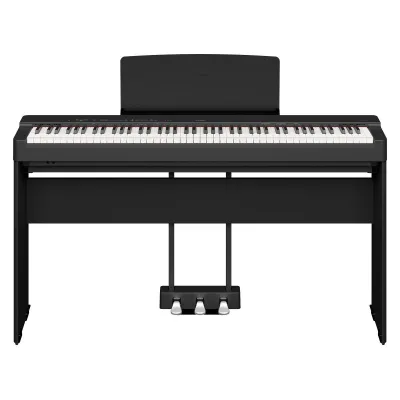
Prices are valid at publication and may change. Please refer to the product page for the latest price.
The Yamaha P-225 features the Graded Hammer Compact (GHC) keyboard action. This mechanism is engineered to replicate the acoustic experience by offering graded resistance—meaning the keys in the lower register feel heavier to the touch, while the keys in the higher register feel lighter. This graded response helps you build balanced hand strength and prepares you for the physical realities of playing a traditional piano. When evaluating this model, you should pay close attention to how the keys rebound and ensure the resistance feels comfortable for your current playing level.
Another critical feature to verify is the touch sensitivity settings. The P-225 allows you to adjust the keyboard’s response to your physical touch, offering options like soft, medium, hard, or fixed. If you have a lighter touch as a beginner, setting the sensitivity to soft can help you produce a full sound without straining your hands. However, teachers generally recommend practicing on the medium setting to encourage a natural dynamic range, helping you avoid the bad habit of playing too aggressively or too softly to compensate for poor finger posture. This is especially important for students preparing for graded practical exams, such as the ABRSM syllabus widely followed in Singapore.
The physical finish of the keys also plays a significant role in your daily practice. The P-225 features matte-finished black keys, which provide a subtle texture that improves grip. In a warm and humid environment like Singapore, fingers can easily become slippery during extended practice sessions. Having a textured matte surface instead of smooth, glossy plastic helps maintain control and prevents your fingers from sliding off the keys, allowing for more precise finger placement.
Sound Quality and Practice Tools: What Beginners Actually Need
An expressive sound engine is vital for developing a good musical ear. The P-225 uses high-quality samples from Yamaha’s flagship CFX concert grand piano, enhanced by Virtual Resonance Modeling Lite (VRM Lite). This technology simulates the complex sympathetic vibrations that occur inside an acoustic piano when strings react to one another. For a beginner, hearing these subtle resonances teaches you how to listen to your playing, helping you understand how different touch techniques alter the overall tone and color of the music.

When comparing digital pianos, you must also check the polyphony count, which refers to the maximum number of individual notes the instrument can produce at one time. The P-225 offers 192-note polyphony. While a beginner might only play a few notes at once, using the sustain pedal causes notes to ring out and layer on top of each other. A high polyphony count of 192 ensures that even when you play complex chords or rapid arpeggios with the pedal held down, older notes will decay naturally rather than being abruptly cut off by the sound processor.
Beyond the core piano tone, the instrument includes several practical utility tools designed to support your daily practice routine. A built-in metronome is essential for building a steady sense of rhythm and timing from your very first lesson. The onboard recording function is another invaluable tool; it allows you to record your performances and play them back, making it much easier to identify uneven tempos, missed notes, or dynamic inconsistencies that you might not notice while actively playing.
Modern digital pianos also offer advanced connectivity options to enhance the learning process. The P-225 includes a USB-to-Host port that handles both MIDI and digital audio. You should verify your device compatibility, but this connection typically allows you to link the piano directly to a tablet, smartphone, or computer. This lets you integrate the instrument with interactive learning software, sheet music readers, or Yamaha’s dedicated Smart Pianist application, which provides an intuitive touchscreen interface for adjusting voices, metronome settings, and recording functions.
Footprint and Setup: Fitting a Digital Piano into Your Space
For many aspiring musicians, finding space for a large musical instrument is a major challenge. The P-225 is designed with a highly compact footprint, making it ideal for smaller apartments, study rooms, or shared living spaces. Weighing approximately 11.5 kg and measuring roughly 132.6 cm in width, it is light enough to be moved by a single adult if you need to clear space, yet robust enough to feel like a serious instrument when placed on a proper stand.
Choosing the right support system is crucial for both safety and playing technique. While a portable metal X-stand is a convenient and cost-effective option for temporary setups, it can wobble during more energetic playing. For a stable, ergonomic setup, it is highly recommended to pair the keyboard with a dedicated wooden furniture-style stand, such as the L-200 (sold separately). A sturdy, stable base ensures the keyboard remains at the correct height (around 72 to 74 cm from the floor to the white keys) and prevents distracting movement that can ruin your hand posture.
The sustain pedal is another critical component that directly impacts your technique. The P-225 typically comes packaged with a basic plastic footswitch (the SP2). While functional for absolute beginners, this switch only registers on or off. As you progress, you will want to verify if your setup supports half-pedaling, which allows you to control the amount of sustain more precisely. Upgrading to a heavier, piano-style pedal like the Yamaha FC3A will give you a much more realistic physical response and allow you to practice advanced pedaling techniques correctly.
Finally, consider the placement of the built-in speakers. The P-225 features a redesigned speaker system with grilles on the back of the instrument, designed to project sound toward the player and the wall. If you position the piano flush against a hard wall, the sound can bounce back and sound overly bright or muddy. To get the best acoustic performance from the internal speakers, leave a small gap of a few centimeters between the back of the piano and the wall, or use a good pair of studio monitor headphones for a clear, direct stereo field during silent practice.
Value and Alternatives: Making a Smart First Investment
When purchasing your first digital piano, it is important to view the instrument as a long-term investment in your education. While entry-level keyboards with unweighted keys are significantly cheaper, they often become a bottleneck within a few months of starting lessons, forcing you to buy a replacement instrument much sooner than expected. A fully weighted model like the P-225, which typically sits in the S$800 to S$1,100 price range depending on the accessories included, provides the physical and acoustic fidelity needed to support your learning from beginner to early-intermediate levels.
However, you should look at alternative instruments if your specific needs do not align with what the P-225 offers:
- Ultra-strict budget: If you cannot spend more than S$400 to S$500, look for entry-level weighted models or reliable pre-owned digital pianos from authorized dealers.
- Arranger and production needs: If you want to create electronic music, use hundreds of non-piano instrument sounds, or play along with built-in auto-accompaniment drum tracks, a dedicated synthesizer or arranger keyboard would be a better fit.
- Traditional aesthetic: If you prefer a permanent piece of furniture with an integrated three-pedal lyre and a sliding key cover, a traditional console digital piano (such as the Yamaha Arius series) may be more appealing, though it will have a larger physical footprint.
Before making your final decision, remember to calculate the total cost of ownership. The base price of the keyboard often does not include essential accessories like a sturdy stand, a comfortable bench, headphones for silent practice, or a padded gig bag if you plan to travel. Many authorized music retailers in Singapore offer comprehensive bundles that include these items, which can offer better value than buying each accessory individually.
The final and most important step is to visit a local music showroom. Testing the physical key action and listening to the sound engine in person is the only way to truly verify that the instrument feels right to your hands and sounds pleasing to your ears. Be sure to verify the warranty terms and ensure you are purchasing from an authorized source to secure local repair coverage and the correct power adapter for Singapore’s electrical outlets.
Frequently Asked Questions (FAQ)
Do I need to buy a separate stand and sustain pedal?
While the Yamaha P-225 typically includes a basic plastic sustain footswitch and a music rest in the box, a proper stand and bench are usually sold separately. For a stable and ergonomic playing experience, it is highly recommended to purchase a sturdy stand—either a heavy-duty double-brace X-stand or the dedicated wooden L-200 furniture stand. You should carefully check the specific retail bundle details before purchasing, as many authorized dealers package the keyboard with a stand, bench, and upgraded pedal to offer better overall value.
Can I connect the piano to learning apps on my tablet or phone?
Yes, you can connect the P-225 to a variety of interactive learning applications and sheet music readers. The instrument features a USB-to-Host port that transmits both MIDI and digital audio data, allowing you to connect directly to an iPad, Android tablet, or computer using a standard USB cable (and a suitable adapter for your device). This connection lets you use popular educational software or Yamaha’s dedicated Smart Pianist app, which allows you to adjust the piano’s settings, select voices, and view sheet music directly on your device’s screen.
Will I outgrow this digital piano as I reach an intermediate level?
The Yamaha P-225 is built to support your musical journey well into the intermediate stages. Its 88 fully weighted keys, graded hammer action, and 192-note polyphony provide the physical resistance and dynamic expression required for standard intermediate classical and contemporary repertoire. You are unlikely to outgrow the instrument’s core capabilities for several years. However, advanced classical players who require highly complex physical hammer simulations, real wooden keys, or a physical grand piano pedal feel may eventually want to upgrade to a high-end console or hybrid digital piano.
Community discussion
Share your experience or ask a question. Comments are reviewed before publication.