
Quick Answer: Which Keyboard Piano Brand Suits Beginners Best?
Selecting your first keyboard piano is a foundational step in your musical journey, and both Yamaha and Casio offer exceptional instruments designed specifically for beginners. However, they cater to slightly different learning goals, musical preferences, and budgets. Understanding these distinctions early on will help you invest in an instrument that keeps you motivated and matches your practice environment.
Yamaha is generally the preferred choice for students focused on classical piano technique, authentic acoustic key feel, and a long-term transition to a traditional acoustic piano. Their instruments prioritize realistic key resistance and rich, natural grand piano tones. This makes them highly favored by music teachers and serious students who want to build proper finger strength from day one.
Casio is often the ideal match for casual learners, those on a stricter budget, or players who prioritize high portability and creative versatility. Casio excels at packing a wide variety of instrument sounds, rhythms, and interactive learning features into lightweight, space-saving designs. The rest of this guide breaks down these differences across key decision-making dimensions to help you choose the right model for your home.
Products mentioned in this guide
![Casio CT-S1 Digital Keyboard [FREE X-STAND] Portable 61 Keys Musical Instrument for Beginners](https://img.lazcdn.com/g/p/70d2952777c0faa1d5c43d84321fe320.jpg_400x400q80.jpg_.webp)
![Yamaha PSR-E283 Portable Digital Keyboard ⚫ Black 61 Keys PSRE283 AC Power Adapter PSR E283 Kids Musical Electronic Electric Instrument Absolute Piano The Music Works Store [LIMITED STOCK]](https://img.lazcdn.com/g/p/16a0f813c10e32e5e036a774ae933031.jpg_400x400q80.jpg_.webp)
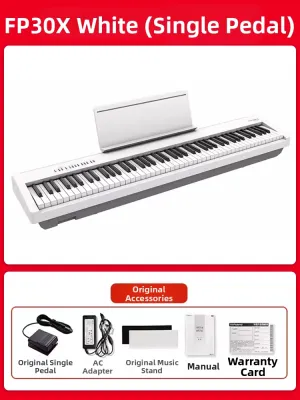
![[ammoon]61 Keys Digital Electronic Keyboard / Piano With MicrophoneUSB CableUser Manual](https://img.lazcdn.com/g/p/e4a8e0dd7c6374c271afdc54fc91cc43.jpg_400x400q80.jpg_.webp)
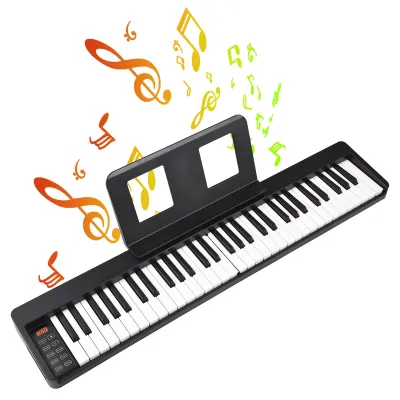
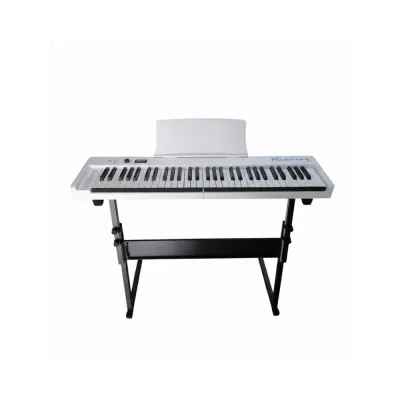
![[✅SG Ready Stock] 61 Key High Quality Music Keyboard Piano kids toys new player beginner Electric Piano](https://img.lazcdn.com/g/p/1f34b80fc1c4ffa462a06ed0ad2ca2fd.jpg_400x400q80.jpg_.webp)
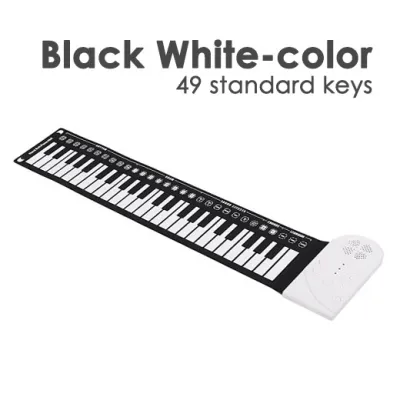
Prices are valid at publication and may change. Please refer to the product page for the latest price.
Key Feel and Action: Building Proper Finger Technique
The physical feel of the keys is the most critical factor when choosing a keyboard piano. It directly impacts how you develop finger strength, muscle memory, and dynamic control—the ability to play softly or loudly based on how hard you press the keys. Without proper key resistance, a beginner may struggle to transition to other pianos later on.

Touch Sensitivity and Weighted Actions
When evaluating a keyboard piano, you will encounter terms like touch-sensitive, semi-weighted, and fully weighted hammer action. Touch-sensitive keys respond to the speed or force of your keystroke, altering the volume accordingly. Fully weighted keys, however, use physical weights and levers to replicate the mechanical resistance of an acoustic piano’s hammers. For serious learners, fully weighted keys are essential for building correct finger technique.
Yamaha’s Approach to Key Action
Yamaha is highly regarded for its realistic key action, which closely mimics the feel of their acoustic grand pianos. In their beginner-friendly digital pianos, they frequently employ the Graded Hammer Standard (GHS) action. This design features graded resistance, meaning the keys in the lower bass register feel heavier to the touch, while the keys in the higher treble register feel lighter. This subtle graduation helps beginners build the specific hand muscles required for classical repertoire and traditional piano playing.
Casio’s Approach to Key Action
Casio has made significant technological strides with its Scaled Hammer Action keyboards, particularly in their slim digital piano lines. These keys provide a reliable, weighted response that performs exceptionally well given the compact chassis of the instruments. However, in their entry-level, highly portable keyboard lines, Casio often utilizes spring-loaded, semi-weighted, or unweighted synth-action keys. While these lighter keys are incredibly easy for young children or casual players to press, they do not offer the resistance needed to develop authentic acoustic piano dynamics.
Aligning Key Action with Your Goals
To make the right choice, consider your long-term musical aspirations:
- Choose fully weighted keys (found in Yamaha’s P-series and Casio’s Privia series) if your primary goal is to learn classical music, take formal piano examinations, or eventually play an acoustic upright or grand piano.
- Choose lighter, unweighted keys (found in entry-level portable keyboards from both brands) if you are learning casually, want to play modern pop songs, or need a lightweight instrument that is easy to move around.
Sound Engines: Authentic Piano Tones vs. Creative Variety
A keyboard’s sound engine determines the quality of the tones you hear. Both brands use digital sampling—recording real instruments at various volume levels—to recreate the sound of an acoustic piano, but their sonic philosophies differ.
Yamaha’s Focus on Acoustic Realism
Yamaha’s sound design is deeply rooted in its heritage as a premier manufacturer of acoustic grand pianos. Most Yamaha digital pianos feature samples recorded directly from their flagship concert grand pianos, such as the Yamaha CFX. This results in a bright, clear, and highly resonant piano tone that projects beautifully. The sound is focused and clean, making it exceptionally well-suited for classical, jazz, and traditional solo performances.
Casio’s Focus on Sonic Variety
Casio utilizes advanced sound engines, such as the Multi-dimensional Morphing AiR (Acoustic and Intelligent Resonator) source and the AiX sound engine. While Casio’s grand piano samples are rich and highly detailed, the brand often places a heavier emphasis on variety. Even their entry-level models frequently come loaded with hundreds of diverse tones, including vintage electric pianos, synthesizers, organs, and world instruments, alongside built-in rhythm accompaniments. This makes Casio highly appealing to players who want to experiment with different musical genres.
Understanding Polyphony Specifications
Polyphony refers to the maximum number of individual notes or voices a keyboard can produce at the exact same time. When you play a complex chord while holding down the sustain pedal, the keyboard must generate multiple sounds simultaneously. If the polyphony limit is too low, older notes will abruptly cut off—a phenomenon known as “voice stealing.”
For beginners, a minimum of 64-note polyphony is recommended, while 128-note or 192-note polyphony is ideal for intermediate playing. Because polyphony varies significantly between specific models, always verify the exact technical specifications of the individual keyboard you are considering rather than relying on brand generalizations.
Choosing Your Sound Profile
Your choice should depend on what you prefer to hear during practice:
- Select Yamaha if you want a pure, authentic, and highly realistic acoustic grand piano sound that encourages expressive, classical play.
- Select Casio if you enjoy playing along with backing tracks, layering different instrument sounds, or exploring electronic and modern music production.
Learning Tools and App Connectivity for New Players
Modern technology has transformed how beginners learn to play. Both Yamaha and Casio integrate educational features directly into their hardware and offer dedicated mobile applications to make daily practice more engaging.
Built-In Lesson Functions
Both brands provide built-in lesson suites designed to help you learn songs at your own pace. These systems typically allow you to isolate the left-hand or right-hand parts, slow down the tempo of a song, and practice challenging sections repeatedly. Some entry-level keyboards even feature key-lighting systems that illuminate the correct keys to guide your fingers, which can be highly motivating for young children and visual learners.
Proprietary App Integrations
To unlock the full potential of your instrument, you can connect it to a smartphone or tablet. Both manufacturers have developed proprietary software to enhance the learning experience:
- Yamaha Smart Pianist: This app allows you to control your keyboard’s settings via an intuitive touch interface on your tablet. It can analyze audio songs stored on your device and automatically generate chord charts, making it easy to play along with your favorite tracks. Yamaha also partners with popular interactive learning platforms like Flowkey.
- Casio Music Space: This comprehensive app features an interactive piano roll viewer (similar to popular rhythm games), a PDF sheet music viewer, and a built-in music player. It provides a visual, gamified approach to learning that helps beginners grasp timing and pitch quickly.
Verifying Hardware and Device Compatibility
Before purchasing, it is essential to verify how your chosen keyboard connects to external devices. Most modern models feature a USB-to-Host port, which allows the keyboard to send MIDI data to a computer, tablet, or smartphone. However, compatibility can vary based on your device’s operating system (iOS, Android, macOS, or Windows).
Always check the manufacturer’s specifications to see if the keyboard supports wireless Bluetooth MIDI or audio. If you are using a wired connection, keep in mind that the required connection cables (such as a USB-B to USB-C cable or an Apple Camera Connection Kit) are rarely included in the box and must be purchased separately.
Portability and Build: Designing Your Practice Space
Your physical environment plays a large role in how often you will practice. In compact urban living spaces, such as apartments and HDB flats in Singapore, finding the right balance between instrument stability and footprint is crucial.
Casio’s Strength in Space-Saving Portability
Casio is a market leader in designing ultra-slim, lightweight keyboard pianos. Many of their beginner models are exceptionally compact, making them easy to fit onto a small desk or store away in a closet or under a bed when not in use. Some of their entry-level portable keyboards even feature integrated carrying handles and can run entirely on AA batteries. This level of portability is perfect for students who need to pack their instrument away after every practice session or want to transport it to lessons and rehearsals.
Yamaha’s Focus on Stability and Presentation
While Yamaha offers lightweight portable keyboards, their beginner digital pianos often emphasize structural stability and a traditional aesthetic. Many of Yamaha’s home-oriented models are designed to be mounted on matching wooden stands with integrated pedal units. This creates a dedicated, furniture-style practice station. While this setup occupies a permanent footprint in your home, having a dedicated space where the instrument is always ready to play can significantly encourage more frequent and consistent practice.
Planning Your Setup
Before making a purchase, measure your designated practice area and consider these structural differences:
- Choose Casio if you have limited space, need to share a room, or require an instrument that can be easily moved and stored.
- Choose Yamaha if you have a dedicated corner for music and prefer a sturdier, more permanent setup that resembles a traditional piano.
Budget and Value: What to Expect at Different Price Points
Understanding the relative value proposition of both brands across different price tiers in Singapore will help you make a smart investment without overspending.
Entry-Level Portable Keyboards (Under S$300 to S$500)
In this highly affordable bracket, Casio often dominates by offering maximum features for the lowest entry price. You will find lightweight, touch-sensitive keyboards packed with hundreds of tones, rhythms, and built-in learning games. Yamaha’s offerings in this price range are incredibly reliable and sound excellent, but they tend to have fewer features and a more conservative design.
Mid-Range Portable Digital Pianos (S$600 to S$1,200)
This is the sweet spot for serious beginners, as fully weighted keys become the standard. Both brands compete fiercely in this segment. Casio focuses on delivering incredibly slim profiles and modern Bluetooth connectivity, while Yamaha focuses on providing superior acoustic key action and highly authentic grand piano samples.
Premium Beginner Console Pianos (S$1,200 to S$2,000+)
At this level, you are investing in a furniture-style cabinet with a complete three-pedal system (sustain, soft, and sostenuto). Yamaha’s console pianos in this range offer outstanding build quality, powerful built-in speaker systems, and a highly realistic playing experience that will easily support a student from beginner to intermediate levels. Casio’s console models in this tier offer excellent value, often including advanced digital features and wireless connectivity at a highly competitive price.
Calculating the Total Cost of Ownership
When budgeting for your first keyboard piano, remember that the instrument itself is only part of the equation. To ensure a comfortable and productive practice environment, verify whether the following essential accessories are included in your purchase or need to be budgeted for separately:
- A sturdy stand: A double-braced X-stand or a dedicated wooden stand is necessary to keep the keyboard at the correct height and prevent wobbling.
- A comfortable bench: Proper seating height is critical for maintaining correct wrist and arm posture, which prevents fatigue and strain.
- A sustain pedal: While basic models may include a small plastic foot switch, investing in a piano-style metal sustain pedal offers a much more realistic experience.
- Quality headphones: Essential for silent practice, especially in high-density housing where late-night practice might otherwise disturb family members or neighbors.
To ensure reliable after-sales support, professional delivery, and valid warranty coverage, it is highly recommended to purchase your instrument through authorized local music retailers in Singapore.
Final Decision: Choose Yamaha or Casio Based on Your Goals
To make your final decision, align the strengths of each brand with your specific learning path, lifestyle, and budget.
Choose Yamaha if:
- You are taking formal classical piano lessons and plan to sit for practical examinations.
- You prioritize a highly realistic, graded key action that builds proper finger strength.
- You prefer a bright, clear, and authentic acoustic grand piano tone.
- You have a dedicated space in your home for a sturdy, permanent practice setup.
Choose Casio if:
- You are working with a stricter budget and want the most features for your money.
- You need an ultra-slim, lightweight, or highly portable instrument that can be easily stored away.
- You want to experiment with a vast library of diverse instrument sounds, backing rhythms, and modern digital effects.
- You are learning casually for fun, primarily using interactive apps or gamified learning systems.
Verify First Before Buying
Before finalizing your purchase, always check the exact specifications of the specific model you are considering. Both brands make exceptions to their general trends—for instance, Casio produces premium digital pianos with incredibly advanced key actions, and Yamaha manufactures highly portable, budget-friendly keyboards.
Additionally, check device compatibility for any learning apps you plan to use, and ensure you have the correct adapters. If possible, visit an authorized local showroom in Singapore to physically test the key feel and listen to the sound of both brands in person before making your final commitment.
Frequently Asked Questions (FAQ)
Is a 61-key keyboard enough for a beginner?
A 61-key keyboard is generally sufficient for the first few months of learning. It allows you to master basic music theory, practice simple two-handed melodies, play chords, and use interactive learning apps. However, as you progress to intermediate classical repertoire or modern pieces that span a wider range, you will eventually run out of keys. If your budget and space allow, investing in an 88-key keyboard from the start is highly recommended to avoid needing an upgrade later on.
Do I need a sustain pedal for my first keyboard piano?
While you do not strictly need a sustain pedal on your very first day, it becomes an essential tool within the first few months of practice. The sustain pedal allows notes to ring out after you release the keys, which is crucial for playing smooth, connected passages (legato) and adding emotional depth to your music. When buying a keyboard, ensure it features a standard 1/4-inch sustain pedal jack. If the keyboard does not bundle a pedal, purchase a sturdy, piano-style metal pedal rather than a cheap, lightweight plastic switch, as the metal pedal will not slide around on the floor.
Can I use headphones with Yamaha and Casio keyboards?
Yes, almost all modern beginner keyboards and digital pianos from both Yamaha and Casio come equipped with a dedicated headphone jack. Utilizing headphones is highly beneficial for practicing silently in shared living spaces, apartments, or late at night without disturbing others. It also helps the player focus entirely on their timing and tone without external distractions. Before buying, check whether the keyboard uses a standard 1/8-inch (3.5mm) headphone jack or a larger 1/4-inch (6.35mm) professional jack, as you may need a simple adapter to connect your personal headphones.
Community discussion
Share your experience or ask a question. Comments are reviewed before publication.