
Choosing your first 88-key digital piano is a milestone decision that shapes your entire musical journey. The market is dominated by three industry giants—Yamaha, Casio, and Roland—each offering distinct design philosophies, technological strengths, and user experiences. Finding the right instrument requires balancing your budget, your living space, and your personal learning goals.
For beginners, the ideal brand depends entirely on your primary priorities. Yamaha is highly favored by those seeking a traditional acoustic piano transition and standardized educational compatibility. Casio excels at delivering slim, space-saving designs and high value for budget-conscious learners. Roland appeals to students who want advanced sound modeling, expressive touch responsiveness, and an instrument that offers long-term room to grow.
Because touch and tone are deeply subjective, there is no single universal winner among these three brands. The best way to secure the right instrument is to understand how their technologies differ and to conduct hands-on testing before making a purchase.
Products mentioned in this guide
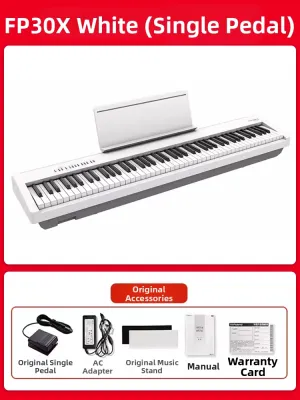
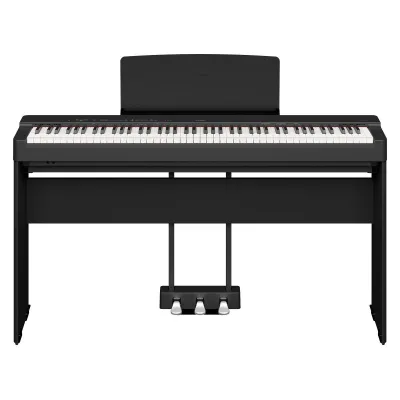
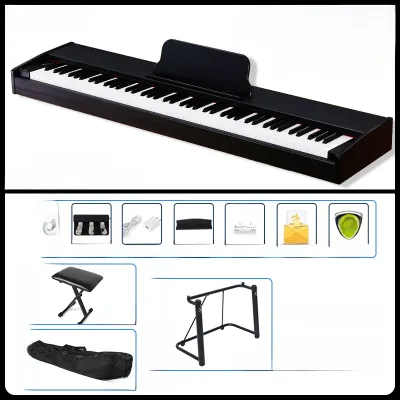
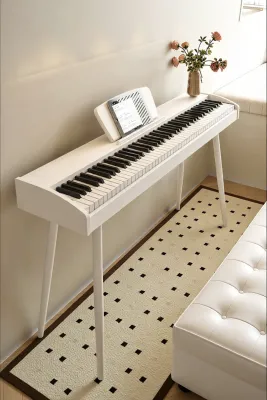
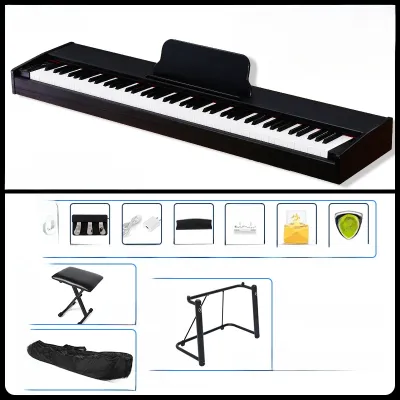
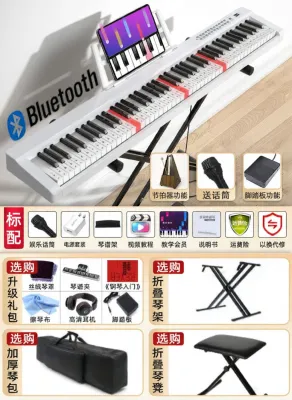
Prices are valid at publication and may change. Please refer to the product page for the latest price.
Key Action and Playability Comparison
Developing proper finger strength and keyboard technique requires a key action that closely mimics the physical mechanics of an acoustic piano. Acoustic pianos use weighted wooden keys and felt-covered hammers to strike strings, creating a natural resistance. Digital pianos replicate this feel using weighted plastic or hybrid keys, graded resistance, and mechanical sensors. Graded action means the keys feel heavier in the lower bass register and lighter in the treble, just like a traditional acoustic instrument.
Each brand approaches key action design with a unique engineering philosophy. Yamaha entry-level models typically focus on a stable, predictable resistance designed to mirror their own acoustic upright pianos. This familiar feel is highly beneficial for students who split their practice time between a home digital piano and an acoustic piano in a teacher’s studio.
Casio prioritizes compact engineering to fit tight living spaces. Their key actions are designed with shorter physical pivot points to keep the overall depth of the instrument as slim as possible. While this makes the keyboard highly portable, it can slightly alter the leverage required when playing deep into the black keys. Beginners should test if this compact design feels comfortable for their hand size.
Roland frequently incorporates advanced features like escapement simulation and textured key surfaces even in their entry-level instruments. Escapement replicates the subtle “click” or let-off sensation felt when gently pressing an acoustic grand piano key. The textured key surfaces, often mimicking synthetic ivory, help absorb finger moisture during long practice sessions.
When testing key actions in a showroom, beginners should focus on three observable physical characteristics:
- Key Resistance: Press the keys slowly to feel how the weight resists your fingers. Ensure it does not feel too light like a plastic toy, nor too heavy, which can cause early hand fatigue.
- Return Speed: Play a single key rapidly to see how quickly it bounces back to its resting position. A sluggish key return makes playing fast, repetitive notes difficult.
- Mechanical Noise: Turn the volume of the digital piano completely off and play the keys. Listen to the physical thudding sound of the plastic parts. A quieter mechanical action is highly desirable if you plan to practice late at night using headphones.
Always verify the exact proprietary name of the key action on the manufacturer’s official specification sheet, as technology levels vary significantly across different price points within the same brand.
Sound Engine and Audio Quality
Digital pianos generate sound using two primary methods: sampling and physical modeling. Sampling involves playing back high-quality digital recordings of real acoustic grand pianos captured at various volume levels. Physical modeling uses powerful computer processors to calculate the acoustic behavior of strings, soundboards, and cabinets in real-time, creating a dynamic sound that responds directly to your touch.

Yamaha relies heavily on high-fidelity sampling, using recordings from their own world-renowned concert grand pianos. This results in a bright, clear, and highly recognizable tone that cuts through mixes beautifully and sounds familiar to classical players. The sound is consistent and predictable, which helps beginners learn to control their dynamics.
Casio utilizes multi-dimensional morphing technology to smooth out the transitions between different sample volumes. This prevents sudden jumps in tone when you transition from playing softly to playing loudly. Their sound engines are optimized to deliver clean, balanced audio through compact speaker systems.
Roland often employs physical modeling or hybrid sound engines in their entry-level lineups. This technology allows for highly expressive playing, as the tone changes continuously based on the speed and force of your keystroke rather than stepping through pre-recorded volume layers. The resulting sound tends to be warmer and highly customizable, though some beginners may find the modeling behavior sounds different from traditional recordings.
Speaker placement and wattage play a critical role in how these sound engines perform in a home environment. In typical Singapore apartments, concrete walls can reflect high frequencies sharply, making low-wattage speakers sound thin or harsh. Pianos with upward-firing speakers generally offer better clarity and spatial realism than those with downward-firing speakers hidden beneath the chassis.
To evaluate sound quality during a showroom visit, test the instrument using both the built-in speakers and a pair of high-quality headphones. Listen closely to the decay of a held chord to ensure the sound fades away naturally without artificial looping. Additionally, check the polyphony limit on the spec sheet; a higher polyphony count ensures notes will not be cut off abruptly when playing complex pieces with the sustain pedal pressed.
Beginner-Friendly Features and Connectivity
Modern digital pianos offer a variety of digital tools designed to make daily practice more engaging and productive. Essential built-in features include a metronome for timing development, a basic MIDI recorder to listen back to your performances, and split or dual modes. Dual mode allows a teacher and student to play side-by-side in the same octave range on a single keyboard.
The user interface determines how easily you can access these features. Some models feature a minimalist design with very few physical buttons, requiring you to hold down a function key and press specific piano keys to change settings. Other models include small LCD screens or dedicated buttons for common sounds. Beginners should consider whether they prefer a clean, distraction-free cabinet or the convenience of visual menus.
Smart device integration has become a standard learning aid. Each brand offers a dedicated companion application:
- Yamaha Smart Pianist: Allows users to select voices, configure settings, and view sheet music directly on a tablet screen.
- Casio Music Space: Features interactive piano lessons, sheet music viewers, and live concert simulator modes.
- Roland Piano App: Offers comprehensive practice diaries, built-in rhythm accompaniments, and flashcard exercises to improve sight-reading.
Before purchasing, verify the compatibility of these apps with your specific iOS or Android device. Connection methods vary between wireless Bluetooth MIDI and wired USB-MIDI. Wireless connections offer convenience but can occasionally suffer from minor latency, whereas wired connections require specific adapters or cables that are often sold separately.
Decision Framework: Matching the Brand to Your Goals
To finalize your decision, match your specific learning environment and musical goals to the core strengths of each brand.
Choose Yamaha if:
- You prefer a bright, traditional acoustic grand piano tone.
- You are taking formal classical lessons and need a key action that closely mirrors exam-room acoustic pianos.
- You want a highly standardized, reliable learning ecosystem with straightforward app integration.
Choose Casio if:
- You are working with strict space constraints in a compact room and need a slim, lightweight instrument.
- You want to maximize your budget, seeking the most features and accessories for your money.
- You need a portable setup that can be easily stored away when not in use.
Choose Roland if:
- You prioritize a highly expressive, dynamically responsive touch and sound engine.
- You want advanced physical features like escapement feel and textured key surfaces at an entry-level price.
- You plan to keep the instrument for many years and want a sound engine that accommodates advanced classical or jazz repertoire.
Verify first if:
- The physical dimensions of the piano, including the stand, fit your designated home space.
- Your existing headphones are compatible with the piano's output jacks (typically 3.5mm or 6.35mm) and impedance levels.
- The model supports a progressive damper pedal or a full triple-pedal unit if you plan to study classical music seriously.
Buying Guide and In-Store Verification in Singapore
While online demonstrations and video reviews are helpful research tools, they cannot replicate the physical sensation of playing a keyboard. Visiting authorized local music showrooms in Singapore is highly recommended. This allows you to experience the key resistance, hear the speaker dispersion in person, and compare models side-by-side.
Before completing your purchase, perform a thorough pre-checkout check to ensure you are getting a complete, compatible package:
- Included Accessories: Confirm what is included in the retail price. Some packages include only the portable keyboard unit, requiring you to purchase a matching wooden stand, a bench, and a sustain pedal separately.
- Power Supply: Ensure the included power adapter is fully compatible with Singapore's 230V electrical system and features a standard Type G three-pin plug.
- Official Local Warranty: Verify that the instrument comes with an official local warranty from the authorized distributor. Avoid parallel imports, as digital pianos contain complex electronic sensors that can be expensive to repair or service without local warranty coverage.
Taking the time to test these instruments in person ensures you select a digital piano that feels comfortable, sounds inspiring, and supports your musical development for years to come.
Frequently Asked Questions (FAQ)
Do I need an 88-key digital piano as a complete beginner?
Yes, starting with a full 88-key keyboard is highly recommended for anyone serious about learning the piano. Standard piano repertoire, classical pieces, and modern graded exam books are written with the expectation of a full-sized keyboard. Starting on a smaller 61-key or 76-key keyboard will quickly limit the music you can play and often means practicing on unweighted keys, which prevents you from developing the finger strength and control needed for acoustic pianos. A smaller keyboard should only be considered as a temporary, highly budget-constrained alternative.
How much should I expect to spend on a beginner 88-key digital piano?
In Singapore, entry-level 88-key digital pianos with fully weighted keys generally range from S$600 to S$1,200. Mid-range models that offer more advanced key actions, better speaker systems, and traditional wooden cabinet designs typically cost between S$1,200 and S$2,000. When planning your budget, remember to set aside an additional S$100 to S$300 for essential accessories such as a sturdy stand, an adjustable bench, a sustain pedal, and a pair of closed-back headphones for silent practice.
Can I use these digital pianos with third-party learning apps?
Yes, most modern 88-key digital pianos from Yamaha, Casio, and Roland are compatible with popular third-party learning and sheet music applications. Connection is established either wirelessly via Bluetooth MIDI or through a wired USB-MIDI connection using a USB-B port on the back of the piano. Always check the specific learning app’s official compatibility list and verify whether your chosen digital piano model requires a separate wireless adapter or specific cable to connect to your tablet or smartphone.
Community discussion
Share your experience or ask a question. Comments are reviewed before publication.