
Choosing your first piano keyboard is a milestone decision that shapes your entire musical journey. The market is largely defined by three industry giants: Yamaha, Casio, and Roland. Each brand approaches beginner instruments with a distinct philosophy, balancing acoustic realism, modern technology, and cost-effectiveness in different ways. Finding the right fit requires looking past brand names to evaluate how their specific design choices align with your personal learning goals, budget, and living space.
To make a quick decision, you can match these brands to your primary goals. Yamaha is generally the ideal choice for learners who prioritize traditional acoustic piano emulation, offering a classic key action and bright, clean grand piano tones. Casio is best suited for budget-conscious beginners, those with limited space, and players who want interactive, built-in learning tools to guide their practice. Roland appeals to players seeking highly expressive touch response, advanced sound engines, and durable build quality that can transition from home practice to performance. Your final selection will depend on verifying specific model availability, local pricing, and your personal budget limits.
Core Differences: Touch, Sound, and Design Philosophies
To understand which brand suits you best, it helps to look at how they design their instruments. The way a keyboard feels, sounds, and connects to other devices reflects the manufacturer’s core priorities. Comparing these aspects directly will help you identify which features matter most for your daily practice.
Products mentioned in this guide
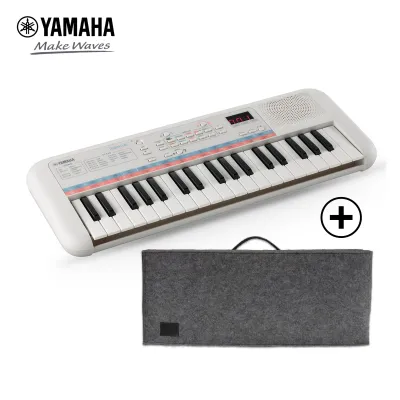
![[ammoon]61 Keys Digital Electronic Keyboard / Piano With MicrophoneUSB CableUser Manual](https://img.lazcdn.com/g/p/e4a8e0dd7c6374c271afdc54fc91cc43.jpg_400x400q80.jpg_.webp)
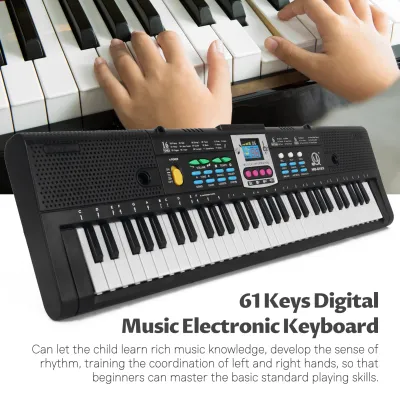
![[✅SG Ready Stock] 61 Key High Quality Music Keyboard Piano kids toys new player beginner Electric Piano](https://img.lazcdn.com/g/p/1f34b80fc1c4ffa462a06ed0ad2ca2fd.jpg_400x400q80.jpg_.webp)
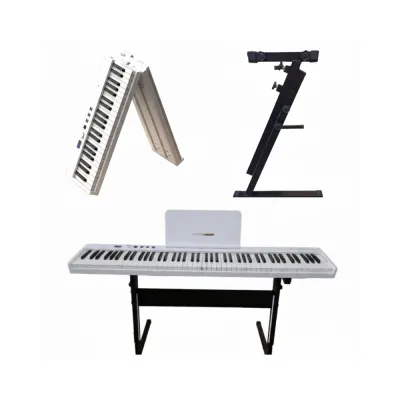
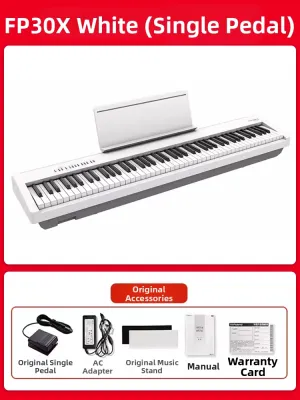
Prices are valid at publication and may change. Please refer to the product page for the latest price.
Key Action and Touch Response
The feel of the keys is the most critical factor in developing proper playing technique. Acoustic pianos use a system of hammers and levers that create natural resistance, which digital instruments attempt to replicate. Yamaha typically focuses on a balanced, traditional key resistance. Their entry-level weighted keyboards often feature graded hammer action, where the lower register feels heavier than the higher register, closely mimicking an acoustic grand.
Casio focuses on compact efficiency. To keep their instruments slim and highly portable, they design scaled hammer actions that fit into remarkably shallow chassis. While this makes their keyboards incredibly space-saving, the key pivot point is shorter, which some players find requires slightly more effort when playing deep into the black keys.
Roland is highly regarded for its expressive touch response. Even their entry-level digital pianos often feature keys with a simulated escapement—the subtle “click” felt when pressing an acoustic piano key slowly—and textured surfaces that absorb moisture from your fingers. When shopping, it is highly recommended to visit a local showroom to test the key resistance in person, paying close attention to how naturally the keys return to their resting position.
Sound Engine and Tones
Sound generation methods vary significantly among the three brands. Yamaha relies heavily on high-quality stereo sampling, capturing the detailed sound of their own world-renowned concert grand pianos. This results in a bright, clear, and instantly recognizable tone that cuts through mixes beautifully and sounds highly realistic in home environments.
Roland often utilizes a hybrid approach, combining sampling with physical modeling technology. Instead of simply playing back a recording, their sound engines mathematically reconstruct the complex physical interactions of a piano’s strings, soundboard, and cabinet. This creates a highly dynamic, warm, and customizable sound that responds organically to how hard or soft you strike the keys.
Casio delivers clean, direct, and highly functional samples. Their sound engines are optimized to provide clear definition across the entire keyboard, making them excellent for beginners who need to hear every note clearly during practice. Regardless of the brand, always check the polyphony limit of the model you are considering. A minimum of 64-note polyphony is acceptable for beginners, but 128-note or 256-note polyphony is preferred to ensure notes do not cut off abruptly when playing complex chords with the sustain pedal pressed.
Learning Tools and Connectivity
Modern digital keyboards offer a wealth of interactive features to keep beginners engaged. Casio excels in this area, frequently integrating visual learning aids, such as lighted key systems on their casual models, and robust compatibility with their proprietary learning app. This app allows you to view interactive sheet music, track your progress, and play along with built-in lessons.
Yamaha offers intuitive companion apps that allow you to control the keyboard’s settings directly from a tablet or smartphone. Their software can analyze audio files from your music library and automatically generate chord charts, making it easier to learn your favorite songs.
Roland focuses on seamless wireless integration. Many of their beginner models feature built-in Bluetooth MIDI and audio connectivity. This allows you to stream backing tracks directly through the keyboard’s speakers or connect wirelessly to popular third-party educational apps and digital audio workstations without dealing with cluttered cables.
How to Choose Based on Your Musical Goals
Your choice of keyboard should align with the specific style of music you want to play and the environment where you will practice. Different musical paths require different hardware specifications.

Classical Piano Foundation
If your primary goal is to study classical music, prepare for formal piano examinations, or eventually transition to an acoustic piano, you must prioritize realism. For this path, an 88-key fully weighted keyboard is essential. The full range of 88 keys is required for classical repertoire, and fully weighted keys are necessary to build the finger strength, control, and muscle memory needed for acoustic instruments.
In this category, Yamaha and Roland are strong contenders due to their focus on traditional key weight and expressive sound dynamics. Look for models that support a continuous half-damper pedal, which allows for more nuanced sustain control than a simple on/off foot switch.
Pop, Production, and Casual Playing
If you are interested in playing pop songs, writing your own music, or exploring electronic genres, you may not need the heavy action of a traditional piano. A 61-key or 76-key keyboard with semi-weighted or synth-action keys can be a highly practical and cost-effective alternative. These instruments are much lighter, easier to move, and often come packed with hundreds of diverse sounds, including synthesizers, organs, brass, and drum kits.
Casio and Yamaha offer excellent electronic keyboards in this segment. They provide built-in accompaniment rhythms that act as a virtual backing band, helping you practice timing and chord progressions in a fun, interactive context.
Space and Portability Constraints
Living arrangements play a major role in your decision. In Singapore, where residential spaces like HDB flats and condominiums require efficient layout planning, a massive digital piano with a permanent wooden cabinet may not be practical. Furthermore, the high humidity in Singapore can affect acoustic piano components, making digital keyboards an incredibly low-maintenance and durable alternative.
If space is tight, look for a portable “slab” style keyboard. These can be placed on a folding stand and stored in a closet or under a bed when not in use. Casio is particularly famous for designing ultra-slim, lightweight 88-key digital pianos that take up minimal floor space while still offering weighted keys. If you plan to transport your keyboard to lessons, rehearsals, or community events, pay close attention to the instrument’s weight, aiming for something under 12 kilograms.
Essential Checks Before Buying Your First Keyboard
Before finalizing your purchase from an online marketplace or a local music retailer, go through this practical checklist to ensure you have everything you need to start playing immediately and protect your investment.
- Verify Included Accessories: Many beginner keyboards are sold as standalone units. Check the product description carefully to see if a power adapter, music rest, and sustain pedal are included in the box. You will likely need to purchase a sturdy keyboard stand (an X-stand or Z-stand) and a comfortable, adjustable bench separately.
- Confirm Power and Connectivity: Ensure the keyboard comes with a compatible power adapter for Singapore's electrical outlets. If you plan to practice silently to avoid disturbing family members or neighbors, check the size of the headphone jack (usually 3.5mm or 6.35mm) and ensure you have the correct headphones or adapter. If you want to connect the keyboard to a computer or tablet, verify that it has a standard USB-MIDI port.
- Check Warranty and Support: Always purchase from authorized local distributors or reputable retailers to ensure you receive a valid local warranty. Parallel imports may seem cheaper initially, but they often lack local warranty coverage, meaning you would have to pay high out-of-pocket costs for repairs if a key sensor or internal component fails. Confirm the location of the authorized service center and the duration of the warranty before buying.
Frequently Asked Questions (FAQ)
Do I absolutely need 88 weighted keys to start learning?
You do not strictly need 88 weighted keys if you are a casual hobbyist learning basic music theory, simple chords, or pop melodies. A 61-key keyboard with touch-sensitive keys is sufficient for the first few months of learning. However, if you plan to take formal piano lessons, play classical music, or develop proper finger dynamics, you will quickly outgrow a smaller keyboard and will need to upgrade to an 88-key fully weighted instrument to build correct technique.
Can I use a standard computer desk as a keyboard stand?
Using a standard computer desk is not recommended for regular practice. Computer desks are typically around 75 centimeters high, which is too tall for proper piano posture and can lead to wrist strain or shoulder tension. A dedicated keyboard stand allows you to adjust the instrument so that the keys sit at elbow height (usually between 65 and 72 centimeters). Additionally, placing a heavy keyboard on a standard desk makes it difficult to position the sustain pedal correctly on the floor, leading to awkward leg angles and poor pedaling habits.
Community discussion
Share your experience or ask a question. Comments are reviewed before publication.