
Selecting your first portable piano keyboard is a foundational step in your musical journey. The three dominant brands in the entry-level market—Yamaha, Casio, and Roland—each approach beginner instruments with distinct design philosophies. There is no single “best” brand for every student; instead, the ideal choice depends on whether you prioritize a traditional acoustic piano feel, budget-friendly portability, or advanced digital connectivity and sound customization.
Quick Answer: Which Brand Fits Your Learning Style?
When choosing between these three industry leaders, your decision should align with your primary learning environment and musical goals. Yamaha is widely recognized for its focus on replicating the touch and response of traditional acoustic pianos, making it a preferred option for students following a classical curriculum. Casio excels in delivering highly portable, feature-rich instruments at accessible price points, which is ideal for casual players or those with limited space. Roland focuses on expressive digital sound engines and robust modern connectivity, appealing to beginners who want to explore music production and interactive learning apps. Because pricing and specific model availability can vary, it is highly recommended to verify current options and local packages at authorized dealers in Singapore before making a purchase.
Key Action and Sound Features to Compare
To make an informed decision, you must understand the technical specifications that directly impact how a portable piano keyboard plays and sounds. These features shape your physical technique and determine how long the instrument will remain useful as your skills progress.
Products mentioned in this guide
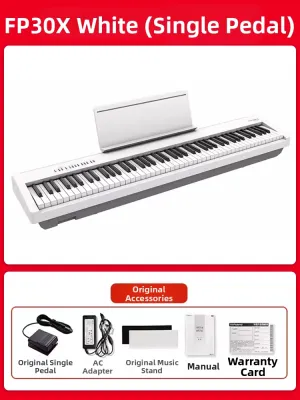
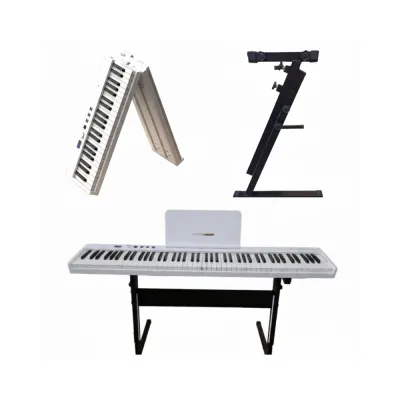
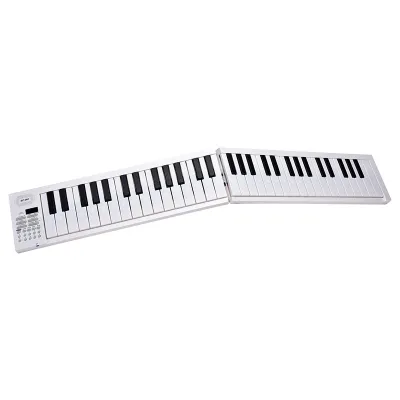
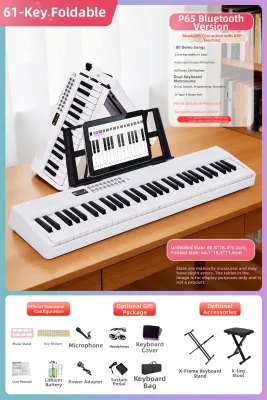
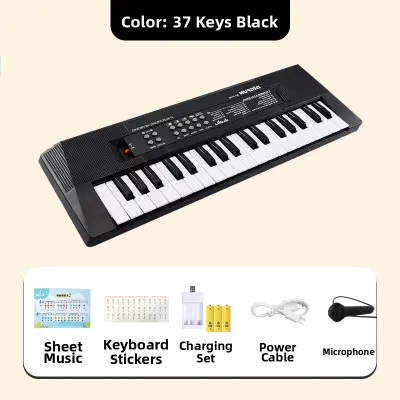
Prices are valid at publication and may change. Please refer to the product page for the latest price.

Key Action and Touch Sensitivity The physical mechanism beneath the keys, known as the key action, is the most critical factor for developing proper finger strength and control. Non-weighted keys offer very little resistance and are common on budget models, but they do not prepare you for playing a real piano. Semi-weighted keys provide moderate resistance using springs, offering a middle ground for portability. Fully weighted hammer action keys simulate the actual mechanical hammers of an acoustic piano, providing the realistic resistance necessary for classical training. Always verify that the keyboard features touch sensitivity, which ensures the volume changes dynamically based on how hard or soft you strike the keys.
Polyphony and Sound Engines Polyphony refers to the maximum number of individual notes or voices the keyboard can produce simultaneously. When you play complex chords while holding down the sustain pedal, older notes will be cut off if the polyphony limit is too low. For beginners, a minimum of 64-note polyphony is recommended, though 128-note or higher is ideal for seamless two-handed playing and expressive pedal work. The underlying sound engine translates your key presses into audio; different brands use proprietary sampling or modeling technologies to recreate the acoustic resonance of grand pianos.
Built-in Learning Tools A good beginner keyboard should serve as an interactive practice partner. Look for built-in metronomes to help you develop a steady sense of rhythm. Many entry-level models also include built-in lesson modes that guide you through pre-loaded songs, visual guides that show which keys to press, and accompaniment features that provide a backing band to make practice more engaging.
Connectivity Options Modern portable keyboards offer various ways to connect to external devices. A USB-MIDI port is essential for connecting the keyboard to a computer, tablet, or smartphone, allowing you to use educational software, interactive learning apps, or digital audio workstations (DAWs). Some models also feature Bluetooth MIDI or Bluetooth Audio, which enables wireless connection to apps and lets you stream backing tracks directly through the keyboard’s speakers.
Brand Strengths for Beginner Learning
Each manufacturer designs its instruments with a specific type of learner in mind. Evaluating these brand-specific ecosystems helps you match their design philosophies with your personal learning style.
Yamaha: Traditional Piano Feel and Structured Learning
Yamaha leverages its extensive history of manufacturing world-class acoustic grand pianos to design its portable digital instruments. This heritage is reflected in their focus on traditional piano feel and structured educational pathways. Many of their entry-level weighted models utilize graded hammer actions, which simulate the heavier feel of lower keys and the lighter touch of higher keys found on an acoustic piano.
In terms of learning integration, Yamaha offers proprietary applications designed to connect seamlessly with their instruments, providing interactive sheet music and automatic accompaniment. This structured ecosystem is highly compatible with traditional classical piano curricula. However, because entry-level models vary in their tactile feedback, you should always check the specific keybed generation and action type listed on the product label to ensure it meets your physical expectations.
Casio: Budget-Friendly Features and Portability
Casio has built a strong reputation for maximizing value, offering highly portable and feature-rich keyboards that do not require a massive financial investment. Their beginner-focused lines frequently emphasize compact, lightweight chassis designs that are easy to store in space-constrained environments, such as typical Singapore apartments. Many of these models can run on battery power, making them highly versatile for practice on the go.
Despite their budget-friendly positioning, many Casio models feature scaled hammer action keybeds that provide a surprisingly realistic weight comparison to traditional pianos. They also tend to include a vast library of built-in tones, rhythms, and digital effects for creative exploration. When comparing models, remember to verify the exact speaker wattage and keybed specifications on the product packaging, as features and physical key weight can vary significantly across different price tiers.
Roland: Expressive Sound Engines and Modern Connectivity
Roland approaches beginner keyboards with a focus on expressive digital technology and modern music production. Instead of relying solely on static audio samples, Roland often utilizes advanced proprietary sound modeling technology in its entry-level instruments. This technology dynamically calculates the complex acoustic interactions of a piano in real time, responding expressively to the subtle nuances of your playing dynamics.
Roland instruments are also known for their robust wireless connectivity, frequently featuring built-in Bluetooth for seamless integration with third-party learning apps and recording software. This makes them highly appealing to tech-savvy beginners who want to explore modern music creation alongside traditional practice. Because Roland’s entry-level key actions are designed with unique mechanical profiles, they may feel distinct from traditional acoustic pianos, making a physical hands-on test highly beneficial before purchasing.
Verifying Compatibility and Specs Before Purchase
Before finalizing your purchase, you must verify that the portable piano keyboard is compatible with your physical living space and your existing digital devices. Taking the time to check these specifications prevents unexpected setup issues.
Physical Dimensions and Weight Portable keyboards vary widely in size and weight. If you live in a compact home, measure your designated desk, table, or stand space carefully. Ensure you check the exact footprint of the keyboard, including the depth and height, to guarantee a comfortable playing posture. If you plan to store the keyboard away when not in use, verify its weight to ensure you can lift and move it safely without assistance.
Power and Audio Outputs Do not assume that every keyboard package includes all necessary accessories. Check the product specifications to confirm whether a power adapter is included in the local retail package, or if you need to purchase one separately. Additionally, verify the size of the headphone jack. Many portable keyboards use a standard 6.35mm (1/4-inch) stereo jack, which requires an adapter if you plan to use standard 3.5mm consumer headphones for silent practice.
Device and App Compatibility If you plan to use specific educational apps or software to learn, verify that the keyboard’s USB-MIDI or Bluetooth connection is fully compatible with your device’s operating system. Check the app developer’s system requirements to ensure seamless integration with iOS, Android, macOS, or Windows.
Warranty and Support To protect your investment, always purchase your keyboard from an authorized retailer in Singapore. This ensures that you receive a valid local warranty and have access to official service centers if the instrument requires maintenance or repairs. Parallel-imported models may not qualify for local support, leaving you without options if technical issues arise.
Final Decision Framework: Choose Your Portable Piano Keyboard
To choose the right portable piano keyboard, match your personal circumstances and learning preferences to the strengths of each brand.
- Choose Yamaha if: You want a traditional learning experience, plan to follow a classical piano curriculum, and prioritize a key action that closely mimics the physical feel of an acoustic grand piano.
- Choose Casio if: You have limited space, need a highly portable and lightweight instrument that can run on batteries, and want the maximum number of features and sounds for a modest budget.
- Choose Roland if: You are interested in modern music production, value expressive digital sound modeling, and want robust Bluetooth connectivity to work with a wide range of third-party educational apps.
- Verify first if: You are uncertain about how different key weights feel under your fingers. Visiting a local showroom in Singapore to physically test the keybeds of each brand is the best way to ensure you select an instrument that feels comfortable and inspiring to play.
Frequently Asked Questions (FAQ)
Do I need an 88-key portable piano keyboard as a beginner?
A standard acoustic piano has 88 keys, and having a full-size keyboard is highly recommended if you plan to study classical music or take formal piano lessons. The complete range allows you to play any piece of repertoire without running out of notes. However, if you are focused on basic music theory, casual pop playing, or have severe space constraints in your home, a 61-key or 76-key model can be an acceptable starting point. Before choosing a smaller keyboard, check with your music teacher or review your chosen curriculum to ensure it does not require a full 88-key layout.
Can I use a portable keyboard with my existing computer speakers?
Yes, you can route the audio from your portable keyboard to external computer speakers using the keyboard’s headphone or auxiliary output jack and a compatible audio cable. However, standard consumer computer speakers are often not optimized for the wide dynamic range and transient peaks of a musical instrument. This can result in distorted sound or noticeable audio latency (delay) between when you press a key and when you hear the sound. For the most accurate sound reproduction and a responsive playing experience, using dedicated studio monitors or a high-quality pair of headphones is highly recommended.
Community discussion
Share your experience or ask a question. Comments are reviewed before publication.