
Choosing a guitar pick maker—often referred to as a pick punch—allows you to transform everyday plastic waste into functional, customized plectrums. For a beginner guitarist in Singapore, this tool offers an engaging way to experiment with different pick thicknesses and materials without constantly purchasing commercial multi-packs. By recycling expired membership cards, old transit cards, or gift cards, you can quickly build a diverse collection of picks tailored to your playing style.
To find the right device, you must evaluate the cutting mechanism, ergonomic design, and material compatibility. A well-chosen pick maker should deliver clean cuts that require minimal post-punch finishing, saving you time and protecting your guitar strings from premature wear. Understanding these core factors ensures you select a durable tool that fits your budget and workspace.
Key Features to Evaluate Before Buying
The cutting mechanism is the heart of any pick maker, directly determining the quality of your finished plectrums. Look for tools constructed with heavy-duty steel blades rather than thin alloy metals. A high-quality steel blade shears through plastic cleanly, minimizing ragged edges or burrs that can snag on your guitar strings. Some advanced models offer replaceable blades, though most consumer-grade punches feature fixed blades designed to last for thousands of cuts when used on approved materials.
Products mentioned in this guide
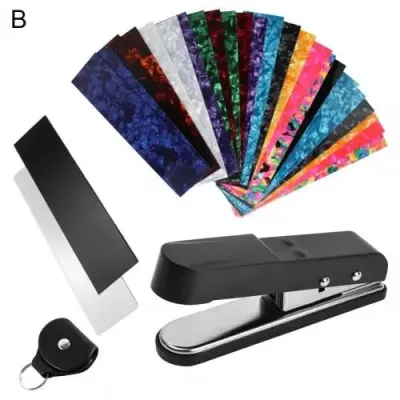
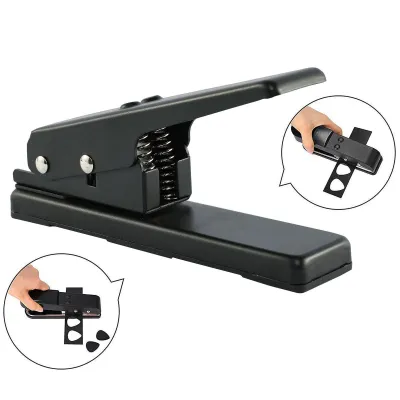
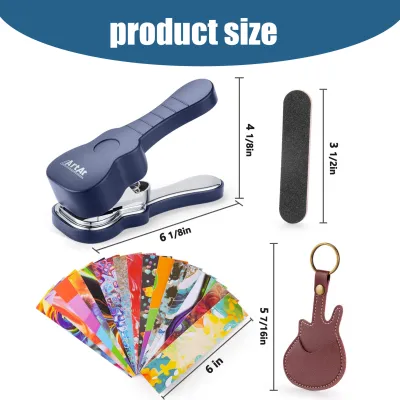
Prices are valid at publication and may change. Please refer to the product page for the latest price.
Blade alignment is equally critical to ensure a clean shear across the entire perimeter of the pick. If the upper and lower cutting dies are misaligned even slightly, the plastic will bend or tear rather than cut cleanly. This misalignment often results in a crushed edge on one side of the pick, which requires extensive sanding to correct. When evaluating a tool, check that the cutting dies meet precisely without any lateral play or wobbling in the lever mechanism.
Ergonomics and lever action play a vital role in how comfortable the tool is to use, especially when punching thicker plastics. Punching a 1-millimeter plastic card requires significant mechanical force, which can quickly cause hand fatigue if the handle is poorly designed. Look for a pick maker with an extended, padded lever handle that provides ample leverage. A longer handle reduces the physical effort required, making it much easier for beginners to achieve a clean cut.
The shape and thickness of the cutting mold dictate the utility of the tool. Most standard pick punches produce the classic 351 teardrop shape, which is the most versatile option for both strumming and flatpicking. However, some specialized makers offer alternative shapes, such as smaller jazz shapes or wider triangle shapes. Consider your primary playing style and the genre of music you wish to learn before deciding on a mold shape, as the pick’s geometry significantly influences your control and comfort.
Edge finishing requirements are an unavoidable reality of using a mechanical punch. Even the sharpest blade will leave a microscopic lip or burr along the sheared edge of the plastic. A reliable pick maker should produce a cut clean enough that only light sanding with fine-grit sandpaper is needed to smooth the edges. If a tool consistently leaves heavy, jagged plastic fringes, it indicates poor blade tolerances or dull cutting surfaces, which will require excessive manual finishing.
Types of Guitar Pick Makers Suitable for Beginners
Guitar pick makers generally fall into two main categories: manual single-shape lever punches and more complex multi-shape or desktop devices. For most beginners in Singapore, space and simplicity are primary considerations when setting up a practice area. Manual lever punches are highly popular because they resemble a heavy-duty stapler, making them easy to store in a drawer or gig bag. These compact tools are highly portable, allowing you to bring them to jam sessions or music classes.

In contrast, larger desktop units or multi-mold devices offer greater versatility but come with a larger physical footprint. These heavier tools are designed to sit flat on a table or workbench, utilizing a vertical press mechanism rather than a hand-squeezed lever. While they provide excellent stability and can often handle slightly thicker materials, they are less portable and require dedicated storage space. Beginners must weigh the desire for multiple pick shapes against the practical constraints of their living and practice spaces.
The trade-off between mechanical simplicity and variety is a key decision point for new players. A simple, single-shape punch has fewer moving parts, reducing the likelihood of mechanical failure or misalignment over time. Multi-shape tools, while appealing for their variety, often feature more intricate die-changing mechanisms that require careful adjustment. For those just starting their guitar journey, a straightforward, single-shape tool is usually the most reliable and cost-effective entry point.
Standard Single-Shape Pick Punches
Standard single-shape pick punches are the most accessible option for beginners due to their straightforward operation and affordable price point. These tools typically feature a hand-held, stapler-style design that utilizes a spring-loaded lever to drive a steel die through a slot. They are optimized for standard plastic cards, such as expired credit cards or membership cards, which generally range from 0.5 to 1.0 millimeter in thickness.
The portability of these standard punches makes them incredibly convenient for everyday use. You can easily slide the tool into your guitar accessory drawer or keep it in your gig bag for quick on-the-go pick creation. Because they require no assembly or complex setup, you can begin punching custom picks immediately after unboxing, making them an excellent introductory tool for aspiring guitarists.
Multi-Shape and Multi-Size Makers
Multi-shape and multi-size pick makers cater to players who want to experiment with different plectrum styles as their techniques evolve. These devices often feature interchangeable cutting cartridges or a rotating die system that allows you to punch standard, jazz, and triangle shapes from a single machine. This versatility is highly beneficial for players who transition between acoustic strumming, which often favors larger, thinner picks, and electric lead playing, which benefits from smaller, thicker jazz-style picks.
However, this added versatility comes with a higher price premium and a slightly steeper learning curve. Swapping out the cutting dies requires careful alignment to prevent damage to the blades, and the larger desktop chassis demands more dedicated workspace. For beginners with a flexible budget and a clear interest in exploring diverse playing techniques, investing in a multi-shape maker can provide long-term utility as their skills progress.
Material Compatibility and Safety Considerations
Understanding which materials are safe to punch is crucial for protecting both your tool and your hands. Suitable materials include expired credit cards, gift cards, library cards, and specially manufactured plastic strips often sold alongside the punch. These materials are typically made of polyvinyl chloride (PVC) or similar pliable plastics that shear cleanly without shattering. Always check the manufacturer’s guidelines for the maximum thickness limit, which is commonly around 1.0 to 1.2 millimeters.
Unsuitable materials present significant risks and should be strictly avoided. Brittle plastics, such as CD cases, thick acrylic sheets, or hard polystyrene, can shatter violently under the pressure of the cutting die, sending sharp fragments flying and permanently damaging the blade. Metal sheets, wood, and extremely thick cardboard will also dull or warp the steel cutting edges, rendering the tool useless. Attempting to punch unapproved materials can jam the mechanism, void the warranty, and potentially cause hand injuries.
Practicing safe operation is essential when using any mechanical shearing tool. Always keep your fingers well clear of the cutting zone and the feed slot where the plastic is inserted. Place the tool on a flat, stable surface when punching, and apply even, downward pressure on the lever rather than using sudden, jerky forces. Store the pick maker in a dry environment out of reach of children, and utilize the handle lock feature if your model includes one to keep the blades safely closed.
Edge smoothing is a mandatory final step before any homemade pick touches your guitar strings. The punching process naturally leaves a sharp, slightly raised edge around the perimeter of the cut plastic. If left unsmoothed, this sharp edge will scrape against your guitar strings, causing premature wear, buzzing, or even string breakage, particularly on nylon-string classical guitars. Use fine-grit sandpaper, a nail buffer, or a dedicated pick file to gently round and smooth the edges of your new pick until it glides effortlessly across the strings.
Where to Buy and What to Verify Upon Delivery
When looking to purchase a guitar pick maker in Singapore, you have the choice between local musical instrument shops and online marketplaces. Local music stores allow you to inspect the build quality firsthand and seek advice from experienced staff, though their inventory of niche accessories like pick punches may be limited. Online marketplaces offer a wider selection of brands and models, often at competitive prices, but require careful vetting of seller ratings and shipping times.
Upon receiving your pick maker, perform a thorough physical inspection before attempting to punch any high-value plastics. Check the alignment of the cutting blades by looking through the feed slot to ensure the upper die aligns perfectly with the lower opening. Test the spring return mechanism by pressing the lever down fully without any material inserted; the handle should spring back to its open position smoothly and without sticking or grinding.
Verify that all included accessories match the product description on your order. Many starter kits come packaged with sample plastic strips, fine-grit sandpaper, or a carrying pouch. Ensure the instruction manual is present and clearly outlines the maximum material thickness and maintenance guidelines. If any components are missing or if the tool shows signs of rust or previous wear, contact the seller immediately to arrange a replacement.
Familiarize yourself with the return and warranty policies of your chosen retailer before making your purchase. A reliable warranty is particularly important for mechanical tools like pick punches, where minor manufacturing defects in blade alignment can render the device ineffective. Ensure the seller offers a straightforward return process in case the cutting mechanism jams on standard-thickness plastics or exhibits structural defects during your initial tests.
Frequently Asked Questions (FAQ)
Can I use a guitar pick maker on thick acrylic or wood?
No, standard manual guitar pick makers are designed strictly for pliable plastics like PVC within a specific thickness range, usually up to 1.2 millimeters. Attempting to punch thick acrylic, wood, or metal will dull or chip the steel blades, jam the lever mechanism, and potentially cause the material to shatter dangerously. For wood or thick acrylic picks, specialized cutting tools, CNC machines, or laser cutters are required.
Why do my homemade picks sound different from store-bought ones?
Homemade picks sound different because the density, flexibility, and composition of recycled plastics differ from commercial pick materials. Commercial picks are typically molded from specialized polymers like celluloid, nylon, or Delrin, which are engineered for specific acoustic properties and durability. Recycled cards are often made of standard PVC, which may produce a slightly brighter or duller attack and wear down faster than professional-grade plectrums.
How do I maintain the blade of my pick punch?
To maintain the blade, regularly wipe away any plastic dust or debris from the cutting chamber using a dry cloth or a small brush. Avoid exposing the tool to moisture or high humidity, which can cause rust on the steel dies, and store it in a dry place. If the manufacturer’s instructions recommend it, you can occasionally apply a drop of light machine oil to the pivot joints and cutting edges to keep the mechanism operating smoothly.

Community discussion
Share your experience or ask a question. Comments are reviewed before publication.