
Preparing for the HSK 3 exam as a self-learner requires a deliberate shift in your study strategy. Unlike the introductory levels, HSK 3 demands that you transition away from relying on phonetic guides and begin reading Chinese characters directly. To navigate this milestone successfully, you need a structured combination of a comprehensive coursebook, a targeted workbook, and reliable digital tools that reinforce your daily learning.
Selecting the right materials involves more than just picking the most popular title on the shelf. You must ensure that your chosen books align with your current proficiency, support your preferred character set, and offer accessible audio files that fit your study environment. By taking a systematic approach to evaluating these resources, you can build a highly effective self-study toolkit that keeps you on track for exam success.
Defining Your HSK 3 Study Needs and Baseline
Before purchasing any books, you must evaluate your current language foundation. HSK 3 introduces 300 new vocabulary words, bringing your cumulative target to 600 words. If your recall of the HSK 2 vocabulary is shaky, or if you still rely heavily on pinyin to read basic sentences, jumping straight into HSK 3 materials will lead to frustration. Take a diagnostic practice test or review a vocabulary list from previous levels to ensure you can recognize characters without phonetic assistance.
Products mentioned in this guide
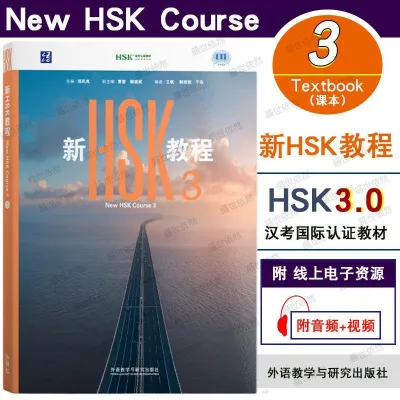


Prices are valid at publication and may change. Please refer to the product page for the latest price.
Identifying your specific skill gaps is the next step in choosing the right materials. Some learners excel at listening comprehension but struggle with character recognition, while others can read passages but find it difficult to construct grammatically correct sentences. If your reading speed is slow, you will need books that offer extensive reading passages. If grammar is your weak point, your budget should prioritize a dedicated grammar workbook over general reading materials.
Finally, establish a realistic study timeline before selecting your books. Self-learners who can commit five hours a week typically require three to six months to fully master the HSK 3 curriculum. If you have a shorter timeline, you will need highly structured, exam-focused textbooks that cut straight to test-taking strategies. If you have more time, you can opt for communicative or story-based books that build broader language proficiency.
Core Textbook Categories for HSK 3 Preparation
When browsing for HSK 3 books, you will encounter two primary methodologies: standard exam-oriented curricula and communicative or story-based approaches. Standard curricula are designed specifically to mirror the structure of the official exam, presenting vocabulary and grammar points in the exact sequence they appear on the test. Communicative approaches, on the other hand, focus on real-world conversations and situational language use, which can make learning more engaging but may require extra effort to align with exam requirements.

A high-quality textbook must maintain a careful balance of listening, reading, and writing exercises. Because the HSK 3 exam tests all three of these skills, using a book that neglects writing or lacks audio support will leave you unprepared. Look for books that integrate character writing grids, reading comprehension passages, and listening exercises in every chapter to ensure balanced skill development.
Comprehensive Coursebooks
A comprehensive coursebook serves as the anchor of your self-study routine, providing the structured progression necessary to build your grammar and vocabulary step-by-step. When evaluating a coursebook, look for clear, accessible grammar explanations written in English, accompanied by multiple example sentences. The dialogues should feel natural and place the target vocabulary in realistic contexts, helping you understand how words are used in everyday situations.
For self-learners, the presence of self-study aids is non-negotiable. Always verify that the coursebook includes a complete answer key for all chapter exercises and full transcripts for every audio track. Without these resources, you will have no way to verify your answers or identify where you made mistakes during listening practice, significantly slowing down your progress.
Targeted Grammar and Vocabulary Workbooks
While a coursebook introduces new concepts, a targeted workbook is essential for reinforcing those concepts and identifying weak points. Workbooks provide the repetitive practice needed to move vocabulary from your short-term memory to your long-term memory. However, you should avoid workbooks that rely solely on mechanical, drill-focused repetition, such as copying characters repeatedly without context.
Instead, look for workbooks that emphasize context-based sentence building, fill-in-the-blank exercises, and reading comprehension drills. It is also critical to ensure that any supplementary workbook you purchase aligns closely with the vocabulary list and grammar progression of your main coursebook. Using a workbook from a completely different series can lead to confusion, as you may encounter unfamiliar words that have not yet been introduced in your main studies.
Supplementary Digital and Physical Study Tools
Textbooks provide the necessary structure, but supplementary tools offer the flexibility and immediate feedback required to accelerate your learning. These tools should not replace your core books; rather, they should support them by filling in gaps during your daily commute or spare moments. The key to successful integration is avoiding tool overload, which can lead to decision fatigue and fragmented study habits.
To keep your routine manageable, select no more than one or two supplementary tools to use alongside your primary textbook. Focus on tools that offer immediate feedback, such as instant pronunciation checks or automated grading for quizzes. This immediate correction is vital for self-learners who do not have a teacher present to point out errors in real-time.
Spaced Repetition and Flashcard Systems
Memorizing the 600 characters required for HSK 3 is one of the biggest hurdles for self-learners, making a reliable flashcard system essential. Digital spaced repetition systems use algorithms to schedule reviews of vocabulary words right before you are likely to forget them. When choosing a digital flashcard app, look for features like custom deck imports, high-quality audio playback, and the ability to organize cards by HSK level.
Physical flashcards, however, remain a highly effective option for tactile learners and those who want to reduce screen time. Writing out your own physical cards helps build muscle memory and reinforces character stroke order. If you choose physical cards, look for pre-printed sets that include pinyin, English definitions, stroke order diagrams, and example sentences on the back of each card.
Dictionary and Reading Assistant Apps
As you begin reading longer passages in HSK 3, a digital dictionary app becomes an indispensable tool for decoding unfamiliar characters. A good dictionary app should feature optical character recognition, allowing you to scan printed characters with your smartphone camera for instant translation. This feature saves significant time compared to looking up characters by radical or stroke count.
Additionally, ensure the app offers offline capabilities so you can study without an active internet connection, and native audio pronunciation to help you master tones. Verify that the app is compatible with your mobile device and supports both simplified and traditional characters. Even if you are focusing on simplified characters for the exam, having access to traditional forms can be beneficial if you plan to travel or work in regions where traditional characters are standard.
Pre-Purchase Verification Checklist for Language Materials
Before finalizing your purchase of HSK 3 materials, you must verify several critical product specifications to ensure they meet your learning goals. First, confirm the character set used in the books. While simplified characters are standard in Singapore and are used in the official HSK exams, some textbooks are published in traditional character editions. Double-check the product description to ensure you are buying the correct version.
Next, check the audio format provided with the textbook. Many older editions still bundle physical CDs, which can be highly inconvenient if your computer or study space lacks a CD drive. Modern publications typically offer digital downloads via a website or streaming access through QR codes printed inside the book. Verify that you will have easy access to these audio files on your preferred devices before buying.
You must also verify the publication edition of the books. The HSK exam standards are updated periodically, and using an outdated textbook can result in studying obsolete vocabulary lists or missing new grammar requirements. Look for editions that explicitly state alignment with the current HSK standards.
When planning your budget, expect to allocate between S$30 and S$80 for a high-quality physical textbook and workbook set. While free digital resources are abundant, investing in professionally structured physical books provides a distraction-free learning environment that digital screens cannot match. Finally, review the return policies of the online bookstore or e-commerce platform you are using, especially when purchasing imported books, to protect yourself in case of printing defects or missing audio access codes.
Structuring Your Self-Study Routine
Having the right books and tools is only half the battle; you must also integrate them into a sustainable daily routine. A balanced study plan should allocate time for both input and output. Spend your primary study sessions reading textbook dialogues and listening to audio tracks to build your comprehension skills. Follow this up with active output practice, such as writing out sentences using new grammar patterns or speaking along with the audio recordings.
To prevent vocabulary decay, schedule dedicated review sessions using your spaced repetition tools. A quick ten-minute flashcard session in the morning and another in the evening can dramatically improve your retention without overwhelming your schedule. Consistency is far more important than cramming; thirty minutes of daily study is significantly more effective than a single three-hour session once a week.
Finally, establish clear milestones to evaluate your progress. Use the practice tests included in your workbooks to measure your reading speed and listening accuracy under timed conditions. Once you can consistently score above eighty percent on these practice exams without referring to your notes, you can confidently begin transitioning to HSK 4 materials.
Frequently Asked Questions (FAQ)
Do I need to buy the official HSK 3 textbook to pass the exam?
While the official textbooks are highly aligned with the exam structure, they are not strictly mandatory. Many third-party textbooks cover the exact same vocabulary and grammar points required for HSK 3. The most important factor is ensuring that whatever book you choose aligns with the official HSK 3 syllabus and that you supplement your studies with official past exam papers to familiarize yourself with the test format.
Should I choose simplified or traditional Chinese characters for HSK 3?
For most learners, simplified characters are the practical choice, as they are used in the official HSK exams and are the standard writing system in mainland China and Singapore. However, if your primary goal is to live, work, or study in Taiwan or Hong Kong, or if you are interested in classical Chinese literature, you may want to choose materials that teach traditional characters.
Are physical workbooks better than digital apps for memorizing vocabulary?
Both mediums offer distinct cognitive benefits. Physical workbooks are superior for developing muscle memory and mastering character stroke order through handwriting practice. Digital apps, however, excel at long-term vocabulary retention due to their automated spaced repetition algorithms and convenience for quick review sessions. For the best results, use digital apps for daily vocabulary recall and physical workbooks for writing practice.

Community discussion
Share your experience or ask a question. Comments are reviewed before publication.