
Choosing your first adjustable piano bench is just as critical as selecting the instrument itself. Many beginner pianists overlook this accessory, assuming any household chair or stool will suffice. However, a dedicated adjustable piano bench is a vital ergonomic tool that directly influences your physical comfort, hand positioning, and long-term technique development.
When shopping for your first bench, you must evaluate several key performance and structural features. A suitable bench must offer a precise height adjustment range, a stable and wobble-free frame, supportive high-density padding, and durable upholstery that can withstand local environmental conditions. By focusing on these essential features, you will create an optimal learning environment that supports hours of comfortable, focused practice.
Why Proper Bench Height Matters for Beginner Pianists
The height at which you sit relative to your piano keys dictates your entire upper-body posture and playing mechanics. When a pianist sits too low, they are forced to raise their shoulders and lift their wrists excessively to reach the keys. This posture places immense strain on the shoulder muscles and restricts blood flow to the forearms, causing rapid fatigue and tension. Conversely, sitting too high forces the player to hunch over the instrument, dropping their wrists and compressing the nerves in the carpal tunnel. Both scenarios create physical tension, which is the primary enemy of fluid piano technique.
Products mentioned in this guide
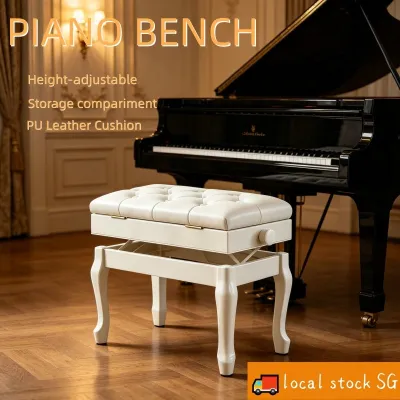
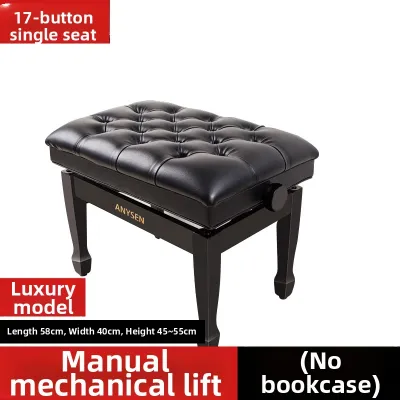
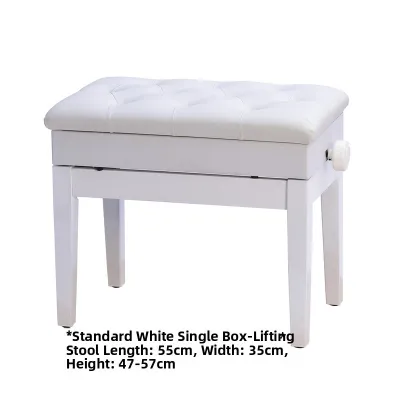
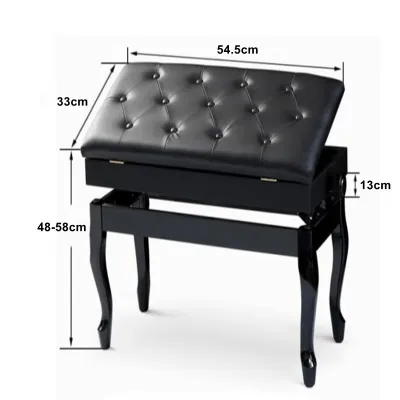
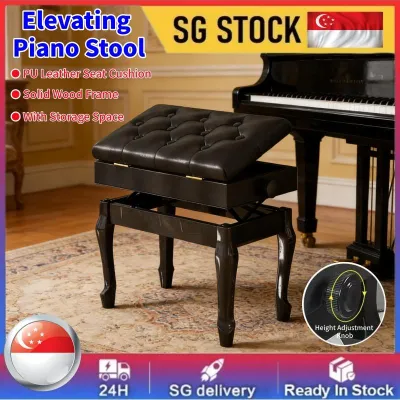
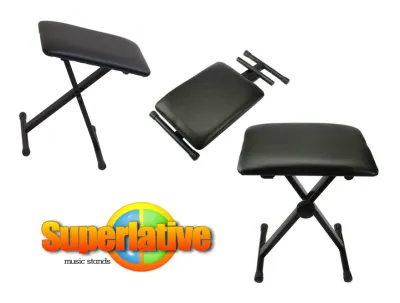
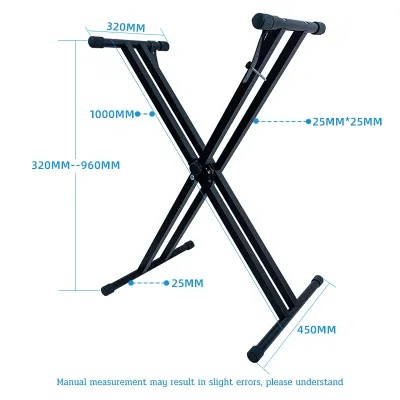
Prices are valid at publication and may change. Please refer to the product page for the latest price.
For beginners, establishing correct ergonomics from the very first lesson is essential for building accurate muscle memory. Your brain needs to develop a consistent physical relationship with the keyboard; if your seating height fluctuates or is incorrect, your spatial awareness of the keys will suffer. This is particularly crucial for young, growing children whose physical proportions change rapidly over months of study. An adjustable bench allows the seat height to be calibrated continuously as the child grows, ensuring they always maintain the correct elbow-to-keybed relationship.
Furthermore, many households share a single piano or digital keyboard among multiple family members of varying heights. A fixed-height bench or a makeshift chair forces everyone to adapt to a single, arbitrary height, which is highly detrimental to individual progress. An adjustable piano bench solves this issue entirely, allowing each player to customize the seat to their unique physical dimensions within seconds before they begin their practice session.
Contrasting a dedicated adjustable piano bench with makeshift seating reveals clear functional differences. Dining chairs are typically built at a standard height designed for eating, which rarely aligns with the standard keybed height of a piano. They also feature sloped backs that encourage slouching. Office chairs, while adjustable, feature wheels that compromise stability and armrests that obstruct lateral arm movement across the keyboard. A dedicated piano bench provides a flat, stable, unyielding foundation that encourages active sitting, where your core muscles support your spine and your feet remain anchored to the floor for balance and pedal control.
Key Features to Look for in an Adjustable Piano Bench
To select the right adjustable piano bench, you must look beyond mere aesthetics and focus on functional specifications. While a polished finish that matches your piano cabinet is a pleasant bonus, the internal engineering and materials of the bench will determine its long-term utility. A high-quality bench must balance mechanical reliability, structural stability, and ergonomic comfort to provide a safe and supportive seat.

As you evaluate different options, prioritize the quality of the adjustment mechanism, the density of the seat cushion, and the overall weight capacity of the frame. Understanding how these features interact will help you make an informed decision that suits your specific practice habits, physical needs, and budget.
Height Adjustment Mechanisms: Knobs vs. Levers vs. Hydraulics
The mechanism used to raise and lower the seat is one of the most important components of an adjustable piano bench. There are three primary systems available on the market today, each offering distinct advantages and trade-offs in terms of convenience, precision, and durability.
Dual-Knob (Traditional) The traditional dual-knob system, often found on classic wooden benches, utilizes a heavy-duty scissor-lift metal mechanism operated by turning wooden or plastic knobs on either side of the bench frame. As you rotate the knobs, the threaded steel rods expand or contract the scissor mechanism, raising or lowering the seat.
- Pros: This system offers exceptional stability and allows for highly precise, micro-adjustments. Because the mechanism locks mechanically via the threaded rods, there is virtually zero risk of the seat slipping or sinking over time.
- Cons: Adjusting the height is a slow, manual process. If you share your piano with family members of significantly different heights, turning the knobs back and forth before every session can become tedious.
Single-Lever / Ratchet Commonly found on modern, metal X-style keyboard benches, the single-lever or ratchet mechanism uses a spring-loaded pin or a notched bar system. To adjust the height, you pull a lever or unscrew a safety knob, slide the bench legs to the desired height slot, and lock the pin back into place.
- Pros: This system is incredibly fast to adjust, highly portable, and generally very affordable. It is an excellent choice for gigging musicians or students who need to pack away their equipment after practice.
- Cons: You are limited to pre-set height increments determined by the factory-drilled holes or notches. You cannot perform micro-adjustments between these slots, which may prevent you from achieving the absolute perfect ergonomic height.
Hydraulic / Pneumatic The hydraulic or pneumatic system is the most modern option, operating similarly to a high-end office chair. By pressing a lever located under the seat, a pressurized gas cylinder smoothly raises or lowers the bench, utilizing the player’s body weight to lower it and the gas pressure to raise it.
- Pros: It offers effortless, near-instantaneous adjustment with infinite precision within its height range. This is the ultimate choice for busy teaching studios or households where multiple players use the piano in rapid succession.
- Cons: Hydraulic benches are typically much heavier, significantly more expensive, and contain internal seals that can degrade over years of use. If the gas cylinder loses pressure, it cannot be easily repaired at home and may require a professional replacement.
For most beginners, a traditional dual-knob wooden bench provides the best combination of stability, precise adjustment, and long-term durability if the bench remains in a fixed location. If portability and budget are your primary concerns, a high-quality metal lever bench is a practical alternative.
Seat Padding and Upholstery for Long Practice Sessions
The comfort of your piano bench directly impacts how long you can practice without experiencing physical fatigue. A poorly padded bench will cause discomfort within fifteen minutes, cutting your practice sessions short and breaking your concentration.
Padding Density When evaluating a bench, do not confuse softness with support. Many cheap benches feature thick, ultra-soft foam that feels incredibly comfortable when you first sit down. However, soft foam lacks structural integrity; under your body weight, it compresses completely, leaving your sit bones resting directly against the hard wooden or metal base plate. This leads to restricted blood circulation and lower back strain. Instead, look for high-density foam padding. High-density foam feels firm to the touch and resists deep compression, distributing your body weight evenly across the seat and maintaining its supportive shape over years of daily use.
Upholstery Materials The material covering the cushion affects both the durability of the bench and your comfort during long sessions.
- Genuine Leather: Highly durable, luxurious, and naturally breathable. However, it is expensive and requires periodic maintenance with leather conditioners to prevent cracking.
- Synthetic Leather (PU/PVC): Polyurethane (PU) and Polyvinyl Chloride (PVC) are highly popular, cost-effective alternatives. They are water-resistant and exceptionally easy to wipe clean with a damp cloth.
- Fabric and Velvet: These materials offer excellent grip, preventing you from sliding around on the seat. They are also highly breathable but are susceptible to staining and can wear down faster than synthetic alternatives.
Climate Considerations In Singapore’s tropical climate, high humidity and heat play a significant role in material longevity and comfort. If your piano is placed in a room without continuous air conditioning, cheap PVC upholstery can trap heat, causing you to sweat and stick to the seat during intense practice. Over time, high humidity can also cause low-grade synthetic leathers to hydrolyze, leading to unsightly peeling, cracking, and flaking. To prevent this, look for high-quality, breathable polyurethane (PU) synthetic leathers or breathable fabric coverings. If you choose a fabric bench, ensure your room is well-ventilated to prevent moisture buildup and mold growth within the cushion fibers.
Frame Stability, Dimensions, and Weight Capacity
A piano bench must provide an absolutely stable, wobble-free platform. Any swaying, rocking, or squeaking during play is highly distracting and can compromise your balance, especially when playing dynamic passages that require you to lean your torso.
Frame Materials
- Solid Wood: Traditional wooden frames offer excellent structural rigidity and a heavy weight that anchors the bench to the floor. High-quality wooden benches feature legs made from solid hardwoods like maple, oak, or beech, which resist bending and warping.
- Tubular Steel / Metal Alloys: Metal frames are highly durable, resistant to environmental changes, and often designed with folding mechanisms. They are lighter than solid wood, making them highly portable, but you must ensure the metal tubes are of a thick gauge to prevent bending under load.
Stability Features When inspecting a bench, pay close attention to the joints and connections. For wooden benches, look for heavy-duty steel corner brackets and bolt-on legs rather than joints held together solely by wood glue or small screws. For metal benches, look for robust cross-bracing and thick locking pins. Non-slip rubber feet are a critical feature; they prevent the bench from sliding on smooth surfaces like polished marble tiles or parquet flooring, and they protect your floors from scratches.
Dimensions and Weight Capacity Standard single piano benches typically measure between 50 to 60 cm in width and 30 to 40 cm in depth. This size provides ample surface area for you to adjust your seating position laterally without feeling like you might fall off. Always verify the manufacturer’s specified weight capacity before purchase. A reliable, well-constructed adjustable bench should have a rated weight capacity of at least 100 kg to 150 kg. Operating a bench close to its maximum weight limit accelerates wear on the adjustment mechanism and joints, leading to premature structural failure.
How to Match Your Bench to Your Keyboard and Space
Your choice of an adjustable piano bench should harmonize with your specific instrument type, physical space, and storage requirements. A bench that is perfect for a portable stage keyboard may be completely unsuitable for a heavy acoustic upright piano.
Digital Keyboards vs. Acoustic Pianos If you are playing a portable digital keyboard supported by an X-stand or Z-stand, a matching lightweight, metal X-style adjustable bench is highly compatible. These benches match the modern, industrial aesthetic of digital keyboards and are easy to fold down flat for storage. However, if you own an acoustic upright piano or a console digital piano with a permanent wooden cabinet (such as those from Yamaha, Roland, or Casio), a solid wooden adjustable bench is far more appropriate. A wooden bench matches the visual weight and elegance of the cabinet, and its heavier mass provides a more grounded, stable feel that aligns with the action of a traditional piano keybed.
Space Constraints In Singapore’s compact apartments, such as HDB flats and condominiums, managing floor space is a daily priority. If your practice area is multi-functional, a folding metal bench is highly advantageous, as it can be folded flat and stored in a closet, under a bed, or behind a door when not in use. If you prefer a wooden bench but have limited space, look for a compact model with a slim profile that can slide completely underneath your keyboard stand when your practice session is finished, keeping your walkways clear.
Storage Features Many adjustable piano benches feature a lift-top seat that reveals a shallow storage compartment underneath. This compartment is incredibly useful for storing sheet music, method books, metronomes, pencils, and cleaning cloths, keeping your practice area tidy and free of clutter. However, be aware of the trade-offs: storage benches are inherently bulkier and heavier because of the deeper wooden box required under the seat. This extra depth can sometimes restrict the minimum height adjustment range of the bench, which is an important factor to check if the bench will be used by very young children who require a higher seat, or exceptionally tall players who need the seat to go as low as possible.
Pre-Purchase Checklist and Common Beginner Mistakes
To ensure you make a successful purchase, use this practical checklist to verify the specifications of your chosen adjustable piano bench before checking out:
- Measure your keyboard height: Measure the distance from the floor to the top of your piano keys. Compare this with the height adjustment range of the bench (typically 45 cm to 55 cm) to ensure you can achieve a parallel elbow-to-keybed position. Note that some portable digital keyboards have thick chassis bases, which may require a bench that can adjust lower than standard models.
- Verify the weight capacity: Ensure the bench's rated weight limit comfortably exceeds your body weight to guarantee long-term safety and prevent premature wear of the adjustment joints.
- Confirm the physical footprint: Measure your designated practice space to ensure the bench fits comfortably without obstructing doors or walkways.
- Check floor protection: Verify that the bench legs are equipped with non-slip rubber feet or felt pads. If they are not, plan to purchase slip-on rubber caps or adhesive felt pads separately to protect your flooring.
- Review the return policy: Because comfort is highly subjective, ensure the retailer offers a clear return or exchange policy so you can test the seat cushion's firmness at home.
Avoiding these common beginner mistakes will save you from frustration and unnecessary expenses:
- Prioritizing visual match over ergonomics: Buying a beautiful, non-adjustable vintage wooden stool simply because it matches your piano's wood grain, only to suffer from back pain because the seat is at an incorrect, unchangeable height.
- Buying under-rated weight capacities: Choosing an ultra-cheap, flimsy bench with a low weight limit. These benches quickly develop wobbles, squeaks, and loose joints, requiring replacement within a few months of daily practice.
- Ignoring floor compatibility: Placing bare metal or rough wood legs directly onto polished parquet, laminate, or vinyl floors, resulting in deep, costly scratches.
- Assuming all "adjustable" benches are identical: Failing to check the actual adjustment range, only to discover the bench does not go low enough for a tall adult or high enough for a young child.
Frequently Asked Questions (FAQ)
Can I use a regular adjustable office chair instead of a piano bench?
No, a regular adjustable office chair is highly unsuitable for piano practice for several ergonomic and physical reasons. First, office chairs are almost always equipped with armrests, which physically obstruct your elbows and prevent you from moving your arms freely across the full range of the keyboard. Second, office chairs are designed with a backward-sloping seat pan and a contoured backrest to encourage reclining and passive sitting. Piano playing requires an active sitting posture, where you sit on the front half of a flat, stable surface with your pelvis tilted slightly forward and your core muscles fully engaged. Finally, the wheeled base of an office chair causes the seat to roll or rotate when you apply downward force to the keys or press the sustain pedal, compromising your stability and control.
How do I know if my piano bench is at the correct height?
To determine if your bench is at the correct height, sit on the front half of the seat with your spine straight and your feet resting flat on the floor. Place your hands on the piano keys in a natural playing position. Your elbows should be positioned slightly in front of your torso, and your forearms should be parallel to the floor (or sloping very slightly downward toward the keyboard). Your wrists should remain straight, relaxed, and level with your knuckles, without bending excessively upward or downward. If you find yourself hunching your shoulders or bending your wrists upward to play, your bench is too low. If you have to reach down or bend your wrists downward, your bench is too high.
Do beginners need a wider duet-style piano bench?
For the vast majority of solo beginners, a standard single piano bench (measuring approximately 50 to 60 cm in width) is perfectly adequate and highly recommended, especially if you have limited floor space. A duet-style piano bench (typically 75 to 90 cm in width) is only necessary if you plan to frequently play four-hand duets with a partner, or if your piano teacher will regularly sit directly beside you on the same bench during home lessons. Duet benches are significantly wider, heavier, more expensive, and more difficult to move around, making them less practical for small apartments unless specifically required for joint practice.

Community discussion
Share your experience or ask a question. Comments are reviewed before publication.