
Finding the right piano to start your musical journey in Singapore involves balancing key action, sound quality, space constraints, and long-term learning goals. For most beginners, the ideal instrument closely mimics the feel of a traditional acoustic piano while fitting comfortably into a modern living space. Rather than searching for a single “best” brand, learners should focus on identifying reputable manufacturers that offer reliable local warranties, responsive key actions, and robust after-sales support through authorized local distributors.
Essential Features for a Beginner Piano
When shopping for a beginner piano, certain technical specifications are non-negotiable for developing proper playing technique. The most critical feature is a full-sized keyboard with 88 keys. Standard piano literature is written for this range, and starting with fewer keys will quickly limit a student’s progress as pieces become more complex. Learning on a shorter keyboard can also disrupt a student’s spatial awareness of the keyboard layout, making it difficult to transition to a standard piano during lessons or examinations.
Equally important is the mechanism beneath the keys. Beginners should look for weighted or hammer-action keys rather than synth-action or semi-weighted keys. Weighted keys use physical weights or hammer mechanisms to simulate the mechanical resistance of an acoustic piano’s wooden keys. This resistance is essential for building finger strength, hand endurance, and proper hand posture. Synth-action keys, which rely on simple springs, offer almost no resistance and can lead to weak finger joints and poor control when transitioning to an acoustic instrument.
Products mentioned in this guide
![[✅SG Ready Stock] 61 Key High Quality Music Keyboard Piano kids toys new player beginner Electric Piano](https://img.lazcdn.com/g/p/1f34b80fc1c4ffa462a06ed0ad2ca2fd.jpg_400x400q80.jpg_.webp)
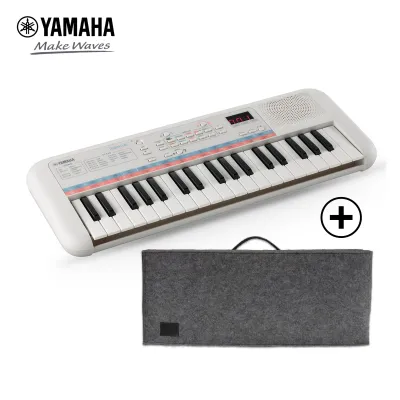
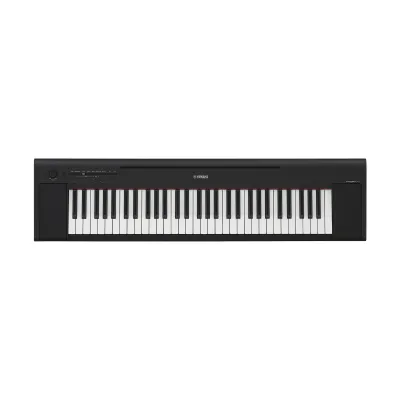
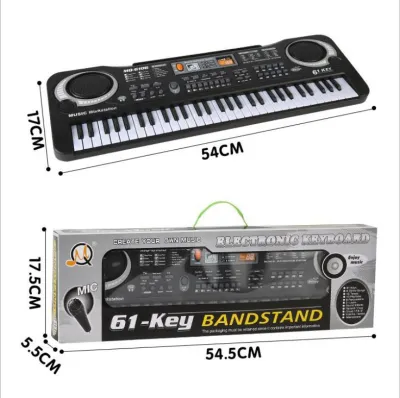
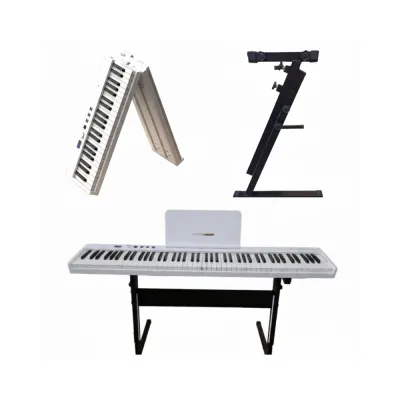
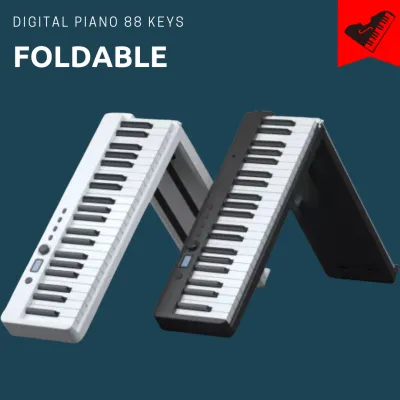
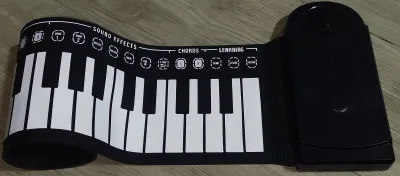
Prices are valid at publication and may change. Please refer to the product page for the latest price.
Touch sensitivity is another vital feature that directly impacts musical expression. A touch-sensitive keyboard detects the velocity and force of a key press, translating that physical input into volume and tonal variation. This allows the player to perform dynamics, ranging from a soft whisper to a powerful strike. Without touch sensitivity, every note sounds at a uniform volume, preventing the student from learning how to express emotion or shape musical phrases.
Finally, beginners should consider the instrument’s polyphony and built-in learning tools. Polyphony refers to the maximum number of individual notes or voices the piano can sound simultaneously. A minimum of 64-note polyphony is recommended, though 128-note polyphony is highly preferable. High polyphony ensures that sustained notes do not cut off abruptly when playing complex chords or using the sustain pedal. Useful built-in tools include a metronome for rhythm practice, a recording function to self-evaluate performance, and dual-mode capabilities that split the keyboard into two identical registers for teacher-student duets.
Reputable Piano Brands to Explore in Singapore
Navigating the musical instrument market can be overwhelming, but focusing on established brands with a strong local presence is a reliable way to narrow down your options. The following manufacturers are widely recognized for their quality, reliability, and accessibility in Singapore. This list is non-exhaustive and does not represent a definitive ranking, as the right choice ultimately depends on individual preferences.

When exploring these brands, keep in mind that personal touch preference and local after-sales support are just as important as brand reputation. Every manufacturer has a unique approach to key action and sound design, resulting in distinct differences in how their instruments feel and sound. It is highly recommended to visit physical showrooms to test these instruments in person, allowing you to experience the physical response of the keys and the character of the sound before making a decision.
Yamaha
Yamaha is one of the most prominent names in the music industry, offering a vast range of both acoustic and digital pianos suitable for beginners. Their entry-level digital lines, such as the portable P-series and the console-style Arius series, are highly regarded for their durability and straightforward user interfaces. Yamaha’s acoustic upright pianos are also staple instruments in many Singaporean households and music schools.
A key advantage of choosing Yamaha is the brand’s widespread educational adoption. Because many music schools and private teachers in Singapore use Yamaha pianos, students often find a high level of consistency between their practice instrument at home and the instrument they use during lessons. Yamaha’s digital pianos are generally known for their bright, clear tonal profile and consistent, reliable key action. When purchasing, always verify the specific model features and ensure you are buying from an authorized dealer to secure a valid local warranty.
Roland
Roland takes a distinct approach by focusing exclusively on digital piano technology, making them a pioneer in sound modeling and electronic instrument design. Instead of relying solely on static audio recordings of acoustic pianos, Roland’s advanced sound engines model the physical behaviors of an acoustic piano in real-time. This results in a highly dynamic and responsive sound that reacts naturally to subtle changes in a player’s touch.
For beginners living in high-density housing such as HDB flats or condominiums, Roland’s compact digital pianos are exceptionally popular. These instruments offer space-saving designs without compromising on key action, often featuring highly responsive keybeds. Roland instruments also excel in headphone sound projection, utilizing specialized ambience technology to make silent practice sessions feel more natural and less fatiguing. Be sure to check local stock availability and confirm the locations of authorized service centers for convenient support.
Kawai
Kawai is highly respected among classical pianists for its dedication to replicating the authentic touch and tone of a grand piano. In both their acoustic and digital lines, Kawai places a strong emphasis on key action development. Their digital pianos are designed to mimic the pivot point, weight, and let-off feel of a traditional acoustic action, with some higher-end models even incorporating real wooden keys.
Kawai’s tonal character is generally described as warm, deep, and mellow, offering a contrast to the brighter sound profiles of other brands. This makes Kawai a popular choice for classical music enthusiasts who prefer a richer, more traditional acoustic sound. Their acoustic upright pianos are built to high standards and offer excellent longevity for serious students. When testing Kawai pianos in a showroom, pay close attention to the touch weight, as some players find their actions to feel slightly more substantial and realistic.
Casio
Casio has successfully redefined its reputation in the musical instrument market by developing highly competitive, beginner-friendly digital pianos under their Privia and Celviano lines. These instruments are particularly well-suited for casual learners, adult hobbyists, or families working with strict space or budget constraints. Casio’s focus is on delivering modern, slimline designs that fit easily into compact living spaces.
Despite their slim profiles, many of Casio’s entry-level digital pianos feature fully weighted hammer-action keys and multi-dimensional sound engines. They also frequently include modern connectivity options, such as Bluetooth audio and MIDI, allowing learners to easily connect to educational apps and interactive tutorials. However, because Casio also manufactures ultra-budget, non-weighted keyboards, buyers must carefully check the specifications of the specific model they are considering to ensure it features fully weighted keys suitable for proper piano training.
Choosing Between Acoustic and Digital Pianos
One of the most significant decisions a beginner must make is choosing between a traditional acoustic piano and a modern digital piano. This decision is heavily influenced by your living environment, budget, and long-term musical goals. In Singapore, housing characteristics play a major role in this choice. Acoustic upright pianos are heavy, dense instruments that require professional moving services and can pose floor-loading challenges in older high-rise buildings. Digital pianos, by contrast, are lightweight, modular, and easily transported, making them highly practical for HDB and condominium living.
Environmental factors also differ significantly between the two formats. Singapore’s tropical climate, characterized by high humidity and temperature fluctuations, presents a constant challenge for acoustic pianos. Made of natural wood, felt, and metal, acoustic pianos are highly susceptible to moisture damage, which can cause keys to stick, strings to rust, and the soundboard to warp. To maintain an acoustic piano in Singapore, owners must run an internal heater bar continuously or keep the instrument in a climate-controlled room, alongside scheduling professional tuning at least once or twice a year. Digital pianos contain no organic acoustic components, making them virtually immune to humidity-related tuning issues and requiring zero ongoing maintenance.
Volume control and practice flexibility are additional areas where digital pianos offer a clear advantage. The ability to plug in headphones allows students to practice at any hour of the day or night without disturbing family members or neighbors in close proximity. Digital pianos also offer volume adjustment, built-in metronomes, and direct recording capabilities. Acoustic pianos, while offering an unmatched natural resonance and physical feedback, are inherently loud and cannot be silenced unless you invest in a specialized, high-cost silent acoustic model.
Despite the convenience of digital instruments, acoustic pianos remain the gold standard for touch and tone. The complex mechanical connection between the key, the hammer, and the vibrating string creates an organic response that digital sensors can only simulate. For students aiming to progress through advanced classical grades, transitioning to an acoustic piano eventually becomes necessary to master advanced pedaling techniques, tonal coloration, and delicate touch control. Beginners should evaluate their immediate living situation and commitment level, keeping in mind that a high-quality digital piano is an excellent, low-maintenance starting point that can be upgraded later.
Buying Safely from Local Music Retailers
Purchasing a piano is a significant investment, and buying from reputable local music retailers in Singapore is the best way to ensure a secure and well-supported transaction. Before making a purchase, always verify that the retailer is an authorized dealer for the brand you are interested in. Authorized dealers receive direct support from the manufacturer, ensuring that your instrument is genuine and covered by an official local warranty. Purchasing parallel imports or buying from unauthorized online sellers may save money upfront, but it often leaves you without access to official spare parts or qualified technicians if the instrument requires repair.
When visiting a showroom, take your time to thoroughly inspect the display models. Do not hesitate to sit at the piano and play, even if you only know a few notes. Turn the volume down completely on digital models and press the keys to listen for any excessive mechanical clicking, clacking, or loose key wobbling, which can indicate poor build quality or wear. Test the pedals to ensure they operate smoothly without squeaking, and check that the music stand is sturdy enough to support heavy music books or a tablet.
Before finalizing your purchase, clarify all policies regarding delivery, assembly, and after-sales service. Ask whether the retail price includes delivery to your home and professional on-site assembly, as some digital console pianos are shipped flat-packed and require careful construction. For acoustic pianos, confirm if the first tuning session after delivery is included in the price, as the instrument will need to settle after being moved.
Finally, ensure you fully understand the retailer’s return and repair policies. Ask about the duration of the warranty and what specific components are covered. Clarify whether warranty service is conducted on-site at your home or if you are expected to transport the instrument back to the retailer’s service center. Having these details in writing on your invoice or receipt provides essential protection and peace of mind as you begin your musical journey.
Frequently Asked Questions (FAQ)
Do I need an 88-key weighted keyboard to start learning?
Yes, music teachers and examiners strongly recommend starting with an 88-key weighted keyboard. A full-sized keyboard ensures you do not run out of keys as your repertoire expands, while weighted keys are essential for building the finger strength and control required to play with dynamic expression. While a smaller, unweighted keyboard or a portable electronic keyboard can serve as a temporary, low-cost trial for the first few weeks to gauge a student’s interest, continuing on such an instrument long-term will hinder technical development and make transitioning to a real piano highly difficult.
How should I budget for a beginner digital piano?
When budgeting for a beginner digital piano, it is best to check current showroom prices for entry-level weighted models from reputable brands, as prices can vary based on promotions and stock. In addition to the cost of the instrument itself, you must factor in essential accessories that may not be included in the base package. These include a sturdy keyboard stand, a height-adjustable bench to maintain proper playing posture, a sustain pedal, high-quality headphones for silent practice, and potential delivery or assembly fees. Setting a realistic budget that includes these accessories ensures a complete and comfortable learning setup from day one.

Community discussion
Share your experience or ask a question. Comments are reviewed before publication.