
Choosing your first digital piano is a significant milestone on your musical journey. For beginners in Singapore, finding an instrument that balances authentic feel, practical learning features, and space efficiency is essential. An 88-key digital piano with weighted keys and built-in recording capabilities offers the ideal foundation, allowing you to develop correct finger technique while providing the tools to analyze and improve your playing.
Navigating the musical instrument market can be overwhelming, especially with various technical terms like hammer action, polyphony, and MIDI. By understanding what these specifications mean and how they impact your daily practice, you can make an informed decision that fits your budget and living space. This guide outlines the essential factors to evaluate, helping you select a digital piano that will support your growth from your very first scales to advanced pieces.
Why 88 Weighted Keys and Recording Matter for Beginners
When starting out, it is tempting to opt for a smaller, lighter keyboard to save money or space. However, investing in a full-size 88-key instrument is crucial for long-term progress. Standard piano music is written for a full keyboard, and starting with fewer keys will eventually limit the repertoire you can play. More importantly, the physical response of the keys plays a fundamental role in how you develop as a pianist.
Products mentioned in this guide
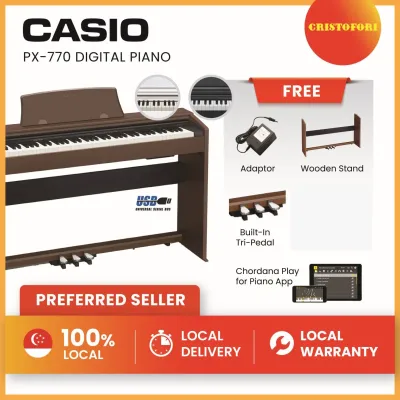
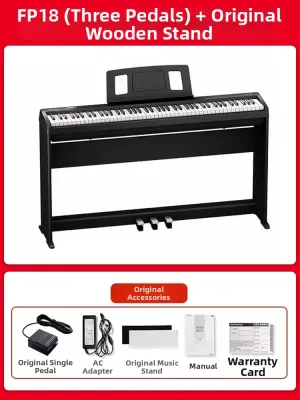
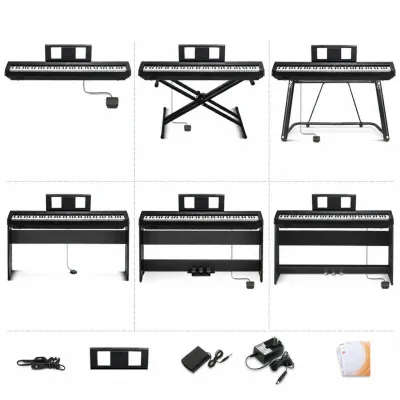
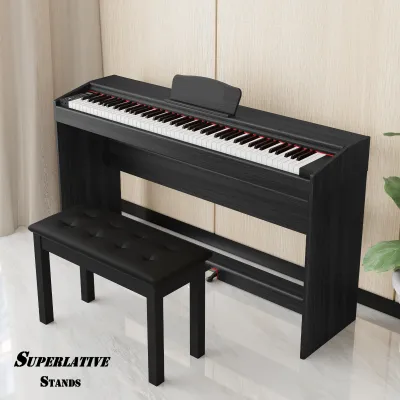
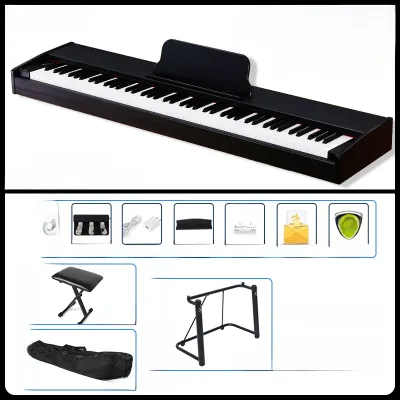
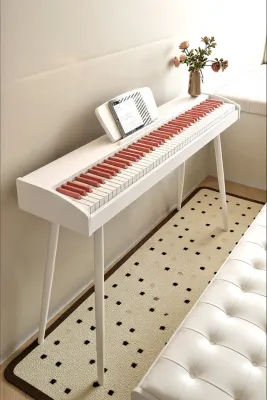
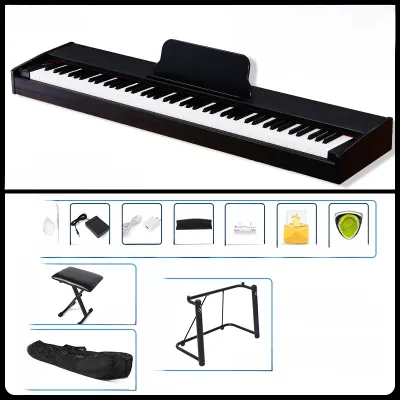
Prices are valid at publication and may change. Please refer to the product page for the latest price.
Acoustic pianos use a complex system of wooden hammers and gravity to strike strings, creating a natural resistance when you press a key. Weighted digital pianos use mechanical weights to simulate this hammer action. Practicing on weighted keys builds the necessary finger strength, dexterity, and control required to play expressively. Without this resistance, beginners often develop a flat-fingered playing style and struggle to control their dynamics when transitioning to a real acoustic piano.
It is important to distinguish between true weighted keys and semi-weighted keys. Semi-weighted keyboards use springs to provide a small amount of resistance. While they are easier to transport and cheaper to manufacture, they do not replicate the feel of an acoustic piano. If your goal is to learn proper piano technique, semi-weighted keys are generally insufficient. Look specifically for terms like fully weighted, hammer action, or graded hammer action when browsing specifications.
Recording capabilities are equally vital for early skill development. When you are actively playing, your brain is highly focused on reading notes, maintaining rhythm, and positioning your fingers. This cognitive load makes it incredibly difficult to listen to yourself objectively. By recording your practice sessions, you can step back and listen to your performance with fresh ears.
Listening to your own recordings allows you to identify subtle mistakes that you might miss in real-time. You might notice that your tempo speeds up during difficult passages, or that your left-hand accompaniment is overpowering your right-hand melody. This self-evaluation accelerates your learning process, helping you correct bad habits before they become deeply ingrained. Additionally, keeping a library of your recordings over several months provides a tangible record of your progress, which can be highly motivating.
Key Specifications to Evaluate Before Buying
To compare different digital pianos effectively, you need to understand the technical specifications listed on product sheets. The first and most critical specification is the keyboard action. Manufacturers use proprietary names for their key actions, but they generally fall into categories of standard hammer action or graded hammer action. Graded action means the keys on the lower register feel heavier than those on the higher register, mimicking the physical reality of thicker strings on an acoustic piano.

Key texture is another aspect of keyboard action that affects playability. Basic digital pianos have smooth plastic keys, which can become slippery when your hands sweat. Higher-quality models feature textured keytops, often described as synthetic ivory or ebony. This textured surface absorbs moisture and provides a more secure grip, which is particularly beneficial in Singapore’s warm and humid climate.
Next, evaluate the recording capabilities of the instrument. Digital pianos typically offer either internal MIDI recording, internal audio recording, or both. Internal MIDI recording saves your performance as digital note data. This allows you to record a song, play it back directly from the piano, or even slow down the playback speed without changing the pitch. However, MIDI files do not contain actual sound waves; they must be played back through a sound engine.
Internal audio recording, on the other hand, captures the actual sound produced by the piano and saves it as a digital audio file (such as a WAV or MP3) onto an external USB flash drive. This is highly convenient if you want to share your recordings with family, send them to your piano teacher, or listen to them on your smartphone. If a piano only supports MIDI recording, you will need to connect it to a computer or tablet to convert your performances into shareable audio files.
Polyphony is another crucial specification, representing the maximum number of individual notes the piano can sound at the same time. While a human only has ten fingers, playing with the sustain pedal down allows notes to ring out and accumulate. If you play a fast arpeggio with the pedal pressed, a piano with low polyphony will run out of available voices, causing the oldest notes to cut off abruptly. For beginners, a minimum of 64-note polyphony is acceptable, but 128-note or 192-note polyphony is highly recommended to ensure smooth, uninterrupted sound as your pieces become more complex.
Finally, examine the connectivity options. A standard headphone jack is essential for silent practice, allowing you to play late at night without disturbing family members or neighbors. Look for a piano that offers dual headphone jacks if you plan to take lessons at home, as this allows both you and your teacher to listen simultaneously. Additionally, ensure the piano has a USB-to-Host port, which lets you connect the instrument to a computer, iPad, or smartphone to interact with educational software and interactive learning apps.
Matching Piano Features to Your Learning Goals
Every beginner has unique goals, and matching the features of a digital piano to your specific learning path will ensure you get the most value from your investment. If your primary goal is classical training or preparing for formal examinations, you should prioritize the authenticity of the key action and the quality of the primary piano sound. For this path, look for a digital piano that can be mounted on a matching wooden stand with a fixed three-pedal unit. This setup replicates the physical posture and pedal placement of an acoustic piano, which is essential for classical repertoire.
If you are more interested in modern music production, songwriting, or self-guided learning through technology, your priorities will shift toward digital connectivity. Look for instruments that feature built-in Bluetooth MIDI and Bluetooth Audio. Bluetooth MIDI allows you to connect wirelessly to learning apps on your tablet, eliminating messy cables. Bluetooth Audio lets you stream songs from your phone through the piano’s built-in speakers, allowing you to play along with your favorite tracks easily.
Living arrangements in Singapore also play a major role in your decision. Space is often limited in local apartments, making a bulky cabinet-style piano impractical. If you live in a cozy HDB flat or condominium, a portable slab-style digital piano is an excellent alternative. These compact models can be placed on a sturdy, collapsible metal stand (such as a double-X or Z-stand) and tucked away in a closet or against a wall when not in use.
When choosing a portable model, pay close attention to the physical dimensions and weight. A standard 88-key digital piano is typically between 130 and 140 centimeters wide. Ensure you have a dedicated space of this size that does not block walkways or ventilation. While portable models are easier to move, they still weigh anywhere from 11 to 15 kilograms due to the weighted key mechanism, so you should ensure your stand is rated to support that weight safely.
Keep in mind that while major manufacturers offer excellent entry-level series designed to meet these various needs, product lineups change. Always verify the current specifications, features, and package inclusions of any model you are considering before making a final decision.
Pre-Purchase Checks and Setup in Singapore
Before finalizing your purchase, there are several practical steps to take to ensure a smooth buying experience and long-term satisfaction. First, always purchase your digital piano from an authorized local dealer in Singapore. Buying from authorized channels ensures you receive a genuine product and a valid local warranty. If your piano develops an electronic fault or a key mechanism issue, shipping the instrument back or paying for out-of-pocket local repairs can quickly erase any initial savings.
Next, carefully review what accessories are included in the purchase price. Some retailers sell the keyboard as a standalone unit, while others offer bundle packages. A complete setup requires a sturdy stand, a comfortable bench, a music rest to hold your books or tablet, and a sustain pedal. The basic plastic footswitches included with many entry-level pianos tend to slide around on tiled floors; investing in a heavier, piano-style sustain pedal with a rubberized base will greatly improve your playing experience.
You must also verify the power requirements and physical setup of the instrument. Ensure the piano comes with a power adapter compatible with Singapore’s 230V electrical system and features a standard Type G (UK 3-pin) plug. Using unapproved adapters or universal travel plugs can pose safety risks and potentially damage the sensitive electronic components of your piano.
Finally, consider the environmental conditions of your home. Singapore’s high tropical humidity can affect both the mechanical parts and the electronic sensors of a digital piano. To protect your investment, avoid placing the piano directly under an air conditioning vent, next to a window with direct sunlight, or in areas prone to high moisture. If you keep your windows open frequently, using a dust cover when the piano is not in use will prevent dust and moisture from settling between the keys and damaging the internal contacts.
Frequently Asked Questions (FAQ)
Can I use a MIDI controller instead of a digital piano for recording?
While you can use a MIDI controller to record music, it is generally not the best choice for a beginner looking to learn the piano. A MIDI controller does not have a built-in sound engine or speakers; it only sends digital data to an external device like a computer or tablet. To hear any sound, you must have the controller connected to a device running virtual instrument software. A digital piano is a standalone instrument with its own built-in sounds and speakers, allowing you to simply turn it on and practice immediately without any external technology.
Do I need an audio interface to record my digital piano?
Whether you need an audio interface depends on the type of recording you want to do. If you only want to record MIDI data to control software instruments on your computer, a standard USB cable connected directly from your piano to your computer is all you need. If you want to record the actual high-quality piano sounds generated by your instrument, you will typically need to connect the piano’s audio outputs to an external audio interface. However, some modern digital pianos feature a built-in USB audio interface, which allows you to transfer both MIDI and digital audio directly to your computer through a single USB cable. Always check your piano’s manual to see if its USB port supports direct audio transfer.

Community discussion
Share your experience or ask a question. Comments are reviewed before publication.