
Choosing your first instrument is a pivotal step, and selecting the right brand significantly influences how quickly and enjoyably you progress. For absolute beginners, the ideal digital piano or electronic keyboard brand balances authentic sound, responsive key action, intuitive learning tools, and reliable build quality. While no single manufacturer is universally superior, brands like Yamaha, Roland, Casio, and Korg consistently lead the market by offering entry-level instruments tailored to different learning paths, budgets, and living spaces.
To make an informed decision, you must align a brand’s design philosophy with your personal musical goals. A student aiming for classical piano training requires a brand known for realistic weighted key actions and acoustic piano samples. Conversely, an aspiring producer or casual hobbyist might prioritize a brand that excels in portable designs, synthesizer sounds, and software integration. By understanding what each major manufacturer offers, you can narrow down your options and select an instrument that supports your practice routines for years to come.
What Makes a Brand Ideal for Absolute Beginners?
When evaluating keyboard brands, build quality and structural durability should be your primary considerations. A beginner’s instrument must withstand hours of daily practice, repetitive keystrokes, and occasional transport. Reputable brands use high-grade plastics and robust internal components that prevent keys from becoming noisy, loose, or unresponsive over time. Investing in a well-constructed instrument ensures that the physical response of the keys remains consistent, which is crucial for developing proper finger strength and muscle memory.
Products mentioned in this guide
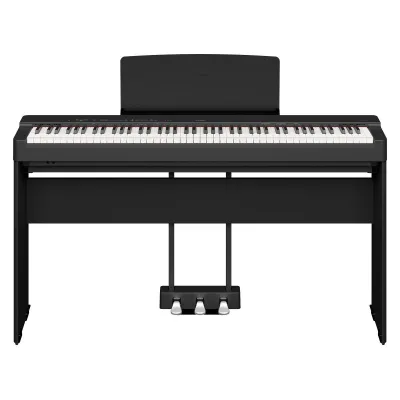
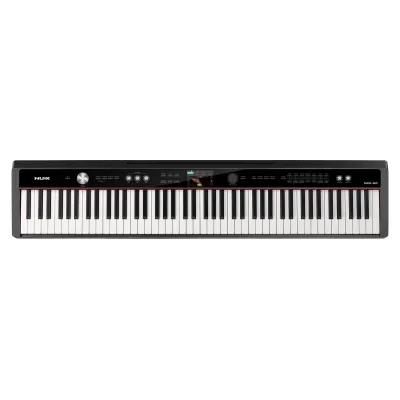
![Yamaha NP-15 Portable Keyboard Piano 61-Key Black/White Piaggero Digital Musical Instrument NP15 [LIMITED STOCK]](https://img.lazcdn.com/g/p/0ec95af5f3240a6cd4d0139cd77da0f4.jpg_400x400q80.jpg_.webp)
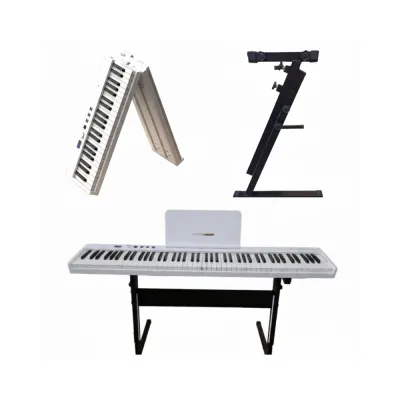
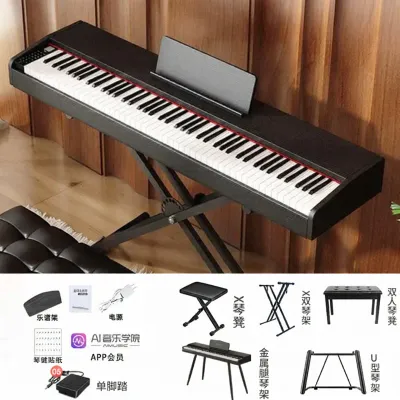
![[✅SG Ready Stock] 61 Key High Quality Music Keyboard Piano kids toys new player beginner Electric Piano](https://img.lazcdn.com/g/p/1f34b80fc1c4ffa462a06ed0ad2ca2fd.jpg_400x400q80.jpg_.webp)

Prices are valid at publication and may change. Please refer to the product page for the latest price.
Beyond physical durability, an ideal beginner brand integrates practical educational features directly into its instruments. Look for brands that offer built-in metronomes, lesson functions, and split-keyboard modes that allow a student and teacher to play side-by-side. Furthermore, modern learning heavily relies on software integration. Brands that develop dedicated companion applications or maintain compatibility with popular third-party learning apps make daily practice more interactive and measurable, helping beginners stay motivated.
Local after-sales support and warranty coverage are equally critical when choosing a brand. In Singapore, where high humidity levels can occasionally affect electronic components and key sensors over time, having access to an authorized local service center is invaluable. Established brands typically offer comprehensive manufacturer warranties and have dedicated service technicians who can source genuine replacement parts. Choosing a brand with a strong local presence ensures that any technical issues can be resolved quickly without the hassle of shipping the instrument overseas.
Leading Digital Piano and Keyboard Brands for Beginners
The global musical instrument market features several prominent manufacturers, each with a distinct approach to designing entry-level digital pianos and electronic keyboards. These brands have spent decades refining their sound-generation technologies and physical key mechanisms to replicate the experience of playing a traditional acoustic piano.

Rather than searching for a single winner, you should compare how each brand balances sound engine characteristics, keyboard action feel, and overall portability. Some brands focus heavily on traditional acoustic realism, while others emphasize modern digital versatility and compact form factors. Understanding these general design philosophies will help you identify which brand aligns best with your budget, space constraints, and musical preferences.
Yamaha
Yamaha is widely recognized for its long history of manufacturing both world-class acoustic grand pianos and high-quality electronic instruments. This dual expertise allows the brand to capture highly accurate acoustic piano samples for its digital models. For beginners, this means access to a rich, natural piano tone that encourages expressive playing from the very first lesson. The brand’s entry-level instruments are known for their exceptional structural reliability and consistent performance, making them a staple in music schools worldwide.
In addition to sound quality, Yamaha places a strong emphasis on creating a comprehensive educational ecosystem. Many of their beginner keyboards and digital pianos feature seamless connectivity with proprietary apps like Smart Pianist, which can analyze songs in your music library and display chord charts. This integration of traditional acoustic sound and modern digital learning tools makes the brand highly appealing to students who want a structured, tech-supported path to mastering the instrument.
Roland
Roland approaches beginner digital pianos with a focus on expressive sound engines and highly responsive key actions. The brand is famous for its proprietary sound modeling technologies, which simulate the complex physical interactions of an acoustic piano rather than simply playing back recorded samples. This results in a highly dynamic sound that responds minutely to changes in your playing touch, helping beginners develop a sensitive and nuanced technique.
The physical key action on entry-level Roland instruments is designed to support long-term skill development. Many of their beginner models feature keys with a simulated ivory feel and escapement mechanisms, mimicking the subtle “click” felt when pressing a key on an acoustic grand piano. This emphasis on tactile realism ensures that as a student’s skills progress, they can transition to a traditional acoustic piano with minimal adjustment to their hand posture and finger control.
Casio
Casio has revolutionized the beginner keyboard market by focusing on highly portable, space-saving, and budget-friendly designs. Once known primarily for basic electronic toys, the brand has evolved into a serious manufacturer of high-quality digital pianos and slimline keyboards. Their instruments are particularly well-suited for modern living spaces, such as HDB flats in Singapore, where floor space is at a premium and portability is a major advantage.
The brand’s entry-level lineups, such as their compact digital pianos and portable keyboards, offer an impressive balance of accessible learning tools and versatile built-in rhythms. These features allow beginners to practice with backing tracks, explore different musical genres, and utilize interactive lesson functions. For budget-conscious beginners or those unsure of their long-term commitment, this brand provides an affordable entry point without sacrificing essential performance features.
Korg
Korg stands out by blending traditional acoustic piano sounds with versatile synthesizer and professional sound-design features. While other brands focus almost exclusively on replicating the classical piano experience, Korg designs instruments that appeal to beginners interested in modern music production, electronic genres, and sound exploration. Their entry-level keyboards often inherit sound engines and effects from their professional-grade workstations.
This unique approach makes Korg an excellent choice for beginners who want to look beyond classical training. If your goals include composing electronic music, layering diverse instrument sounds, or connecting your keyboard to a digital audio workstation (DAW) for recording, Korg’s intuitive interfaces and robust MIDI capabilities provide a powerful foundation. The brand successfully bridges the gap between a traditional learning tool and a creative music production asset.
Essential Features to Compare When Choosing a Keyboard
When comparing models across different brands, understanding key action types is crucial. Key actions generally fall into three categories: weighted, semi-weighted, and synth-action. Fully weighted keys use physical weights or hammers to simulate the resistance of an acoustic piano’s action, which is essential for building finger strength and learning dynamic control. Semi-weighted keys offer light spring resistance, while synth-action keys are completely unweighted and highly springy. For students pursuing traditional piano lessons, an 88-key fully weighted keyboard is highly recommended to ensure proper technique development.
Another critical specification to evaluate is the polyphony limit of the instrument. Polyphony refers to the maximum number of individual notes or voices the keyboard can sound simultaneously. When you play a chord while holding down the sustain pedal, each note continues to ring out, consuming the instrument’s polyphony capacity. Entry-level keyboards may have polyphony limits of 48 or 64 notes, while more advanced digital pianos offer 128 or 256 notes. If the polyphony limit is too low, older sustained notes will be abruptly cut off during complex passages, which can be frustrating as your playing advances.
Connectivity options are also vital for a functional practice setup. A dedicated headphone jack is essential for silent practice, allowing you to play at any hour without disturbing family members or neighbors. USB-to-Host or MIDI ports are necessary if you plan to connect the keyboard to a computer, tablet, or smartphone to use learning apps or recording software. Additionally, ensure the keyboard has a dedicated input for a sustain pedal; some basic keyboards only support simple on/off switch pedals, whereas more advanced models support half-pedaling for greater expressive control.
Pre-Purchase Checklist and Setup Considerations
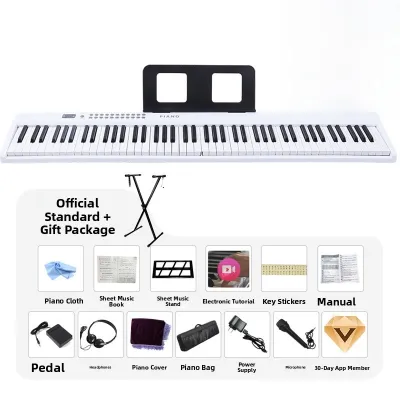
Before finalizing your purchase, it is important to verify the exact model number and the specific items included in the package. Many manufacturers sell the keyboard unit alone, while others offer bundle packages that include essential accessories such as a matching wooden stand, a comfortable bench, a sustain pedal, and a music rest. Additionally, check the power supply requirements; some portable keyboards can run on batteries but do not include the AC power adapter in the standard box, requiring you to purchase it separately.
Physical dimensions and weight must be carefully checked against your intended practice space. If you live in a compact apartment, a slim, lightweight digital piano that can be easily stored or placed on a folding stand may be more practical than a heavy, cabinet-style model. Ensure that the surface or stand supporting the keyboard is sturdy enough to handle the instrument’s weight, especially for fully weighted 88-key models, which can weigh upwards of 12 kilograms.
Finally, always verify the warranty terms and the authorized retailer status of the seller. Purchasing from an authorized local dealer in Singapore ensures that you receive a genuine product eligible for local warranty service, which typically covers parts and labor for at least one year. Be cautious of parallel imports or unauthorized online sellers; while they may offer slightly lower upfront prices, they often lack local warranty coverage, leaving you responsible for expensive repair costs if the instrument develops a fault.
Frequently Asked Questions (FAQ)
Do I need an 88-key weighted keyboard to start learning?
If your primary goal is to learn classical piano or transition to an acoustic piano in the future, starting with an 88-key fully weighted keyboard is highly recommended. This setup ensures you develop the necessary finger strength, hand posture, and dynamic control from the beginning. However, if you are focusing on casual playing, electronic music production, or have severe space and budget constraints, a smaller 61-key or 76-key semi-weighted keyboard can serve as a practical starting point. Always check with your music instructor, as many formal piano curricula require a full 88-key weighted instrument from the very first lesson.
Can I use a standard electronic keyboard instead of a digital piano?
Yes, you can use a standard electronic keyboard to learn the basics of music theory, note reading, and simple melodies. However, standard keyboards typically feature unweighted keys and fewer than 88 keys, which limits their suitability for classical piano repertoire. Digital pianos are specifically designed to replicate the sound and feel of an acoustic piano, making them the better choice for serious piano students. If your interest lies in exploring diverse instrument sounds, rhythms, and portable music-making, a standard electronic keyboard is a suitable and cost-effective option.
What accessories are essential for a beginner setup?
A complete and ergonomic beginner setup requires a few essential accessories beyond the keyboard itself. A sturdy, height-adjustable stand is crucial to keep the instrument stable and at the correct playing height. An adjustable bench is equally important to ensure proper posture, which prevents back and wrist strain during long practice sessions. Finally, a high-quality sustain pedal that mimics the feel of an acoustic piano pedal is necessary for learning legato playing. Always check the product specifications to see which of these items are included in the box so you can purchase any missing essentials separately.

Community discussion
Share your experience or ask a question. Comments are reviewed before publication.