
Choosing your first electronic keyboard is an exciting milestone, but the variety of brands and technical specifications can feel overwhelming. For beginners in Singapore, finding the right instrument involves balancing sound quality, key action, learning features, and long-term value. While several major manufacturers dominate the market, the ideal brand for you depends heavily on your specific musical goals, budget, and learning style.
By understanding what each brand typically offers and how to evaluate key specifications, you can make an informed decision that supports your musical journey. Rather than searching for a single universal winner, focus on matching a keyboard’s design philosophy with your personal learning path, whether you aspire to play classical masterpieces, produce electronic beats, or simply enjoy casual chord-playing at home.
Key Features to Evaluate in a Beginner Keyboard
When shopping for an electronic keyboard, the technical specifications listed on the box or website can be confusing. Understanding these features is crucial because they directly impact how the instrument feels, sounds, and functions as you progress.
Products mentioned in this guide
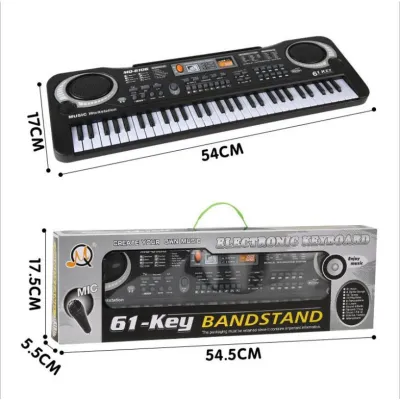
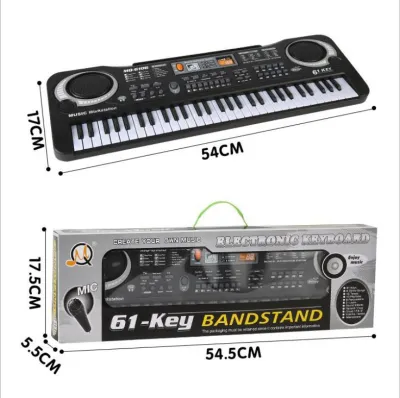
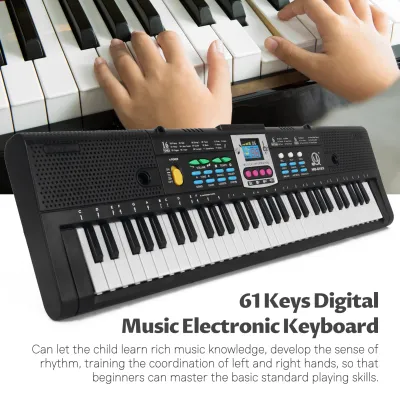
![[✅SG Ready Stock] 61 Key High Quality Music Keyboard Piano kids toys new player beginner Electric Piano](https://img.lazcdn.com/g/p/1f34b80fc1c4ffa462a06ed0ad2ca2fd.jpg_400x400q80.jpg_.webp)

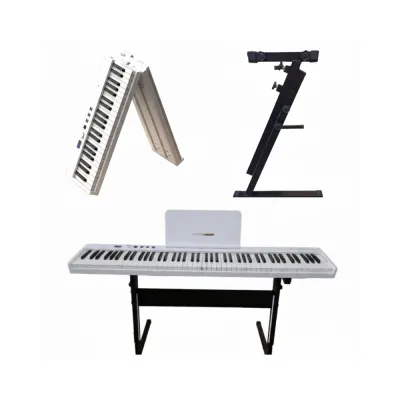
Prices are valid at publication and may change. Please refer to the product page for the latest price.
The first and most critical decision is the key count and action. Standard keyboards typically come with 61, 76, or 88 keys. A 61-key keyboard is highly portable and sufficient for learning basic melodies, chords, and pop songs. However, classical music and more advanced pieces eventually require the full range of an 88-key instrument. Beyond the number of keys, you must evaluate the key action. Non-weighted keys are light and easy to press, which is fine for casual playing but does not build finger strength. Semi-weighted keys offer some resistance, while fully weighted keys simulate the heavy feel of an acoustic piano’s hammers. Additionally, ensure the keyboard has touch response (or velocity sensitivity), meaning the volume changes depending on how hard or soft you press the keys. Without touch response, expressing emotion in your music is nearly impossible.
Built-in learning tools are another major consideration for beginners. Many modern keyboards feature interactive lesson modes that guide you through built-in songs step-by-step, sometimes even lighting up the keys to show you where to place your fingers. Many brands also offer dedicated educational apps that connect to the keyboard via Bluetooth or USB. These apps provide interactive tutorials, games, and sheet music, making practice sessions more engaging for self-directed learners or younger students.
Sound engine quality and polyphony limits determine how realistic and pleasant the instrument sounds. The sound engine is the technology used to generate the keyboard’s voices, such as acoustic pianos, electric pianos, organs, and strings. Higher-quality sound engines use detailed samples of real instruments to create a richer, more authentic tone. Polyphony refers to the maximum number of individual notes or voices the keyboard can play simultaneously. For beginners, a minimum of 32-note or 64-note polyphony is recommended to prevent notes from cutting off abruptly when playing chords with a sustain pedal.
Finally, essential connectivity options ensure your keyboard can adapt to different environments and learning setups. A headphone jack is indispensable for quiet practice sessions at any time of day without disturbing others. A sustain pedal input is necessary for learning how to hold notes smoothly, a fundamental technique in piano playing. USB or MIDI connectivity allows you to connect the keyboard to a computer, tablet, or smartphone, transforming your instrument into a controller for music production software or educational apps. Some models also include auxiliary inputs or Bluetooth audio, allowing you to play along with your favorite backing tracks directly through the keyboard’s speakers.
Top Electronic Keyboard Brands and Their Strengths
Navigating the musical instrument market reveals a few dominant manufacturers, each with a distinct design philosophy and target audience. Rather than searching for an absolute “best” brand, beginners should look for the manufacturer whose strengths align with their personal learning style, musical preferences, and budget.

Each major brand has spent decades refining its technology, resulting in distinct characteristics across their product lineups. Some prioritize the traditional feel of an acoustic piano, while others focus on portability, interactive technology, or creative sound design. By understanding these general brand identities, you can narrow down your options before visiting a showroom or browsing online catalogs.
Yamaha
Yamaha is widely recognized for its deep heritage in manufacturing both acoustic pianos and electronic instruments. This dual expertise is reflected in their beginner keyboards, which often prioritize realistic acoustic piano sampling and structured educational features. The brand’s proprietary sound engines capture the nuances of their world-renowned grand pianos, providing beginners with an inspiring and authentic auditory experience from their very first notes.
For students following a traditional learning curriculum, Yamaha keyboards offer highly structured built-in lesson functions. These systems break down songs into left- and right-hand parts, waiting for you to play the correct note before advancing. Yamaha’s entry-level to intermediate product lines are designed to scale with a student’s progress, offering a reliable path from simple portable keyboards to sophisticated digital pianos that fit seamlessly into a home environment.
Casio
Casio has established a strong reputation for delivering exceptional value, portability, and highly interactive learning ecosystems. Often favored by casual learners, younger students, and those with limited living space, Casio’s keyboards are designed to be lightweight and user-friendly. The brand has pioneered compact designs that do not compromise on essential features, making them easy to store or transport to lessons and practice sessions.
A key strength of Casio is its integration with modern learning technology. Many of their beginner models connect seamlessly with interactive companion apps, which offer gamified learning experiences, visual sheet music, and progress tracking. Additionally, Casio’s focus on affordability makes it an attractive entry point for families who want to explore music lessons without making a massive upfront financial commitment, all while enjoying a diverse library of built-in tones and rhythms.
Roland
Roland is highly regarded for its emphasis on durable build quality, expressive sound engines, and modern connectivity. While they offer excellent entry-level options, Roland’s instruments are designed with long-term playability in mind, ensuring that a beginner will not quickly outgrow the keyboard as their skills advance. Their keybeds are frequently praised for their realistic touch response, which closely mimics the resistance and rebound of an acoustic piano.
In addition to traditional piano tones, Roland keyboards often feature advanced sound engines derived from their professional synthesizers. This makes them highly appealing to beginners who are interested in modern music genres, sound design, and music production. With robust Bluetooth connectivity for both audio and MIDI, Roland instruments integrate smoothly with modern digital audio workstations (DAWs) and mobile learning apps, offering a versatile platform for creative exploration.
Korg
Korg stands out as a powerhouse in the realm of electronic music, synthesizers, and creative music-making tools. While they produce excellent digital pianos, their beginner-friendly keyboards often lean toward arranger and synthesizer features. This makes Korg an exciting option for beginners who are less focused on classical piano and more interested in electronic music, beat-making, songwriting, and sound exploration.
Korg’s instruments typically feature intuitive interfaces designed for real-time experimentation. They offer a vast array of high-quality synthesizer sounds, drum kits, and auto-accompaniment rhythms that allow a single player to sound like a full band or electronic producer. For creative beginners who want to dive straight into arranging, composing, and manipulating sounds, Korg provides the tools and flexibility to turn musical ideas into reality quickly.
Aligning Keyboard Features With Your Musical Goals
To make the right purchase, you must align the specific features of these brands with your intended musical path. Different genres and learning methods place different demands on an instrument, and choosing a keyboard tailored to your goals will make practice more enjoyable and productive.
If your primary goal is classical and traditional piano learning, your priority must be key action and acoustic sound quality. In this scenario, look for brands and models that offer 88 fully weighted keys with hammer action. This physical resistance is essential for developing the finger strength, control, and technique required to play an acoustic piano. Brands like Yamaha and Roland excel in this category, offering entry-level digital pianos that focus heavily on replicating the physical feel and expressive dynamics of a grand piano.
For those interested in pop music, chord-playing, and casual learning, a lightweight arranger keyboard is often the most practical choice. These instruments typically feature 61 or 76 semi-weighted or non-weighted keys, making them highly portable and easy to set up. Look for models with robust auto-accompaniment features, which provide backing bands in various musical styles based on the chords you play with your left hand. Casio and Yamaha offer excellent portable keyboards in this category, featuring intuitive layouts and interactive lesson modes that help you learn popular songs quickly without the steep learning curve of classical training.
If you aspire to get into music production, songwriting, or electronic music, your focus should shift toward connectivity and sound variety. You will want a keyboard with strong MIDI-over-USB capabilities, allowing you to connect the instrument to your computer or tablet to control software instruments. A wide selection of onboard synthesizer sounds, drum pads, and real-time control knobs will also be highly beneficial. Roland and Korg are particularly strong in this area, offering instruments that bridge the gap between a traditional learning keyboard and a professional music production workstation.
Finally, budget considerations play a crucial role in your decision. It is important to balance essential learning features with long-term value to avoid overspending on professional tools you may not use. A complete beginner does not need a high-end workstation with thousands of editable parameters. Instead, invest in a keyboard that covers the fundamentals well: touch-sensitive keys, a reliable sustain pedal input, and a clean piano sound. By focusing on these core features, you can find an affordable instrument from a reputable brand that will comfortably support your learning for the first few years before you need to consider an upgrade.
Pre-Purchase Checklist for Buyers in Singapore
Purchasing an electronic keyboard in Singapore requires a few localized considerations to ensure you get a compatible, fully supported, and high-quality instrument. Before finalizing your purchase, use this practical checklist to guide your decision.
First, always verify that you are buying from an authorized dealership or a reputable local retailer. Purchasing through official channels ensures that your keyboard comes with a valid local warranty and access to reliable after-sales support. While parallel imports or unauthorized online sellers might offer slightly lower prices, they often lack local warranty coverage, meaning you could face high repair costs or difficulty sourcing replacement parts if the instrument develops a fault.
Second, check the power supply specifications of the keyboard. In Singapore, the standard household electricity supply is 230V at 50Hz, utilizing the Type G three-pin plug. Ensure that the keyboard package includes an AC adapter compatible with these local standards. Some imported models may come with two-pin plugs or require different voltages, which would necessitate external adapters or transformers that can be inconvenient and potentially unsafe if mismatched.
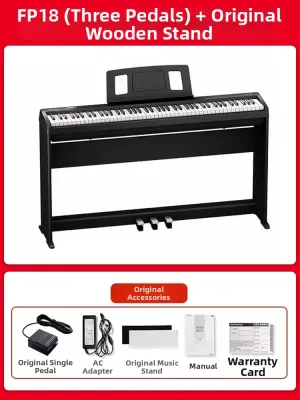
Third, confirm exactly what accessories are included in the purchase price. A keyboard alone is difficult to play comfortably without proper support. Check if the bundle includes an adjustable stand, a comfortable bench, a music sheet rest, and a sustain pedal. Some retailers offer comprehensive starter bundles, while others sell the keyboard as a standalone unit, requiring you to purchase accessories separately. Factor these additional costs into your overall budget to evaluate the true value of the offer.
Finally, take advantage of physical testing opportunities at local showrooms before committing to a purchase. Visit music stores in Singapore to try different brands side-by-side. Pay close attention to how the keys feel under your fingers, how intuitive the interface is to navigate, and whether the sound quality through both the speakers and headphones meets your expectations. Many local showrooms also have knowledgeable staff who can answer specific questions about setup and compatibility.
Frequently Asked Questions (FAQ)
Do I need an 88-key keyboard to start learning?
You do not strictly need an 88-key keyboard to begin your musical journey. For the first year or two of learning, a 61-key or 76-key keyboard is usually sufficient for practicing basic melodies, scales, finger exercises, and standard pop songs. These smaller keyboards are also lighter, more affordable, and take up less space in typical Singaporean homes. However, as you progress to classical repertoire, complex arrangements, or pieces that utilize the extreme high and low registers, transitioning to a full-size 88-key keyboard with weighted action becomes necessary to develop proper technique and play the music as written.
Can I use a standard electronic keyboard to learn classical piano?
While you can learn the basic notes and music theory on a standard, unweighted electronic keyboard, it is not suitable for serious classical piano training. Classical music relies heavily on dynamics, expression, and touch control, which can only be properly developed on keys that simulate the weighted hammer action of an acoustic piano. Playing on unweighted keys can lead to poor finger strength and a lack of control when you eventually transition to a real piano. If your primary goal is classical piano, look for a digital piano with fully weighted keys and touch response, and consult with a qualified piano instructor to ensure your instrument meets their curriculum requirements.

Community discussion
Share your experience or ask a question. Comments are reviewed before publication.