
Selecting the right instrument for a child embarking on their musical journey is a pivotal decision that balances educational value, physical suitability, and household practicality. For parents in Singapore, where residential space is often carefully managed and noise considerations are part of daily life, a digital keyboard offers an adaptable, compact, and highly engaging alternative to a traditional acoustic piano. The ideal starter keyboard must bridge the gap between an entertaining toy and a serious learning tool, providing enough musical accuracy to foster correct habits without overwhelming a young beginner with unnecessary complexity.
To make an informed choice, you need to evaluate how a keyboard’s physical design, key action, and sound generation align with your child’s immediate learning goals and physical development. While the market is filled with options ranging from ultra-portable budget models to high-end digital pianos, focusing on established brands known for their educational features and reliable build quality will ensure your investment supports your child’s progress. By understanding the core specifications and matching them to your child’s specific learning path, you can select an instrument that inspires consistent practice and builds a strong musical foundation.
What Makes a Keyboard Suitable for Beginner Kids?
When searching for a child’s first keyboard, the first step is distinguishing between musical toys and genuine beginner instruments. Toys often feature miniature, unweighted plastic keys that lack dynamic response, coupled with low-quality synthesized sound engines that produce harsh, inaccurate tones. A true beginner keyboard, even at an entry-level price point, utilizes a sophisticated sound engine that reproduces the sampled tones of real acoustic instruments. This tonal accuracy is crucial for developing a child’s ear and pitch recognition during their formative training years.
Products mentioned in this guide
![Yamaha PSR-E283 Portable Digital Keyboard ⚫ Black 61 Keys PSRE283 AC Power Adapter PSR E283 Kids Musical Electronic Electric Instrument Absolute Piano The Music Works Store [LIMITED STOCK]](https://img.lazcdn.com/g/p/16a0f813c10e32e5e036a774ae933031.jpg_400x400q80.jpg_.webp)
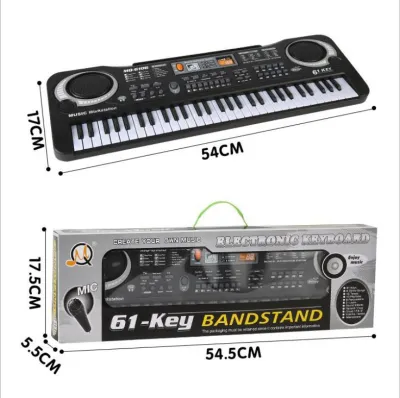
![[✅SG Ready Stock] 61 Key High Quality Music Keyboard Piano kids toys new player beginner Electric Piano](https://img.lazcdn.com/g/p/1f34b80fc1c4ffa462a06ed0ad2ca2fd.jpg_400x400q80.jpg_.webp)
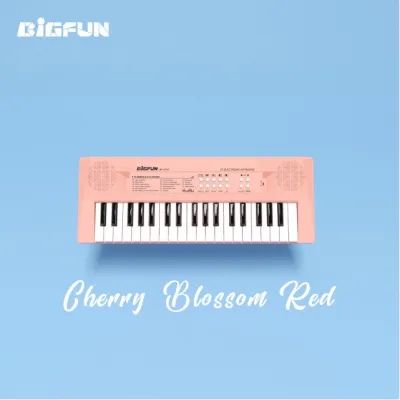
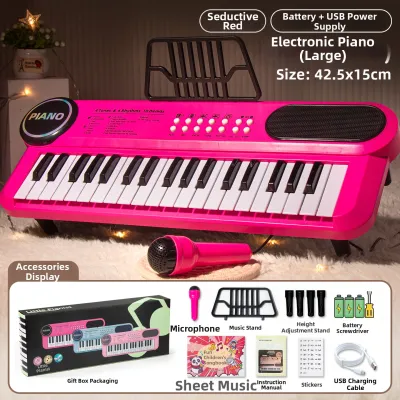
![Yamaha PSS-E30 PSS-A50 Mini Keyboard 37 Keys High Quality PSSE30 PSSA50 Kid Toy Gifts Light Weight Music Instrument Battery USB Powered PSS E30 A50 Absolute Piano The Music Works [LIMITED STOCK]](https://img.lazcdn.com/g/p/febce4b8975c04bd0986e8d090fe4ee1.png_400x400q80.png_.webp)
Prices are valid at publication and may change. Please refer to the product page for the latest price.
The psychological impact of sound quality on a young learner should not be underestimated. When a child presses a key and hears a rich, resonant, and realistic piano tone, it provides immediate positive reinforcement. Conversely, thin, tinny, or highly artificial sounds can quickly become fatiguing to the ear, leading to shorter practice sessions and a general loss of interest. Investing in a brand that prioritizes high-fidelity sampling ensures that your child remains engaged and inspired by the music they are creating.
Key size and key count are equally critical factors for growing hands. While mini-keys may seem appealing for toddlers, children aged five and older who are starting formal lessons should practice on standard-sized keys. Standard keys build correct muscle memory and finger spacing, preventing the need for a difficult transition later. For absolute beginners, a 61-key instrument is often the practical sweet spot, offering a five-octave range that easily accommodates early repertoire while remaining compact. However, if your child is immediately enrolling in a classical curriculum, an 88-key instrument is the standard required to cover the full range of traditional piano literature.
Physical weight and portability also play a significant role in a child’s daily practice routine. In many Singaporean households, dedicated space for a permanent piano setup may not be immediately available. A lightweight, portable keyboard can be easily set up on a sturdy desk or a folding stand, and stored away when not in use. Choosing an instrument that a child can safely interact with—without the risk of heavy lids or unstable structures—promotes a sense of ownership and independence, encouraging them to initiate practice sessions on their own.
Key Features to Compare Across Keyboard Brands
To evaluate different keyboard brands objectively, parents must look past aesthetic designs and focus on key action and touch sensitivity. Touch sensitivity, or velocity response, means the volume of the sound changes based on how hard or soft the key is pressed. This feature is non-negotiable for beginners, as it teaches children how to express emotion and control dynamics, which are fundamental aspects of piano playing. Without touch sensitivity, a child will develop a flat, heavy-handed playing style that is incredibly difficult to correct when they transition to an acoustic piano.

Beyond key action, the internal learning systems and functional tools built into the keyboard can significantly enhance daily practice. Look for brands that integrate built-in metronomes, which are essential for developing a steady sense of rhythm. Many beginner-focused models also feature visual learning aids, such as light-up keys or on-screen notation displays, which can make learning new melodies more intuitive and less frustrating for younger children. Additionally, pay attention to the polyphony limit of the instrument. Polyphony refers to the number of individual notes the keyboard can produce simultaneously; a minimum of 32-note or 48-note polyphony is recommended to ensure that notes do not abruptly cut off when a child plays chords with the sustain pedal.
Another critical design element is the simplicity of the user interface. Beginner keyboards often come loaded with hundreds of different instrument voices, rhythm tracks, and sound effects. While these features can be highly entertaining, a cluttered control panel with dozens of tiny buttons can easily distract a young child from their core practice goals. Look for brands that offer clean, intuitive layouts, or even dedicated piano buttons that instantly reset the instrument to a standard acoustic piano sound. This ensures that practice time remains focused on learning technique rather than navigating complex digital menus.
Modern connectivity options are another vital area of comparison. A keyboard equipped with a USB-to-Host port or Bluetooth MIDI capability can easily connect to tablets, computers, and interactive learning applications. These digital integrations allow children to access gamified lesson apps, digital sheet music, and interactive tutorials that keep them engaged. Furthermore, a dedicated headphone jack is an indispensable feature for urban living, allowing your child to practice at any hour of the day or night without disturbing family members or neighbors in close proximity.
Matching Brand Strengths to Your Child's Learning Goals
Different keyboard manufacturers design their instruments with distinct philosophies, making certain brands better suited for specific learning paths. For children whose primary goal is to transition eventually to a traditional acoustic piano and pursue classical examinations, brands like Yamaha and Roland are highly regarded. These manufacturers leverage their extensive heritage in acoustic piano manufacturing to create digital instruments with highly realistic piano samples and graded key actions that mimic the resistance of physical hammers. Their entry-level digital pianos and high-end keyboards focus heavily on touch authenticity and tonal depth, providing a seamless transition to the instruments found in classical exam halls.
If your child is younger or more motivated by creative exploration, interactive features, and modern music production, brands like Casio and Alesis offer compelling alternatives. Casio has long pioneered beginner-friendly technology, particularly through their Casiotone series, which often features light-up keys, intuitive step-up lesson functions, and highly portable, slim profiles. These instruments are designed to make the initial learning phase feel like a game, reducing the early friction that often causes children to lose interest. Alesis also excels in providing feature-rich, budget-friendly keyboards that include built-in speakers, diverse sound libraries, and introductory subscriptions to interactive learning platforms, making them excellent for casual or self-paced learning.
Furthermore, considering the long-term path of your child’s musical education can help you decide between these brand philosophies. A high-quality entry-level keyboard from a reputable brand like Yamaha or Roland often retains its resale value remarkably well in the local Singapore market. Should your child progress rapidly and require an upgrade to an acoustic piano, or conversely, if they decide to pursue other interests, a well-maintained instrument from an established manufacturer is much easier to sell or trade in compared to generic, off-brand alternatives.
When selecting a brand, it is highly beneficial to cross-reference your options with the recommendations of local music schools and private instructors in Singapore. Many local music schools align their curricula with specific instrument specifications, and some may even require a particular key count or action type for home practice. Consulting with your child’s prospective teacher before finalizing a brand choice ensures that the instrument you purchase fully supports their lesson plan and homework assignments. This alignment prevents the frustration of buying an instrument that your child quickly outgrows or one that lacks the technical capabilities required for their school’s curriculum.
Where to Buy and What to Verify Before Checkout
Once you have identified the right brand and model type, navigating the purchasing process requires careful verification to ensure you receive a genuine product with reliable local support. In Singapore, purchasing from authorized music retailers or official brand stores is highly recommended over parallel importers or unverified online sellers. Authorized dealers guarantee that the instrument is genuine and, crucially, that it comes with a valid local warranty. If a technical issue arises with the keyboard’s electronics or key sensors, having access to an official local service center ensures hassle-free repairs and genuine replacement parts.
Before finalizing your purchase, always verify the electrical specifications of the keyboard. Instruments imported from other regions may come with power adapters that are incompatible with Singapore’s standard voltage (230V, 50Hz) or require unsafe plug adapters. Ensure the package includes a safety-certified power adapter suitable for local three-pin Type G wall sockets. Additionally, clarify exactly what is included in the purchase price. Many entry-level keyboards are sold as standalone units, meaning essential accessories such as a sturdy keyboard stand, a comfortable bench, a music sheet rest, and a sustain pedal must be purchased separately. Opting for official bundle deals from authorized retailers can often save you money and ensure all accessories are fully compatible with your chosen model.
While online research provides a solid foundation, visiting a physical showroom in Singapore with your child before making a final decision is highly beneficial. Allowing your child to sit at the keyboard, feel the weight of the keys, and hear the sound in person can provide invaluable insights into their comfort level. Pay close attention to how their hands rest on the keys and whether the height of the stand and bench can be adjusted to support proper posture. A physical trial also allows you to interact with knowledgeable showroom staff who can clarify warranty terms and demonstrate the instrument’s connectivity features in real-time.
Frequently Asked Questions (FAQ)
Is a 61-key keyboard enough for a child just starting out?
Yes, a 61-key keyboard is generally sufficient for a child’s first year of learning. It covers the five octaves required for almost all beginner method books and early repertoire. However, as your child progresses to intermediate classical pieces that utilize a wider range of the keyboard, they will eventually run out of keys. If your child shows strong commitment or is enrolled in a formal classical curriculum from the start, investing in a full-size 88-key keyboard early on can save you the cost of upgrading later.
Do beginner kids need weighted keys immediately?
While weighted keys are not strictly mandatory for the very first few months of casual exploration, they become highly important as soon as formal lessons begin. Weighted keys simulate the physical resistance of an acoustic piano’s hammers, which is essential for building finger strength, hand posture, and dynamic control. If a child practices exclusively on non-weighted, springy keys, they may struggle to produce sound correctly when playing on their teacher’s acoustic piano. If a fully weighted keyboard is outside your budget, look for an instrument with touch-sensitive, semi-weighted keys as a practical middle ground.
How can I connect the keyboard to learning apps?
To connect a keyboard to interactive learning applications on a tablet or computer, you must first identify the available ports on the back of the instrument. Most modern beginner keyboards feature a USB-to-Host port (often shaped like a square printer port), which allows you to connect directly to a device using a standard USB cable and an appropriate adapter for your tablet. Some advanced models also offer Bluetooth MIDI connectivity, allowing for a wireless connection. Always check the keyboard’s specifications and the app’s system requirements to ensure compatibility before purchasing any connecting cables.

Community discussion
Share your experience or ask a question. Comments are reviewed before publication.