
To learn the piano successfully in Singapore, choosing the right instrument is one of the most critical decisions you will make. While acoustic pianos are traditional, digital keyboards offer a practical, versatile, and space-saving alternative for modern homes. Yamaha, a brand with a long history in both acoustic and digital instrument manufacturing, provides several options designed specifically for beginners. Selecting the correct model requires balancing key action, sound quality, physical size, and your specific learning goals. This guide outlines what to look for in a starter keyboard and compares the most suitable Yamaha series available locally.
What Beginners Need in a Yamaha Keyboard
When evaluating digital keyboards, several technical specifications directly influence how effectively you can learn proper playing techniques. Choosing an instrument that lacks these core features can lead to poor habits that are difficult to correct later.
88 Full-Sized Keys A standard acoustic piano has 88 keys. For a beginner, practicing on a keyboard with 88 full-sized keys is essential for developing proper hand positioning and spatial awareness. Keyboards with fewer keys, such as 61-key or 76-key models, will quickly limit your repertoire. As you progress to classical pieces, modern arrangements, or formal graded examinations, you will frequently find yourself running out of notes on the lower and upper ends of the keyboard.
Products mentioned in this guide
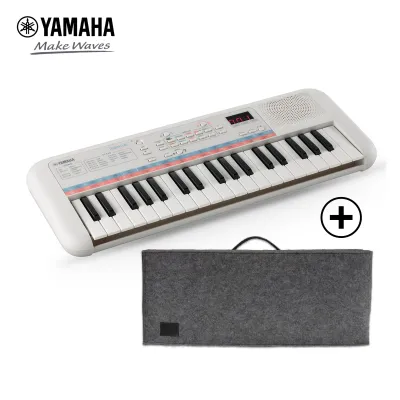
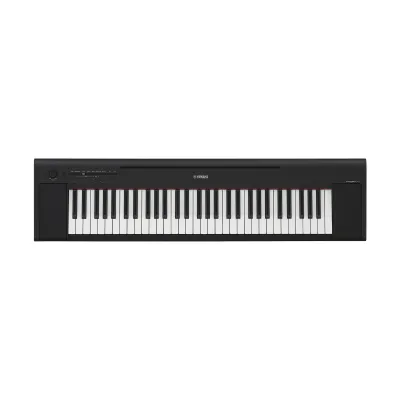
![Yamaha NP-15 Portable Keyboard Piano 61-Key Black/White Piaggero Digital Musical Instrument NP15 [LIMITED STOCK]](https://img.lazcdn.com/g/p/aff5a2a6d544d118d346871a4153a7e2.jpg_400x400q80.jpg_.webp)
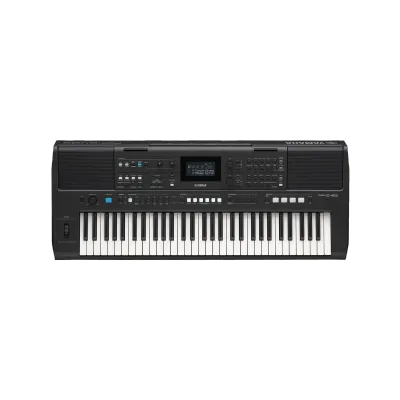
![Yamaha PSR-E283 Portable Digital Keyboard ⚫ Black 61 Keys PSRE283 AC Power Adapter PSR E283 Kids Musical Electronic Electric Instrument Absolute Piano The Music Works Store [LIMITED STOCK]](https://img.lazcdn.com/g/p/16a0f813c10e32e5e036a774ae933031.jpg_400x400q80.jpg_.webp)
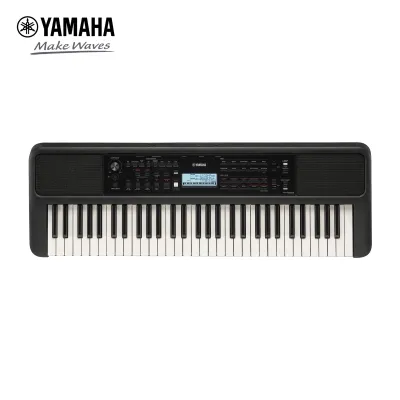
![Yamaha PSR-EW320 PSR-EW310 76-key Portable Digital Electronic Keyboard Touch Response Sensitive The Music Works Singapore [LIMITED STOCK]](https://img.lazcdn.com/g/p/2be0d94091483249c22888c0a53144d8.jpg_400x400q80.jpg_.webp)
Prices are valid at publication and may change. Please refer to the product page for the latest price.
Weighted and Hammer-Action Keys Aacoustic pianos rely on physical wooden hammers striking strings, creating a natural mechanical resistance when a key is pressed. To replicate this feel, Yamaha utilizes specialized key actions in their digital instruments. The most common entry-level actions are Graded Hammer Standard (GHS) and the newer Graded Hammer Compact (GHC). These actions are “graded,” meaning the keys in the lower register feel heavier to the touch, while the keys in the higher register are lighter. This physical resistance is crucial for building the finger strength, control, and muscle memory needed to play an acoustic piano.
Touch Sensitivity and Velocity Response Expressive piano playing depends heavily on dynamics—the ability to transition smoothly between soft, quiet passages and loud, powerful chords. Touch sensitivity ensures that the keyboard detects the exact speed and force with which you strike a key. A soft strike produces a quiet tone, while a firm strike produces a louder, brighter sound. Without reliable touch sensitivity, every note you play will sound at the exact same volume, making your music sound flat and mechanical.
Polyphony Requirements Polyphony is the maximum number of individual notes or voices a digital piano can sound at the same time. When you play a chord while holding down the sustain pedal, the notes continue to ring out and layer over one another. If your keyboard has low polyphony, older notes will abruptly cut off to make room for new ones. For beginners, a minimum of 64 notes of polyphony is necessary, though 128 notes or higher is highly recommended for smooth, uninterrupted sustain during complex pieces.
Silent Practice and Practical Tools Living in densely populated housing estates in Singapore, such as HDB flats or condominiums, means that noise control is a daily consideration. A built-in headphone jack allows you to practice at any hour of the day or night without disturbing your family or neighbors. Additionally, a built-in metronome is an indispensable tool for beginners, helping you practice scales and exercises with precise timing and rhythm.
Top Yamaha Keyboard Series for Piano Learners
Yamaha categorizes its digital instruments into distinct product lines, each optimized for different living situations, budgets, and learning paths. The primary series suitable for beginners are portable digital pianos, furniture-style home digital pianos, and arranger keyboards. Understanding the design philosophy behind each series will help you choose an instrument that supports your long-term progress. Always verify specific model specifications on the manufacturer’s label or at an authorized local showroom before making your purchase, as features can vary between individual models.

Portable Digital Pianos for Small Spaces
Portable digital pianos, primarily represented by Yamaha’s P-series, feature a slim, slab-style design without a permanent cabinet. This form factor is highly advantageous if you live in a compact Singaporean apartment where floor space is limited. These instruments can be easily set up on a temporary stand in a study room or bedroom and stored away when not in use.
However, portable models involve specific trade-offs. While they are lightweight and easy to relocate, they typically ship with only a basic plastic footswitch instead of a proper sustain pedal. To maintain a stable, ergonomic playing height that prevents wrist fatigue, you will need to purchase a sturdy stand (such as a double-braced X-stand, a Z-stand, or a dedicated wooden stand designed for the model) and a robust sustain pedal separately. These portable models are also ideal if you need to transport your keyboard to music lessons, school performances, or collaborative practice sessions.
Furniture-Style Digital Pianos for Home Use
For learners who have a dedicated space and want an experience that closely resembles playing an acoustic piano, furniture-style digital pianos are the premier choice. Yamaha’s Arius series (often designated as YDP models) features integrated wooden cabinets, built-in music rests, and a complete three-pedal assembly (sustain, soft, and sostenuto) permanently attached to the frame.
The structural stability of a furniture-style piano is particularly beneficial for young children, as there is no risk of the instrument shifting or tipping over during enthusiastic practice. Furthermore, the wooden cabinet acts as an acoustic chamber, allowing the built-in speakers to project sound with greater depth and resonance than slim portable models. These instruments also serve as elegant furniture pieces that can enhance the aesthetic of your living room while remaining permanently ready for practice.
Arranger Keyboards vs. Digital Pianos
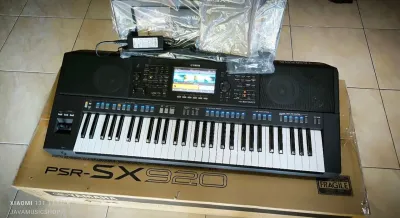
It is easy for beginners to confuse arranger keyboards, such as Yamaha’s PSR series, with digital pianos. Arranger keyboards focus on musical variety and production, offering hundreds of instrument voices, automatic backing tracks, drum rhythms, and sequencing tools. They are excellent for songwriters, electronic music producers, and live entertainers who want to perform as a solo band.
However, if your primary goal is to learn traditional piano technique, an arranger keyboard is generally not the right tool. Most entry-level arranger keyboards feature spring-loaded, unweighted keys that do not replicate the physical resistance of an acoustic piano. Practicing on unweighted keys can prevent you from developing the finger strength and control needed for expressive playing. When starting your piano journey, you should prioritize the quality of the piano sound engine and the authenticity of a weighted key action over a vast library of novelty sounds and synthetic backing tracks.
Comparing Key Yamaha Series for Beginners
To help you decide which Yamaha series fits your home and learning goals, consider how their design characteristics align across key practical dimensions.
| Feature | Portable Digital Pianos (P-Series) | Furniture-Style Pianos (Arius/YDP) | Arranger Keyboards (PSR-Series) |
|---|---|---|---|
| Form Factor | Slim, lightweight slab style | Cabinet style with integrated stand | Compact, lightweight keyboard |
| Key Action Type | Weighted (GHS or GHC action) | Weighted (GHS, GH3, or GHC action) | Unweighted or semi-weighted |
| Space Requirement | Minimal; easy to store or move | Moderate; requires dedicated floor space | Minimal; fits on small desks or tables |
| Pedal Setup | Single pedal jack (basic switch included) | Integrated three-pedal board | Single pedal jack (pedal sold separately) |
| Best Use Case | Students, renters, and compact homes | Permanent home setup for serious learners | Budding producers and pop arrangers |
When interpreting this comparison, evaluate your current living arrangement and long-term plans. If you are renting a room or anticipate moving frequently, the flexibility and easy transport of a P-series portable piano are highly advantageous. If you own your home and are supporting a student preparing for formal graded exams (such as ABRSM or Trinity College London), investing in a furniture-style YDP model provides a stable, acoustic-like platform that ensures consistent technique development from the very beginning.
Buying and Maintaining Your Keyboard in Singapore
Purchasing a digital piano is a significant investment. To protect your instrument and ensure you receive proper support, it is important to buy safely and maintain the keyboard correctly in Singapore’s unique environment.
Purchasing Safely When shopping for a Yamaha keyboard in Singapore, always purchase from authorized local dealers or official brand showrooms. This ensures your instrument comes with a valid local warranty, protecting you against manufacturing defects. Authorized models are supplied with the correct regional power adapters designed for Singapore’s 230V electrical grid and Type G wall sockets. Purchasing gray-market imports or buying from unauthorized online sellers may save you a small amount upfront, but these units often lack local warranty coverage and may require unsafe step-down voltage transformers to operate.
Climate Protection Singapore’s tropical climate, characterized by high relative humidity (often exceeding 80%) and rapid temperature fluctuations from air conditioning, presents major challenges for electronic instruments. Excess moisture in the air can corrode internal electronic circuitry, cause sensor failures under the keys, and make the key action feel sticky or unresponsive.
Maintenance Steps To extend the lifespan of your keyboard, implement these simple environmental controls:
- Avoid Direct Sunlight: Place your keyboard away from windows to prevent UV rays from warping the plastic chassis or fading the wooden finish.
- Keep Away from AC Vents: Do not position the instrument directly under or opposite air-conditioning vents, as sudden temperature drops can cause condensation to form inside the cabinet.
- Control Humidity: If possible, run a standalone dehumidifier in your practice room to keep the relative humidity between 40% and 60%.
- Use a Dust Cover: When the keyboard is not in use, cover the keys with a fitted fabric dust cover or close the integrated key cover to prevent dust and moisture from settling into the key contacts.
Cleaning Regular cleaning keeps your keyboard performing at its best. Use a dry, soft microfiber cloth to gently wipe down the keys and cabinet after each practice session to remove finger oils and dust. Never use harsh chemical cleaners, alcohol, or abrasive solvents, as these can strip away the protective coating on the keys and ruin the textured finish of the keytops. For stubborn spots, a slightly damp microfiber cloth—wrung out completely so no water drips between the keys—is sufficient, followed immediately by a dry cloth.
Frequently Asked Questions (FAQ)
Do I need 88 weighted keys to start learning piano?
Yes, 88 weighted keys are highly recommended if your goal is to learn proper piano technique. Acoustic pianos have 88 keys, and learning on a full-sized keyboard ensures you develop the correct spatial awareness and can play any piece of music without running out of keys. Weighted keys build the necessary finger strength and control required to play with expression. While a 61-key unweighted keyboard can work for learning basic music theory or playing simple melody lines, you will quickly outgrow it. Transitioning from unweighted keys to an acoustic piano can be difficult and frustrating, as your fingers will not be accustomed to the physical resistance of real piano keys.
How do I protect my digital piano from Singapore's humidity?
To protect your digital piano from Singapore’s intense humidity, place it in a room with stable environmental conditions. Keep the relative humidity between 40% and 60% if possible, which can be managed using a standalone dehumidifier or by running an air conditioner periodically. Avoid placing the keyboard near open windows where rain can blow in, or in areas prone to high moisture, such as adjacent to a kitchen or bathroom. Using a fitted fabric dust cover when the instrument is idle helps shield the key mechanisms from dust and ambient humidity.
Can I connect my Yamaha keyboard to learning apps?
Yes, most modern Yamaha digital keyboards feature connectivity options that allow you to link them to educational applications and sheet music software on your tablet, smartphone, or computer. This is typically done via a USB-to-Host port, which transmits MIDI data, or through built-in Bluetooth MIDI on compatible models. These connections let you use interactive learning platforms to receive real-time feedback on your playing. Always check the specific model’s specifications before purchasing, as some entry-level keyboards require a physical cable adapter to connect to your specific smart device, while others support wireless Bluetooth connections directly.

Community discussion
Share your experience or ask a question. Comments are reviewed before publication.