
Starting piano lessons is an exciting milestone for a child, but selecting the right instrument can feel overwhelming for parents. The market is filled with options ranging from simple toys to complex professional workstations. To set your child up for long-term musical success, the focus should be on choosing a reliable keyboard from an established brand that supports proper finger technique, physical development, and expressive playing. Selecting an instrument that balances technical requirements with your home environment ensures your child remains engaged without developing poor habits that are difficult to correct later.
When evaluating options, parents often wonder whether to invest in a premium model immediately or start with a basic, budget-friendly alternative. The key is finding a balance that matches your child’s current commitment level while providing the necessary physical feedback to make lessons effective. A well-chosen keyboard not only makes practice more enjoyable but also bridges the gap between home practice and the acoustic piano used during formal lessons. By focusing on specific technical features and reputable brand ecosystems, you can make an informed decision that supports your child’s musical growth.
Key Features to Look for in a Beginner Kids Keyboard
To support proper piano technique and sustain a child’s interest, several technical specifications must be evaluated before making a purchase. The first major decision is the key count. While standard acoustic pianos have 88 keys, many beginner keyboards come with 61 or 76 keys. A 61-key keyboard is often sufficient for the first year of lessons, as early method books focus on the middle register of the instrument. However, as a child progresses to classical repertoire or prepares for formal graded examinations, they will quickly run out of keys. Transitioning to a full 88-key instrument becomes necessary to accommodate the wider range of notes found in intermediate pieces.
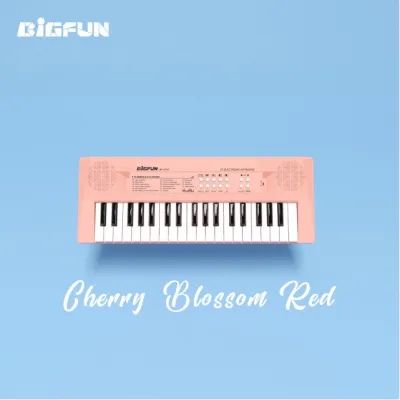
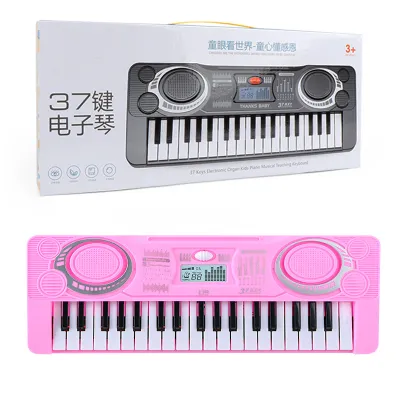
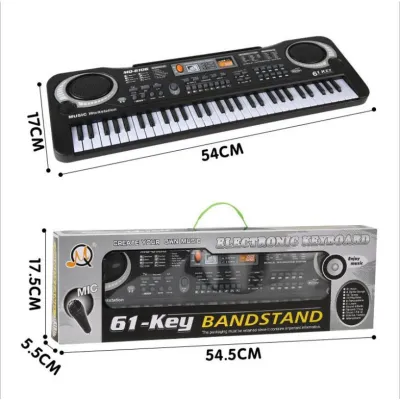
Products mentioned in this guide
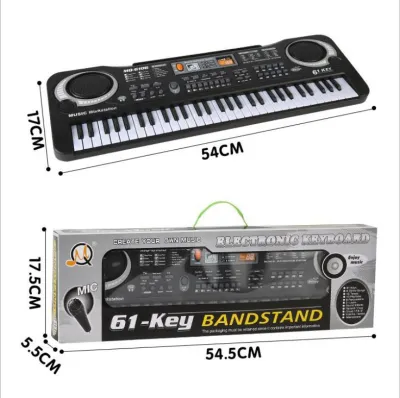
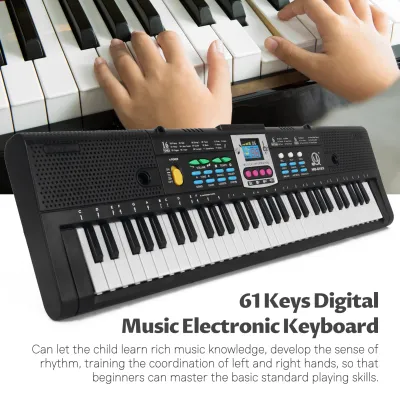
![[✅SG Ready Stock] 61 Key High Quality Music Keyboard Piano kids toys new player beginner Electric Piano](https://img.lazcdn.com/g/p/1f34b80fc1c4ffa462a06ed0ad2ca2fd.jpg_400x400q80.jpg_.webp)
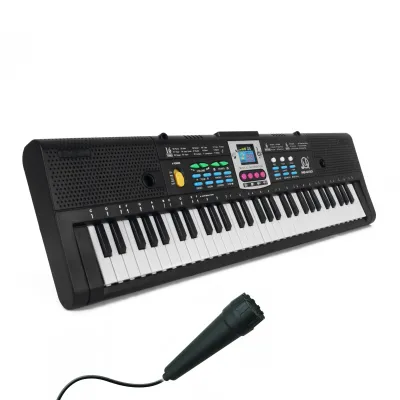
Prices are valid at publication and may change. Please refer to the product page for the latest price.
Key action is perhaps the most critical factor in developing proper finger strength and hand posture. Unweighted keys offer no resistance and spring back instantly, which can lead to weak finger joints and a collapsed hand position. Semi-weighted keys offer a slight amount of resistance using springs, but they still do not replicate the feel of an acoustic instrument. Fully weighted or hammer-action keys use actual weights or mechanical linkages to mimic the physical resistance of an acoustic piano’s hammers. For children, practicing on fully weighted keys is essential for building the intrinsic hand muscles required to control the instrument and play with precision.
Touch sensitivity, also known as velocity sensitivity, is another non-negotiable feature for serious learners. This technology ensures that the volume of the sound corresponds to how hard or soft the key is pressed. If a keyboard lacks touch sensitivity, every note will play at the same volume regardless of the child’s touch. This limitation prevents the child from learning dynamic expression, such as playing softly (piano) or loudly (forte), which is fundamental to musical interpretation. Ensuring the keyboard has adjustable touch sensitivity allows you to tailor the key response to a young child’s lighter touch.
Finally, parents should evaluate the built-in educational features and connectivity options. Traditional tools like a built-in metronome are invaluable for developing a steady sense of rhythm. Recording functions allow children to listen to their own performances, helping them identify mistakes and track their progress. Modern keyboards also offer USB or Bluetooth connectivity, allowing them to interface with educational software and interactive learning apps. While these digital tools can make practice sessions more engaging, they should be viewed as supplements to structured lessons rather than replacements for a qualified piano teacher.
Trusted Keyboard Brands for Young Beginners
Navigating the entry-level keyboard market is much easier when you focus on established musical instrument manufacturers. Brands like Yamaha, Roland, Casio, and Korg have spent decades refining their sound engines and key actions to suit both beginners and professionals. Yamaha is widely recognized for its educational heritage, offering a vast range of portable keyboards and digital pianos that are standard in many music schools. Roland is highly regarded for its advanced sound modeling technology and expressive keybeds, providing a premium playing experience even in their entry-level models. Casio has transformed its reputation by producing slim, space-saving digital pianos that offer exceptional value and robust build quality. Korg, while often associated with professional synthesizers, offers beginner-friendly digital pianos known for their rich sound and intuitive interfaces.

When comparing these brands, it is helpful to look at their proprietary software ecosystems and educational integrations. Many of these manufacturers offer dedicated companion apps that connect directly to their keyboards. These apps provide interactive sheet music, sight-reading exercises, and step-by-step lessons that can keep young learners motivated between formal classes. Some brands also bundle their instruments with trial subscriptions to popular online learning platforms or include physical songbooks that match the built-in demo songs. Evaluating these software packages can add significant value to your purchase.
For families in Singapore, local support infrastructure is a vital consideration. Purchasing an instrument from an authorized dealer ensures that you receive a valid local warranty, which typically ranges from one to two years. Authorized service centers in Singapore are equipped with genuine replacement parts and trained technicians who can resolve issues like sticky keys, software glitches, or power port failures. Buying from unauthorized parallel importers may save a small amount upfront, but it often leaves you without recourse if the instrument requires repairs.
It is highly recommended to avoid unbranded, toy-like, or non-standard keyboards sold on generic online marketplaces. These cheap alternatives often feature non-standard key sizes, which can ruin a child’s spatial awareness and muscle memory when they transition to a real piano. Furthermore, their poor sound quality and lack of key resistance can frustrate young learners, leading them to lose interest in music altogether. Investing in a recognized brand ensures that the instrument behaves predictably and supports the physical demands of early piano lessons.
Portable vs. Console Keyboards: Which Setup Fits Your Child?
Choosing between a portable keyboard and a furniture-style console piano depends heavily on your living situation and your child’s commitment level. In typical Singapore homes, such as HDB flats and condominiums, space is often a primary constraint. Portable keyboards offer excellent flexibility, as they can be set up on a temporary stand and stored away in a closet or under a bed when not in use. They are also easy to transport if your child needs to bring their instrument to a performance or a relative’s house.
However, the stability and ergonomics of your setup play a major role in your child’s physical development. Placing a portable keyboard on a flimsy, generic X-stand can cause the instrument to wobble during practice, which is highly distracting and can lead to poor posture as the child tries to stabilize their hands. A sturdy Z-stand or a dedicated wooden stand designed specifically for the keyboard model is a much safer and more stable option. Console keyboards, which feature integrated wooden cabinets and fixed pedals, provide the most stable playing environment. They position the keyboard at the exact standard height of an acoustic piano, promoting correct posture and wrist alignment from day one.
Long-term usability and resale value are also important factors to weigh. A high-quality console digital piano can easily serve a child from their very first lesson through to intermediate or advanced grades, making it a highly durable investment. If you are unsure of your child’s long-term interest, starting with a reputable portable keyboard is a sensible way to minimize initial costs. Branded keyboards from established manufacturers maintain strong resale value in the local secondhand market, allowing you to recoup a significant portion of your investment if you decide to upgrade to a console model or if your child pursues other interests.
Essential Accessories and Setup for Early Lessons
To create a safe, comfortable, and productive practice environment, parents must budget for several essential accessories alongside the keyboard itself. An adjustable bench is one of the most critical purchases. Children grow rapidly, and sitting at the wrong height can lead to hunched shoulders, bent wrists, and physical fatigue. An adjustable bench allows you to fine-tune the seating height so that your child’s elbows are level with or slightly above the keys, promoting a relaxed and natural hand position.
A sustain pedal is another accessory that will become necessary as your child progresses beyond the absolute basics. While some entry-level keyboards include a simple plastic foot switch, these are often lightweight and slide around on tiled or wooden floors. Investing in a solid, piano-style sustain pedal with a non-slip rubber base provides a much more realistic feel and teaches proper pedaling technique. Before purchasing, verify that the pedal is compatible with your keyboard brand, as some brands use different polarity standards.
For families living in close proximity to neighbors, a good pair of headphones is indispensable. Headphones allow your child to practice at any time of day or night without causing a disturbance. When choosing headphones, look for over-ear models with padded ear cups to ensure comfort during longer practice sessions. It is also important to check the audio output jack on your keyboard; some models use a standard 3.5mm headphone jack, while others require a larger 6.35mm stereo jack, which may necessitate a simple adapter.
Pre-Purchase Checklist for Parents
Before finalizing your purchase, running through a quick checklist can help you avoid unexpected compatibility issues or hidden costs. First, verify the exact model number of the keyboard and ensure that the power supply is designed for Singapore’s electrical standards. The power adapter should support a 230V input and come with a standard UK 3-pin plug. Buying an instrument intended for a different region can lead to power compatibility issues or require unsafe adapter configurations.
Next, carefully check what accessories are included in the box. Some retailers sell keyboards as “body-only” packages, meaning you will need to purchase the power adapter, music rest, and sustain pedal separately. Other retailers offer bundle deals that include a stand, bench, and headphones. Calculate the total cost of these individual components to determine if a bundle offers better value than buying the keyboard alone.
Finally, clarify the retailer’s policies regarding delivery, assembly, and returns. Heavy console digital pianos often require professional delivery and assembly, which may or may not be included in the retail price. Ensure you understand the return policy in case the instrument arrives with a manufacturing defect, and ask if the local distributor offers a trial period or an upgrade program that allows you to trade in your beginner keyboard for a higher-end model in the future.
Frequently Asked Questions (FAQ)
At what age should a child transition from a beginner keyboard to a digital piano?
Children typically need to transition to a fully weighted digital piano when they reach the intermediate stages of their curriculum, which often coincides with ages seven to nine. A key milestone is when their pieces begin to require nuanced dynamic control and rapid note repetitions that unweighted or semi-weighted keys cannot accurately reproduce. If a piano teacher notes that the child’s finger joints are collapsing or that they are struggling to play with expression on acoustic pianos during lessons, it is a clear sign that their home practice instrument needs to be upgraded to a fully weighted 88-key digital piano.
Do kids need a keyboard with built-in speakers, or are headphones sufficient?
While headphones are incredibly useful for quiet practice in shared living spaces, a keyboard with built-in speakers is highly recommended for young beginners. Playing through speakers helps children develop spatial sound awareness and learn how their touch directly affects the acoustic environment of the room. Furthermore, having built-in speakers is essential during home lessons, as it allows the teacher to hear the student’s performance clearly and provide immediate feedback. Relying solely on headphones can isolate the child and make it difficult for parents to monitor practice sessions and offer encouragement.
How should parents structure their budget for a beginner keyboard and accessories?
When planning your budget, it is wise to allocate approximately 70% of your funds to the keyboard itself, ensuring you secure an instrument with high-quality key action and sound. The remaining 30% should be reserved for essential ergonomic accessories, including a sturdy stand, an adjustable bench, and a reliable sustain pedal. In the Singapore market, entry-level portable setups with semi-weighted keys can often be found for under S$500, while more robust, fully weighted 88-key digital pianos suitable for long-term study generally range between S$500 and S$1,500. Prioritizing key action over non-essential digital sound effects will always yield a better return on your investment.

Community discussion
Share your experience or ask a question. Comments are reviewed before publication.