
Choosing the right piano keyboard as an adult beginner is not about finding a single “best” brand, but rather matching your personal learning goals, living space, and budget to the specific strengths of established manufacturers. For most adult learners, the priority lies in finding an instrument that closely replicates the touch and tone of an acoustic piano, providing a solid foundation for transferable skills. Brands like Yamaha, Roland, Casio, and Korg each approach this challenge with distinct design philosophies, ranging from traditional acoustic emulation to space-saving modern designs.
Core Criteria for Adult Beginners
Adults learn differently than children; they typically bring a more developed sense of critical listening and specific musical goals to their practice. When evaluating a keyboard, you must balance three primary pillars: key action realism, sound quality, and physical footprint. While children’s keyboards often feature colorful buttons and automated accompaniment styles, adult learners generally find these features distracting and of limited long-term value. Instead, your focus should be on acquiring an instrument that behaves like a traditional piano, allowing you to develop proper finger strength, hand posture, and expressive control.
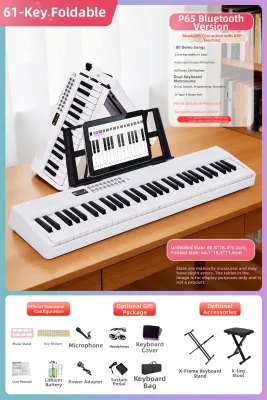
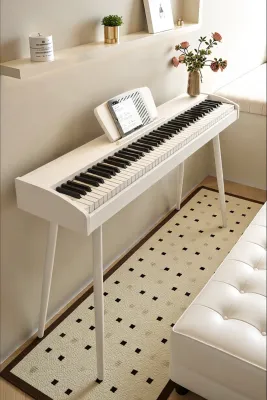
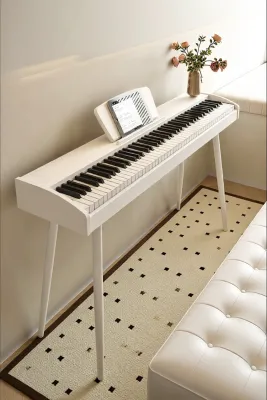
To achieve this, certain technical baselines are highly recommended. A full-size keyboard with 88 keys is the standard for classical, jazz, and modern pop repertoire, ensuring you do not run out of range as your skills progress. Furthermore, the keys must offer physical resistance—either through weighted or semi-weighted mechanisms—to mimic the hammer action of an acoustic instrument. Portability is another key consideration, especially if you live in a compact home or plan to move the instrument between rooms. A lightweight slab-style digital piano offers the flexibility of easy storage, whereas a console-style digital piano provides a more permanent, furniture-like presence that enhances stability during vigorous playing.
Products mentioned in this guide
![Yamaha NP-15 Portable Keyboard Piano 61-Key Black/White Piaggero Digital Musical Instrument NP15 [LIMITED STOCK]](https://img.lazcdn.com/g/p/0ec95af5f3240a6cd4d0139cd77da0f4.jpg_400x400q80.jpg_.webp)
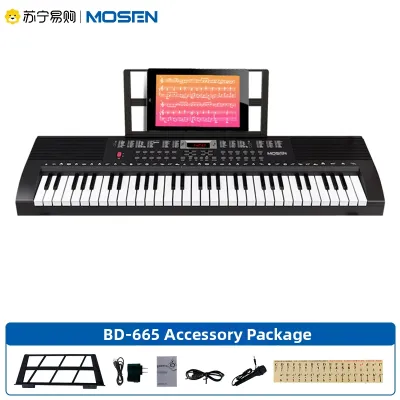
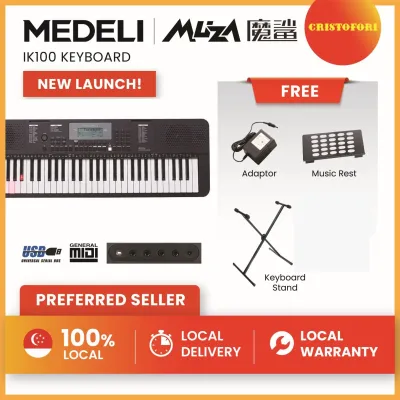
Prices are valid at publication and may change. Please refer to the product page for the latest price.
Decoding Key Action and Sound Quality
Understanding the terminology used by manufacturers is essential for making an informed decision. The most critical component of any digital piano is its key action, which determines how the keys feel under your fingers. Non-weighted keys, often found on budget electronic keyboards, offer little to no resistance and rely on simple springs; these are generally unsuitable for developing proper piano technique. Semi-weighted keys introduce a small amount of resistance, making them a viable, budget-friendly compromise for casual players. However, for a true piano-playing experience, fully weighted keys—often referred to as hammer action or graded hammer action—are the gold standard. These mechanisms use actual physical weights or levers to simulate the mechanical resistance of acoustic piano hammers, with lower keys feeling slightly heavier than the higher ones.

Sound quality is equally vital and is driven by the internal sound engine and polyphony. Digital pianos generate sound either by playing back high-resolution recordings (samples) of world-class acoustic grand pianos or by using physical modeling technology to synthesize the sound in real time. Polyphony refers to the maximum number of individual notes or voices the keyboard can produce simultaneously. When you play a complex chord with the sustain pedal pressed, the instrument must render dozens of notes, including their sympathetic resonances. A minimum of 64-note polyphony is acceptable for beginners, but 128-note or 256-note polyphony is highly recommended to prevent notes from cutting off prematurely during expressive passages.
When evaluating these features, you can perform simple, observable checks. In a showroom, turn the volume completely down and press the keys firmly; a high-quality keybed should operate quietly without excessive clacking, rattling, or mechanical thuds. Next, turn the volume up and play a single note from very softly to very loudly. The sound should not just get louder; its tonal character (timbre) should change, transitioning from a warm, mellow tone at low velocities to a bright, metallic ring at high velocities, mimicking the physical behavior of a struck acoustic string.
Evaluating Major Keyboard Brands for Beginners
Rather than searching for a universal winner, adult beginners should understand how major manufacturers tailor their instruments to different user priorities. Each brand has carved out a distinct identity based on its engineering heritage, target audience, and technological innovations. By aligning your personal goals—whether they involve classical training, space-saving convenience, or modern music production—with a brand’s core philosophy, you can select an instrument that supports your learning journey for years to come.
Yamaha: Acoustic Heritage and Consistent Touch
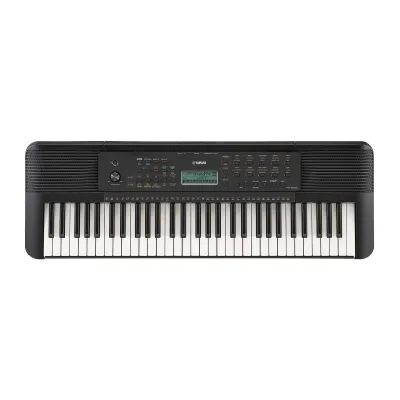
Yamaha leverages over a century of acoustic piano manufacturing experience to design its digital instruments. Their primary philosophy centers on delivering a highly traditional playing experience, often sampling their own flagship concert grand pianos to create a rich, familiar acoustic tone. For adult beginners, this translates to a highly consistent key resistance across their entry-level lines, which helps build standard finger strength that transfers seamlessly to acoustic pianos.
In addition to physical realism, Yamaha provides a robust educational ecosystem. Their proprietary companion applications allow users to control keyboard settings, select voices, and access interactive lessons directly from a tablet or smartphone. The build quality of these instruments is highly regarded for its long-term durability, making them a reliable investment for dedicated learners who appreciate a classic, no-nonsense approach to piano study.
Roland: Innovative Action and Durability
Roland is renowned for its progressive engineering, often prioritizing advanced physical modeling and highly responsive key actions. Instead of relying solely on static audio samples, many of Roland’s sound engines calculate the complex physical interactions of a piano’s strings, soundboard, and cabinet in real time, offering an exceptionally wide dynamic range. This makes their instruments highly appealing to adult learners who want to explore subtle nuances in touch and expression.
Their key action mechanisms, such as the widely praised PHA-4 Standard keyboard, are designed with a simulated escapement mechanism that replicates the subtle “click” felt when pressing an acoustic piano key slowly. Roland instruments are also built to withstand heavy daily use, featuring robust chassis designs and high-quality internal components. This focus on tactile feedback and structural durability makes them an excellent choice for beginners who plan to transition to intermediate and advanced classical repertoire.
Casio: Compact Design and Accessible Value
Casio has successfully redefined its reputation by producing highly competitive, space-conscious digital pianos that offer exceptional value. Their design philosophy focuses on maximizing performance within ultra-slim, lightweight cabinets, making them particularly suitable for modern apartments or shared living spaces where floor area is at a premium.
Despite their compact dimensions, Casio’s modern lines feature smart scaling hammer action keybeds that provide a surprisingly realistic weighted feel without the bulk of traditional digital pianos. They balance essential learning features with intuitive user interfaces, offering a highly accessible entry point for casual adult learners who want a capable instrument that can be easily stored away when not in use.
Korg: Synthesizer Roots and Versatile Sounds
Korg approaches the digital piano market from a background of professional synthesizer and workstation development. Consequently, their instruments often feature exceptionally rich, diverse sound libraries that extend far beyond standard acoustic piano tones to include vintage electric pianos, organs, and orchestral pads.
For an adult beginner whose musical interests span multiple genres—such as jazz, rock, electronic music, or home music production—a Korg keyboard offers a versatile creative platform. Their key actions are designed to be comfortable for both traditional piano playing and faster synthesizer techniques, making them ideal for learners who want to explore sound design and modern music arrangement alongside their foundational piano studies.
Setting Your Budget and Finding Value
Navigating the financial aspect of purchasing a keyboard requires understanding which features directly contribute to your progress and which are unnecessary extras. Higher-priced instruments typically justify their cost through advanced key actions (such as wooden keys or triple-sensor systems), higher polyphony limits, and superior multi-speaker sound systems that project a more realistic acoustic field. If your goal is to develop authentic classical technique, investing in a superior key action is always a wise allocation of your budget.
Conversely, adult beginners can easily save money by bypassing features designed for entertainment or production. Extensive auto-accompaniment styles, hundreds of novelty sound presets, and built-in multi-track sequencers often inflate the price of a keyboard without improving its core piano performance. Focus your budget on the quality of the primary piano sound and the physical feel of the keys.
In the local market, budget expectations can be categorized into three general tiers. Entry-level weighted keyboards typically range from S$500 to S$900, offering solid key action and essential piano tones. Intermediate digital pianos, which often feature improved speaker systems and more refined cabinet designs, generally fall between S$1,000 and S$2,000. Premium instruments with wooden keys and advanced physical modeling can exceed S$2,500.
When planning your purchase, remember to factor in essential accessories that may not be included in the box. A sturdy, double-braced X-stand or a dedicated wooden furniture stand is crucial to prevent the keyboard from wobbling while you play. An adjustable bench is highly recommended to maintain correct ergonomic posture and prevent wrist strain. Finally, ensure you acquire a high-quality, progressive sustain pedal that supports half-pedaling techniques, as the basic plastic “footswitch” pedals included with many entry-level models do not allow for realistic pedaling control.
Pre-Purchase Checklist and Testing Guide
Before finalizing your purchase, visiting a local showroom to test the instruments in person is highly recommended. This hands-on evaluation allows you to verify how the keyboard responds to your specific touch and fits your physical comfort.
Use this step-by-step checklist during your showroom visit:
- Key Resistance and Return: Press several keys slowly to feel the resistance. They should feel substantial but not overly stiff. Release the keys and observe how quickly they return to their resting position; sluggish keys can hinder fast playing.
- Dynamic Range Test: Play a simple five-finger scale. Start as softly as possible (pianissimo) and gradually increase the force until you are playing as loudly as possible (fortissimo). The volume and tonal character should transition smoothly without sudden jumps.
- Speaker and Headphone Clarity: Play chords at both low and high volume levels. Listen closely for any cabinet vibration, speaker distortion, or buzzing. If you plan to practice quietly, bring your own high-quality headphones to test the headphone output quality.
- Pedal Responsiveness: Connect the sustain pedal and play a series of chords, depressing and releasing the pedal. The sound should sustain smoothly and damp immediately when the pedal is fully released, without any noticeable digital lag.
- Warranty and Local Support: Verify the warranty terms offered by the retailer. In Singapore's humid climate, electronic components and key lubricants can experience wear over time. Ensure there is an authorized local service center that can handle repairs, and clarify the return policy in case of out-of-the-box defects.
Frequently Asked Questions (FAQ)
Do I need an 88-key keyboard to start learning as an adult?
Yes, starting with a full-size 88-key keyboard is highly recommended for adult beginners. Standard piano music, including classical pieces, jazz standards, and modern pop arrangements, is written with the assumption of a full 88-key range. Learning on a smaller keyboard can quickly limit your repertoire and force you to adapt your hand positioning awkwardly when you run out of keys.
However, if you face severe space constraints in a compact room, or if your musical focus is strictly limited to synthesizers, electronic music, or simple chord accompaniments, a 61-key or 73-key instrument may suffice. If you choose a smaller keyboard, ensure it still features touch-sensitive keys so you can practice dynamic control, though you should plan to upgrade to a full 88-key weighted instrument if you decide to pursue traditional piano studies seriously.
Can I use a MIDI controller instead of a digital piano for learning?
While a MIDI controller can be used for learning, it introduces several technical hurdles that can disrupt a beginner’s practice routine. A MIDI controller does not produce sound on its own; it must be connected to an external device, such as a computer, tablet, or smartphone running virtual instrument software. You will also need external speakers or headphones and, in some cases, an audio interface to prevent sound delay (latency).
For most adult beginners, the convenience of a dedicated digital piano is far superior. Digital pianos feature built-in sound engines and speakers, allowing you to simply switch the instrument on and begin practicing immediately. This frictionless setup is crucial for maintaining a consistent daily practice habit, as any technical setup barriers can easily discourage you from practicing during short pockets of free time.

Community discussion
Share your experience or ask a question. Comments are reviewed before publication.