
Starting to learn the piano is an exciting journey, but choosing your first instrument can feel overwhelming. For many beginners, Terence digital pianos and keyboards present an appealing entry point due to their balance of modern features, space-saving designs, and accessible pricing. When evaluating which model is best suited for your learning path, the decision should not be based on aesthetics alone. Instead, you must look closely at the technical specifications—such as key action, polyphony, and connectivity—to ensure the instrument supports proper technique development.
In Singapore’s unique living environment, where space in HDB apartments is often at a premium and high humidity can pose challenges for traditional acoustic instruments, a digital piano is a highly practical solution. Digital models do not require regular tuning, can be played silently with headphones, and easily fit into compact study rooms or living areas. By understanding what to look for in the Terence lineup, you can select an instrument that fits both your home and your musical goals.
Essential Technical Requirements for Beginners
To build a solid foundation, a beginner needs an instrument that mimics the physical behavior of an acoustic piano as closely as possible. The most critical factor is the key action. Digital keyboards generally fall into three categories: synth-action, semi-weighted, and fully weighted (often called hammer action). Synth-action keys offer almost no resistance and spring back instantly, which is suitable for playing electronic music but poor for developing finger strength. Semi-weighted keys use springs and light weights to provide some resistance, offering a middle ground. For serious piano students, fully weighted keys are highly recommended. They simulate the mechanical hammers of an acoustic piano, teaching your fingers how to control dynamics—the variation between soft (piano) and loud (forte) sounds. Without touch-sensitive, weighted keys, you cannot develop the expressive control required for classical or contemporary piano repertoire.
Products mentioned in this guide
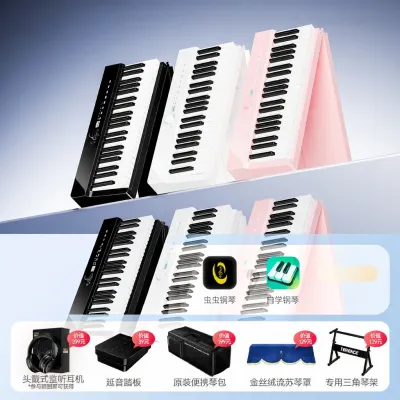
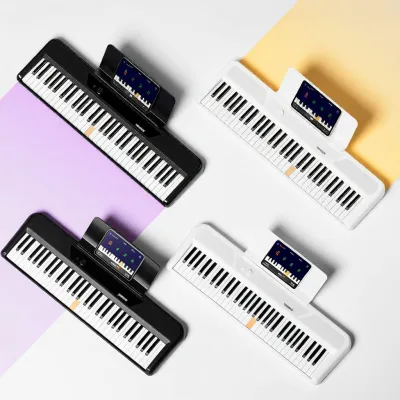
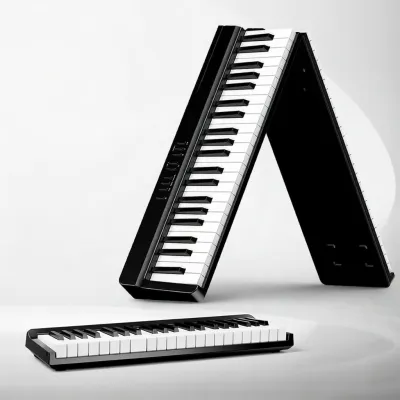
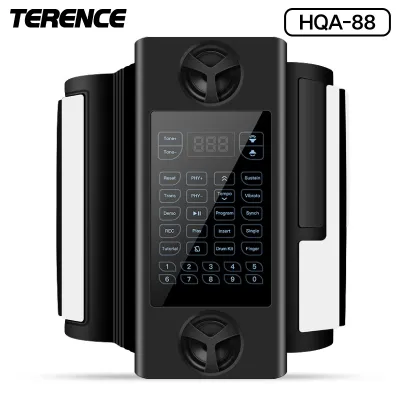
Prices are valid at publication and may change. Please refer to the product page for the latest price.
Another technical specification to verify is polyphony. Polyphony refers to the maximum number of individual notes or voices the digital piano can produce simultaneously. When you play a chord while holding down the sustain pedal, each note continues to ring out. If your keyboard has low polyphony, older notes will be abruptly cut off to make room for new ones, resulting in a choppy, unnatural sound. For beginners, a minimum polyphony of 64 notes is acceptable for basic pieces, but 128 notes is highly preferred as you progress to more complex arrangements and pedal work.
Finally, look for built-in practice tools that facilitate daily learning. A built-in metronome is indispensable for developing a steady sense of rhythm and timing. Headphone outputs are equally vital, especially in high-density residential areas, allowing you to practice at any hour without disturbing family members or neighbors. Additionally, a basic on-board recording function lets you record your practice sessions and play them back, which is an invaluable tool for self-review and identifying areas that need improvement.
Navigating the Terence Lineup for Entry-Level Players
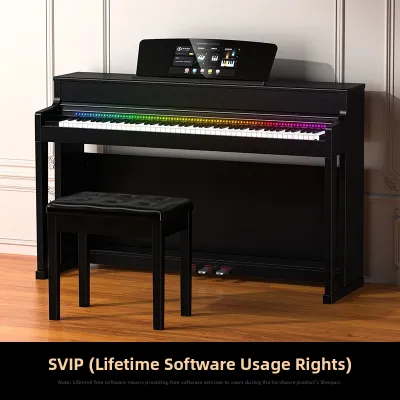
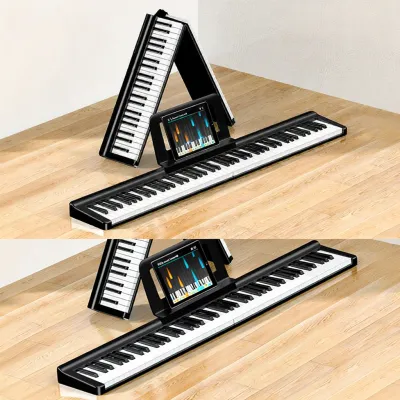
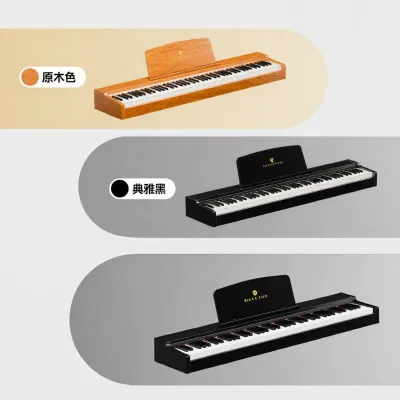
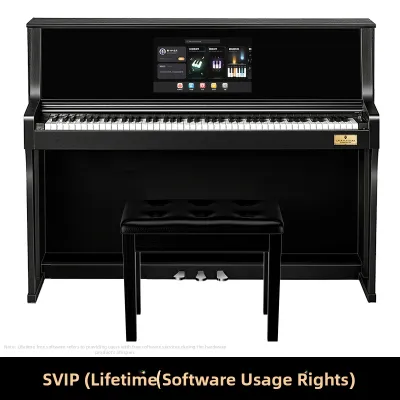
The Terence brand offers a variety of keyboard instruments, ranging from ultra-portable folding keyboards to stationary console-style digital pianos. Understanding these form factors will help you narrow down your choices based on your lifestyle and practice space. Portable arranger keyboards are lightweight, easy to store, and often feature hundreds of built-in sounds, rhythms, and accompaniment tracks. These are excellent for casual players or those who need to pack their keyboard away after every session. On the other hand, console digital pianos are housed in a wooden cabinet with integrated pedals. They are designed to stay in one place, offering a more stable playing experience and a look that resembles a traditional piano.

When reading a Terence specification sheet, pay close attention to how the manufacturer describes the sound engine and key bed. Look for terms like “stereo sampling” or “acoustic grand piano tone.” This indicates that the keyboard’s sounds are recorded from actual acoustic instruments rather than synthetically generated, resulting in a richer, more authentic tone. For the key bed, check whether the keys are “velocity-sensitive” or “touch-sensitive.” If a model does not explicitly state that it has touch-sensitive keys, assume it does not, which makes it unsuitable for formal piano instruction.
Terence’s product tiers generally cater to different stages of the learning journey. Their entry-level tier includes 61-key and 88-key semi-weighted portable models, which are highly affordable and perfect for testing your interest in the instrument. The intermediate-leaning tier features 88-key fully weighted models, often equipped with graded hammer action (where the lower keys feel heavier than the higher keys, just like on an acoustic piano). If you are committed to long-term learning, investing in a fully weighted 88-key model from the start will save you from needing an upgrade within your first year of study.
| Feature / Dimension | Portable Keyboards (e.g., Folding/Slim Models) | Console Digital Pianos (Cabinet Style) |
|---|---|---|
| Key Action Type | Typically semi-weighted or touch-sensitive synth-action | Often fully weighted or graded hammer action |
| Portability | High; lightweight, easy to store or travel with | Low; heavy wooden cabinet designed for permanent placement |
| Space Requirement | Minimal; can be placed on a desk or folding stand | Moderate; requires dedicated floor space |
| Pedal Options | Usually includes a single plastic sustain foot switch | Integrated three-pedal unit (Sustain, Sostenuto, Soft) |
| Typical Price Range | S$150 to S$350 | S$350 to S$700 |
| Best Suited For | Casual hobbyists, travelers, and tight living spaces | Dedicated students aiming for classical or formal training |
Pre-Purchase Checks: Accessories and Connectivity
Before finalizing your purchase, it is essential to verify what accessories are included in the box. Many entry-level Terence models are sold as bundles, but the quality and contents of these bundles can vary. A complete setup requires a sturdy stand; a flimsy single-X stand may wobble during energetic playing, so look for double-X stands or dedicated wooden stands. An adjustable bench is also crucial for maintaining the correct posture, preventing wrist and back strain during long practice sessions. Additionally, check the type of sustain pedal provided. Many budget keyboards include a small plastic foot switch that easily slides around on tiled floors; you may want to budget for a heavier, chrome-plated piano-style sustain pedal that offers a more realistic feel.
Digital connectivity is another area where modern keyboards shine. Ensure the model you choose features USB-MIDI connectivity (usually via a USB Type-B port). This allows you to connect the keyboard directly to a tablet, laptop, or smartphone. Once connected, you can use interactive piano learning applications, which provide real-time feedback on your notes and timing, or connect to digital audio workstations (DAWs) for music production. Some Terence models also offer Bluetooth MIDI or Bluetooth Audio. Bluetooth MIDI allows for wireless connection to learning apps, while Bluetooth Audio lets you stream backing tracks from your phone directly through the piano’s built-in speakers, allowing you to play along.
Do not overlook the built-in speaker system. The wattage of the speakers determines the volume and depth of the sound. For a typical bedroom or living room, a speaker system with a combined output of 10 to 20 watts is generally sufficient. Pay attention to speaker placement as well; downward-firing speakers can sound muffled if the keyboard is placed on a soft surface or a solid desk, whereas upward- or forward-firing speakers offer clearer sound dispersion.
Budgeting, Warranties, and Where to Buy
Establishing a realistic budget is key to a satisfying purchase. For a beginner digital piano, a budget of S$200 to S$500 is a reasonable starting point. While it is tempting to opt for the cheapest available keyboard, spending slightly more on a model with fully weighted keys and better sound quality will pay off in the long run by delaying the need for an upgrade. Remember to factor in the cost of essential accessories if they are not included in the bundle, such as a pair of comfortable over-ear headphones for silent practice, a dust cover to protect the key bed from a humid and dusty environment, and a music stand.
When deciding where to buy, prioritize authorized local dealers or official flagship stores on major online marketplaces. Purchasing from an authorized source ensures that you receive a genuine product and, crucially, a valid manufacturer’s warranty. A standard warranty typically covers parts and labor for 12 months. Having local warranty support means that if your keyboard develops a technical fault, you can easily access a local service center rather than dealing with the high costs and logistical headaches of shipping a heavy instrument back to an overseas seller.
Finally, carefully evaluate bundle deals versus buying components separately. Retailers often package the keyboard with a stand, bench, and headphones at a discounted price. While these bundles offer excellent convenience and upfront savings, check the specifications of the bundled accessories. If the included stand is too flimsy or the headphones are uncomfortable, it may be more cost-effective to buy the keyboard standalone and select high-quality accessories separately that match your specific physical space and comfort preferences.
Frequently Asked Questions (FAQ)
Do I need an acoustic piano to start learning, or is a digital Terence model enough?
A digital Terence model is more than enough for the first few years of learning. Digital pianos offer several practical advantages for beginners, including the ability to control the volume, practice silently with headphones, and avoid the recurring maintenance costs of tuning and humidity control, which are particularly challenging in tropical climates. An acoustic piano only becomes necessary once a student reaches an advanced level (typically around ABRSM Grade 6 and above), where the complex mechanical nuances, sympathetic string resonance, and subtle pedal techniques of an acoustic instrument are required to master highly demanding classical repertoire.
How many keys should a beginner Terence keyboard have?
A beginner should ideally choose an 88-key keyboard, which is the standard size for a full piano. Having 88 keys ensures that you develop proper spatial awareness and can play any piece of music without running out of notes. It also prepares you for transitioning to acoustic pianos in exam halls or teacher’s studios. A 61-key or 76-key model may be acceptable under specific conditions, such as for very young children with small hands, casual hobbyists focused on basic pop melodies, or players with severe space constraints. However, you will likely outgrow a smaller keyboard quickly as your repertoire expands beyond basic beginner exercises.

Community discussion
Share your experience or ask a question. Comments are reviewed before publication.