
Finding the right Secondary 2 Science G2 assessment books in Singapore requires a clear understanding of the Full Subject-Based Banding (FSBB) framework. With the transition to G1, G2, and G3 suites, students need study materials tailored precisely to their specific academic band. The ideal assessment book does not simply offer a large volume of questions; it aligns with the current Ministry of Education (MOE) syllabus, matches the student’s immediate learning needs, and provides clear, step-by-step explanations that facilitate independent learning.
To make an informed purchase, you must evaluate how different books target specific skills, from topical reinforcement to exam-style preparation. This guide provides a comprehensive framework to help you assess, select, and verify the best Science assessment books for a Secondary 2 G2 student, ensuring that your investment translates directly into academic confidence and exam readiness.
Understanding the Sec 2 Science G2 Syllabus Requirements
The introduction of Full Subject-Based Banding (FSBB) in Singapore secondary schools has changed how subjects are taught and assessed. Under this framework, subjects are offered at G1, G2, or G3 levels, which correspond to the previous Normal (Technical), Normal (Academic), and Express streams respectively. Secondary 2 Science at the G2 level is designed to build a strong foundation in scientific inquiry while maintaining an accessible pace and depth.
Products mentioned in this guide
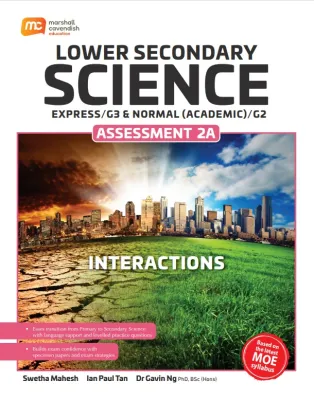
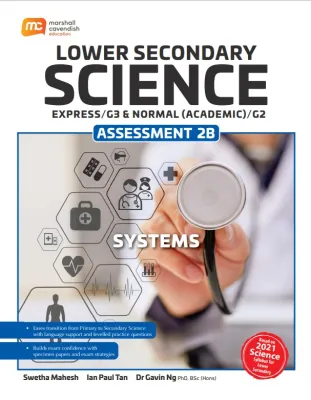
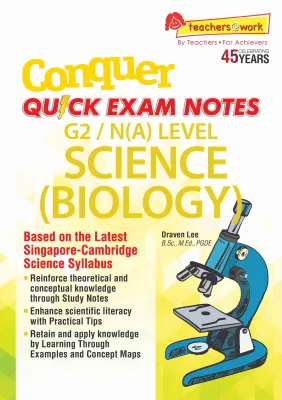
Prices are valid at publication and may change. Please refer to the product page for the latest price.
When searching for assessment books, it is critical to distinguish G2 materials from G1 and G3 resources. G3 books often introduce highly complex theoretical details and mathematical calculations that are out of scope for G2 students, which can lead to unnecessary confusion and frustration. Conversely, G1 books may lack the depth of explanation and the structured question formats required to score well in G2 school examinations. Ensuring the book is explicitly designed for the G2 curriculum keeps the student’s focus on relevant learning outcomes.
The Secondary 2 Science curriculum generally spans three core scientific disciplines: Biology, Chemistry, and Physics. Key thematic areas typically include the study of transport systems in living things, human digestive and reproductive systems, chemical changes, physical properties of matter, and physical concepts such as forces, energy, and heat. Because different secondary schools in Singapore may arrange these topics in varying sequences throughout the academic year, modular or topical assessment books are highly advantageous, allowing students to practice topics in the exact order their school teaches them.
Furthermore, the Ministry of Education (MOE) periodically updates the science syllabus to emphasize real-world applications, data analysis, and scientific inquiry over rote memorization. An outdated assessment book might contain topics that have been removed from the syllabus or lack the modern question formats used in current school assessments. Checking that the book aligns with the latest syllabus guidelines is the first and most crucial step in your selection process.
Matching Assessment Book Types to Your Study Goals
Not all assessment books serve the same purpose, and selecting the right type depends heavily on the student’s current academic standing and immediate learning objectives. Rather than buying multiple books of the same style, a more effective strategy is to build a balanced toolkit of complementary resources.

Topical Practice Books
Topical practice books are designed for immediate reinforcement. These resources organize questions by individual chapters, allowing students to practice specific concepts immediately after they are taught in school. This immediate application helps solidify memory, identify conceptual gaps early, and build confidence. If a student understands the classroom teacher but struggles to apply the concepts to homework questions, a topical practice book is the most appropriate tool to bridge this gap.
Yearly or Prelim Compilation Books
As the end-of-year examinations approach, the focus of study must shift from individual topics to holistic revision. Yearly or prelim compilation books gather past examination papers from various schools, offering full-length practice papers that simulate the actual exam environment. These books are invaluable for teaching students how to manage their time effectively, transition smoothly between different scientific disciplines within a single paper, and tackle complex, multi-part questions that integrate multiple topics.
Study Guides and Revision Notes
For students who struggle to digest dense textbook chapters or find it difficult to organize their thoughts, study guides and revision notes are essential. These books typically feature concise summaries, visual mind maps, comparison tables, and worked examples that highlight common student misconceptions. Rather than offering extensive question sets, they focus on clarifying difficult concepts and providing a quick-reference framework that students can review before attempting independent practice.
By identifying whether a student needs conceptual clarification, immediate topical practice, or comprehensive exam preparation, you can select the specific category of book that will yield the greatest academic benefit.
Essential Checks Before Buying Science Assessment Books
Before finalizing any purchase at a bookstore or online marketplace, performing a few targeted quality checks can save you from buying ineffective or redundant materials. Use the following criteria to evaluate any Secondary 2 Science G2 assessment book:
Verify the Banding Label
The book cover should explicitly state “G2” or “General 2.” Be cautious of older stock that may still carry the “Normal (Academic)” or “N(A)” label. While some of these older books remain highly relevant, you must verify that the publisher has updated the content to align with the current FSBB syllabus structure. Avoid buying G3 (Express) books as a “stretch” resource unless the student has already mastered the G2 content and has received specific guidance from their school teacher to do so.
Examine the Quality of the Answer Key
A high-quality answer key is often the difference between a mediocre assessment book and an excellent one. Open the book to the back and review the solutions. For multiple-choice questions, the answer key should provide brief explanations for why the correct option is right and why the distractors are incorrect. For structured and free-response questions, look for step-by-step marking rubrics that highlight essential scientific keywords. This helps students learn exactly how to structure their answers to secure full marks in school exams.
Check the Publication and Edition Details
Locate the copyright page, which is usually found within the first few pages of the book. Look for the publication year and the edition number. A book published or revised recently is much more likely to reflect the current emphasis on scientific inquiry, data analysis, and practical-based questions.
Assess the Inclusion of Diverse Question Formats
Modern secondary science assessments in Singapore do not rely solely on simple recall questions. Ensure the book includes data-analysis questions, experimental design scenarios, and structured questions that require students to interpret graphs, tables, and diagrams. These formats prepare students for the practical and application-based components of their school assessments.
Where to Buy and How to Verify Book Authenticity
Acquiring your assessment books from reliable sources ensures that you receive complete, high-quality, and authorized editions of the study materials.
Established Physical Bookstores
Visiting established physical bookstores in Singapore remains one of the most reliable ways to purchase assessment books. Physical shopping allows you to flip through the pages, assess the layout, check the clarity of the diagrams, and directly evaluate the depth of the answer keys. It also ensures you can compare different publishers side-by-side to see which style resonates best with the student’s learning preferences.
Publisher Official Online Stores
Many reputable educational publishers in Singapore operate their own official online storefronts. Purchasing directly from the publisher guarantees that you are getting the most recent edition of the book. Publishers often offer curated bundles that combine topical worksheets, study guides, and mock papers at a competitive package price, making this a highly convenient and reliable option.
General Online Marketplaces
While general online marketplaces and ecommerce platforms offer convenience and sometimes lower prices, they require extra caution. When buying from third-party sellers, always verify the exact edition and publication year of the book, as some sellers may list older, outdated stock. Read customer reviews to ensure other buyers received complete books with the answer booklets intact.
Cross-Referencing with School Booklists
At the start of the academic year, secondary schools distribute official booklists containing recommended supplementary materials. Cross-referencing these lists can give you an excellent starting point, as school teachers select these titles based on their direct alignment with the school’s specific teaching plan and assessment schedule.
Frequently Asked Questions (FAQ)
Do I need to buy the Ten-Year Series (TYS) for Secondary 2?
No, you do not need to buy a Ten-Year Series (TYS) for Secondary 2. The official Ten-Year Series is compiled exclusively for national examinations, such as the GCE O-Level, GCE N-Level, or the Singapore-Cambridge Secondary Education Certificate (SEC) examinations, which are taken at the end of Secondary 4 or 5. There is no national examination at the Secondary 2 level. Instead of a TYS, look for topical practice books, school-specific prelim exam compilations, or end-of-year revision papers designed specifically for the lower secondary G2 syllabus. These resources are much better aligned with the developmental stage and curriculum scope of a Secondary 2 student.
How can I tell if a book is updated for the latest MOE syllabus?
To verify if an assessment book is updated for the latest Ministry of Education (MOE) syllabus, start by checking the book’s cover for official badges or text indicating alignment with the latest curriculum. Next, turn to the copyright page at the front of the book to check the publication or latest reprint year. Finally, cross-reference the book’s table of contents with the official Secondary Science syllabus outline provided on the MOE website or your child’s school scheme of work. If the book includes obsolete topics or lacks key thematic areas currently being taught in school, it is likely outdated.

Community discussion
Share your experience or ask a question. Comments are reviewed before publication.