
Selecting your first electric piano is a significant milestone that shapes your musical development, finger strength, and overall enjoyment of the instrument. In Singapore, where residential space is highly valued and shared-wall living is the norm, finding the right balance between authentic acoustic feel, compact physical dimensions, and silent practice capabilities is essential. Established global brands like Yamaha, Roland, Casio, and Korg lead the market by offering beginner-friendly models that successfully bridge the gap between traditional action and modern convenience.
Choosing the right instrument requires looking past basic aesthetic appeal to evaluate key mechanical and digital specifications. A high-quality beginner instrument should not only sound pleasant but must also provide the physical resistance necessary to train your hands for an acoustic piano. By focusing on reputable brands and understanding what to test in local showrooms, you can make an investment that supports your learning journey for years to come.
What to Look for When Choosing Your First Electric Piano
Weighted Keys and Hammer Action
To build proper finger strength and correct playing habits, a beginner must practice on an electric piano featuring fully weighted keys with realistic hammer action. Unlike basic keyboards or synth-action controllers that rely on simple spring-loaded mechanisms, hammer-action digital instruments simulate the physical levers and hammers found inside an acoustic grand piano. This weight resistance forces your fingers to engage fully, allowing you to develop control over the volume and tone of each note depending on how forcefully you strike the key.
Products mentioned in this guide
![Roland FP10 FP30X Portable Digital Piano 88 Keys Weighted Keyboard FP-10 FP-30X FP 10 30 [LIMITED STOCK]](https://img.lazcdn.com/g/p/c22997b08d0f6f3184d539150f91cb18.jpg_400x400q80.jpg_.webp)
![Yamaha P-143BT Portable Digital Piano 88 Weighted Keys Bluetooth Beginners Instrument P143 P-143 [LIMITED STOCK]](https://img.lazcdn.com/g/p/b40c0a5d1400f3afb2c14a886464b0ef.jpg_400x400q80.jpg_.webp)
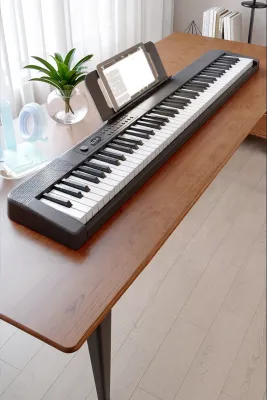
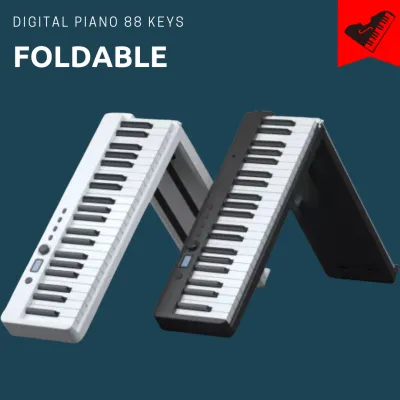
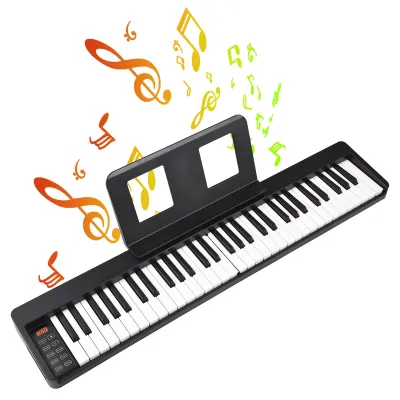
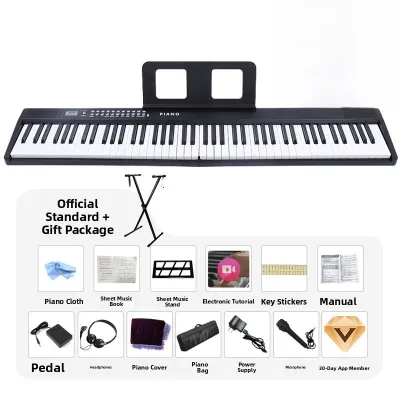
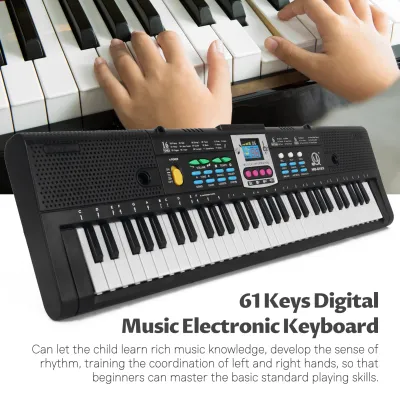
![[✅SG Ready Stock] 61 Key High Quality Music Keyboard Piano kids toys new player beginner Electric Piano](https://img.lazcdn.com/g/p/1f34b80fc1c4ffa462a06ed0ad2ca2fd.jpg_400x400q80.jpg_.webp)
Prices are valid at publication and may change. Please refer to the product page for the latest price.
When browsing specifications, look for terms like “graded” or “scaled” hammer action, which mimic the natural characteristics of an acoustic piano where the lower bass keys feel heavier than the treble keys. Avoid instruments labeled merely as “touch-sensitive” or “semi-weighted,” as these lack the mechanical weight necessary to transition smoothly to a real acoustic piano during lessons or exams.
Polyphony Count
Polyphony refers to the maximum number of individual notes or voices an electric piano can produce at the exact same moment. While a beginner might think 88 keys only require 88 notes of polyphony, playing a sequence of notes with the sustain pedal pressed down causes multiple sound samples to layer and ring out simultaneously. If your instrument has insufficient polyphony, older notes will abruptly cut off to make room for new ones, creating a choppy and unnatural sound.
For a beginner, a polyphony count of 64 notes is the absolute minimum, while 128 notes or higher is highly recommended to accommodate intermediate classical repertoire and complex pedal work. Selecting an instrument with robust polyphony ensures that your musical expression is never artificially limited as your technical skills progress.
Sound Engine and Speakers
The realism of an electric piano depends heavily on its internal sound engine, which translates your physical key strikes into digital audio. High-quality instruments use sophisticated stereo sampling techniques, capturing the actual recordings of world-class acoustic grand pianos at multiple dynamic levels to reflect subtle changes in timbre. Some advanced models also incorporate physical modeling to simulate string resonance, damper noise, and cabinet acoustics.
Equally important is the onboard speaker system, which must deliver clean, undistorted sound across the entire frequency range. Look for models with built-in amplifiers rated at least 6 to 12 watts per channel, as underpowered speakers can make the instrument sound thin, muddy, or uninspiring, which can quickly discourage a new learner.
Connectivity for Silent Practice
One of the greatest advantages of an electric piano over an acoustic counterpart is the ability to practice silently, which is particularly valuable in Singapore’s high-density housing environments. Ensure the instrument features at least one, and preferably two, dedicated quarter-inch or 3.5mm headphone jacks so that you and an instructor can listen simultaneously without disturbing family members or neighbors.
Additionally, look for a USB-to-Host port or built-in Bluetooth MIDI capability, which allows the instrument to connect directly to tablets, smartphones, or computers. This connectivity is essential for integrating with modern interactive learning applications, digital sheet music, and music notation software, turning your practice sessions into a more engaging and structured experience.
Trusted Electric Piano Brands to Consider for Beginners
Yamaha
Yamaha has earned a global reputation for producing reliable, high-quality musical instruments, drawing on over a century of experience manufacturing world-class acoustic grand pianos. This acoustic heritage is directly reflected in their digital sound engines, which frequently feature meticulously recorded samples of their flagship Yamaha CFX concert grand. For beginners, this translates to a bright, clear, and highly recognizable tonal profile that fits beautifully across classical, pop, and jazz genres.

Beyond sound, Yamaha’s entry-level digital pianos are highly regarded for their intuitive user interfaces and straightforward layouts, allowing students to focus on playing rather than navigating complex menus. When shopping, beginners should focus on Yamaha’s dedicated digital piano lines, such as the portable P-series or the console-style Arius (YDP) series, which feature their Graded Hammer Standard (GHS) or Graded Hammer Compact (GHC) actions. It is important to distinguish these fully weighted instruments from Yamaha’s PSR or EZ portable keyboard lines, which feature unweighted keys designed for casual play rather than serious piano study.
Roland
Roland approaches digital piano design with a strong emphasis on technological innovation, physical durability, and expressive performance. Instead of relying solely on static audio samples, Roland’s SuperNATURAL sound engine uses advanced digital modeling to recreate the complex acoustic interactions of a physical piano, resulting in a highly responsive dynamic range. This allows beginners to practice subtle variations in touch and volume, which is crucial for developing emotional expression and nuanced control.
Roland’s entry-level models are frequently praised for their robust PHA-4 Standard keyboard action, which features an escapement mechanism and synthetic ivory-feel keys that absorb moisture from your fingers during long practice sessions. Their instruments are built to withstand years of daily use and often come equipped with modern Bluetooth MIDI and audio connectivity for seamless integration with the Roland Piano App. However, buyers should note that Roland’s deep customization options mean some models have multi-functional key combinations or deeper menu systems, which may require a brief period of adjustment for absolute beginners.
Casio
Casio has successfully redefined its reputation in the musical instrument industry by offering exceptionally compact, stylish, and value-driven digital pianos that do not compromise on core learning features. Their modern Privia and Celviano lines are specifically designed to maximize space efficiency, making them an excellent fit for smaller apartments or study rooms in Singapore. Despite their slim profiles, these instruments deliver a surprisingly authentic playing experience, often coming as complete accessory bundles that include a matching stand, pedal board, and score stand.
When exploring Casio’s catalog, it is vital to verify that the model you choose features their fully weighted Scaled Hammer Action or Smart Scaled Hammer Action. Casio is also a major producer of lightweight, unweighted Casiotone keyboards, which are excellent for portable fun but lack the key resistance needed for proper classical piano training. By selecting a dedicated Privia or Celviano model, beginners receive a highly competitive instrument that offers excellent value for money, reliable key weighting, and modern connectivity.
Korg
Korg is a powerhouse in the professional synthesizer and stage piano market, and they bring this rich expertise in sound design and software integration directly into their beginner-focused digital pianos. A major appeal of choosing a Korg instrument is the inclusion of extensive, high-quality sound libraries that go far beyond standard acoustic pianos, offering lush electric pianos, organs, and orchestral strings. This makes Korg a compelling choice for beginners who want to explore different musical genres or dive into basic music production and home recording.
Korg’s digital pianos, such as the B2 or LP-380U, are known for their sleek, contemporary physical designs that blend seamlessly into modern home interiors. Because Korg’s product lineup spans from lightweight stage pianos to heavy home consoles, the physical feel of their keyboard actions can vary significantly across models. It is highly recommended to test their Natural Weighted Hammer (NH) action in person to ensure the resistance and key return speed align with your personal playing preferences before finalizing your purchase.
How to Test and Buy from Music Retailers in Singapore
The Importance of In-Store Testing
While reading specifications and watching online demonstration videos provides a helpful starting point, nothing can replace the physical experience of testing an electric piano in person. Every manufacturer designs their key action and sound profile differently, and what feels comfortable to one player might feel too heavy or springy to another. Sitting at the instrument allows you to evaluate the physical resistance of the keys, the responsiveness of the sustain pedal, and how the sound projects from the built-in speakers in a real room.
What to Do at Authorized Dealers
When you visit authorized music showrooms in Singapore, come prepared to conduct a systematic evaluation. Bring a pair of high-quality, over-ear headphones to plug into the instruments; this allows you to listen closely to the sound engine’s clarity without background showroom noise, while also helping you hear if the physical keys make excessive clacking noises when pressed. Do not hesitate to ask the showroom staff about local warranty terms, which typically cover parts and labor for one to two years, and verify that they provide professional delivery and assembly services to ensure your piano is set up safely in your home.
In-Store vs. Online Marketplaces
Purchasing your electric piano from an authorized physical retailer or their official online store offers significant advantages in terms of buyer protection, reliable after-sales support, and verified local warranties. In contrast, buying from unauthorized parallel importers or general e-commerce marketplaces carries substantial risks, such as receiving an instrument with an incorrect voltage plug or transformer not rated for Singapore’s 230V electrical grid. Furthermore, parallel imports rarely qualify for local manufacturer warranties, meaning you could face high out-of-pocket repair costs if the internal electronics or key sensors malfunction.
Essential Accessories and Setup Tips for Home Practice
Ergonomic Seating and Stands
Maintaining proper posture is critical for preventing fatigue and repetitive strain injuries during long practice sessions. Avoid using wobbly, single-braced X-stands or standard dining chairs, which often place the keyboard at an incorrect height and force you to slouch. Instead, invest in a sturdy, double-braced Z-stand or a dedicated wooden furniture stand designed specifically for your piano model, paired with a height-adjustable piano bench that allows your forearms to rest parallel to the floor.
Sustain Pedals
Many entry-level electric pianos ship with a lightweight, plastic foot switch that slides easily across the floor and fails to replicate the physical feel of an acoustic pedal. Upgrading to a heavy-duty, metal sustain pedal with a non-slip rubber base provides a much more realistic resistance underfoot. If your budget allows, verify whether your chosen piano model supports half-pedaling, which allows for more gradual and realistic control over sound dampening as you progress to intermediate pieces.
Headphones for Shared Spaces
To make the most of your silent practice sessions without causing ear fatigue, invest in a dedicated pair of comfortable, over-ear studio monitor headphones. Standard earbuds or noise-canceling consumer headphones often color the sound artificially, whereas studio headphones provide a flat, natural frequency response that accurately reproduces the piano’s internal sound engine. This is particularly important for late-night practice sessions in Singapore’s HDB flats or condominiums, ensuring you can play at any hour without disturbing your household or neighbors.
Placement and Climate Care
Singapore’s tropical climate, characterized by high relative humidity and consistent warmth, requires careful consideration when placing your electric piano at home. Avoid positioning the instrument in direct sunlight, near open windows where sudden rainstorms could blow moisture inside, or directly underneath air-conditioning vents where rapid temperature changes can cause condensation. To protect the internal electronic circuit boards and key sensor contacts from moisture damage, consider using a fitted dust cover when the piano is not in use, and place a small dehumidifier or moisture-absorbing packets nearby if the room is not regularly air-conditioned.
Frequently Asked Questions (FAQ)
Do I need an 88-key electric piano as a beginner?
Yes, starting with a full-sized 88-key keyboard is highly recommended for anyone serious about learning the piano. Standard piano pedagogy, classical sheet music, and graded examinations are designed around the full range of the instrument, and having fewer keys will quickly limit your ability to play advanced pieces. While 61-key or 76-key keyboards are highly portable and acceptable for casual play or basic music production, they lack the spatial layout needed to develop proper hand coordination and spatial awareness.
Can I use an electric piano with online learning apps?
Most modern electric pianos can be connected to tablets, smartphones, or computers to work seamlessly with popular interactive learning applications. To do this, verify that the piano model features a USB-to-Host port or built-in Bluetooth MIDI connectivity, which transmits your performance data directly to the app for real-time feedback on pitch and rhythm. Always check the specific learning application’s compatibility requirements to ensure your instrument’s data transmission protocol is fully supported before purchasing accessories.
How should I budget for a beginner electric piano in Singapore?
For a reliable, fully weighted beginner electric piano from an established brand in Singapore, you should expect to budget between S$600 and S$1,500. This price range typically covers high-quality entry-level portable models and mid-range console-style instruments. When planning your purchase, remember to factor in approximately S$150 to S$300 for essential accessories, including a sturdy stand, an adjustable bench, quality headphones, and potential delivery or home assembly fees.

Community discussion
Share your experience or ask a question. Comments are reviewed before publication.