
Selecting the ideal French learning book as a complete beginner requires matching the book’s instructional design with your personal learning objectives and study environment. While some learners thrive on structured grammar explanations, others prefer conversational dialogues or practical phrasebooks for upcoming travel. To make a successful purchase, you must evaluate how a book presents vocabulary, whether it includes essential self-study tools like answer keys, and how easily you can access its accompanying audio resources. By understanding these key factors, you can avoid common pitfalls and build a highly effective, budget-friendly study plan.
Identify Your French Learning Goals and Style
Before browsing online marketplaces or local bookstores in Singapore, you must clarify why you want to learn French. If your primary motivation is an upcoming holiday to France or a French-speaking region, your needs will differ significantly from someone aiming for academic certification or professional fluency. A traveler requires immediate, situational vocabulary and phonetic guides to navigate restaurants, transit, and hotels. Conversely, a long-term learner needs a systematic introduction to grammar, verb conjugations, and sentence structure to build a versatile linguistic foundation.
Your preferred learning style also dictates which book format will yield the best results. Visual learners benefit from books that utilize color-coded grammar charts, illustrations, and clear layout hierarchies to break down complex rules. Auditory learners should prioritize packages that feature extensive audio tracks, dialogues, and pronunciation drills. If you learn best by doing, a practice-oriented workbook filled with fill-in-the-blank exercises, translation tasks, and writing prompts will keep you engaged far longer than a dense, text-heavy grammar reference.
Products mentioned in this guide
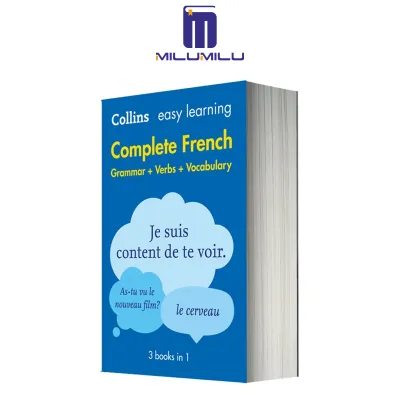
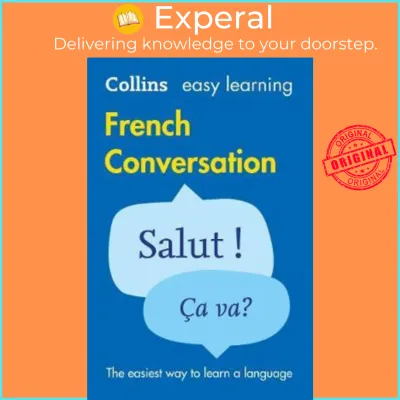
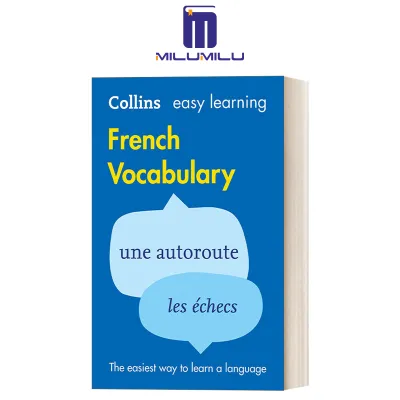
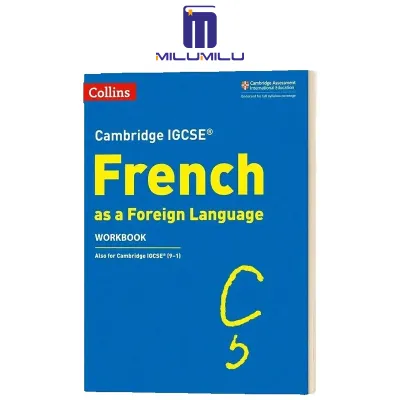
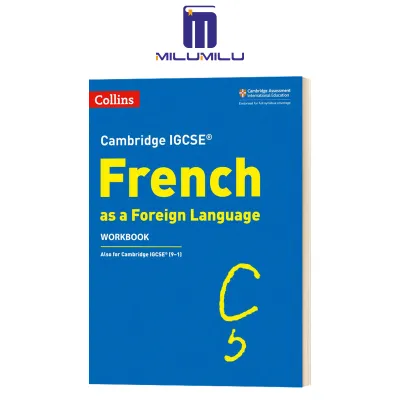
Prices are valid at publication and may change. Please refer to the product page for the latest price.
Compare Types of French Books for Beginners
Comprehensive Textbooks for Structured Progression
Comprehensive textbooks are designed to take you from absolute zero to a basic conversational level, typically aligned with the A1 level of the Common European Framework of Reference for Languages (CEFR). These books introduce grammar concepts sequentially, ensuring that each chapter builds logically on the previous one. They offer a balanced mix of reading passages, vocabulary lists, grammar explanations, and cultural insights. While textbooks provide the most thorough education, they are often designed for classroom use, meaning they may require a companion teacher’s guide or a tutor to help you navigate the material effectively.

Workbooks and Exercise Books for Active Practice
Workbooks focus almost entirely on active recall and reinforcement. Instead of lengthy explanations, they provide concise grammar summaries followed by pages of drills, conjugation tables, and sentence-building exercises. Writing by hand in a physical workbook helps solidify spelling and grammatical agreements, which are notoriously challenging in French. These books are excellent companions to a main textbook or online course, allowing you to test your understanding of concepts like gender agreement, plural forms, and irregular verbs through repetitive, focused practice.
Phrasebooks and Travel Guides for Immediate Use
If your goal is survival communication rather than deep linguistic mastery, a phrasebook is the most practical choice. These compact guides are organized by real-world scenarios, such as ordering food, asking for directions, shopping, or handling medical emergencies. They prioritize high-frequency phrases and provide simplified phonetic transcriptions so you can pronounce words recognizably without studying complex French phonetics. While phrasebooks will not teach you how to construct original sentences, they are invaluable tools for quick reference during travel.
Audio-Integrated and Multimedia Books for Pronunciation
French pronunciation can be highly counterintuitive for beginners due to silent letters, nasal vowels, and the liaison system, where the final consonant of one word links to the vowel of the next. Audio-integrated books bridge this gap by linking text directly to spoken audio. These modern resources often feature QR codes on the pages that link to streaming audio, or they direct you to a companion mobile application. Utilizing these multimedia tools ensures you learn the correct pronunciation and rhythm of the language from day one, preventing the formation of bad habits that are difficult to correct later.
Essential Features to Check Before You Buy
Balance of English Explanations and French Immersion
As an absolute beginner, you must carefully check how much English is used in the book. Fully immersive textbooks, written entirely in French, are common in language school classrooms where an instructor is present to explain instructions. However, for independent self-study, a book written entirely in French can quickly lead to frustration and burnout. Look for resources that explain complex grammatical concepts, such as the difference between past tenses, in clear English, while reserving French for vocabulary lists, examples, and exercises.
Availability and Format of Audio Resources
Never buy a beginner French book without verifying how the accompanying audio is delivered. Many older editions or secondhand books rely on physical CDs, which are increasingly difficult to play on modern laptops and mobile devices. Ensure the book provides access to digital audio files via a dedicated publisher website, a companion app, or downloadable MP3s. Additionally, check if the audio access is included in the purchase price or if it requires an additional subscription fee, as hidden digital costs can significantly inflate your overall investment.
Inclusion of Comprehensive Answer Keys
If you plan to study independently, a comprehensive answer key is non-negotiable. Many textbooks designed for academic classrooms deliberately omit the answer key, publishing it instead in a separate teacher’s manual that must be purchased individually. Before finalizing your purchase, look at the table of contents or the back of the book to confirm that the answers to all exercises are included. Without an answer key, you will have no way of verifying your progress or identifying persistent mistakes in spelling and grammar.
Build a Cost-Effective Starter Library
Building a starter library does not require spending hundreds of dollars. The most cost-effective approach is to start with a single, high-quality textbook-workbook hybrid that combines clear explanations with practical exercises. Avoid the temptation to buy multiple books at once, as this often leads to overwhelm and fragmented learning. Master one resource before investing in supplementary materials like specialized vocabulary builders or advanced grammar guides.
You can also save money by evaluating older editions of popular textbooks. While publishers frequently release new editions, the core grammar rules of the French language do not change. An older edition is often available at a steep discount on online marketplaces or in local secondhand bookstores, and it will teach you the exact same foundational grammar as the latest release. Just ensure that any digital components, such as companion websites or audio downloads associated with the older edition, are still active and supported by the publisher.
Finally, complement your physical books with free digital resources. In Singapore, the National Library Board (NLB) provides access to a vast collection of language learning e-books, audiobooks, and digital magazines. You can use these free library resources to supplement your primary textbook, allowing you to practice reading and listening comprehension without spending extra money on supplementary materials.
Final Pre-Purchase Checks for Compatibility
Before completing your purchase, verify which regional variant of French the book teaches. While Metropolitan French (the standard spoken in France) is the most common and widely understood globally, some books focus specifically on Canadian French (Québec). While the core grammar is identical, there are notable differences in vocabulary, idioms, and pronunciation. Choosing a book that aligns with your target destination will ensure you learn the most relevant vocabulary for your needs.
Additionally, check the publication date and read recent user reviews regarding any companion software or mobile apps. Publishers sometimes discontinue support for older apps, leaving readers unable to access the audio tracks or interactive exercises advertised on the cover. Ensure the companion app is compatible with your smartphone’s current operating system. If you are purchasing an e-book version, verify that the file format is compatible with your e-reader and that any embedded audio features function correctly on your specific device.
Frequently Asked Questions (FAQ)
Can I achieve fluency using only French learning books?
No, books alone cannot make you fully fluent in French. While textbooks and workbooks are exceptional tools for building a strong foundation in grammar, vocabulary, and reading comprehension, fluency requires active, real-time communication. To develop speaking and listening fluency, you must supplement your book study with active practice, such as speaking with native speakers, participating in language exchange groups, or working with a tutor. Books provide the structural blueprint, but conversational practice builds the real-world skill.
Should I buy a separate bilingual dictionary as a beginner?
A separate, heavy physical bilingual dictionary is generally unnecessary for absolute beginners. Most beginner textbooks and workbooks include comprehensive glossaries at the back containing all the vocabulary used in the lessons. For words outside your textbook, free and highly reliable digital dictionary applications and websites offer instant translations, grammatical context, and audio pronunciation guides. A dedicated physical dictionary is only worth the investment if you prefer offline study or are preparing for formal exams that prohibit digital devices.
Is it worth paying more for the newest edition of a textbook?
In most cases, it is not necessary to pay a premium for the newest edition of a French textbook. The fundamental rules of French grammar, verb conjugations, and core vocabulary remain unchanged across editions. The primary differences in newer editions are typically minor layout updates, more modern illustrations, and updated cultural references. However, you should opt for the newer edition if the older version relies on obsolete media formats like CDs, or if the publisher has migrated the essential audio resources to a new app that only supports the latest edition.

Community discussion
Share your experience or ask a question. Comments are reviewed before publication.