
Selecting the right Yamaha weighted keyboard is one of the most critical decisions you will make when starting formal piano lessons. For a beginner, the instrument serves as the bridge between initial practice sessions at home and the acoustic piano used during weekly instruction. The ideal choice is not necessarily the most expensive model, but rather one that accurately replicates the physical resistance of an acoustic piano action while fitting your living space and budget.
Yamaha offers several distinct tiers of weighted keyboards, ranging from highly portable slab-style instruments to permanent console digital pianos. Understanding how these instruments differ in key action, sound generation, and physical design will help you make an informed investment that supports proper technique development from day one.
Why a Weighted Keyboard Matters for Piano Lessons
When a student sits down at an acoustic piano, pressing a key initiates a mechanical chain reaction. A felt-covered hammer is thrown against steel strings, creating resistance that the player’s fingers must overcome. This mechanical feedback is essential for developing finger strength, dexterity, and dynamic control.
Products mentioned in this guide
![Yamaha P-143BT Portable Digital Piano 88 Weighted Keys Bluetooth Beginners Instrument P143 P-143 [LIMITED STOCK]](https://img.lazcdn.com/g/p/b40c0a5d1400f3afb2c14a886464b0ef.jpg_400x400q80.jpg_.webp)
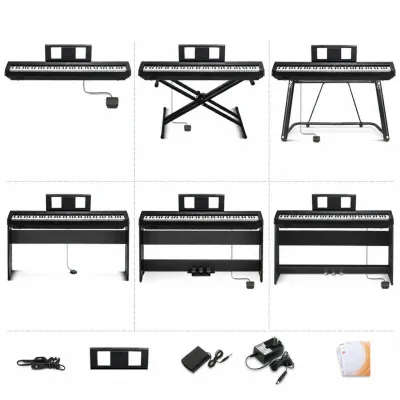
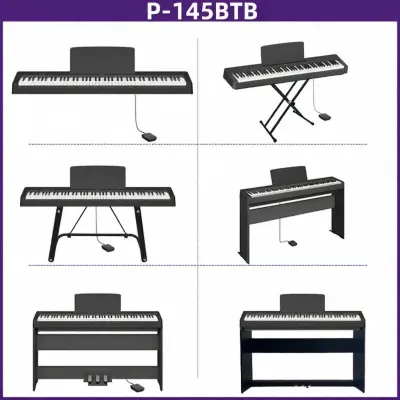
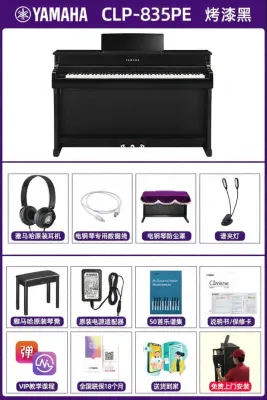
Prices are valid at publication and may change. Please refer to the product page for the latest price.
Non-weighted keyboards, often referred to as synth-action or semi-weighted keyboards, rely on simple plastic springs or light tension to return the keys to their resting position. These keys offer very little resistance, making it easy for a beginner to press them down. However, practicing on such an instrument can lead to poor habits, as the student does not learn how to control the weight of their arms and fingers to produce different volume levels.
Weighted keyboards use graded hammer action mechanisms to simulate the physical feel of an acoustic piano. In a graded system, the keys in the lower register feel heavier to press, while the keys in the higher register feel lighter, mimicking the varying hammer sizes found inside an acoustic instrument. This realistic resistance ensures that the muscle memory and finger strength built during home practice translate seamlessly to the acoustic piano in a teacher’s studio or examination hall.
Without this physical feedback, a student transitioning from a non-weighted keyboard to an acoustic piano during a lesson will often struggle with hand fatigue, uneven timing, and an inability to play softly or loudly on demand. Investing in a weighted keyboard from the start prevents these technical setbacks and keeps the learning process encouraging.
Core Specifications to Compare Across Yamaha Models
When browsing official Yamaha product specification sheets, the terminology can feel overwhelming. To make an accurate comparison, you need to focus on a few critical technical metrics that directly impact playability and sound quality.

First, examine the keyboard action type. Yamaha categorizes its weighted actions into several tiers. The entry-level standard is Graded Hammer Standard (GHS), which has been a reliable benchmark for beginners for many years. Newer portable models may feature the Graded Hammer Compact (GHC) action, designed to offer a similar weighted feel in a slimmer chassis. Mid-range and premium models utilize Graded Hammer 3 (GH3), Natural Wood X (NWX), or GrandTouch-S actions, which incorporate triple-sensor systems and synthetic ivory or ebony key surfaces for enhanced responsiveness and grip.
Second, check the polyphony limit. Polyphony refers to the maximum number of individual notes or voices the keyboard can produce simultaneously. For a beginner, a minimum of 64-note polyphony is acceptable, but 128-note or 256-note polyphony is highly recommended. When you play complex passages and hold down the sustain pedal, notes continue to ring out; if the polyphony limit is too low, older notes will be abruptly cut off, resulting in a thin and unnatural sound.
Third, evaluate the sound engine and speaker wattage. Yamaha digital pianos typically feature sound engines based on samples from their world-class acoustic grand pianos, such as the CFX concert grand. Look for terms like “CFX Stereo Sampling” or “AWM Stereo Sampling” on the spec sheet. Additionally, check the amplifier output, measured in watts (W). For a standard bedroom or living room, a built-in speaker system with an output of 6W to 12W per channel is usually sufficient to deliver a clear, full-bodied sound without distortion.
Finally, pay close attention to connectivity options. Silent practice is one of the greatest advantages of a digital instrument, so ensure the keyboard has at least one headphone jack. Many models offer dual headphone jacks (either 1/4-inch stereo jacks or 3.5mm mini-jacks), allowing a teacher and student to listen together without disturbing others. If you plan to connect the keyboard to external devices, look for dedicated auxiliary outputs or USB connectivity.
Evaluating Portable Yamaha Keyboards for Small Spaces
For many beginners, especially those living in compact apartments or shared housing, a portable “slab-style” weighted keyboard is an incredibly practical choice. These instruments consist of the keyboard unit itself, without a permanent wooden cabinet, making them easy to move, store, or transport.
The primary advantage of a portable model is its flexibility. You can place the keyboard on a temporary folding stand, such as a double-braced X-stand, and store it in a closet or under a bed when not in use. Alternatively, many portable models can be paired with an optional matching wooden stand (often sold separately) to create a more stable, semi-permanent setup that still occupies minimal visual space.
However, using a portable keyboard requires careful attention to ergonomics. Lightweight folding stands can sometimes wobble during vigorous playing, which can be distracting and disrupt a student’s rhythm. It is also crucial to pair the keyboard with a height-adjustable bench to ensure the player’s elbows are at the correct angle relative to the keys, preventing wrist strain and promoting proper posture.
Another consideration is the sustain pedal. Portable keyboards often ship with a simple plastic footswitch that tends to slide around on tiled or wooden floors. To ensure a stable practicing experience, you will likely need to upgrade to a more substantial, piano-style sustain pedal that stays firmly in place and offers realistic physical travel.
Evaluating Console Yamaha Pianos for a Traditional Home Setup
If space permits and you are committed to a long-term learning path, a console-style digital piano offers a highly stable and aesthetically pleasing alternative. These instruments are built into a permanent wooden cabinet, designed to look and feel like a traditional upright acoustic piano.
One of the most significant benefits of a console model is the integrated three-pedal unit. This unit replicates the soft, sostenuto, and damper (sustain) pedals found on an acoustic grand piano, securely anchored to the base of the cabinet. This setup ensures the pedals never slide away during practice and allows the student to develop proper pedaling habits from the very beginning.
Console pianos also feature sliding key covers that protect the delicate keybed from dust, pet hair, and accidental spills when the instrument is not in use. The stable wooden cabinet provides a solid foundation that eliminates any wobbling, allowing the student to focus entirely on their performance. Furthermore, the larger cabinet structure often acts as a natural acoustic chamber, enhancing the resonance and depth of the built-in speakers.
The trade-off is the physical footprint and weight. A console digital piano is a heavy piece of furniture that requires dedicated floor space in your home. It cannot be easily packed away or transported in a standard car, meaning you must carefully plan its placement away from direct sunlight and high-humidity areas to preserve the cabinet finish and internal electronics.
Matching the Keyboard to Your Budget and Learning Path
Navigating the financial aspect of purchasing a weighted keyboard requires balancing your current budget with the expected lifespan of the instrument. In Singapore, entry-level portable weighted keyboards generally range from S$600 to S$1,200, depending on the included accessories and specific model generation. This tier is excellent for absolute beginners who want to test their commitment without a massive upfront investment.
Mid-range models, which include higher-end portable keyboards and entry-level console pianos, typically fall between S$1,200 and S$2,500. These instruments offer upgraded key actions, higher polyphony, and more robust speaker systems. If you are certain that you or your child will stick with piano lessons for several years, investing in this mid-range tier from the start can save you money in the long run, as you will not need to upgrade the instrument as quickly.
Premium console models can exceed S$3,000, offering advanced wooden key actions and sophisticated sound projection systems. While these are exceptional instruments, they are rarely necessary for the first few years of lessons.
When evaluating the long-term value of a Yamaha keyboard, consider its resale potential. Yamaha is a highly recognized and trusted brand in the musical community, which means their weighted keyboards tend to hold their value well on the secondary market. If a student eventually decides to transition to an acoustic piano or discontinue lessons, a well-maintained Yamaha digital piano can often be resold quickly to another beginner.
Pre-Purchase Verification and Buying in Singapore
Before finalizing your purchase, it is essential to perform a few verification steps to ensure a smooth buying experience and avoid unexpected costs. First, always verify the warranty terms. When buying in Singapore, ensure the instrument comes with an official local warranty from the authorized distributor rather than a parallel import. A local warranty guarantees that you can access authorized service centers and genuine replacement parts if any technical issues arise.
Second, carefully review what is included in the box. Some retailers bundle the keyboard with essential accessories like a power adapter, music rest, and basic sustain pedal, while others sell these items separately. If you are purchasing a portable model, factor in the cost of a sturdy stand, a comfortable bench, and a pair of high-quality headphones for silent practice.
Third, make an effort to visit an official showroom or authorized dealer in Singapore to test the instruments in person. Even as a complete beginner, sitting at the keyboard and pressing the keys will give you a sense of the physical resistance and texture. Listen to the sound through both the built-in speakers and a pair of headphones. If possible, bring along your piano teacher or an experienced friend to play a few pieces and provide feedback on the key responsiveness.
Finally, consider the logistics of delivery and assembly. Console models are heavy and arrive in large, flat-packed boxes. Check if the retailer offers free delivery and professional on-site assembly, as putting together a console piano yourself can be challenging and time-consuming.
Frequently Asked Questions (FAQ)
Can I start learning piano on a non-weighted Yamaha keyboard?
While it is technically possible to learn the basic layout of the notes on a non-weighted keyboard, it is highly discouraged for formal piano lessons. Non-weighted keys do not build the necessary finger strength or hand endurance required to play an acoustic piano. Furthermore, they lack the touch sensitivity needed to control dynamics (playing softly or loudly), which is a fundamental aspect of piano expression. If your goal is to take formal lessons and progress through graded exams, starting with a weighted keyboard is essential.
Do I need to buy a separate amplifier for a Yamaha digital piano?
For standard home practice, you do not need to purchase an external amplifier. Yamaha weighted keyboards and digital pianos come equipped with built-in amplifiers and speakers designed to fill a typical room with clear sound. An external amplifier or keyboard monitor is only necessary if you plan to perform in large venues, play alongside loud acoustic instruments in a band, or if you want to practice in an exceptionally large open space where the built-in speakers might struggle to project.
How do I connect my Yamaha keyboard to piano learning apps?
Most modern Yamaha weighted keyboards offer straightforward connectivity to tablets, smartphones, and computers. To connect to learning apps, check your keyboard’s specification sheet for a USB-to-Host port or built-in Bluetooth MIDI capability. If using a wired connection, you will typically need a standard USB cable (often a USB Type-B to Type-A or Type-C cable, depending on your device) and a compatible adapter for your tablet or phone. Once connected, the app will be able to detect the notes you play in real-time, providing interactive feedback and guided lessons.

Community discussion
Share your experience or ask a question. Comments are reviewed before publication.