
Selecting the right 37-key keyboard bag in Singapore requires balancing physical protection, transport comfort, and weather resistance. Because 37-key instruments range from ultra-slim MIDI controllers to thick, heavy analog synthesizers, a generic case rarely provides a perfect fit. Choosing an unsuitable bag can lead to broken keys, bent knobs, or strained zippers that fail when you least expect it.
For a beginner, the ideal bag is one that matches your specific instrument’s dimensions while accommodating your daily routine. Whether you are commuting to weekly music lessons via the MRT, storing your gear safely away from household dust, or traveling to casual jam sessions, understanding the core specifications of keyboard bags will help you make an informed purchase. By focusing on observable build quality and structural features, you can secure a reliable bag that keeps your instrument safe for years to come.
Understanding 37-Key Keyboard Dimensions and Fit
Before browsing online marketplaces or visiting local music shops, you must obtain the exact physical measurements of your keyboard. Do not rely solely on the “37-key” label, as key sizes, bezel widths, and chassis designs vary dramatically between brands. A 37-key MIDI controller with slim keys will have a completely different footprint compared to a vintage-style synthesizer with full-sized keys and wooden side panels.
Products mentioned in this guide
![TMW Digital Piano Keyboard Bag suitable for 37 44 61 Keys Model Premium Durable Quality Accessories [LIMITED STOCK]](https://img.lazcdn.com/g/p/01098f39a16a9a8c7f3e002aa8139b0d.jpg_400x400q80.jpg_.webp)
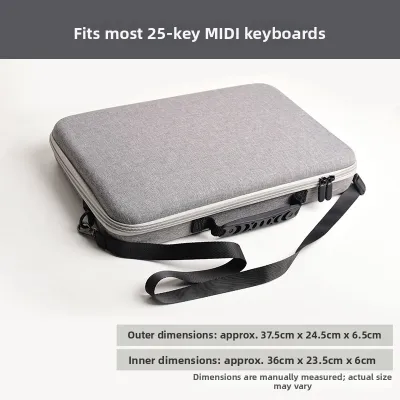
Prices are valid at publication and may change. Please refer to the product page for the latest price.
To measure your keyboard accurately, use a physical measuring tape and record three critical dimensions: length, width, and height. Measure the absolute longest points of the instrument. This means including any protruding pitch-bend wheels, master volume knobs, rear-panel jacks, or integrated rubber feet. If your keyboard has a detachable music rest or an external power switch that sticks out, factor these into your measurements to avoid buying a bag that is too tight.
Once you have your instrument’s exact measurements, compare them carefully against the internal dimensions of the keyboard bag. External bag dimensions are often significantly larger due to padding thickness and outer accessory pockets. A safe rule of thumb is to look for a bag with internal dimensions that offer approximately 1 to 2 centimeters of clearance on all sides. This small buffer prevents the fabric and zippers from stretching tightly over the corners of your keyboard, which is a primary cause of premature zipper failure.
Finally, consider the space required for your essential accessories. Beginners often forget that power adapters, USB cables, sustain pedals, and sheet music must travel alongside the instrument. If your keyboard bag lacks adequate external pocket capacity, you will be forced to pack these items inside the main compartment. Placing heavy metal pedals or hard plastic adapters directly next to your keyboard risks scratching the finish or cracking the keys during transit.
Key Features to Evaluate for Beginner Protection and Portability
Keyboard bags generally fall into two categories: lightweight gig bags and heavily padded soft cases. Lightweight gig bags usually feature minimal padding, ranging from 2mm to 5mm of basic foam. These are highly portable and cost-effective, making them excellent for dust protection at home or quick car trips. However, they offer very little defense against accidental drops, sharp impacts, or the crowded environment of public transportation.

For beginners who plan to travel with their instrument, a padded soft case with at least 10mm to 15mm of high-density foam padding is highly recommended. High-density foam absorbs shock much better than soft, spongy packing foam. When evaluating a bag, press your fingers firmly into the padding; it should resist compression and quickly spring back into shape. Pay close attention to corner reinforcement, as the corners of your keyboard are the most vulnerable to impact damage if the bag is dropped vertically.
Internal securing features are equally important for preventing damage during transit. Look for bags equipped with adjustable internal velcro straps. These straps lock the keyboard securely against the back panel of the bag, preventing it from sliding back and forth as you walk. If an instrument is allowed to shift freely inside an oversized compartment, the constant friction can wear down the finish and put unnecessary stress on the keys and control knobs.
Portability features directly impact how often you will want to take your keyboard out of the house. For commuting via the MRT or walking under the sun, dual backpack-style straps are a game-changer. Ensure these straps are wide, padded, and adjustable to distribute the weight evenly across your shoulders. If you prefer a single shoulder strap or a traditional carry handle, verify that the attachment points are reinforced with heavy-duty metal D-rings and cross-stitched fabric patches rather than thin plastic clips.
Material and Build Quality: What to Look For
Singapore’s tropical climate presents unique challenges for musical instrument storage and transport. High humidity and sudden, intense rain showers mean that weather resistance should be a top priority when selecting a keyboard bag. Look for exterior fabrics made from high-denier polyester or nylon, such as 600D (Denier) Oxford cloth. These materials are naturally water-resistant, durable, and tough enough to resist tears from accidental scrapes against walls or transit barriers.
While water-resistant fabrics will protect your gear from a light drizzle, pay close attention to the seams and zippers, which are common entry points for moisture. High-quality bags feature reversed zippers or fabric flaps that fold over the zipper teeth to repel water. Inspect the stitching along the main seams; it should be tight, even, and free of loose threads. Double-stitching at major stress points, such as where the straps and handles connect to the main body, is a strong indicator of a bag built to last.
Inside the bag, the lining material plays a crucial role in preserving your keyboard’s appearance. Avoid bags with rough, synthetic interiors that feel abrasive to the touch. Instead, look for soft, non-abrasive linings made of brushed tricot, microfiber, or smooth nylon. This prevents the interior fabric from scratching the plastic chassis, keytops, or delicate display screens of your instrument over years of repeated packing and unpacking.
Additionally, check the quality of the hardware components. Metal zipper pulls are far more durable than plastic ones, which can easily snap under tension. The buckles used to adjust the shoulder straps should be made of thick, impact-resistant polymer or solid metal. If the hardware feels flimsy or brittle, it is highly likely to fail when the bag is fully loaded, risking a catastrophic drop.
Building Your Shortlist: Matching Bags to Your Practice Routine
To find the best value without overspending, match the structural features of the bag to your actual weekly routine. Beginners often fall into one of three common use-case profiles. Identifying which profile fits you best will help you filter out unnecessary features and focus your budget on what matters most.
If your keyboard primarily stays at home for practice and only needs protection from dust, pet hair, and occasional spills, a lightweight gig bag with 5mm of padding is perfectly adequate. For this profile, focus on a compact design that is easy to slide under a bed or store in a wardrobe. You do not need to spend extra on heavy backpack straps or extreme weatherproofing.
If you are a student commuting weekly to music lessons or jam sessions via public transit, your priority must be portability and weather protection. Look for a bag with dual padded backpack straps, a water-resistant 600D polyester exterior, and at least 10mm of high-density foam padding. A large front pocket is also essential here to keep your lesson books, tablet, and power cables organized and dry.
For those who participate in occasional community performances or transport their gear in car trunks alongside heavy equipment, maximum physical protection is required. Seek out a heavy-duty soft case with 15mm to 20mm of padding, rigid side walls, rubber bumper feet on the bottom, and internal securing straps. While these bags are heavier and more expensive, they provide the structural integrity needed to withstand being stacked or bumped.
Use the following checklist to evaluate your shortlisted options side-by-side:
- Internal Dimensions: Does it offer 1 to 2 cm of clearance without being overly loose?
- Padding Thickness: Is it at least 10mm of high-density foam for travel, or 5mm for home storage?
- Exterior Fabric: Is it made of water-resistant 600D nylon or polyester?
- Strap Configuration: Does it have adjustable backpack straps, a shoulder strap, or just a carry handle?
- Pocket Space: Are the external pockets large enough to hold your power adapter and sustain pedal without pressing against the keys?
- Hardware: Are the zippers, D-rings, and adjustment buckles made of durable metal or heavy-duty polymer?
Where to Buy and What to Verify Before Checkout
When you are ready to make a purchase, you can choose between local physical music stores in Singapore or online e-commerce platforms. Both options have distinct advantages, but each requires a specific verification process to ensure you do not end up with an unusable product.
If you prefer shopping online for convenience and a wider selection, pay close attention to the seller’s return and exchange policies. Because sizing mismatches are incredibly common with keyboard bags, verify that the platform or seller allows hassle-free returns or exchanges if the bag does not fit your specific keyboard model. Read through customer reviews specifically looking for photos of the bag in use; this helps you verify the actual color, fabric texture, and pocket sizes.
When buying from online marketplaces, check the seller’s rating and look for authorized dealer badges to avoid counterfeit or poorly manufactured generic bags. Many low-cost generic bags use sub-standard zippers and thin, unpadded fabrics that offer virtually no protection. If a price seems too good to be true, it often reflects a lack of internal padding or weak stitching that will unravel after a few weeks of use.
If you choose to visit a physical music retailer in Singapore, bring your keyboard with you if possible, or at least carry a tape measure. Testing the fit in-store is the most reliable way to guarantee compatibility. While in the store, conduct a hands-on quality check: zip and unzip the bag multiple times to ensure the teeth align smoothly without catching, pull firmly on the strap attachment points to test the seam strength, and squeeze the padding to confirm its density.
Frequently Asked Questions (FAQ)
Can I use a 49-key keyboard bag for a 37-key keyboard?
Using a 49-key bag for a 37-key keyboard is generally not recommended because the excess space allows the instrument to slide around freely inside. This constant movement can cause the keys, knobs, and jacks to repeatedly strike the sides of the bag, leading to cosmetic scratches or structural damage during transit. Additionally, carrying an oversized bag is awkward and increases the risk of bumping into doors or transit barriers.
If you must use a larger bag as a temporary solution, you must mitigate the risks by filling the empty space. Place clean, rolled-up towels or high-density foam blocks at both ends of the bag to snuggly wedge the keyboard in place. Ensure the internal straps are pulled as tight as possible to minimize shifting, and avoid using this setup for long commutes or rough travel.
Do I need a hard case instead of a gig bag for a 37-key keyboard?
For most beginners in Singapore, a high-quality padded gig bag or soft case provides more than enough protection for daily local commuting, storage, and lessons. Gig bags are lightweight, easy to carry on public transit, and can be folded away when not in use. They are also significantly more affordable than hard cases, allowing you to allocate more of your budget toward your instrument or lessons.
A hard flight case is only necessary if you plan to travel by air, where your instrument must be checked as baggage, or if you regularly stack heavy equipment on top of your keyboard in a touring van. Hard cases are heavy, bulky, and difficult to carry over long distances on foot, making them impractical for the average beginner’s daily routine.
How do I clean and maintain my keyboard bag?
To prolong the lifespan of your keyboard bag and protect your instrument from dirt and moisture, regular maintenance is essential. For general cleaning, wipe down the exterior fabric with a damp microfiber cloth and a mild, diluted dish soap. Gently scrub any dirty spots or stains, then wipe the area again with a clean, damp cloth to remove any soap residue.
Never submerge your keyboard bag in water, put it in a washing machine, or use harsh chemical solvents like bleach. These actions can dissolve the internal glue, degrade the protective foam padding, and strip away the water-resistant coatings on the exterior fabric. Always allow the bag to air-dry completely in a shaded, well-ventilated indoor area before placing your keyboard back inside, as trapping moisture in a humid environment like Singapore can quickly lead to mold and mildew growth.

Community discussion
Share your experience or ask a question. Comments are reviewed before publication.