
Selecting your first digital piano is a milestone decision that shapes how you develop your musical skills, finger strength, and overall enjoyment of the instrument. For beginners in Singapore, Casio has long been a prominent brand, offering a diverse lineup of instruments designed to bridge the gap between affordable portable keyboards and traditional acoustic pianos. However, navigating the various series, key actions, and technical specifications can feel overwhelming when you are just starting out. The ideal choice is not simply the most expensive model, but rather the one that aligns with your specific learning goals, budget, and the physical constraints of your living space.
To make an informed decision, you must look beyond aesthetic appeal and evaluate how each model performs in key areas such as key weight, sound generation, and connectivity. Singapore’s unique living environment—characterized by high-density housing like HDB flats and a highly humid tropical climate—also introduces practical considerations regarding instrument size, noise management, and long-term maintenance. By understanding what to look for and how to verify product specifications, you can confidently select a digital piano that will serve as a reliable learning partner for years to come.
Understanding Casio's Entry-Level Digital Piano Series
Casio categorizes its digital pianos into distinct product lines, each tailored to different user needs, space requirements, and budgets. For beginners, the two primary series to consider are the Compact Digital Piano (CDP) series and the Privia series, alongside the more traditional Celviano console models. Understanding the core philosophy behind these product lines is the first step in narrowing down your options.
Products mentioned in this guide
![Casio CDP-S110 Digital Piano [FREE X-STAND] Portable 88 Weighted Keys Instrument for Beginners](https://img.lazcdn.com/g/p/d40c3133bab175e5ba2ea3c8e22a63d9.png_400x400q80.png_.webp)
![Casio CT-S200 Digital Keyboard [FREE X-STAND] Portable 61 Keys Musical Instrument for Beginners](https://img.lazcdn.com/g/p/f4b94571f698b0120270864b7b0c17bd.jpg_400x400q80.jpg_.webp)
![Digital Piano Casio PX-S5000 PX-S3100 PX-S1100 [FREE BENCH] 88 Weighted Keys Portable Instrument](https://img.lazcdn.com/g/p/1b07efb31886dc964ce79158cc5cd6d6.jpg_400x400q80.jpg_.webp)
![Casio CT-S1 Digital Keyboard [FREE X-STAND] Portable 61 Keys Musical Instrument for Beginners](https://img.lazcdn.com/g/p/34b2071d37fa9459c1aa31b1568e43b6.jpg_400x400q80.jpg_.webp)
![CASIO CT-S1 Keyboard [FREE: X-stand] (Assorted Colors) ( CTS1 ) 61 keys Portable Digital Electronic](https://img.lazcdn.com/g/p/ed57c1a5cea4305bb7d060235e15365a.jpg_400x400q80.jpg_.webp)
![Casio CT-S500 Digital Keyboard [FREE X-STAND] Portable Casiotone 61 Keys Synthesizer Instrument](https://img.lazcdn.com/g/p/14f99d647be620f436cc7c94724704b3.jpg_400x400q80.jpg_.webp)
Prices are valid at publication and may change. Please refer to the product page for the latest price.
The CDP series represents Casio’s highly accessible entry point into the world of weighted-key instruments. These pianos are designed with a focus on essential functionality and maximum portability. They strip away complex digital interfaces and extensive sound libraries to deliver a straightforward, budget-friendly playing experience. If you are uncertain about your long-term commitment to the instrument or have a strict budget, the CDP series offers a practical way to secure a full-sized, 88-key weighted keyboard without a significant financial outlay.
In contrast, the Privia series is engineered for players who desire a more refined touch, advanced sound engines, and modern design aesthetics. The modern Privia models, often designated with a “PX-S” prefix, are celebrated for their ultra-slim, sleek profiles. These instruments utilize advanced sound-scaling technology and multi-dimensional sound sources to replicate the acoustic resonance of a grand piano more faithfully. Additionally, they frequently feature touch-sensor control panels and expanded wireless connectivity, making them appealing to tech-savvy beginners who want to integrate learning apps into their practice routines.
For those who have a dedicated space and prefer a traditional look, the Celviano series offers console-style digital pianos. These models are housed in wooden cabinets with integrated stands, sliding key covers, and physical three-pedal lyres. While they occupy a larger footprint and are less portable than the CDP or Privia slab-style models, they provide superior physical stability and a visual presence that closely mimics an upright acoustic piano.
When researching these series, it is crucial to consult the manufacturer’s official catalog rather than relying on outdated forum posts or discontinued model listings on online marketplaces. Casio frequently updates its product lines, introducing improved key actions and sound chips while phasing out older models. Verifying the current lineup on the official local distributor’s website ensures you do not inadvertently purchase a legacy model that lacks modern connectivity or updated sound-generation technology.
Essential Features to Evaluate for Beginner Learning
When evaluating any digital piano, certain technical specifications directly impact your ability to develop proper playing technique. As a beginner, your primary focus should be on the mechanical feel of the keys, the realism of the sound engine, and how easily the instrument connects to external learning tools.

The most critical feature of any beginner digital piano is the key action. Acoustic pianos use a complex system of wooden keys, felt hammers, and gravity to produce sound, creating a distinct physical resistance when a key is pressed. To build the finger strength, dexterity, and dynamic control required for classical or contemporary piano playing, you must choose a digital piano with fully weighted keys, often referred to as hammer-action keys. Casio utilizes various proprietary key actions, such as the Scaled Hammer Action or the Smart Scaled Hammer Action. These systems simulate the heavier feel of the lower bass keys and the lighter touch of the treble keys, ensuring a seamless transition if you ever perform on an acoustic instrument. Avoid unweighted or semi-weighted keyboards, as they do not provide the physical feedback necessary to develop proper hand posture and touch sensitivity.
Another vital specification to verify is polyphony, which refers to the maximum number of individual notes or voices the digital piano can produce at the exact same time. When you play a piece of music, especially one that requires holding down the sustain pedal, multiple notes continue to ring out simultaneously. If a digital piano has low polyphony, older notes will be abruptly cut off to make room for new ones, resulting in a choppy, unnatural sound. For a beginner, a minimum of 64-note polyphony is acceptable for basic exercises, but aiming for 128-note or 192-note polyphony is highly recommended. This ensures that as your repertoire grows more complex and your pedaling technique improves, the instrument’s sound engine can handle sustained chords and layered tones without any audible drop-outs.
Modern digital pianos also offer significant advantages in terms of connectivity and app integration. You should check the instrument’s physical ports to ensure it includes a USB Type-B port, commonly referred to as a USB-to-Host port. This interface allows you to connect the piano directly to a tablet, smartphone, or computer. Many of Casio’s contemporary models are compatible with the Casio Music Space application, which provides interactive sheet music, gamified learning modules, and an intuitive interface for adjusting the piano’s internal settings. Some models support wireless MIDI and audio via optional or bundled Bluetooth adapters. This wireless capability allows you to stream backing tracks directly through the piano’s speakers or send MIDI data to educational software without cluttering your practice space with cables.
Matching Your Space, Budget, and Lifestyle to a Configuration
Your physical living environment and financial plan play a decisive role in determining which digital piano configuration is most suitable. In Singapore, where residential spaces like HDB flats and condominiums often require efficient layout planning, selecting the right form factor is just as important as choosing the right technical specifications.
If you reside in a space-constrained environment or a multi-purpose room, a portable slab-style digital piano is often the most practical choice. These compact models can be placed on a portable stand and easily moved or stored when not in use. When opting for a portable setup, it is highly recommended to pair the keyboard with a sturdy, double-braced X-stand or a heavy-duty Z-stand. Cheap, flimsy stands can wobble significantly during enthusiastic playing, which not only disrupts your concentration but can also negatively affect your hand positioning and posture.
Conversely, if you have a dedicated learning space, a console-style digital piano or a portable model paired with a matching wooden stand (such as Casio’s custom stand accessories) offers distinct advantages. A fixed wooden stand provides exceptional physical stability, ensuring the keyboard remains completely stationary regardless of how hard you play. Furthermore, console configurations typically include a fixed three-pedal unit (sustain, soft, and sostenuto) that mimics the exact spacing and height of an acoustic piano’s pedals. This setup encourages correct sitting posture and prevents the pedal from sliding away across smooth flooring during practice.
When planning your budget, it is essential to look beyond the base price of the digital piano itself. A complete, functional beginner setup requires several key accessories, and failing to account for them can lead to unexpected expenses. In Singapore, you should allocate your budget across the following components:
- The core instrument: Prices generally range from approximately S$500 for basic entry-level models to over S$1,500 for premium slim or console models.
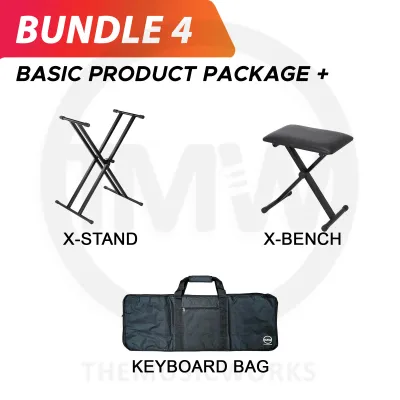
- A sturdy stand and bench: If these are not included in a bundle, expect to spend additional funds on a stable stand and an adjustable bench that allows you to sit at the correct height.
- High-quality headphones: Essential for silent practice in high-density housing, allowing you to practice late at night or early in the morning without disturbing family members or neighbors.
- Delivery and assembly: Some local retailers include delivery in the purchase price, while others charge extra, particularly for heavy console models that require professional on-site assembly.
By carefully balancing these costs, you can assemble a high-quality practice station that fits comfortably within both your home and your financial boundaries.
Pre-Purchase Verification and Local Buying Steps
Before finalizing your purchase, taking the time to physically test the instrument and verify the terms of sale will protect your investment and ensure a smooth ownership experience. Purchasing a digital piano is a long-term commitment, and a systematic pre-purchase check is highly recommended.
Whenever possible, visit a local music showroom in Singapore to test display units in person. While online demonstrations can give you a general sense of how an instrument sounds, they cannot replicate the physical sensation of playing the keys. When testing a display model, begin by playing the keys with the instrument’s power turned completely off. Pay close attention to the mechanical noise generated by the key action. All digital pianos produce some mechanical sound, but it should not feel excessively clunky, loose, or distracting. Next, turn the power on and adjust the volume to a comfortable home-listening level. Play a series of chords across the entire range of the keyboard, listening for any speaker distortion, cabinet vibration, or uneven volume levels between the bass and treble registers.
Another critical step is verifying the warranty terms and the reputation of the seller. To ensure long-term peace of mind, always purchase your digital piano from an authorized local dealer. Authorized dealers provide official manufacturer warranties backed by local service centers in Singapore. Be cautious of parallel imports or gray-market units sold at unusually low prices on online marketplaces. While these deals may seem attractive initially, parallel-imported instruments often lack local warranty coverage. If a key sensor fails or the internal motherboard malfunctions, you may find yourself unable to access official replacement parts or authorized repair technicians, resulting in costly out-of-pocket repairs.
Finally, double-check the compatibility of all included accessories before leaving the store or completing your online checkout. Ensure that the power adapter supplied with the instrument is designed for Singapore’s electrical standards, featuring a standard Type G (UK 3-pin) plug and operating at the correct voltage. Additionally, verify whether the bundle includes a sustain pedal and a music rest. Some entry-level packages only include a basic plastic footswitch, which tends to slide around on tiled or wooden floors. If necessary, consider upgrading to a heavier, rubber-bottomed sustain pedal that offers a more realistic resistance and stays firmly in place during your practice sessions.
Frequently Asked Questions (FAQ)
Do I need to buy a separate amplifier or external speakers for home practice?
No, you do not need to purchase an external amplifier or separate speakers for standard home practice. Almost all entry-level Casio digital pianos come equipped with built-in stereo speaker systems, typically ranging from 8 to 15 watts per channel. This built-in amplification is more than sufficient to fill a standard HDB living room or bedroom with clear, rich sound. In fact, for detailed practice and noise management in close-quarters housing, investing in a high-quality pair of closed-back headphones is far more beneficial than buying external speakers. Headphones allow you to hear the subtle nuances of your playing without distracting others, making them an indispensable tool for daily practice.
How can I maintain the key action and prevent dust damage in a humid climate?
Singapore’s tropical climate, characterized by consistently high relative humidity, requires proactive care to protect your digital piano’s mechanical and electronic components. To prevent moisture buildup and dust accumulation, always cover the keyboard with a fitted dust cover when it is not in use. Position the instrument away from open windows where it might be exposed to direct sunlight, sudden rain splashes, or high humidity fluctuations. Avoid placing the piano directly under or adjacent to air-conditioning vents, as rapid temperature changes can cause internal condensation. For cleaning, simply wipe the keys and cabinet with a dry, lint-free microfiber cloth. Never use harsh chemical solvents, alcohol-based sanitizers, or wet wipes, as these substances can degrade the plastic keytops and strip away the protective finishes.

Community discussion
Share your experience or ask a question. Comments are reviewed before publication.