
Finding the most suitable collapsible music stand is rarely about identifying a single universal winner; it is about matching specific structural features to your distinct playing environments. A stand that excels in a quiet home studio may fail completely during a windy outdoor busking session. This guide breaks down the core decision-making dimensions to help you evaluate stability, portability, and load capacity, ensuring you select a collapsible music stand that reliably supports your sheet music, tablets, and performance needs across different scenarios.
Choosing the right accessory requires looking past generic marketing claims and focusing on physical specifications. Whether you are practicing in a cozy apartment, performing on a bustling street corner, or rehearsing with a community orchestra, the physical build of your stand directly impacts your playing comfort and the safety of your sheet music or expensive digital devices. By understanding how different designs handle weight, wind, and frequent transport, you can make an informed purchase that protects your gear and enhances your practice sessions.
Core Features to Evaluate Before Choosing a Collapsible Music Stand
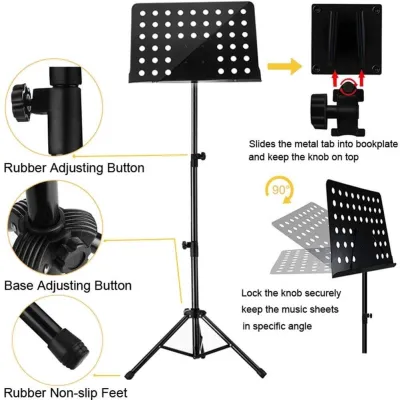
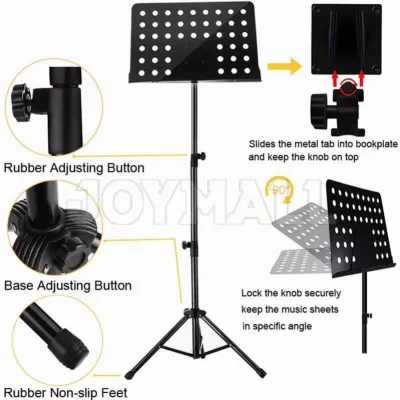
To make an informed decision, you must first understand the primary structural components of a collapsible music stand. The most critical differentiator is the desk type, which is the surface that actually holds your music. Solid desks, typically made of aluminum or steel, offer a continuous, flat surface that easily supports heavy binders, single loose sheets, and digital tablets. Wire desks, on the other hand, feature an open, skeleton-like frame that folds down into a highly compact shape, though they are generally limited to holding lightweight books or individual sheets of paper.
Products mentioned in this guide
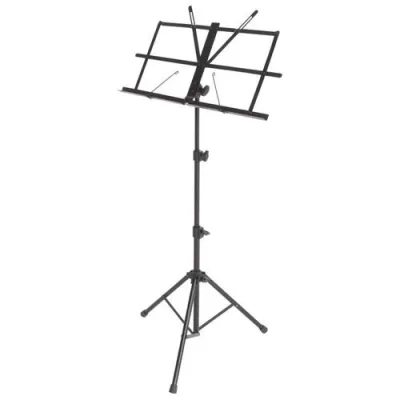
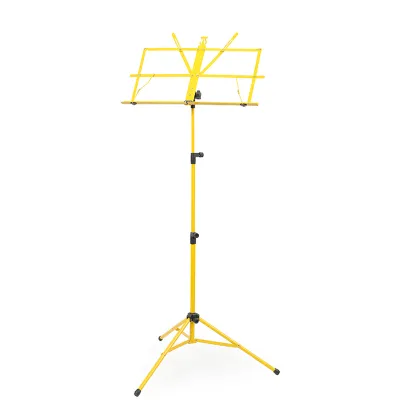
![[SG] Foldable Music Sheet Stand Portable Tripod Stand Steel Metal Music Stand with Carry Bag Guitar Parts & Accessories](https://img.lazcdn.com/g/p/1c4eb2b75dba2e577d25030cb6773814.jpg_400x400q80.jpg_.webp)
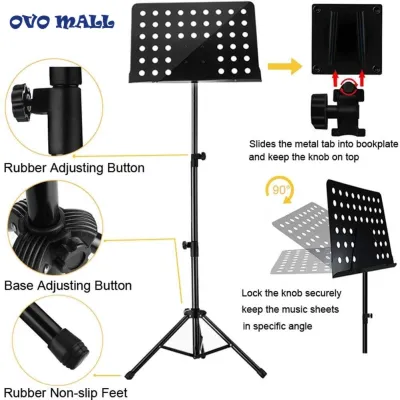
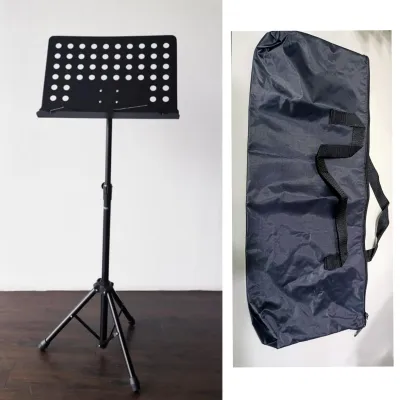
![[SINGAPORE SELLER] Foldable & Adjustable Quran Stand / Adjustable Rehal / Music Stand / Reading Book Stand](https://img.lazcdn.com/g/p/923b883d7d779b05c6c1f404acefb0c7.png_400x400q80.png_.webp)
Prices are valid at publication and may change. Please refer to the product page for the latest price.
The base design is another fundamental element that dictates stability. Tripod bases are the industry standard for collapsible stands, utilizing three legs that spread outward to distribute weight. These legs can often be adjusted to handle slightly uneven ground, making them highly versatile. In contrast, circular or flat bases are less common in highly portable models but offer exceptional stability on flat, indoor surfaces, as they keep the center of gravity low and prevent tripping hazards in tight spaces.
Finally, you must evaluate the adjustment mechanisms used to set the height and angle of the stand. Friction-based sliders rely on tight tolerances and physical tension to hold the telescoping shafts in place, offering quick adjustments but potentially wearing down over years of heavy use. Clutch or knob-locking systems use threaded screws or physical clamps to lock the sections securely, providing a much more reliable hold for heavier loads, though they require a few extra seconds to adjust during setup.
Choosing a Stand for Home Practice and Studio Use
When selecting a collapsible music stand primarily for home practice or a dedicated studio space, portability takes a backseat to stability and load capacity. Home practice often involves heavy anthologies, thick songbooks, or large binders that can easily cause a flimsy stand to tip over. For this scenario, prioritizing a solid metal desk with a robust, heavy-duty tripod base is essential. This setup ensures that your music remains completely stable, even when you are turning pages quickly or using a heavy digital tablet.

Ergonomics should also play a major role in your decision for indoor use. If you practice both seated and standing—such as switching between classical guitar and vocal exercises—you need a stand with a wide height extension range. Ensure the stand can be raised high enough so that the center of the desk aligns with your eye level when standing, preventing neck strain and promoting proper posture.
Because the stand will likely remain assembled for long periods or only be folded away occasionally to clear space in a compact living room, you can comfortably accept a larger folded footprint and a heavier overall weight. A heavier stand, perhaps weighing over two kilograms, provides the reassuring physical presence needed to support expensive tablets or heavy reference books without any risk of wobbling.
Choosing a Stand for Outdoor Busking and Live Gigs
For musicians who frequently perform outdoors or travel to various gig venues, portability and weather resistance are the most critical factors. A heavy, solid-desk stand quickly becomes a burden when you are carrying instruments, cables, and amplifiers across public transport or parking lots. In this scenario, look for stands constructed from lightweight materials like high-grade aluminum, which offer a great balance of structural integrity and low weight.
The ease of transport is greatly enhanced by choosing a stand that folds down into a compact, streamlined shape. Many portable models are designed to fit into dedicated padded carrying bags equipped with shoulder straps, which protect the stand’s finish and make it easy to carry. Quick-setup mechanisms, such as spring-loaded joints or rapid-lock collars, are also invaluable when you need to assemble your gear quickly before a performance.
Outdoor environments introduce the unpredictable element of wind, which can easily transform a music stand into a sail. To combat this, look for stands that feature a wider tripod leg spread to lower the center of gravity. You should also verify if the stand’s design allows you to drape supplemental weights, such as small sandbags or even your gear bag, over the base legs to anchor it firmly to the pavement.
Choosing a Stand for Ensemble Rehearsals and Orchestras
Ensemble and orchestral settings present unique spatial and functional challenges that require a specific style of collapsible stand. In these environments, you are often sharing a stand with a stand partner or reading from large, multi-page orchestral folios. Therefore, the desk width and the depth of the bottom lip are crucial. A wider desk prevents the edges of oversized sheet music from drooping, while a deeper lip securely holds thick folders and prevents pages from sliding off during fast transitions.
Height adjustability is equally important in a group setting, but with a focus on the lower end of the spectrum. Seated instrumentalists, such as cellists or woodwind players, require the stand to adjust down to a relatively low height so they can maintain a clear line of sight to the conductor over the top of their music. Before purchasing, verify that the stand’s minimum height specification can comfortably accommodate a seated playing position.
Furthermore, the physical footprint of the stand’s base must be carefully managed. In a crowded rehearsal hall or orchestra pit, space is at a premium. A tripod base with an excessively wide leg spread can easily become a tripping hazard for nearby musicians or interfere with the legs of adjacent chairs. Look for stands that offer adjustable leg spreads, allowing you to narrow the footprint when space is tight while still maintaining adequate stability.
Cross-Scenario Compatibility: Can One Stand Do It All?
Many musicians wonder if it is possible to find a single, hybrid collapsible music stand that excels in every single scenario. Some designs attempt to solve this by offering modular builds, which feature detachable solid desks that can be swapped for lighter wire frames, or bases that can transition between tripod and flat configurations. While these hybrid options offer excellent versatility, they often come with a higher price tag and may still require some compromises in terms of weight or setup speed.
The reality is that extreme portability and maximum load-bearing stability are fundamentally opposing design goals. A stand that is light enough to carry in a backpack will inevitably struggle to support a heavy three-ring binder or withstand a strong gust of wind. Conversely, a rock-solid studio stand will always be cumbersome to transport on public transit.
If your budget allows, identifying the breaking point where you need two dedicated stands is often the most practical approach. For example, keeping a heavy, solid-desk stand permanently set up in your home practice space while owning a lightweight folding wire stand for occasional outdoor rehearsals can save you significant frustration and protect your expensive gear from accidental falls.
Pre-Purchase Verification and Care Checklist
Before finalizing your purchase, it is highly recommended to perform a physical inspection of the stand if buying in person, or carefully review user specifications and return policies if shopping online. Start by testing the tightness and smooth operation of all locking knobs and telescoping shafts. The joints should slide smoothly without grinding, and the knobs should lock securely with minimal effort, indicating high-quality threading and durable materials.
Next, closely inspect the structural connection points. Look at the joint rivets, welding points, and any plastic connectors for signs of stress fractures, thin metal, or loose play. These areas are the most common failure points on collapsible stands, especially under the stress of frequent folding and unfolding.
Finally, consider the long-term care of your stand, particularly if you live in a humid tropical climate like Singapore. High humidity can accelerate rust on steel components and degrade cheap plastic joints. To ensure longevity, periodically wipe down the metal shafts with a dry microfiber cloth to remove sweat and moisture, and avoid over-tightening the adjustment knobs, which can strip the threads over time.
Frequently Asked Questions (FAQ)
How do I prevent a lightweight collapsible music stand from blowing over outdoors?
To stabilize a lightweight stand in windy conditions, you can drape a small sandbag, a water bottle, or your instrument case over the tripod legs to anchor the base. Additionally, try to position the stand so the desk is angled slightly parallel to the wind direction, reducing the surface area that catches the breeze, and use elastic wind clips or page pegs to keep your sheet music from blowing away.
Can I use a wire desk stand for heavy tablets or thick binders?
It is generally not recommended to use a standard wire desk stand for heavy tablets or thick binders. The concentrated weight can easily bend the thin wire frame, strip the adjustment clutches, or cause the entire stand to tip over, risking damage to your expensive devices. For digital tablets, it is much safer to use a solid-desk stand or a dedicated tablet-mount attachment that clamps directly to a sturdy microphone or music stand shaft.
What is the standard height range I should look for in a collapsible music stand?
The ideal height range depends entirely on your height and playing posture. To find your required range, measure the distance from the floor to your eye level while seated in your performance chair, and then while standing. Look for a collapsible music stand that covers both of these measurements within its official height specifications, ensuring you can always position your music at an ergonomically correct angle.

Community discussion
Share your experience or ask a question. Comments are reviewed before publication.