
Starting your piano learning journey in Singapore is an exciting step, but choosing the right instrument can feel overwhelming given the sheer variety of options available. The ideal keyboard brand for a beginner depends on matching your physical living space, budget, and long-term technical goals. Trustworthy brands are defined by consistent key action, reliable local support networks, and educational compatibility rather than marketing claims. When starting out, focusing on established manufacturers that offer fully weighted keys, robust local warranties, and seamless integration with learning tools ensures a smooth transition to acoustic pianos later on.
Key Features to Look for in a Beginner Keyboard
To build proper piano technique, you must understand the physical mechanics of the keyboard you choose. The most critical hardware specification is the key action, which directly impacts how your fingers develop strength and control. Synth-action keys are lightweight and springy, offering no resistance, which makes them unsuitable for learning piano dynamics. Semi-weighted keys offer a slight compromise, but they still lack the mechanical realism needed for classical training. Fully weighted hammer action keys use actual physical weights or levers to mimic the resistance of an acoustic piano’s hammers, making them the gold standard for serious beginners.
Key count and physical key size are equally important factors to verify before making a purchase. Standard acoustic pianos have 88 keys, and learning on a full-sized 88-key keyboard ensures you will not run out of notes as your repertoire expands. While a 61-key keyboard can be a practical, space-saving option for absolute beginners learning basic melodies, it will quickly limit your progress once you begin two-handed coordination or classical pieces. Furthermore, ensure the keys are full-sized rather than mini-sized, as narrower keys will disrupt your spatial awareness and muscle memory when transitioning to a real piano.
Products mentioned in this guide
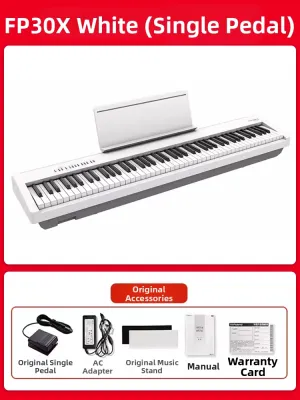
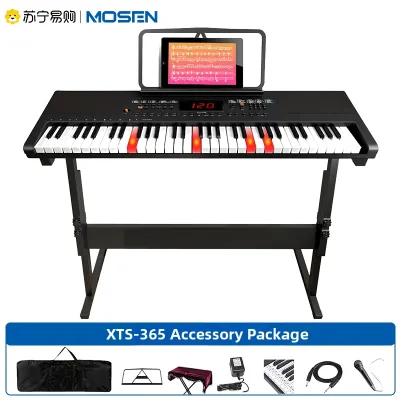
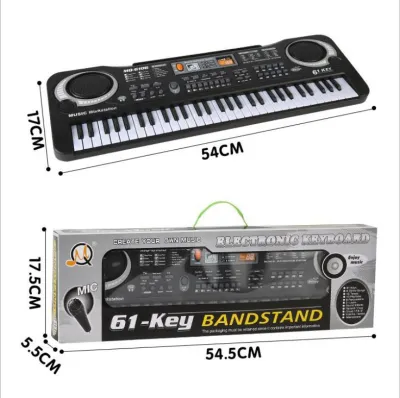
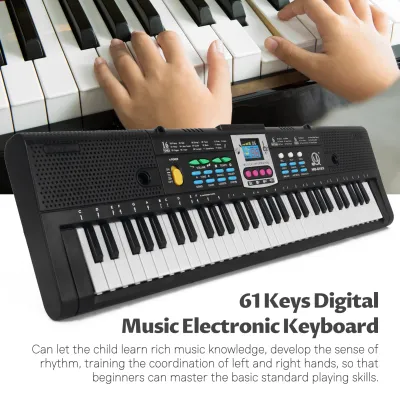
![[✅SG Ready Stock] 61 Key High Quality Music Keyboard Piano kids toys new player beginner Electric Piano](https://img.lazcdn.com/g/p/1f34b80fc1c4ffa462a06ed0ad2ca2fd.jpg_400x400q80.jpg_.webp)
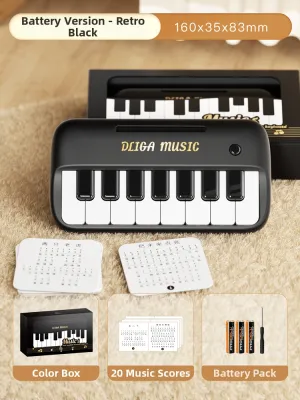
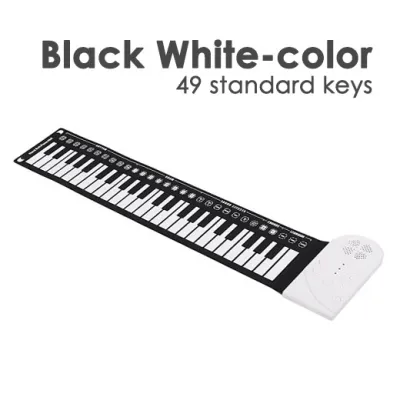
Prices are valid at publication and may change. Please refer to the product page for the latest price.
The internal sound engine and polyphony capability determine how realistic the instrument sounds during practice. Polyphony refers to the maximum number of individual notes or voices the keyboard can produce at the same time. When you play chords while holding down the sustain pedal, the number of active notes accumulates rapidly. A keyboard with low polyphony, such as 32 notes, will cut off older sustained notes abruptly, ruining the musical flow. For a beginner, a minimum of 64-note polyphony is recommended, though 128-note polyphony is ideal for a seamless, natural sound.
Touch sensitivity, also known as velocity sensitivity, is the feature that allows the keyboard to respond to the force of your keystrokes. If you strike a key softly, the instrument should produce a quiet sound; if you strike it firmly, it should produce a loud, bright tone. Without touch sensitivity, every note is played at the exact same volume, preventing you from learning how to play with musical expression and dynamics. Most reputable beginner keyboards allow you to adjust the touch sensitivity curves to match your current finger strength.
How to Evaluate Keyboard Brands for Beginners
When evaluating different keyboard brands in Singapore, the local support network should be one of your primary considerations. Singapore’s high humidity can affect electronic components, keybed lubricants, and sensor contacts over time. Purchasing from a brand with an established local distributor and an authorized service center ensures that you can easily access repairs, replacement parts, and warranty services. Always check the physical location of the service center and verify that the warranty covers parts and labor locally rather than requiring you to ship the instrument overseas.

The educational ecosystem provided by the manufacturer can significantly enhance your daily practice sessions. Many leading brands develop proprietary companion applications that connect directly to your keyboard via Bluetooth or USB. These apps allow you to adjust internal settings, control the metronome, select different instrument sounds, and access interactive lessons from a tablet or smartphone. Before choosing a brand, research their official app’s compatibility with your mobile devices and check if they offer free trial subscriptions to popular third-party learning platforms.
Build quality is a reliable indicator of how long the keyboard will last as you progress. Examine the chassis materials, looking for sturdy, matte-finished plastics that resist scratches and fingerprints. The keybed itself should feel stable, with minimal lateral wobble when you wiggle the keys side-to-side. Additionally, pay attention to the quality of the input and output jacks on the back of the instrument, as loose headphone or power ports can lead to connectivity issues down the road.
Consider the resale value and longevity of the brand you select. Many beginners eventually upgrade to an acoustic piano or a higher-end digital piano as their skills advance. Established, reputable brands tend to retain their value exceptionally well in Singapore’s active secondhand market. Choosing a recognized brand name makes it much easier to sell your entry-level instrument on local classifieds platforms when the time comes to upgrade, allowing you to recoup a significant portion of your initial investment.
Matching Keyboard Categories to Your Learning Goals
Understanding the functional differences between keyboard categories will help you align your purchase with your specific learning goals. Digital pianos are designed with a single primary objective: to replicate the feel and sound of an acoustic piano as accurately as possible. They typically feature 88 fully weighted keys, high-quality piano samples, and minimal distracting buttons. Digital pianos are available as console models with integrated wooden stands and three pedals, or as portable slab models that can be placed on a folding stand, making them the best choice for classical students.
Portable keyboards are lightweight, highly compact instruments designed for convenience and flexibility. They are an excellent option for space-constrained HDB flats where a permanent piano setup is not feasible, as they can be easily stored in a closet or under a bed when not in use. Many portable keyboards can run on batteries, allowing you to practice anywhere. However, because they prioritize portability, they often feature non-weighted or semi-weighted keys, which may not support the development of proper finger strength for classical piano exams.
Arranger keyboards are versatile instruments packed with hundreds of different instrument voices, backing rhythms, and auto-accompaniment features. They are ideal for beginners who are interested in music production, songwriting, or exploring various musical genres beyond classical piano. The interactive backing tracks can make practice sessions highly engaging, especially for younger learners who might find repetitive scale practice tedious. However, the abundance of buttons and sound effects can sometimes distract from core technical practice, so it is important to balance creative exploration with disciplined finger exercises.
What to Verify Before Buying Online or In-Store
Before finalizing your purchase, visiting a local showroom in Singapore for hands-on testing is highly recommended. When testing a keyboard in person, turn the volume completely down and play several keys across the entire keybed. Listen closely for any excessive mechanical noise, such as loud clacking, thumping, or squeaking, which can be highly distracting during quiet practice sessions. Next, turn the volume up to a high level and play a few low chords to check if the built-in speakers produce any chassis vibration or audio distortion.
Verify exactly which accessories are included in the box or bundle. Many entry-level keyboards are sold as standalone units, meaning you will need to purchase essential accessories separately. A stable stand is crucial; single-X stands are often wobbly, so look for double-X or heavy-duty Z-stands to keep the keyboard secure. Additionally, check if a sustain pedal is included. Many basic bundles include a small plastic foot switch that easily slides around on tiled floors, so upgrading to a heavy, metal, piano-style sustain pedal is highly recommended for a realistic playing experience.
If you decide to purchase your keyboard online, take specific safeguards to protect your investment. Ensure that the online retailer is an authorized dealer for the brand to guarantee that your local warranty will be honored. Double-check the power specifications of the instrument; Singapore uses a 230V, 50Hz electrical system with Type G three-pin plugs. Parallel imports from other regions may come with incompatible voltages or plug types, which can pose safety hazards or require inconvenient adapters. Finally, review the seller’s return and exchange policies in case the instrument arrives with shipping damage or manufacturing defects.
Frequently Asked Questions (FAQ)
Do I need an 88-key keyboard to start learning piano?
While an 88-key keyboard is the ideal standard, you do not strictly need one to begin your very first lessons. A 61-key keyboard is generally sufficient for the first few months of learning, as early beginner method books focus on basic melodies and simple chords within a limited range. However, as you progress to two-handed coordination, classical repertoire, or graded music exams, you will quickly run out of keys. If your budget and living space permit, investing in an 88-key instrument from the start is the most cost-effective choice, as it saves you from having to purchase a second instrument later on.
Should I buy a keyboard with built-in speakers or use external monitors?
For most beginners, a keyboard with decent built-in speakers is the most convenient and practical option. Built-in speakers allow for quick, hassle-free setup and are perfectly adequate for daily home practice. However, if you live in a shared space or a typical HDB flat, investing in a high-quality pair of closed-back headphones is often more valuable than external monitors. Headphones allow you to practice at any hour of the day or night without disturbing your family or neighbors, while also providing a highly detailed, immersive sound experience that built-in speakers might lack.
How important is MIDI connectivity for a beginner?
MIDI connectivity is an incredibly valuable feature for modern piano beginners. Typically available via a USB-to-Host port, MIDI allows your keyboard to communicate directly with computers, tablets, and smartphones. This connectivity enables you to use interactive learning software, which can listen to your playing in real-time and provide instant feedback on your note accuracy and timing. Additionally, MIDI allows you to use your keyboard as a controller for digital audio workstations, opening up opportunities for music production, recording, and accessing an endless library of virtual instrument sounds.

Community discussion
Share your experience or ask a question. Comments are reviewed before publication.