
Selecting the right math model assessment books for Singapore O-Level Mathematics preparation requires matching a student’s current academic standing with the specific structural design of the practice material. While many options line the shelves of local bookstores, the most effective books are those that align perfectly with the latest Singapore Examinations and Assessment Board (SEAB) syllabus, offer detailed step-by-step worked solutions, and target the student’s specific developmental areas. Rather than searching for a single universal recommendation, parents and students should evaluate books based on their structural category, solution depth, and formatting accuracy to build a customized revision suite.
Understanding the Types of Math Model Assessment Books
To build an effective study plan, it is essential to understand the distinct categories of mathematics assessment books available in the market. The most common division is between historical compilations of actual national examinations and newly written model papers designed by educators. Both serve unique purposes in a student’s preparation timeline, and relying on only one type can leave critical gaps in exam readiness.
The Ten-Year Series (TYS) is the cornerstone of O-Level preparation. These books compile actual past examination papers administered in Singapore over the preceding decade. Because they contain real questions marked by official examiners, they offer the most authentic representation of the exam’s language, formatting, and general difficulty level. However, because the syllabus undergoes periodic revisions, older papers in a TYS may contain topics that have since been removed, or they may lack coverage of newly introduced mathematical concepts.
Products mentioned in this guide
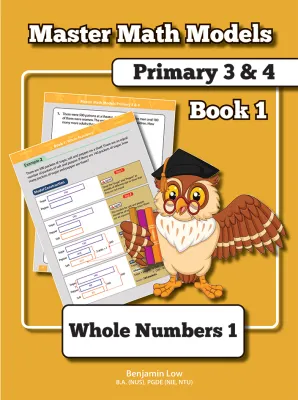
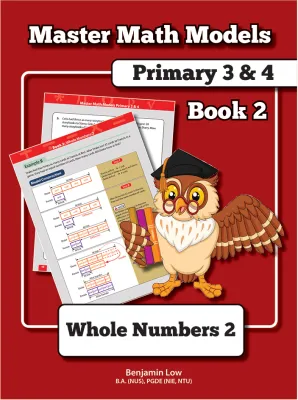
Prices are valid at publication and may change. Please refer to the product page for the latest price.
In contrast, newly written model assessment papers—often published as “specimen papers” or “model exam papers”—are designed by experienced teachers and tutors to address the current syllabus directly. These books are particularly valuable for introducing fresh, non-routine questions that students have not encountered in school. They help prevent rote memorization, forcing students to apply mathematical principles to novel scenarios, which is a growing trend in modern O-Level examinations.
Another critical distinction lies between topical question banks and full-length mock examination papers. Topical books organize questions by chapter, such as Quadratic Equations, Trigonometry, or Vectors. These are ideal for progressive learning throughout the school year, allowing students to reinforce what they have just learned in class. Full-length mock papers, on the other hand, compile diverse topics into Paper 1 and Paper 2 formats. These are essential for cumulative revision, helping students practice transitioning quickly between different mathematical concepts under exam conditions.
Finally, publisher-specific variations play a significant role in question style and difficulty. Some publishers specialize in high-difficulty challenge papers that push students well beyond standard O-Level expectations, which can be useful for high achievers but discouraging for struggling students. Other publishers focus on highly structured, scaffolded worksheets that build confidence through incremental difficulty steps. Understanding these differences ensures that the purchased books match the student’s current learning phase.
Core Criteria for Evaluating Math Model Books
Before purchasing any mathematics assessment book, it is vital to evaluate its educational quality using a structured checklist. The most critical element to inspect is the depth, clarity, and step-by-step logic of the provided worked solutions. A book that only provides final numerical answers is of limited use to a student who is stuck on a complex problem. High-quality books feature comprehensive solutions that show every algebraic step, geometric proof, and logical deduction clearly.

Excellent worked solutions should also explain the reasoning behind key steps, such as why a specific formula was selected or how a word problem was translated into an algebraic equation. This is particularly important for real-world context questions, which require students to interpret data, make assumptions, and justify their mathematical decisions. Clear solutions help students self-correct and learn independently, reducing reliance on external tutoring.
Strict alignment with the current Singapore O-Level Mathematics syllabus is another non-negotiable criterion. The SEAB syllabus is updated periodically to ensure the curriculum remains relevant. A book that has not been updated may include obsolete topics, such as certain graphical methods or matrices if they are no longer examinable, which wastes valuable study time. Conversely, it might omit critical new components, such as specific data analysis techniques or financial mathematics applications. Parents should verify the syllabus code printed on the cover or preface of the book before buying.
Furthermore, look for books that offer valuable supplementary features. These include “common student misconceptions” sidebars, which highlight frequent errors like forgetting to reject negative values in context-based quadratic equations or failing to write down units. “Examiner’s tips” can provide insights into how marks are allocated, helping students understand the difference between method marks and accuracy marks. Some books also provide alternative solving methods, which can expand a student’s problem-solving toolkit and help them find more efficient paths to the correct answer.
Matching the Book to the Student's Learning Needs
Every student has unique academic strengths, weaknesses, and learning styles, meaning that a book highly recommended for one student may be entirely unsuitable for another. To maximize the return on study time, the selection of math model books must be tailored to the student’s specific academic goals and current level of proficiency.
For students who are struggling with core concepts or failing to pass their school assessments, the primary focus must be on foundation building. For these students, full-length mock papers can be overwhelming and counterproductive. Instead, prioritize topical drills that offer highly detailed, guided solutions. These books should feature scaffolded questions that start with basic computational exercises and gradually progress to simple multi-step problems. The goal is to build confidence, master basic algebraic manipulation, and ensure a solid grasp of fundamental mathematical laws before attempting exam-level questions.
For students who have a decent grasp of the concepts but struggle to perform under pressure, the focus must shift to exam readiness. These students often run out of time during school exams or make careless mistakes due to rushing. The most effective materials for them are full-length, timed mock papers that accurately mimic the structure of Paper 1 and Paper 2. Practicing with these papers under strict exam conditions helps students develop pacing strategies, such as allocating a specific number of minutes per mark and learning when to temporarily skip a difficult question to secure easier marks elsewhere.
For high-achieving students who are consistently scoring well but want to secure a top distinction grade, such as an A1 or A2, standard topical drills are of little value. These students require books that specialize in higher-order problem-solving and non-routine questions. These materials should challenge students to integrate multiple topics—such as combining coordinate geometry with mensuration—or require deep logical reasoning to interpret complex real-world mathematical modeling scenarios. Exposure to these challenging questions prevents complacency and prepares students for the most difficult questions they might encounter in the actual O-Level exam.
Essential Checks Before Purchasing
Even if a book seems to have excellent content, several practical and physical checks must be performed before making a purchase. These checks ensure that the material is user-friendly, compatible with the student’s study habits, and representative of the actual examination environment.
First, always verify the publication year and edition of the book. This information is typically found on the copyright page or in the publisher’s note at the beginning of the book. Ensure that the book explicitly states it is written for the current syllabus code. This is crucial because even minor syllabus amendments can result in the removal of certain topics or changes in the way specific concepts are assessed. Purchasing an outdated edition can lead to confusion and wasted effort.
Second, examine the physical format and spacing of the questions. The actual O-Level Mathematics examination requires students to write their working steps and final answers directly on the question paper, within designated spaces. Therefore, effective model books should provide realistic writing spaces, clear grid lines for graphing questions, and accurate margins. Books that cram multiple questions onto a single page with no working space force students to use separate writing pads, which fails to simulate the spatial organization and handwriting control required during the actual exam.
Third, confirm the availability and format of the answer keys. Ideally, the worked solutions should be detachable from the main book. This allows parents or tutors to keep the solutions separate during practice sessions, preventing the temptation to peek at the answers when encountering a difficult step. If the book uses digital solution supplements, such as QR codes leading to online PDFs, verify that the hosting platform is stable, easy to navigate, and does not require an additional paid subscription or account creation.
Frequently Asked Questions (FAQ)
How many years of past papers should a student practice?
Practicing between 5 to 10 years of past papers is generally considered the optimal range for O-Level Mathematics preparation. This volume provides sufficient exposure to recurring question patterns, common phrasing, and the overall structure of the exam without causing study burnout. However, the quality of the practice is far more important than the quantity. It is highly recommended to thoroughly analyze 5 years of recent papers—understanding every mistake and rewriting the correct steps—rather than rushing through 10 years of papers superficially. Adjust the historical timeframe based on the student’s current proficiency and the amount of revision time remaining before the examinations.
Are digital versions of math model books as effective as physical copies?
For mathematics preparation, physical books are almost always superior to digital versions. Writing out mathematical steps by hand is critical for developing muscle memory, spatial organization, and the handwriting speed required for a written exam. Drawing geometric diagrams, plotting curves on physical graph paper, and using mathematical instruments like compasses and protractors cannot be replicated effectively on a digital screen. Digital versions are best used as portable reference guides, quick answer-checking tools, or for reading through worked solutions while commuting, rather than as the primary medium for active practice.
Should students use Additional Mathematics model books for standard Mathematics practice?
No, students should avoid using Additional Mathematics (A-Math) model books for standard Mathematics (E-Math) practice. While there are some overlapping topics, such as quadratic equations, simultaneous equations, and basic trigonometry, A-Math books utilize techniques, notations, and proofs that are far more advanced than those required for the standard syllabus. Attempting to solve standard math problems using complex A-Math methods can lead to confusion, inefficient working steps, or even a loss of marks if the required standard syllabus methods are bypassed. Keep the revision materials strictly separated to maintain clear conceptual boundaries and ensure efficient preparation.

Community discussion
Share your experience or ask a question. Comments are reviewed before publication.