
Setting up your first keyboard is an exciting milestone, but the excitement can quickly fade if your instrument wobbles every time you press a key or if your back begins to ache after just ten minutes of practice. For beginners, the ideal piano stand and bench combination is one that prioritizes structural stability, ergonomic height adjustment, and straightforward comfort. You do not need to invest in premium, tour-grade stage equipment or expensive hydraulic furniture to get started. Instead, focus on finding a reliable, adjustable foundation that matches the physical dimensions of your keyboard and allows you to sit with a healthy, relaxed posture.
A proper setup does more than just hold your instrument; it directly influences how quickly you develop correct playing habits. When your keyboard is positioned at the correct height and supported by a stable stand, your hands, wrists, and shoulders can move naturally without unnecessary tension. Similarly, a dedicated bench ensures your hips are positioned correctly, preventing the slouching that often occurs when using standard household chairs. By focusing on essential specifications like weight capacity, locking mechanisms, and height ranges, you can assemble a safe and comfortable practice space that fits your budget and supports your musical journey for years to come.
Evaluating Piano Stand Types and Stability for Beginners
The primary job of a piano stand is to keep your keyboard completely still while you play. Keyboards, especially weighted 88-key digital pianos, can be surprisingly heavy, and the physical action of playing creates lateral forces that can cause a flimsy stand to sway. When evaluating your options, you will primarily choose between three common designs: X-style, Z-style, and table-style stands. Each design offers distinct trade-offs regarding stability, legroom, and portability that you must weigh against your home environment.
Products mentioned in this guide
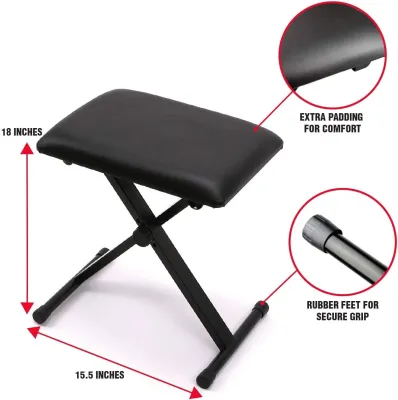
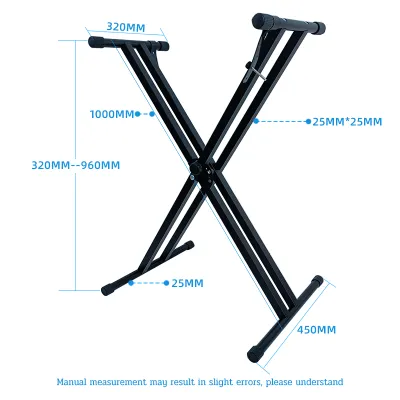
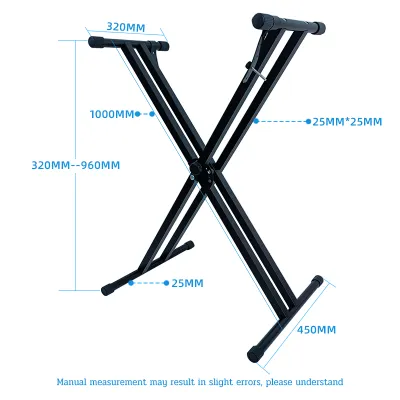
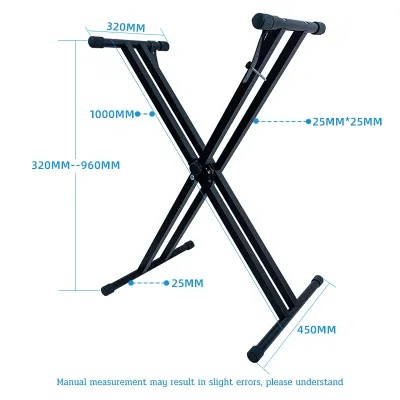

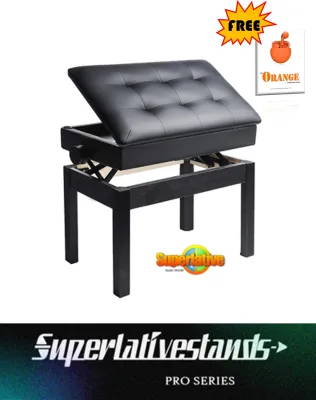
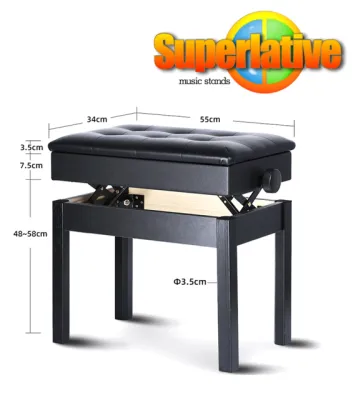
Prices are valid at publication and may change. Please refer to the product page for the latest price.
X-style stands are the most common and affordable options. They feature a simple scissor-like design that folds completely flat, making them excellent for small spaces or players who need to pack their gear away after practice. However, single-braced X-stands can feel unstable under heavier 88-key instruments. Double-braced X-stands, which use a reinforced double-bar design, offer significantly better stability and are highly recommended if you choose this style. The main drawback of any X-stand is the lack of legroom; the crossing bars occupy the space directly beneath the keyboard, which can force taller players to sit at an awkward angle.
Z-style stands offer a much more robust and spacious alternative. Shaped like the letter Z, these stands provide a wide, open frame that leaves the space directly under the keyboard completely clear for your legs and feet. This open design is particularly beneficial if you plan to use a sustain pedal, as it allows you to position the pedal naturally without fighting against a metal crossbar. Z-stands are exceptionally stable and can easily support heavy, fully weighted digital pianos without swaying. The trade-off is that they are bulkier and take up a slightly larger permanent footprint on your floor.
Table-style stands, sometimes called platform stands, feature four independent legs similar to a standard table. These stands offer the absolute maximum amount of legroom and are incredibly stable, making them a favorite for players who sit for long practice sessions. Many table stands allow you to adjust the height and width of each leg independently, which is incredibly useful for leveling the stand on uneven floors. While they do fold relatively flat, they tend to be heavier and more expensive than basic X-stands, making them best suited for permanent home setups.
Regardless of the style you choose, you must verify the stand’s weight capacity and width adjustability before making a purchase. Check the manufacturer’s specifications for both your keyboard and the stand to ensure a safe margin of safety. Additionally, look for stands equipped with thick, non-slip rubber end caps on the top support bars and bottom feet. These caps prevent the keyboard from sliding around during play and protect your floors from scratches. Secure locking mechanisms, such as pull-pin knobs or heavy-duty bolt systems, are also essential to prevent the stand from accidentally collapsing.
Choosing a Keyboard Bench for Proper Posture and Comfort
While it is tempting to save money by pulling a dining chair or a folding stool up to your new keyboard, investing in a dedicated keyboard bench is crucial for your physical well-being. Playing the piano is a physical activity that requires precise coordination, and your posture forms the foundation of your technique. A proper bench allows you to sit at the correct height so that your forearms are parallel to the floor when your hands are on the keys. This alignment is essential for preventing wrist strain and shoulder tension.

Adjustable height is the most critical feature to look for in a beginner’s bench. Fixed-height benches, such as traditional wooden piano benches, are designed for standard acoustic pianos, which have a fixed keyboard height. However, digital keyboards sit on stands of varying heights, and players themselves come in all shapes and sizes. An adjustable bench, typically featuring a bolt-on or scissor-style adjustment mechanism, allows you to fine-tune your seating position. This flexibility is especially important if multiple family members of different heights will share the same keyboard.
When evaluating the seat itself, you must consider the balance between padding thickness and support. A bench that is too hard will cause discomfort during longer practice sessions, discouraging you from playing. Conversely, a bench with excessively soft, cheap foam will compress completely under your weight, offering no real support and causing you to sink into an unstable posture. Look for high-density foam padding that feels firm yet comfortable. The upholstery should be durable and easy to clean, with synthetic leather or heavy-duty vinyl being popular choices that withstand daily wear.
You will also need to choose between single-width and double-width benches. Single benches are compact, lightweight, and easy to tuck away under the keyboard when not in use, making them ideal for tight spaces. Double benches, often referred to as duet benches, offer a wider seating surface that can accommodate two players side-by-side. While solo beginners might assume a single bench is sufficient, a double bench provides practical value even for individual practice. The extra width allows you to slide left or right to reach the extreme ends of the keyboard comfortably, and it provides a convenient spot to place your sheet music or headphones.
Matching the Stand and Bench to Your Keyboard Size
Before purchasing any accessories, you must carefully measure your keyboard to ensure physical compatibility. Keyboards come in three primary sizes based on the number of keys: 61-key, 76-key, and 88-key models. A stand that is perfectly proportioned for a compact 61-key instrument may be far too narrow and unstable for a full-sized 88-key digital piano. Conversely, a heavy-duty stand designed for an 88-key model might not adjust down far enough to securely hold a smaller keyboard without the support arms sticking out awkwardly from the sides.
For a standard 88-key digital piano, which typically measures around 130 to 140 centimeters in width, you need a stand with a wide top tier that supports the instrument near its outer edges. If the support arms of the stand are positioned too close to the center, the keyboard will overhang significantly on both sides, creating a tipping hazard if you press keys at the extreme high or low registers. For smaller 61-key or 76-key keyboards, verify that the stand can be adjusted to a narrow enough width to hold the instrument securely without it slipping between the support bars.
Weight verification is another critical step that beginners often overlook. Fully weighted 88-key digital pianos can weigh anywhere from 11 to 25 kilograms, and some premium models with wooden keys can weigh even more. Always check the exact weight of your keyboard in its user manual and compare it against the maximum load limit of the stand. It is wise to choose a stand with a weight capacity that exceeds your keyboard’s weight by at least 30 percent to account for the downward pressure your hands apply while playing.
Finally, take the time to measure your available floor space before bringing your new setup home. A stable stand requires a solid footprint, and you need to ensure you have enough clearance to walk around the setup without tripping. Consider the depth of both the stand and the bench when they are set up at your playing height. An X-stand, for example, becomes wider at the base as you lower its height, which can catch you off guard if you are working with limited room. Ensure there is enough space behind the bench for you to sit down and stand up comfortably.
Budgeting Your Setup: What to Buy and What to Skip
When budgeting for your first keyboard setup, it is easy to get overwhelmed by the sheer variety of accessories available. Many retailers offer matched stand-and-bench bundles, which can seem like an attractive and convenient option. These bundles often provide a modest cost saving compared to buying the items individually. However, you should inspect the specifications of bundled items carefully. In many budget bundles, the manufacturer may pair a decent stand with an incredibly flimsy, non-adjustable stool to keep the price low. Sourcing the items separately often allows you to prioritize quality where it matters most.
As a beginner, there are several premium features that you can safely skip to keep your costs reasonable. Hydraulic or pneumatic height-adjustable benches, while incredibly convenient, are expensive luxury items that are unnecessary for a home practice space. Manual adjustment mechanisms, such as pins or bolts, work perfectly fine and are highly durable. You can also skip multi-tier stand attachments, which are designed to hold a second or third keyboard above the main one. Unless you plan to play multiple instruments simultaneously, these attachments add unnecessary weight, bulk, and cost to your setup.
Similarly, built-in audio mounts, microphone booms, and sheet music holders that attach directly to the stand are often overpriced and can compromise the stability of your setup. A simple, independent music stand or a clip-on light is usually much cheaper and more versatile. Focus your budget on the core structural components: a sturdy, wobble-free stand and a comfortable, adjustable bench. These two items directly impact your physical safety and playing comfort, making them the most important investments in your setup.
Your decision to invest in a heavier, more stable stand versus a lightweight, foldable option should be guided by your portability needs. If you plan to keep your keyboard in a dedicated spot in your living room or bedroom, prioritize a heavier Z-style or table-style stand that offers maximum stability and legroom. On the other hand, if you need to pack your setup away after every practice session or transport it to lessons, a high-quality, double-braced X-stand is the most practical choice. By aligning your purchases with your actual space and lifestyle, you can build a highly functional setup without overspending.
Frequently Asked Questions (FAQ)
Can I use a regular chair or desk instead of a dedicated piano bench and stand?
Using standard household furniture like a dining chair or a computer desk is generally not recommended. Standard chairs are typically too low, and standard desks are often too high, forcing your wrists to bend at an unnatural angle to reach the keys. This poor alignment can quickly lead to fatigue, muscle tension, and even repetitive strain injuries over time. Additionally, placing a heavy keyboard on a standard desk can be unsafe, as these desks are not designed to handle the specific dynamic weight and vibrations generated while playing. A dedicated stand and bench ensure your instrument is secure and your body is positioned for healthy, comfortable practice.
Do I need a double-width bench if I am the only person playing?
While a single-width bench is perfectly adequate for solo practice and takes up less space, a double-width bench offers several practical advantages. The extra width allows you to slide easily along the bench when playing pieces that span the entire keyboard, preventing you from having to lean awkwardly. It also provides a convenient surface right next to you to keep your sheet music, notebooks, headphones, or metronome within easy reach. If you have the budget and floor space, a double bench is a worthwhile upgrade that enhances your overall practice experience, though a single adjustable bench remains a highly functional and space-saving choice.
How do I prevent an X-style stand from wobbling on uneven floors?
If your X-style stand wobbles on an uneven floor, first check the rubber end caps on the bottom feet. Many modern stands feature adjustable, eccentric end caps that can be rotated to compensate for minor floor unevenness. By turning these caps, you can effectively change the thickness of the rubber pad resting on the floor, stabilizing the stand. You can also check the tension of the central cross-brace bolt to ensure it is tightened securely. If the floor is extremely uneven and these adjustments do not resolve the wobble, it is safest to switch to a Z-style or table-style stand with independently adjustable legs, as an unstable stand poses a constant risk of tipping your keyboard.

Community discussion
Share your experience or ask a question. Comments are reviewed before publication.