
Starting to learn the piano in Singapore is an exciting journey, but choosing your first instrument can feel overwhelming. For beginners, a portable piano offers the ideal balance of space-saving convenience, affordability, and authentic playing feel. While several major manufacturers dominate the market, there is no single brand that suits every learner. Instead, the right choice depends on how closely a brand’s design philosophy, key action, and sound technology align with your personal learning goals, budget, and living space.
Core Features to Evaluate in a Beginner Portable Piano
Before comparing specific brands, you must understand the technical specifications that directly impact your learning progress. A portable piano is not merely a keyboard with more keys; it is designed to replicate the physical and acoustic properties of an acoustic grand piano. If you choose an instrument lacking these core features, you risk developing poor finger habits that can be difficult to correct later.
The most critical element to evaluate is the key action. Acoustic pianos use a complex system of hammers and levers to strike strings, creating a distinct physical resistance. To mimic this, high-quality portable pianos feature weighted hammer action keys. This design uses actual weights inside the key mechanism to simulate the resistance of an acoustic piano, with keys in the lower register feeling heavier than those in the higher register.
Products mentioned in this guide
![Casio CT-S1 Digital Keyboard [FREE X-STAND] Portable 61 Keys Musical Instrument for Beginners](https://img.lazcdn.com/g/p/34b2071d37fa9459c1aa31b1568e43b6.jpg_400x400q80.jpg_.webp)
![Yamaha PSR-E283 Portable Digital Keyboard ⚫ Black 61 Keys PSRE283 AC Power Adapter PSR E283 Kids Musical Electronic Electric Instrument Absolute Piano The Music Works Store [LIMITED STOCK]](https://img.lazcdn.com/g/p/16a0f813c10e32e5e036a774ae933031.jpg_400x400q80.jpg_.webp)
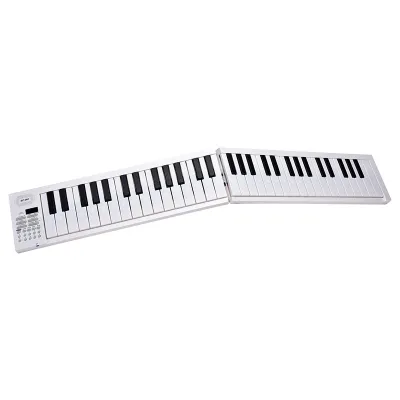
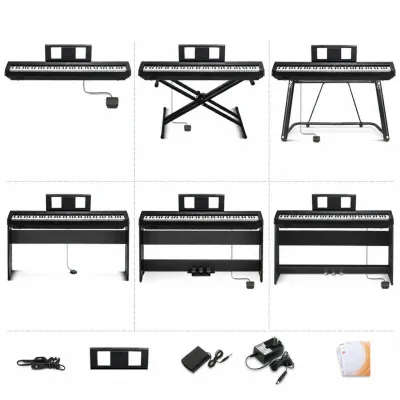
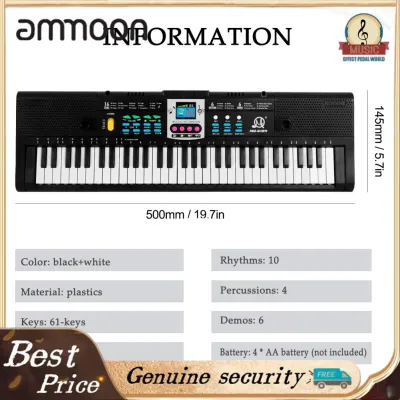
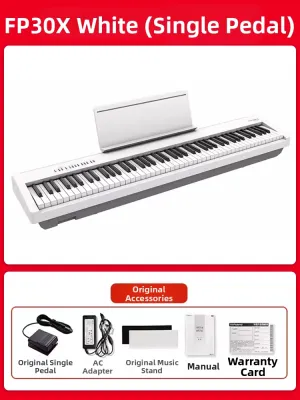
Prices are valid at publication and may change. Please refer to the product page for the latest price.
In contrast, semi-weighted or synth-action keys rely on simple springs. While spring-loaded keys are easier to press, they do not build the finger strength or control required to play an acoustic piano. If your goal is to transition to an acoustic instrument eventually, a fully weighted hammer action is non-negotiable.
Another technical specification to check is polyphony. Polyphony refers to the maximum number of individual notes or voices the digital piano can produce simultaneously. When you play a chord with the sustain pedal pressed, each note continues to ring out, consuming polyphony. If you exceed the instrument’s polyphony limit, the oldest active notes are abruptly cut off to make room for new ones.
For beginners, a minimum polyphony of 64 notes is acceptable, but 128 notes or higher is recommended to accommodate complex classical pieces, layered sounds, and expressive pedaling as you progress.
Modern connectivity features also play a vital role in contemporary piano education. A dedicated headphone jack is essential for practicing in Singapore’s high-density residential environments, allowing you to play at any hour without disturbing family members or neighbors. Look for models that offer dual headphone jacks if you plan to take lessons with a teacher at home.
Additionally, a USB-to-Host port or MIDI connectivity allows you to connect the piano to a tablet, computer, or smartphone. This connection enables the use of interactive learning applications, sheet music readers, and music production software, transforming your practice sessions into highly engaging experiences.
Mainstream Portable Piano Brands and Their Design Focus
The global digital piano market is led by a few established manufacturers, each bringing a unique heritage and engineering focus to their entry-level instruments. Understanding these overarching brand philosophies helps you narrow down your options before diving into specific model spec sheets. While one brand may prioritize acoustic authenticity, another might focus on cutting-edge digital sound modeling or ultra-compact physical designs.

Yamaha
Yamaha is a household name in the music industry, largely due to its long history of manufacturing acoustic grand pianos. This heritage heavily influences their digital portable piano lineup. Yamaha’s design focus centers on traditional acoustic tone replication, often utilizing high-fidelity samples recorded directly from their flagship concert grand pianos. This provides beginners with a familiar, bright, and resonant acoustic tone that is highly regarded in classical music circles.
In addition to sound quality, Yamaha places a strong emphasis on educational integration. Many of their entry-level portable pianos are compatible with proprietary learning applications, such as the Smart Pianist app, which can analyze songs in your music library and generate chord charts. When evaluating Yamaha models, it is important to check the specific key action used. While their entry-level models often feature Graded Hammer Standard (GHS) or newer graded actions, you should verify the exact specifications of the model you are considering to ensure the key resistance meets your expectations.
Roland
Roland approaches digital piano design from a background of electronic music innovation. Unlike brands that rely solely on playing back recorded audio samples, Roland is known for its advanced digital sound modeling technology. Their SuperNATURAL sound engine recreates the complex physical interactions of an acoustic piano in real-time, resulting in a highly expressive and dynamic sound that responds naturally to the player’s touch.
Another hallmark of Roland’s portable pianos is the physical durability and feel of their key mechanisms. Many of their beginner-friendly models utilize the PHA-4 Standard keyboard action, which features simulated ivory keys and an escapement mechanism that mimics the subtle “let-off” feel of an acoustic grand piano. This action is highly praised for its realistic resistance and tactile feedback. However, because Roland packs significant technology into their instruments, the user interfaces can sometimes feature multiple button combinations; you should verify that the control scheme and app integration suit your preferred style of interaction.
Casio
Casio has established a strong reputation for delivering high value, portability, and user-friendly interfaces, particularly for budget-conscious beginners. Their design philosophy focuses on maximizing space efficiency without sacrificing the essential features required for proper piano practice. This is highly evident in their slimline portable series, which are among the most compact weighted-key digital pianos available on the market.
Casio’s entry-level instruments often feature intuitive control panels that allow beginners to navigate sounds, metronome settings, and recording functions with ease. While they excel at creating lightweight, space-saving designs, it is crucial to verify the key weighting and polyphony limits on their most affordable models. Some ultra-budget options may use lighter key actions or lower polyphony counts, so always cross-reference the specifications to ensure the model you select supports long-term technical development.
Korg
Korg is highly respected in the professional music industry for its synthesizers, stage pianos, and music workstations. When they design portable pianos for home and beginner use, they often bring a stage-oriented versatility to the instrument. Korg instruments typically feature diverse sound libraries, offering high-quality electric pianos, organs, and string ensembles alongside traditional acoustic piano tones.
This versatility makes Korg an attractive option for beginners who want to explore genres beyond classical music, such as jazz, pop, or electronic music production. Their portable models often feature robust built-in speaker systems designed to project clearly in various room sizes. However, because of their stage heritage, some Korg models may prioritize sound variety and lightweight portability over a heavy, classical-style key action. If you are pursuing a strict classical curriculum, you should carefully verify whether the key action and pedal response of a specific Korg model meet the demands of traditional piano training.
Matching the Brand to Your Learning Goals
Selecting the right portable piano brand requires a clear understanding of your practice environment, physical space, and musical aspirations. In Singapore, where residential space is often at a premium, the physical footprint of your instrument is a major consideration. If you live in a cozy HDB flat or condominium, an ultra-slim model from Casio or a compact design from Roland may be easier to integrate into your living room or bedroom.
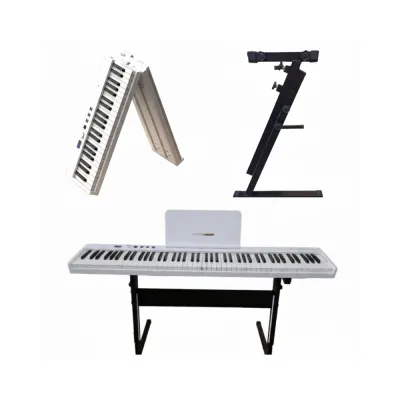
Consider whether you will need to store the piano away when not in use or if it will remain permanently on a dedicated stand. A truly portable setup allows you to move the instrument easily, but you must ensure the stand you use is sturdy enough to prevent wobbling during energetic practice sessions.
Your musical goals should also dictate your choice. If you are focused on classical piano training, your priority should be the authenticity of the key action and the realism of the acoustic piano sound. In this scenario, brands like Yamaha and Roland, which invest heavily in graded hammer actions and sophisticated acoustic modeling, are excellent starting points.
On the other hand, if you are interested in modern music production, songwriting, or playing in a band, you may benefit more from Korg’s diverse sound libraries and MIDI controller capabilities, or Casio’s highly portable and accessible interfaces.
Finally, consider how you allocate your budget. When purchasing a beginner portable piano in Singapore, prices typically range from around S$600 to S$1,200 for reliable entry-level models. It is often wiser to invest in a model with a more authentic key action and sound quality rather than one with hundreds of novelty sound effects or flashing lights. A high-quality key action will support your physical development for several years, whereas basic digital features can quickly become obsolete. If your budget is limited, look for models that focus on the essentials: 88 fully weighted keys, a reliable sustain pedal input, and a clear, responsive acoustic piano tone.
Pre-Purchase Verification for Shoppers in Singapore
Once you have narrowed down your brand preferences, taking the correct steps before finalizing your purchase in Singapore will save you time, money, and frustration. The local market offers various purchasing channels, from authorized distributors to parallel importers and online marketplaces. To protect your investment, always verify that you are purchasing from an authorized local dealer or official brand store.
Buying through official channels ensures that your portable piano comes with a valid manufacturer’s warranty, which typically covers parts and labor for at least one year. Parallel imports may seem cheaper initially, but they often lack local warranty support, meaning you would have to pay out of pocket for any repairs.
Another critical factor to check is power compatibility. Singapore uses Type G power plugs and operates on a 230V supply voltage at 50Hz. If you purchase a portable piano imported from another region, the bundled power adapter may not match local electrical standards. Using an incompatible adapter or an incorrect voltage converter can damage the sensitive electronic components of your digital piano. Always verify with the seller that the instrument comes with a safety-certified power adapter suitable for Singapore’s electrical grid.
Lastly, evaluate the availability of local after-sales support and physical showrooms. Before buying online, it is highly recommended to visit a local showroom to test the key action and sound quality in person. Every player’s hands are different, and a key action that feels comfortable to one person may feel too heavy or too light to another. Additionally, inquire about the retailer’s return policy and the location of their service center. Knowing that you can easily access professional technical support or exchange a defective unit locally provides invaluable peace of mind as you begin your musical journey.
Frequently Asked Questions (FAQ)
Do I need a sustain pedal for a beginner portable piano?
Yes, a sustain pedal is an essential tool for any piano student, even in the very early stages of learning. The sustain pedal allows notes to continue ringing after you release the keys, which is fundamental for creating smooth transitions, rich harmonies, and expressive phrasing. When purchasing a portable piano, check if a basic pedal switch is included in the box. While a simple on/off switch is sufficient for absolute beginners, you will eventually want to upgrade to a pedal that supports half-damper capabilities. Half-damper detection allows the piano to respond to how far down the pedal is pressed, mimicking the gradual dampening effect of an acoustic piano’s felt pads and allowing for much greater expressive control.
Can I use a portable keyboard instead of a portable piano for learning?
While a portable keyboard may look similar to a portable piano, they serve very different purposes and are not interchangeable for serious piano study. Standard portable keyboards typically feature unweighted, spring-loaded keys (often called synth-action) and may have fewer than the standard 88 keys. Practicing on unweighted keys prevents you from developing the finger strength, hand posture, and dynamic control needed to play a real piano. Furthermore, keyboards often focus on a wide variety of synthesized sounds and automatic accompaniment styles rather than high-fidelity acoustic piano tones. For proper piano instruction and long-term progress, you should always choose a dedicated portable digital piano with 88 fully weighted keys.

Community discussion
Share your experience or ask a question. Comments are reviewed before publication.