
Investing in a beginner Yamaha digital piano is an exciting step for any aspiring musician in Singapore. Whether you have selected a portable model from the P-series or a versatile keyboard from the PSR-series, safeguarding this investment is crucial for maintaining its sound quality, key action, and overall longevity. A high-quality protective cover serves as the first line of defense against environmental hazards that can silently degrade your instrument over time. By choosing a cover tailored to your specific model and living conditions, you ensure that your digital piano remains in excellent playing condition for years to come.
Why a Dedicated Cover is Essential for Your Digital Piano
Digital pianos are sophisticated electronic instruments that house delicate sensors, circuit boards, and mechanical key actions beneath their sleek exteriors. Unlike traditional acoustic pianos, which are primarily made of wood and metal, digital keyboards rely heavily on precise electrical contacts to register your keystrokes. When dust, pet dander, or household debris settles on the keyboard, these fine particles can slip between the keys and accumulate on the contact pads. Over time, this buildup can cause keys to become unresponsive, sticky, or produce inconsistent volume levels, requiring professional cleaning or repairs.
In Singapore’s tropical climate, environmental factors are amplified by consistently high humidity levels. Relative humidity often exceeds 80 percent, creating an environment where airborne moisture can easily settle on exposed electronic components. When dust combines with high humidity, it forms a conductive, grimy paste that accelerates the corrosion of internal copper contacts and circuit boards. A dedicated cover acts as a barrier, significantly reducing the volume of moist air and dust that circulates around the keybed when the instrument is not in use.
Products mentioned in this guide
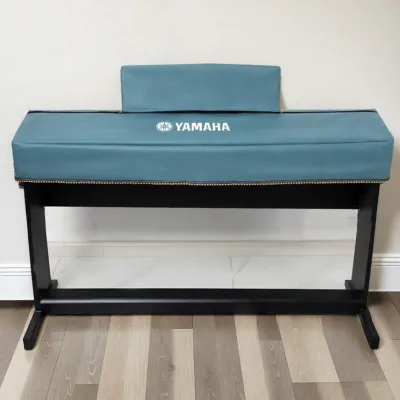
![Clairevoire Digital Piano Cover for Yamaha P525 | P515 [52.6 x 14.8 inches | 133.6 x 37.6 cm] Waterproof](https://img.lazcdn.com/g/p/fbf8cf005b55db7ed2299c70407fd75f.jpg_400x400q80.jpg_.webp)
![TMW 88 Keys Dust Cover SUITABLE for Yamaha Roland Korg Casio Portable Digital Piano Durable Quality AP-DC231 88K Accessories Absolute Piano The Music Works Store Electronic Instrument MA2 [LIMITED STOCK]](https://img.lazcdn.com/g/p/6359ca79e87bf2818424980528e7516c.jpg_400x400q80.jpg_.webp)
Prices are valid at publication and may change. Please refer to the product page for the latest price.
Beyond internal protection, a cover shields the exterior of your Yamaha digital piano from daily physical hazards. Accidental liquid spills from nearby drinks can instantly short-circuit a digital keyboard, leading to costly or irreversible damage. Furthermore, physical scratches from household items, toys, or pets can mar the finish of your instrument. If your piano is positioned near a window, prolonged exposure to ultraviolet (UV) light can cause the plastic casing to discolor, become brittle, or warp. A robust cover mitigates these risks, preserving both the aesthetic appeal and the structural integrity of your keyboard.
Official Yamaha Accessories vs. Third-Party Universal Covers
When shopping for a protective cover, you will generally choose between official Yamaha accessories and third-party universal covers. Official accessories are designed specifically for individual models or series, ensuring a precise fit that matches the exact contours of your digital piano. These custom-fit covers often feature dedicated cutouts for the music rest, power cables, and sustain pedal connections, allowing you to protect the instrument without unplugging your setup. This tailored approach provides a clean, professional aesthetic that complements your living space.

On the other hand, third-party universal covers offer a highly flexible and cost-effective alternative. These covers are typically designed to fit standard 61-key, 76-key, or 88-key layouts and often utilize adjustable drawstrings, elastic hems, or buckle straps to secure the fabric around the keyboard base. While they may not offer the seamless, glove-like fit of an official accessory, universal covers are widely available and can easily adapt to different keyboard shapes if you decide to upgrade your instrument in the future.
Cost is another significant factor to consider when making your decision. Official Yamaha covers generally command a premium, often ranging from S$40 to S$80, depending on the material and the specific model compatibility. In contrast, high-quality third-party universal covers are typically more budget-friendly, with prices generally falling between S$15 and S$35. For beginners who want to allocate more of their budget toward lessons or sheet music, a reliable third-party cover provides excellent protection without a significant financial outlay.
It is also important to understand how your choice of cover relates to your instrument’s warranty. While using a third-party cover does not void your official Yamaha warranty, physical damage resulting from an improperly fitting cover can complicate warranty claims. For instance, if a tight, non-breathable universal cover traps excessive moisture that leads to internal water damage, or if a rough fabric scratches a polished finish, such issues may not be covered under standard warranty terms. Verifying that your chosen cover fits securely without putting undue stress on the keys or trapping heat is essential for maintaining your warranty protections.
Choosing the Right Material for Your Environment
The material of your piano cover plays a pivotal role in how effectively it protects your instrument from Singapore’s unique environmental challenges. Oxford cloth and heavy-duty nylon are among the most popular choices for digital piano covers due to their exceptional durability and water resistance. These synthetic fabrics are tightly woven, making them highly effective at blocking dust and preventing accidental liquid spills from penetrating the keyboard. Additionally, Oxford cloth is incredibly easy to maintain, as most dust and light stains can be wiped away quickly with a damp cloth.
While water resistance is vital, protecting the delicate exterior finish of your digital piano is equally important. Many premium covers feature a dual-layer design, combining a rugged outer shell with a soft inner lining made of velvet, flannel, or brushed microfiber. This soft lining acts as a cushion against physical impacts and prevents the cover itself from scratching the glossy or matte plastic surfaces of your Yamaha keyboard during placement and removal. If your digital piano has a polished finish, prioritizing a cover with a scratch-resistant inner lining is highly recommended.
In a humid environment like Singapore, finding the right balance between waterproofing and breathability is critical. If a cover is completely airtight and made of non-breathable plastic, it can trap ambient moisture underneath the fabric, creating a microclimate that promotes mold growth and accelerates electronic corrosion. To prevent this, look for covers made from breathable synthetic blends or those featuring ventilation panels. These designs allow trapped moisture to evaporate naturally while still preventing dust and direct water droplets from reaching the sensitive electronic components of your keyboard.
How to Measure and Match Your Piano's Exact Dimensions
To ensure your cover provides reliable protection, you must accurately measure your digital piano rather than relying solely on generic key counts. Begin by measuring the overall width of the keyboard from the leftmost edge to the rightmost edge. Next, measure the depth from the front of the keys to the back of the chassis. Finally, measure the height from the bottom of the keyboard base to the top of the highest point. If you plan to leave your music rest attached while the piano is covered, be sure to measure the height with the music rest folded down or fully extended, depending on how the cover is designed to drape.
You must also consider your keyboard stand setup when taking measurements. If your digital piano sits on a portable X-stand or double-X stand, a standard keyboard-only cover that wraps tightly around the base of the instrument is usually the most practical choice. However, if your piano is mounted on a wooden cabinet stand (such as the Yamaha L-125 or L-225), you may want a larger drape-style cover that covers the entire structure or a custom-fit top cover that sits neatly on the upper console. Deciding whether you want the cover to drape over the stand legs or stop precisely at the keyboard base will narrow down your options.
Before finalizing any purchase, always cross-reference your physical measurements with the manufacturer’s official specification sheet for your specific Yamaha model. Beginner models like the Yamaha P-145, P-225, or PSR-E373 have distinct dimensions that may vary slightly from standard universal sizing. Checking the official manual or product page ensures you do not accidentally purchase a cover that is too tight, which can depress the keys and strain the key action, or too loose, which allows dust to enter through the gaps.
Functional Features That Improve Daily Convenience
A practical piano cover should not only protect your instrument but also fit seamlessly into your daily practice routine. One of the most convenient features to look for is integrated cable and pedal cutouts or Velcro slits. These design elements allow you to keep your power adapter, sustain pedal, and headphones permanently connected to the back of the piano without having to unplug them every time you put the cover on. This saves time and reduces wear and tear on your instrument’s input jacks.
Another practical feature is the inclusion of integrated storage pouches or a compact folding design. When you are ready to practice, you need a convenient place to store the cover so it does not clutter your music room or living space. Covers that fold down into a small, self-contained pouch can be easily tucked away in a drawer, hung on your keyboard stand, or placed in your music bag. This keeps your practice area tidy and ensures the cover remains clean and free of dust while you are playing.
Finally, consider covers that feature non-slip inner linings or secure fastening mechanisms, such as adjustable drawstrings, elasticized edges, or under-keyboard straps. These features are particularly important in active households with children or pets, where a loose cover can easily be brushed off or pulled down. A secure fastening system ensures the cover stays firmly in place, preventing accidental exposure and keeping your Yamaha digital piano fully protected even when the room is busy.
Where to Buy and What to Verify Upon Delivery
When you are ready to purchase your cover, sourcing it from reputable channels is essential for ensuring product quality and customer support. Authorized music retailers and official brand stores in Singapore are excellent options, as they offer genuine accessories and knowledgeable staff who can help you match the cover to your specific Yamaha model. Alternatively, reputable online marketplaces and specialized musical instrument e-commerce platforms provide a wide selection of third-party covers, often accompanied by detailed customer reviews and sizing charts.
Before completing your purchase, carefully review the seller’s return and exchange policies, especially regarding sizing mismatches. Even with precise measurements, a cover may fit differently than expected due to fabric elasticity or minor manufacturing variances. Choosing a seller that offers hassle-free returns or exchanges within a reasonable window ensures you can swap the cover if it does not fit your digital piano properly.
Once your cover arrives, perform a thorough inspection before discarding the packaging or using it long-term. Check the fabric for any manufacturing defects, such as loose threads, uneven stitching, or faulty zippers and drawstrings. Gently place the cover over your digital piano to verify that it fits snugly without putting excessive pressure on the keys or stretching the seams to their limit. If you notice any defects or sizing issues, contact the seller immediately to arrange for a replacement within the return window.
Frequently Asked Questions (FAQ)
Can I wash my digital piano cover in a washing machine?
Before attempting to wash your digital piano cover, always check the manufacturer’s care label for specific cleaning instructions. For synthetic materials like Oxford cloth or nylon, hand-washing with mild detergent and cool water is generally the safest method to preserve the fabric’s water-resistant coating. If the care label permits machine-washing, use a gentle cycle with cold water and place the cover in a mesh laundry bag to protect the seams and drawstrings. Velvet or flannel covers may require dry cleaning or delicate hand-washing to maintain their soft texture. Regardless of the material, always air-dry the cover completely in a well-ventilated area before placing it back on your piano, as any residual moisture can damage your instrument’s electronics.
Should I leave the cover on while playing with the sustain pedal?
No, you should always remove the cover completely before playing your digital piano. Leaving the cover partially draped over the instrument while practicing can interfere with your playing technique, obstruct your view of the keys, and block access to essential control buttons and sliders. Furthermore, loose fabric can drape down and interfere with the mechanical movement of your sustain pedal or pull on connected cables, potentially causing damage to the input ports. Neatly folding and storing the cover during your practice sessions ensures a distraction-free playing experience and protects both the cover and your piano from accidental damage.

Community discussion
Share your experience or ask a question. Comments are reviewed before publication.