
To choose the right Thai language book, you must accurately assess your current command of the Thai script, tone rules, and vocabulary, then match these capabilities to a structured curriculum. Selecting a book that aligns with your actual skills—rather than your aspirational goals—prevents the common pitfalls of cognitive overload or repetitive boredom. In Singapore, where self-study is highly popular among busy professionals and language enthusiasts, finding the right physical or digital textbook requires looking past attractive covers to evaluate structural features, audio formats, and script ratios.
Investing in a language resource is both a financial and a time commitment. A mismatched book can quickly lead to frustration, causing you to abandon your studies prematurely. By taking a systematic approach to evaluating your current proficiency and understanding what to look for in a study guide, you can ensure your learning journey remains engaging, efficient, and successful.
Identify Your Current Thai Proficiency Level
Before browsing online marketplaces or visiting local bookstores, you must establish an honest baseline of your current Thai language skills. Thai is a tonal language with its own unique script, which means proficiency cannot be measured solely by how many vocabulary words you have memorized. You must evaluate your skills across four distinct areas: script recognition, tone rule comprehension, reading speed, and conversational ability.
Products mentioned in this guide
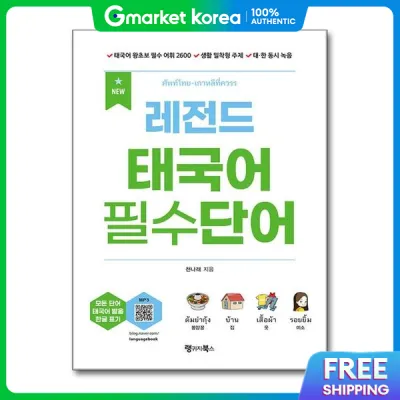
Prices are valid at publication and may change. Please refer to the product page for the latest price.
The first major checkpoint is your relationship with the Thai script. Can you confidently identify the 44 consonants, 32 vowels, and 4 tone marks? More importantly, do you understand how consonant classes (low, mid, and high) interact with vowel lengths and tone marks to determine the pitch of a word? If you still rely entirely on phonetic transliteration—often referred to as Romanization or karaoke Thai—you are at the absolute beginner stage. Recognizing this is crucial, as jumping into a book that assumes script literacy will immediately stall your progress.
The second checkpoint involves reading and writing mechanics. Thai is written continuously without spaces between words, and punctuation marks are rarely used. If you can look at a sentence written in Thai script and successfully identify where one word ends and the next begins, you have developed essential word-boundary recognition. If you can read simple signs, menus, or short paragraphs without phonetic guides, you have transitioned out of the introductory phase and are ready for elementary or intermediate materials.
Finally, assess your listening and speaking capabilities. Are you limited to memorized survival phrases, such as ordering food or asking for directions? Or can you understand natural speech patterns and participate in basic daily conversations? If you can comprehend short audio clips spoken at normal speed and formulate your own responses without translating every word in your head, your listening comprehension is ready for intermediate-level textbooks that feature longer dialogue passages.
Match Your Level to the Right Book Category
Once you have identified your current proficiency, you can match your skills to the appropriate category of Thai language books. Textbooks are generally structured to serve three distinct stages of learning: absolute beginner, elementary to intermediate, and advanced or specialized.

For absolute beginners, the primary goal is to build a rock-solid foundation in phonetics and the writing system. Look for books that dedicate their opening chapters entirely to the Thai alphabet, illustrating stroke orders for writing and providing detailed diagrams of mouth positions for unique Thai sounds. These books should use Romanization alongside the Thai script, but only as a temporary training tool. The ideal beginner book guides you to read the script as early as possible, preventing you from becoming dependent on phonetic spelling.
As you transition to the elementary and intermediate stages, your focus should shift toward expanding grammar structures and building practical vocabulary. Books in this category should phase out Romanization almost entirely, forcing you to read the Thai script directly. The content should be organized around situational themes, such as navigating public transport, visiting a clinic, or discussing hobbies. Look for textbooks that introduce complex spelling rules, silent consonants, and tone exceptions through contextual reading passages rather than dry, isolated lists.
Advanced or specialized learners require books that prepare them for real-world immersion or formal proficiency exams. These materials are written almost entirely in Thai, with minimal English explanations. They focus on formal vocabulary, literary devices, academic reading comprehension, and specialized terminology for business or media. If your goal is to use Thai in a professional environment, look for books that feature business correspondence templates, formal meeting dialogues, and explanations of cultural etiquette in corporate settings.
Key Features to Check Before Buying a Thai Textbook
Selecting a Thai language book involves more than just matching the difficulty level; you must also verify that the book’s format, media, and resources align with your learning style and technical setup. Budgeting around S$30 to S$60 for a comprehensive textbook set is common, so verifying these features beforehand ensures your money is well spent.
First, verify the language of instruction and the edition of the book. For self-study, clear English-to-Thai explanations are essential. Ensure you are purchasing the latest edition, as language textbooks are frequently updated to correct typographical errors in tone marks or script spelling. A single misplaced tone mark in an older edition can completely alter the meaning of a word, leading to unnecessary confusion during self-study.
Second, examine the audio media formats provided with the book. Because Thai is a tonal language, studying from a book without accompanying audio is highly discouraged. Check how the audio is delivered—whether through physical CDs, downloadable MP3 files, companion mobile apps, or streaming via QR codes. Ensure the delivery method is compatible with your daily routine and devices. For example, if you plan to study during your daily commute on the MRT, a book that offers streaming audio via a mobile app or downloadable MP3s is far more practical than one relying on physical CDs.
Third, review the layout and the ratio of Thai script to Romanization. A well-designed textbook should use a clear, legible font for the Thai script, as some stylized fonts can be difficult for learners to read. Ensure that the Romanization system used is consistent throughout the book and that there is a clear path toward reading the script independently. Additionally, confirm whether the book includes an answer key at the back or if you need to purchase a separate workbook. For self-study, an accessible answer key is non-negotiable for verifying your writing and grammar exercises.
Adjusting Your Learning Path if the Book Feels Wrong
Even with careful planning, you may occasionally find that a textbook you purchased does not align with your learning pace. Recognizing the signs of a mismatched book early allows you to adjust your course without losing motivation.
If you find yourself overwhelmed by complex grammar rules or struggling to read sentences without phonetic guides, the book is likely too advanced. Do not hesitate to step back and downgrade to foundational materials. Spending a few weeks reinforcing your knowledge of consonant classes, vowel lengths, and tone rules will make your return to the advanced book much smoother and more productive.
Conversely, if a textbook feels too easy or repetitive, do not let your progress stall. You can supplement the material by incorporating native media, graded readers, or bilingual podcasts into your daily routine. Use the textbook’s vocabulary lists as a baseline, but practice constructing your own complex sentences using grammar patterns you observe in real-world Thai media.
If self-study books leave you consistently confused about pronunciation nuances or grammar exceptions, it may be time to pause and seek professional guidance. Enrolling in a structured language course or working with a qualified tutor can provide the personalized feedback you need. A professional can assess your speaking and listening skills in real-time, correct subtle pronunciation errors, and recommend specific supplementary materials tailored to your unique learning style.
Frequently Asked Questions (FAQ)
Can I learn Thai using only Romanization without learning the script?
While Romanization is useful for short-term travel survival, such as learning how to order food or ask for directions, it is highly limiting for long-term fluency. Romanization systems are not standardized; different publishers use different spelling conventions to represent the same Thai sounds, which often leads to mispronunciation. Furthermore, without learning the Thai script, you cannot read street signs, menus, or basic messages, and you will struggle to master the complex tone rules that are inherently tied to consonant classes.
How do I know if a textbook's audio matches standard Central Thai?
Standard Central Thai is the official language used in government, education, and national media. When purchasing a Thai language book, check the publisher’s description or introduction to confirm that the audio recordings feature native speakers using standard Central Thai pronunciation. If preview tracks are available, listen to ensure the speech is clear, natural, and free of heavy regional dialects (such as Northern, Northeastern, or Southern Thai), unless you are specifically studying those regional variations for travel or family reasons.

Community discussion
Share your experience or ask a question. Comments are reviewed before publication.